Destinations

Impressions from Romania

Greetings once more from Romania! As I write this, Brooke and I are currently on a train from Bucharest heading north to the town of Brasov. This ride is our first encounter with a European train – something I’ve been looking forward to all day. Also our first time in one of those shared train compartments occupied by a group of strangers facing each other. Nifty!

So far, our time in Romania has been, quite frankly, kind of thrilling and fun. Bucharest is bustling, the gorgeous late-summer weather is a nice change of pace and makes for pleasant walks through the quality park near our hotel. Impressions so far? While I would hesitate to say that Romania falls under the category of a developing nation, I would say that it’s a nation that’s rebuilding. Hey, your country might be too if it was just over twenty years removed from an epic political revolution that ousted a diminutive, megalomaniacal communist leader. Toss on a parade of crappy presidents that followed afterwards, lingering structural damage from allied bombing during WWII and even a devastating earthquake in the late 1970’s and it’s easy to understand why this is a country trying to climb it’s way back to it’s Mid-20th century nickname of “Little Paris.”
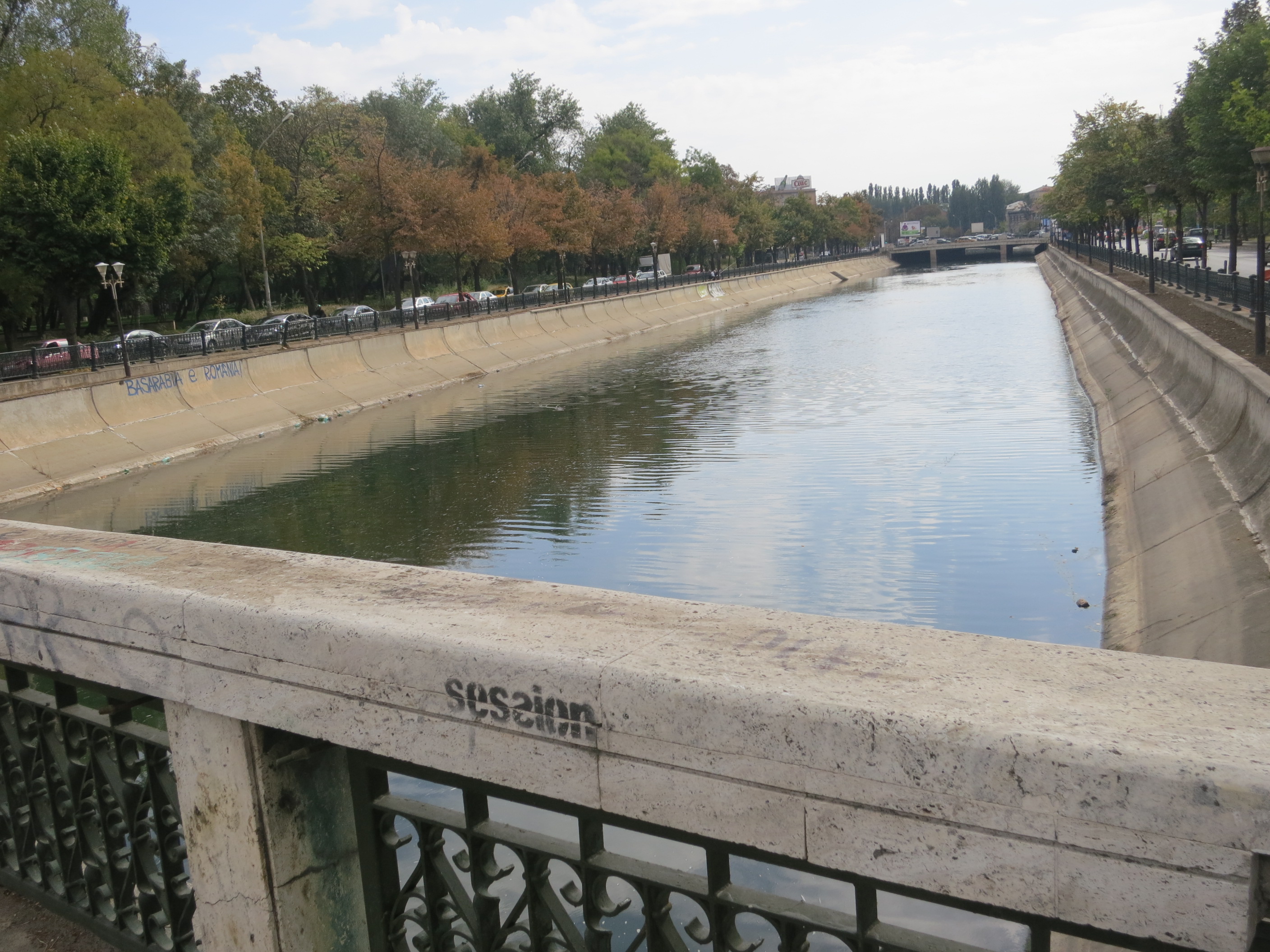
The somewhat gross central canal in Bucharest certainly won’t be confused with those in Venice anytime soon.

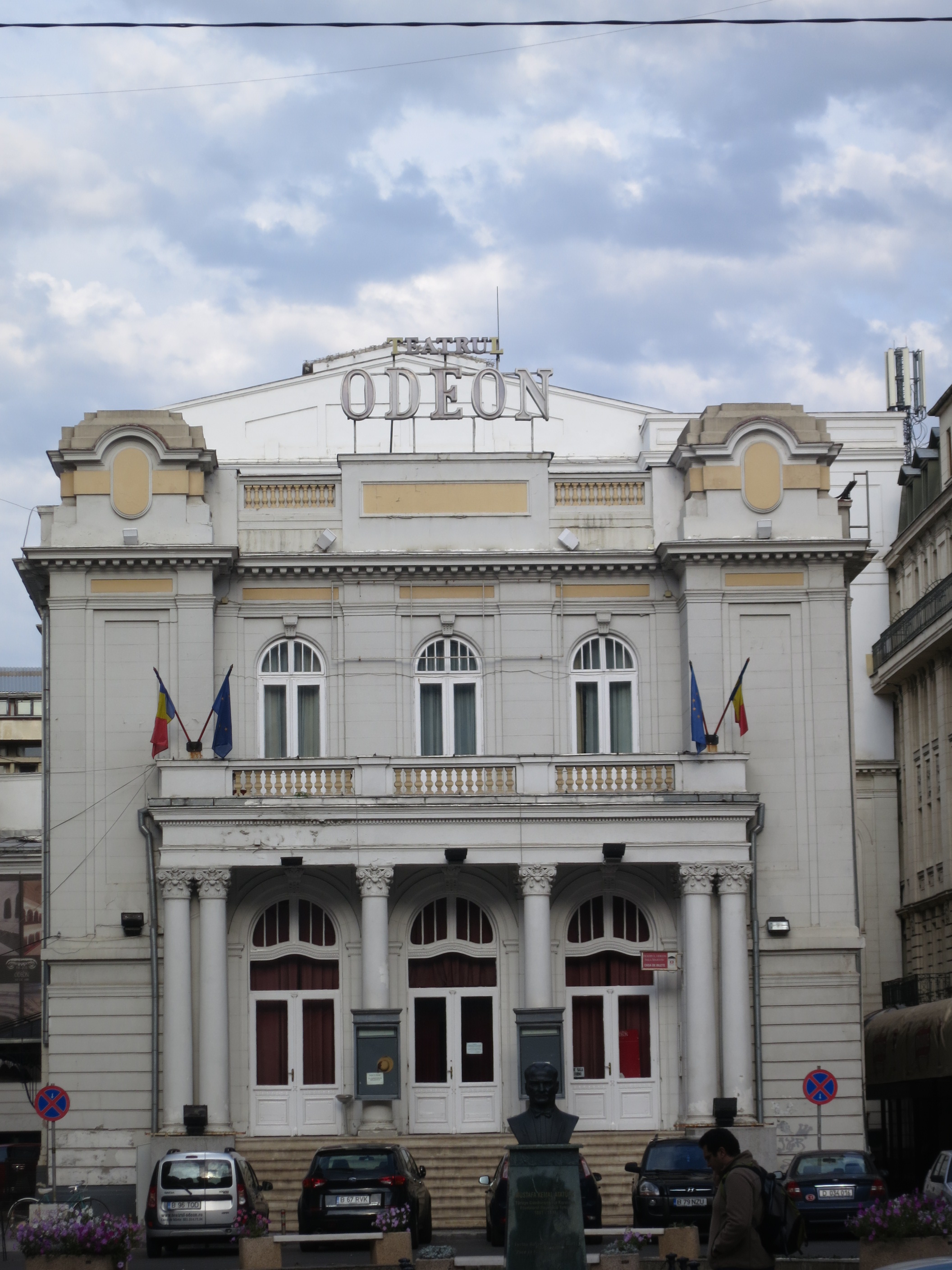
Brooke mentioned the dilapidated nature of some of Bucharest, but it’s worth repeating. For every well-maintained building with a stunning facade, there is a neighboring building that’s crying out for an Extreme Home Makeover. Apparently, some of these run down edifices are a haven for squatting Gypsies, while others are owned by landlords who are just waiting for the buildings to crumble on their own (sad). Others still (like the National Theater) are undergoing overdue yet magnificent renovations. Also, there is so much graffiti on the buildings that ARE in use, we’re considering cashing in and opening a spray paint store. You can see neon colored paint on about 75% of buildings. Whether it is an apartment high-rise or a local monument, it has been tagged in one way or another. It’s just everywhere. On a similar note, you have to be heads up for random, loose wires dangling in your path when you walk. Those dangerous urban vipers are everywhere too. Yet, don’t get the wrong idea; we’ve enjoyed our time in the city. We really have. From all that we’ve heard, read and seen, the city motto here could be “Bucharest:  much better than it used to be.”

Phil enjoying morning pastry deliciousness in the heart of Old Town

In fact, it seems like the 1980’s were a particularly awful time to live in Romania for a thousand different reasons. The decade ended with a revolution that ousted Nicolae Ceausescu who was, by all professional accounts, a downright rat bastard. One impact of his regime that we hear about over and over was his destructions of several old quarters of the city in favor of building a modern, Paris-style central avenue. To many a Romanian’s chagrin, wonderful, amazing old parts of the city were toppled by hungry bulldozers. What does remain is the exceptionally cool Lipscani or Old Town. A small section of Bucharest that’s packed with truly beautiful old buildings, an endless array of tantalizingly hip bars and restaurants with outdoor seating and small pedestrian-only streets. Old Town has a pulse and flavor that makes it lively and distinct from the other parts of the city. The only shame is that 30 years ago it was a region that was so much larger!
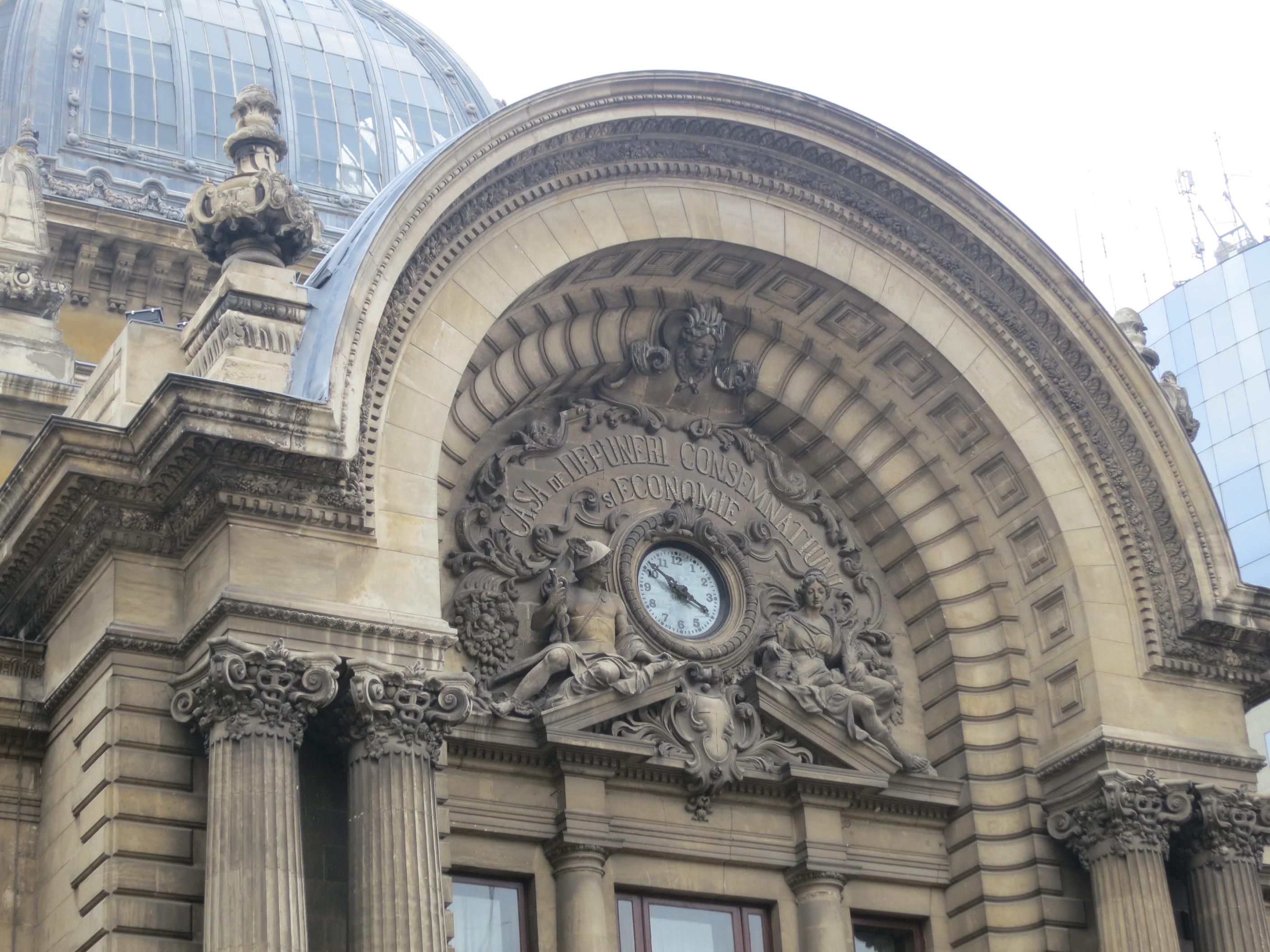
Face of one of my favorite buildings- The old CEC Bank Building outside of Old Town. Marvelous!

Oddly enough, there are an unsettling amount of wayward dogs who are trotting around the city. Certainly an uncommon sight elsewhere, we’re told that most of these canines are harmless, but they cause enough trouble that reportedly up to 150 people a day get bitten. Straight out of crazy town is that the government has done little to tackle this issue. Apparently, the problem stems in part from the afore-mentioned Rat Bastard’s destruction of people’s homes during which time residents just set their pets loose. Also worth mentioning is the sheer volume of smoking we’ve seen in Romania. I know, I know – people everywhere smoke more than they do in the Untied States. We’ve seen it from Asia to Copenhagen. But, Holy Marlborough Man, I’m telling you do the people smoke in Romania. It is everywhere–street corners, stores and even the train. It is not just tolerated, it’s almost expected. You want to go to a restaurant with a Non-smoking section? Good luck. The law dictates that there must be one token non-smoking table somewhere in the corner, but that’s about it. And, in fact, recent legislation has repealed some of the smoking restrictions. As Brooke lamented yesterday, “Don’t these beautiful girls know they’re going to end up looking wrinkled and old by the time they hit 40?” It’s taken some getting used to. And my clothes smell like they did circa the bar scene in 1998.
Speaking of rules, we’ve learned that many laws in Romania are actually only kind of laws. There are loose interpretations on what’s technically illegal on everything from liquor sales to regulated taxi fares to parking and driving. We’ve witnessed that large parts of the world seems to have a more liberal take of road rules that we do in the United States. Silly us thought that common rules like pedestrian right of way and yielding to emergency vehicles would be universal, but as my dad has warned us, “Don’t assume anything when you travel.” (This would have also been good advice to heed when we had to visit four separate post offices in a confounding attempt to ship a box home.) One of our taxi drivers decided to cover some ground by driving in reverse for a few hundred meters down a one-way street. And the parking golden rule is “just wherever you can find a space” – which means sidewalks, driveways, crosswalks and more are fair game with nary a parking ticket to be seen. We’ve wondered how a few drivers even put the car in a particular space! This site offers some photos of the most bewildering offenders. We once again chose to blame the afore-mentioned Rat Bastard leader (although his hands are probably clean on this one).

All that being said, Bucharest has been a very safe city boasting an impressively low crime rate with apparently pickpockets accounting for the most dangerous threat. Combine that with a large number of people speak at least a small amount of English and we feel as comfortable and safe as New Yorkers strolling through central park. We’ve had some great meals, made a few wonderful new friends, and seen some impressive sights. While we can point out all those unique differences, we also can gush about how interesting it is to visit a corner of the world that doesn’t attract tons of tourists. Just…watch out for the dogs, smokers and loose wires.

-Phil
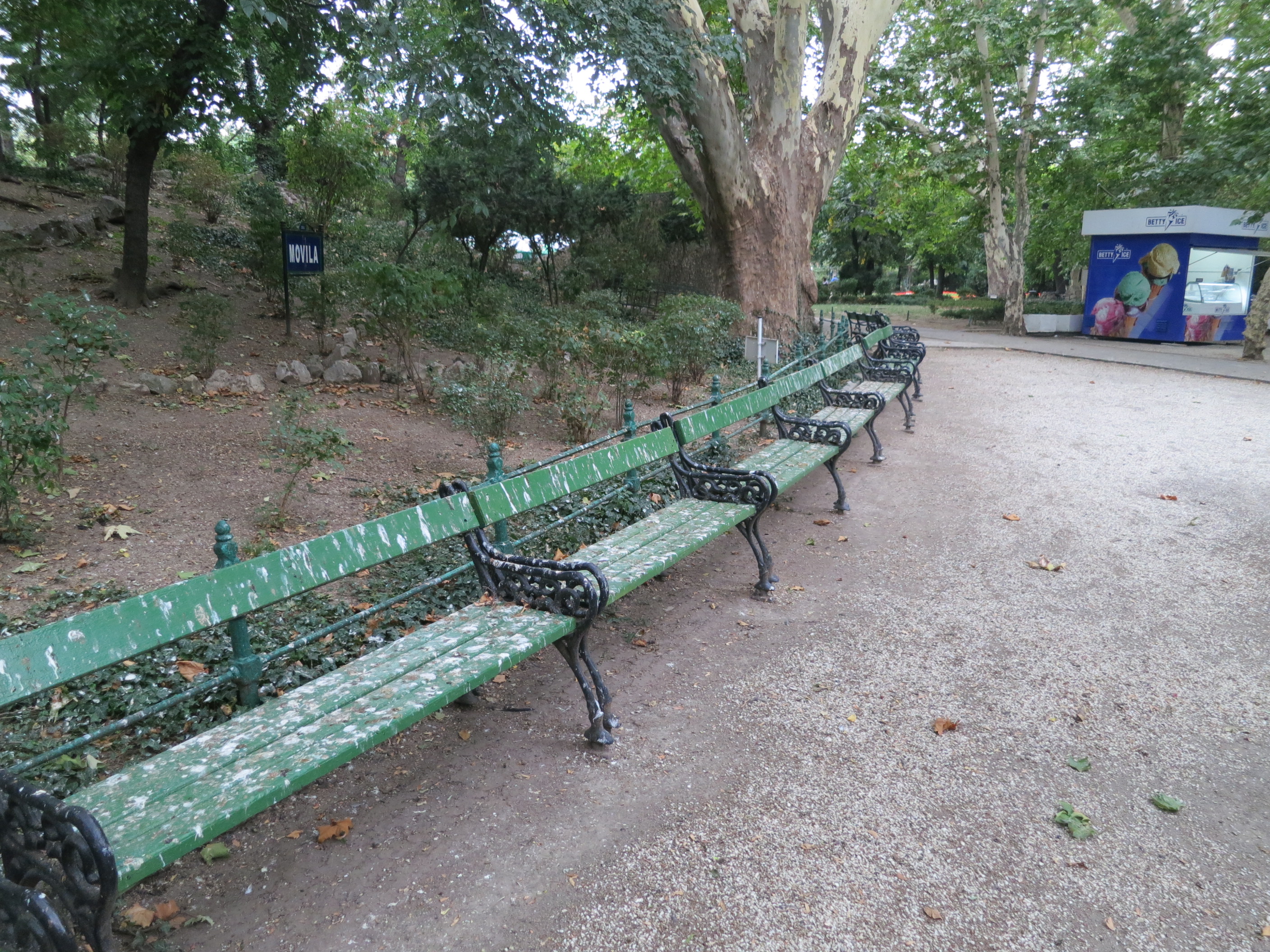
Just a littttttlllle bit of a bird poop from a boatload of crows on the park benches.
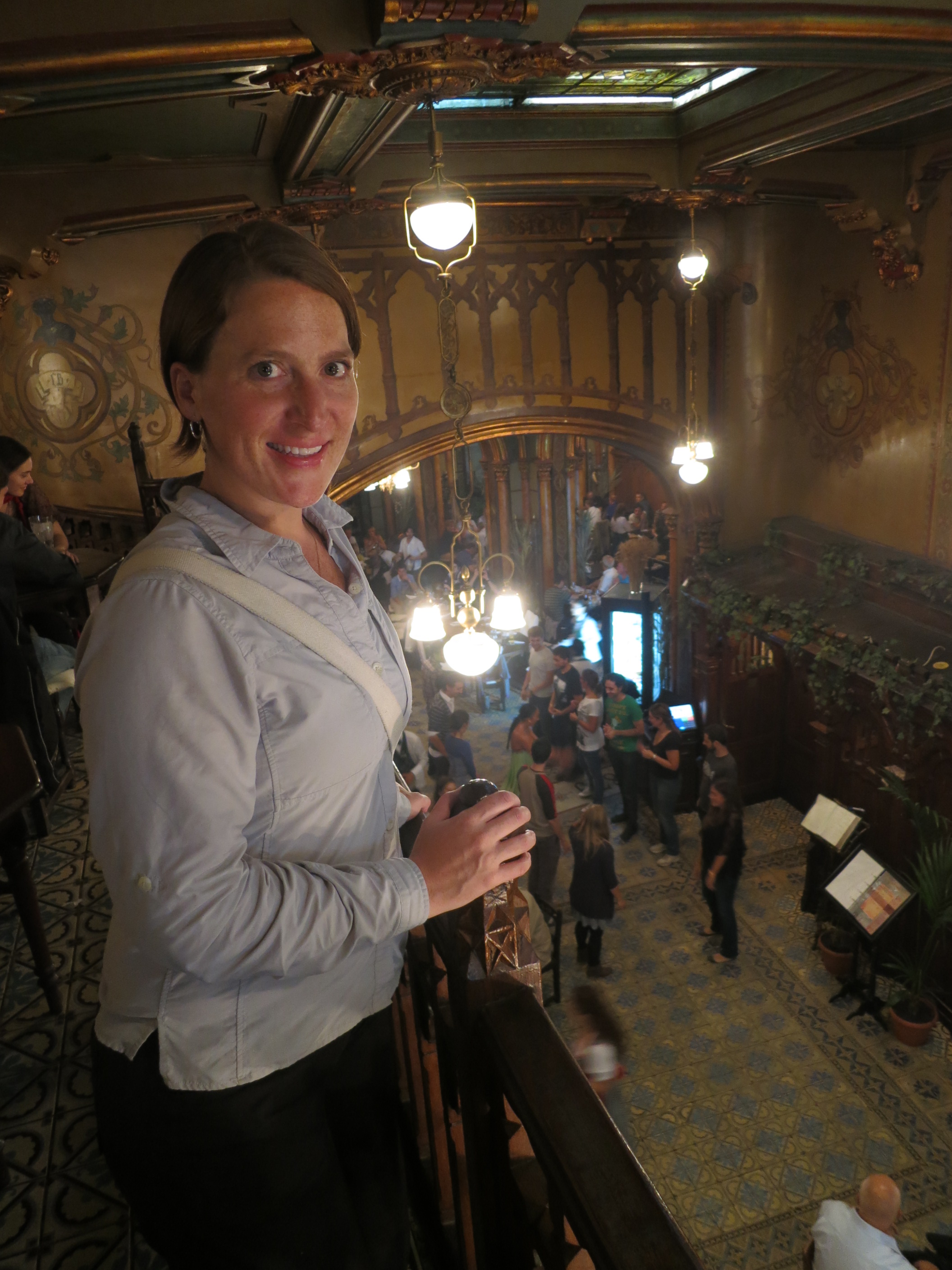
Brooke enjoying dinner at Caru’ Cu Bare – a really can’t miss meal in Bucharest!
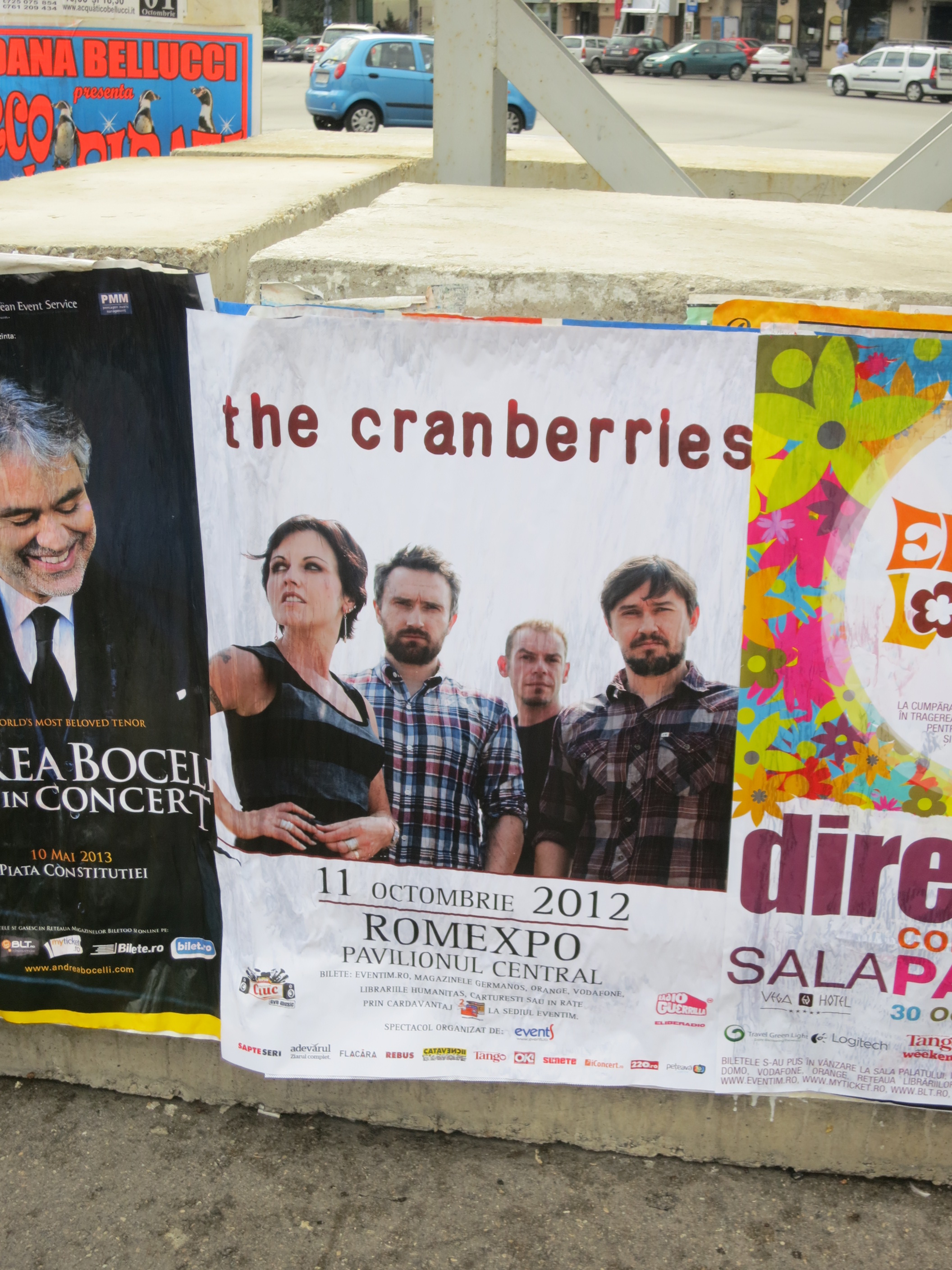
Hey, The Cranberries are coming to Bucharest! WAIT, the Cranberries are still around as a band?

Categories: City Visits, Destinations, Differences, Europe, Exploring, Rail, Romania, Uncategorized | Tags: , , , , , , , , , , | 8 Comments

Last Day in Copenhagen


Brooke enjoying some wine in ole 4026Our wonderfully relaxing and easy-living nine day Baltic Sea cruise has come to an end. The time has come to leave the boat. We started the day with one final delicious breakfast buffet at our favorite spot on Deck 11 of ye olde Norwegian Sun. And, for the last time, walked away from the table without worrying about  settling a check or removing a single dish. After docking in Copenhagen, Brooke and I attempted to remain onboard as long as we could but around 9:00 AM the crew pulled us off kicking and screaming. It was quite a scene that disturbed some of the older passengers. In all seriousness, we’ve enjoyed the cruise but we’re ready for what’s next.

Copenhagen's most famous art musemSo, we find ourselves back in Copenhagen for one last day before we close the book on our Northern European leg. Now off the boat and away from the all-English all-accomodating lifestyle, we’re back to the little things being a touch more difficult and occasionally frustrating. Today’s particular challenge was our attempt to spend some time in the local library. We figured a Copenhagen “bibliotek” would be a good place to cool our heels for a few hours, flip through some travel books and hop online. We were able to pinpoint the location, determine walking directions, and check the hours. But what the Danish language website did not make clear is that this funky library is open on Sunday only to library card holders who must swipe their way in via key card. See? Frustrating. Also, please don’t alert the Copenhagen Transit Authorities, but due to issues with the ticket machine, we managed to take a pair of rides on the local trains without forking over a single dime.
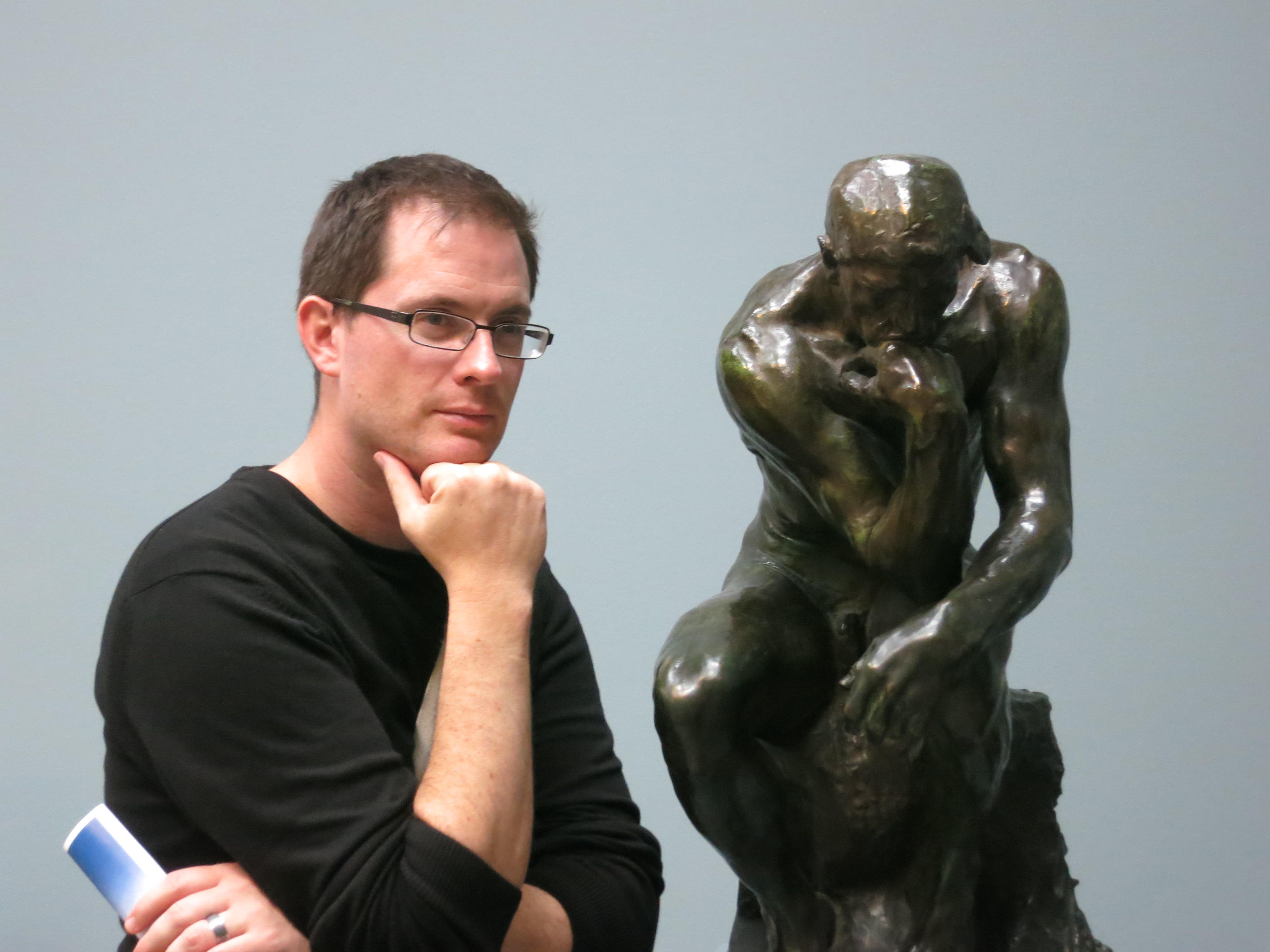
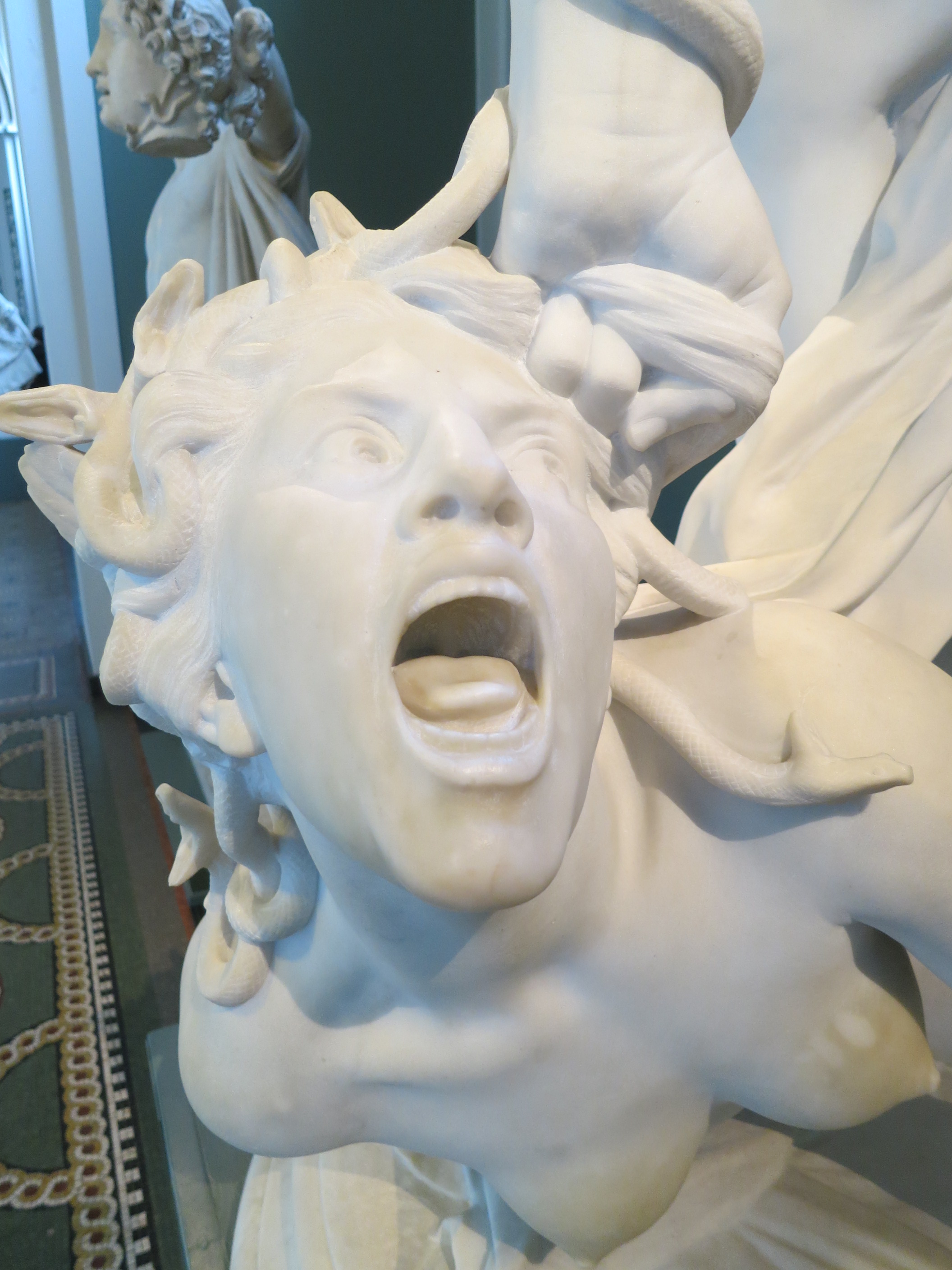
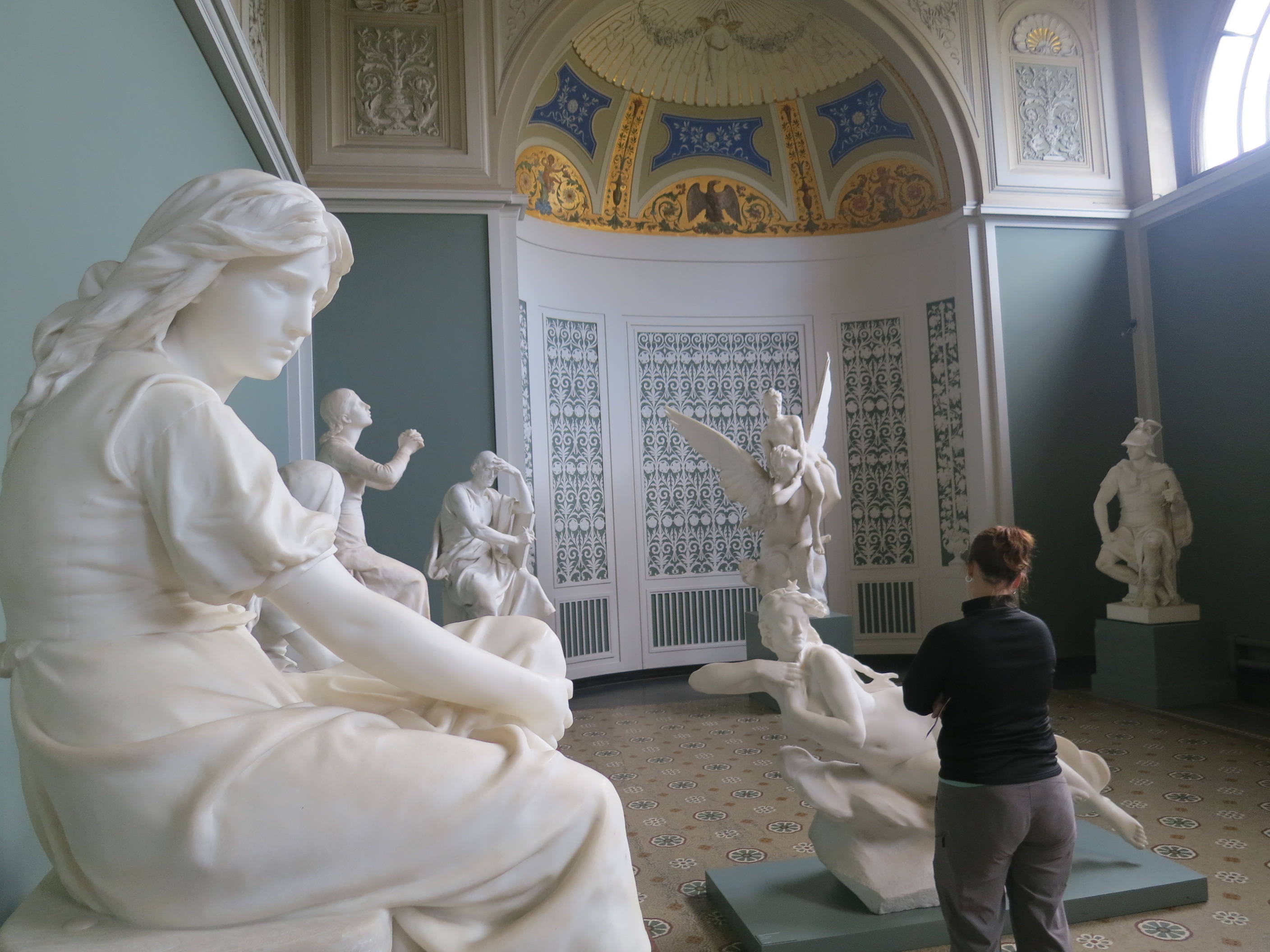
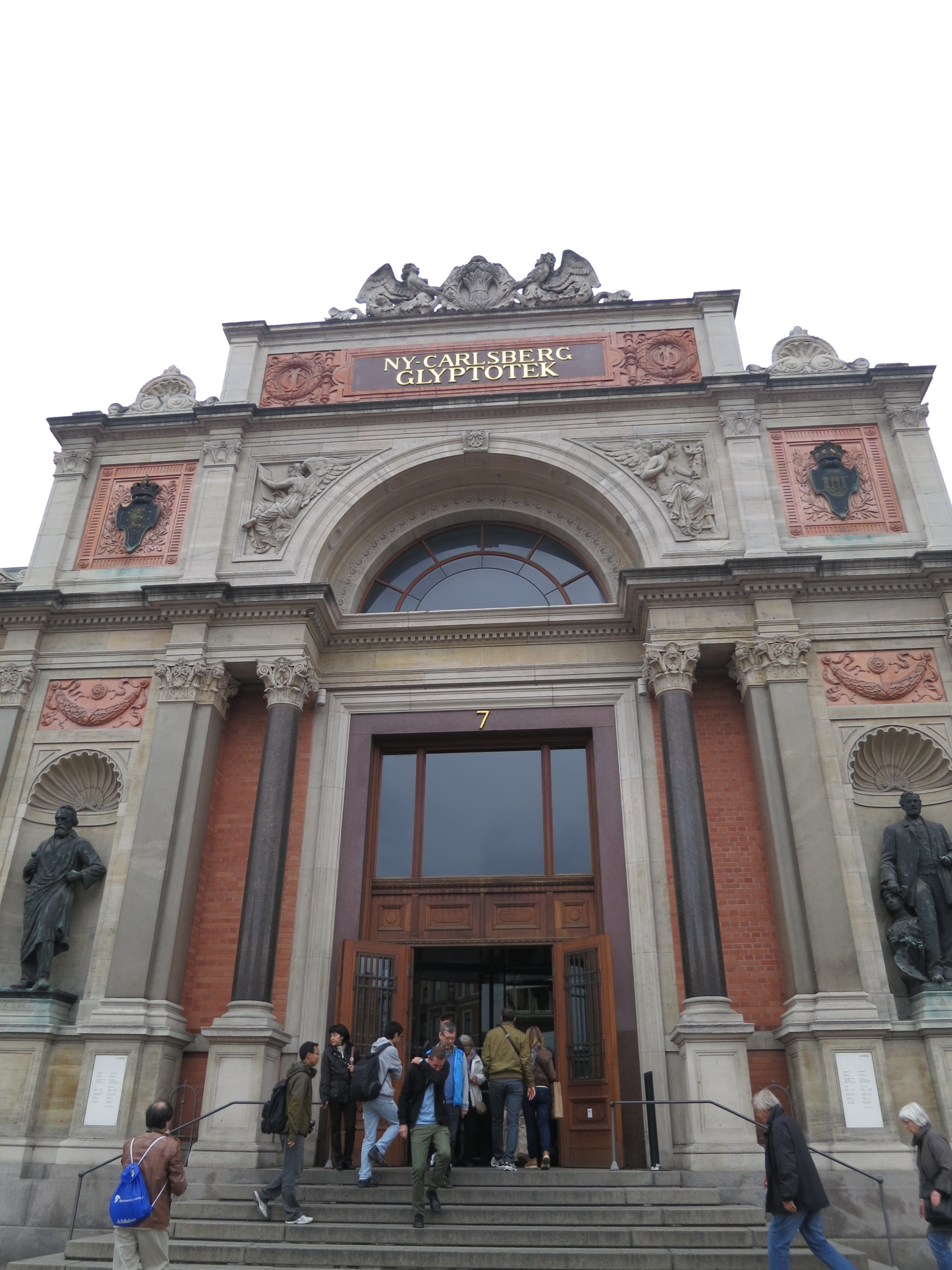
Philospohical Phil!We did manage to make a visit to the renowned Glyptotek museum in central Copenhagen. The museum offers free admissions on Sundays and boasts an impressive art collection started in 1882 by beer baron Carl Jacobsen of Carlsberg fame (see our post mentioning Carlsberg here). Jacobsen also donated, among others, the sea-side dwelling Little Mermaid statue that is forever associated with Copenhagen. We strolled through a handful of the galleries, enjoyed some of the architectural features of the museum building as much as the art and took in some great paintings and sculptures. There was art by Degas, Manet, Van Gogh, Picasso, Monet, Rodin, Gaughin and two dozen other European artists and painters I should probably know but have already forgotten. The sculpture gallery was loaded with marble and bronze creations and was positively great, although I wouldn’t want to be there at night. My personal favorite was a sculpture of Perseus severing Medusa’s head in action. We were kind of thrilled when we saw that the museum was the home of Rodin’s iconic “The Thinker” as part of a comprehensive Rodin gallery. But that was until we learned that there are like twenty other “original” casts of the statue throughout the world. Maybe not as special, but the Glypoteck is still a great museum.

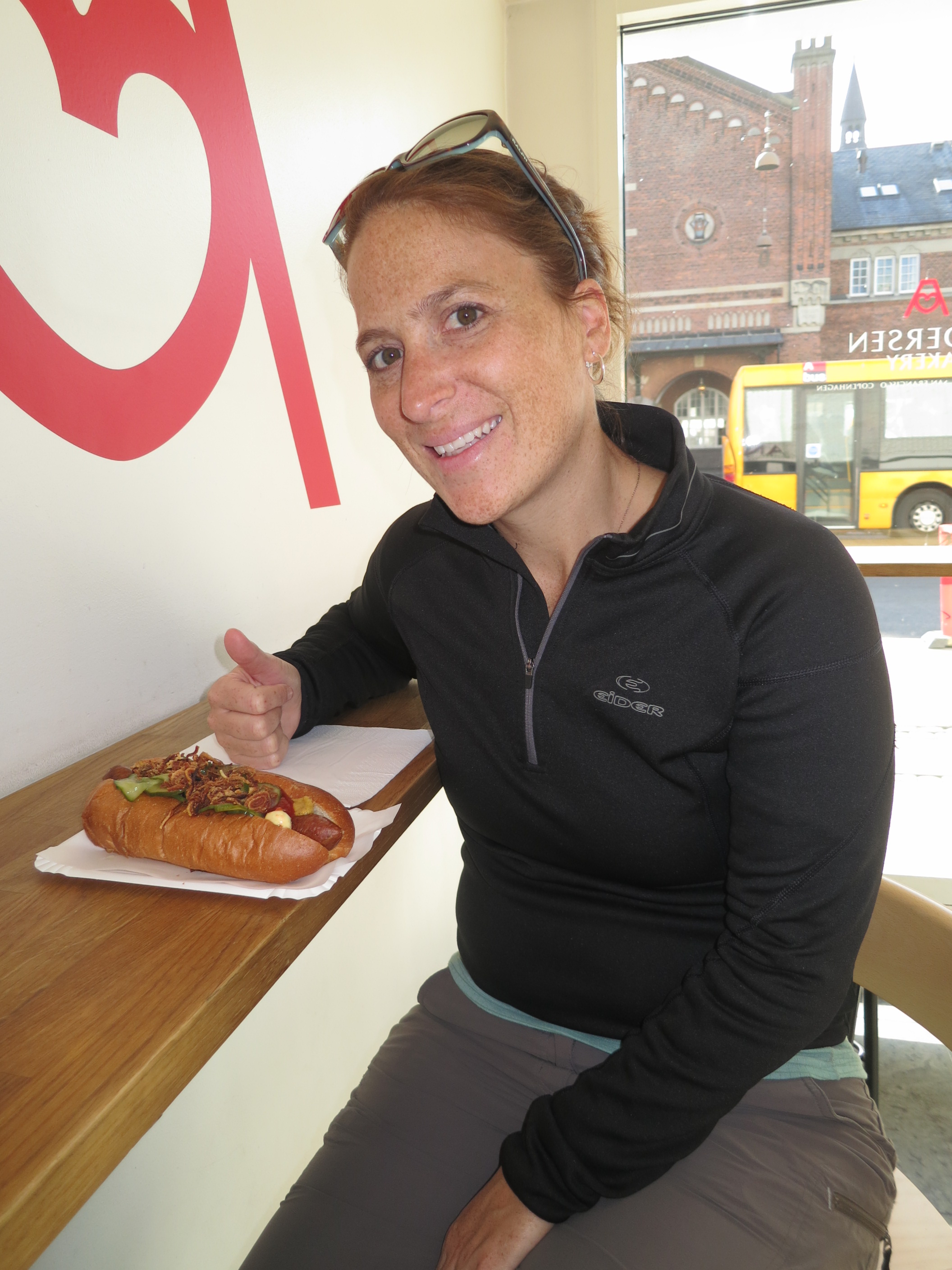
Amazing lunchOf course, for lunch, we couldn’t resist one last hot dog. This time we asked around for the best hot dog in the city. We went gourmet with arguably the best deluxe wiener in town from Nimb. These dogs were a bit more expensive, but they delivered the goods. Gourmet taste-bud satisfaction from one end of the bun to the other.

Final impressions of Copenhagen? It’s kind of a great city. Locals give off a vibe of general contentment – they seem especially merry whilst mounted on bicycles. The town is sophisticated, forward thinking and awash in eye-brow raising design. Highbrow, but accessible. Expensive, but doable. The town even managed to surge my own bit of creativity. Growing up, my friends and I used to watch a lot of professional wrestling. We were always coming up with ideas for new gimmicks for the wrestlers to use in the rings. I now have a fantastic concept: The Angry Dane. He’s big, he’s blonde and he rides a bicycle to the ring which he locks to the ringpost once he arrives. During his match, The Angry Dane illegally uses the Bicycle as a weapon against his opponent. The announcers will call that move the “Twelve Speed.” Pure gold. Someone get me Vince McMahon on the phone.

The Denmark Airport Bids Adieu

Now, we’re off to Romania and Bulgaria as we open the door on our Eastern European segment. We start by visiting yet two more nations that we know virtually nothing about. (As always, we’re open to suggestions!) A pair of flights from Copenhagen to Vienna and then Vienna to Bucharest and yet another quick time change where we jump ahead two hours. We selected a landing spot in Bucharest in part because of it’s Eastern European location in relation to points Westward and in part because, well, it sounded like an interesting place to visit. It’s so cool that this trip has allowed us to point to a strange, new location on a map and just go. By tomorrow, we should have some new insight into yet another town that seems to be begging to be discovered. We’ve already begun reading up on Romania to prep a bit for our visit by taking a sneak peek at the culture, food and airport taxi scams.

For the next month, our schedule gives us much more flexibility on where to go and when. Our next scheduled flight isn’t until Mid-October. Little by little, I’m discovering that the world is such a big place, but it is also a finite place as well. Who knows what we’ll see, but the odds are that it will be worth sharing.

-Phil

Brooke studying a painting in the Glyptotek’s French Impressionist wing.


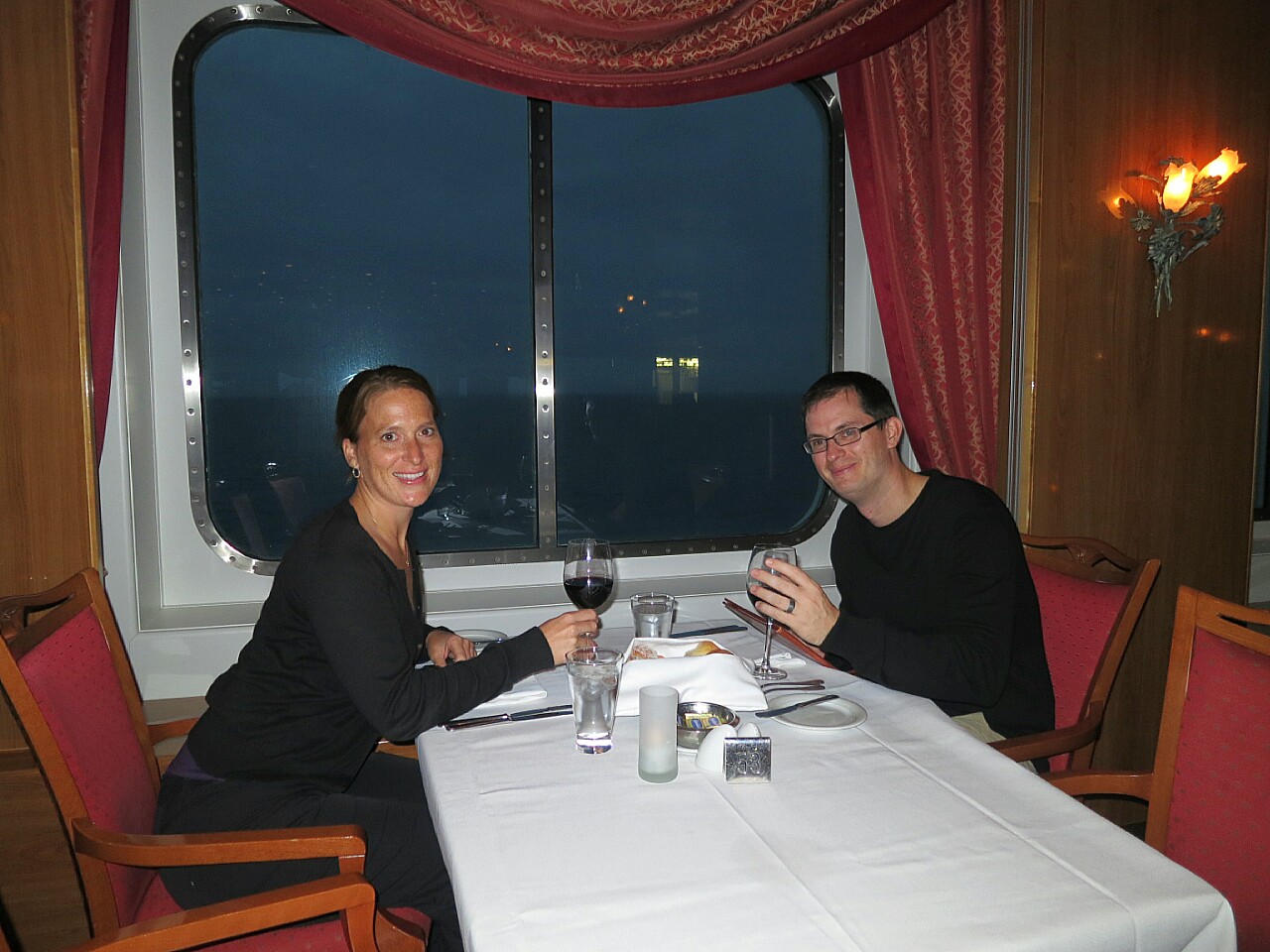
Our final dinner in the Norwegian Sun! Ah, we’ll miss meals like this.

Another look at the outstanding sculpture gallery in the Denmark museum.

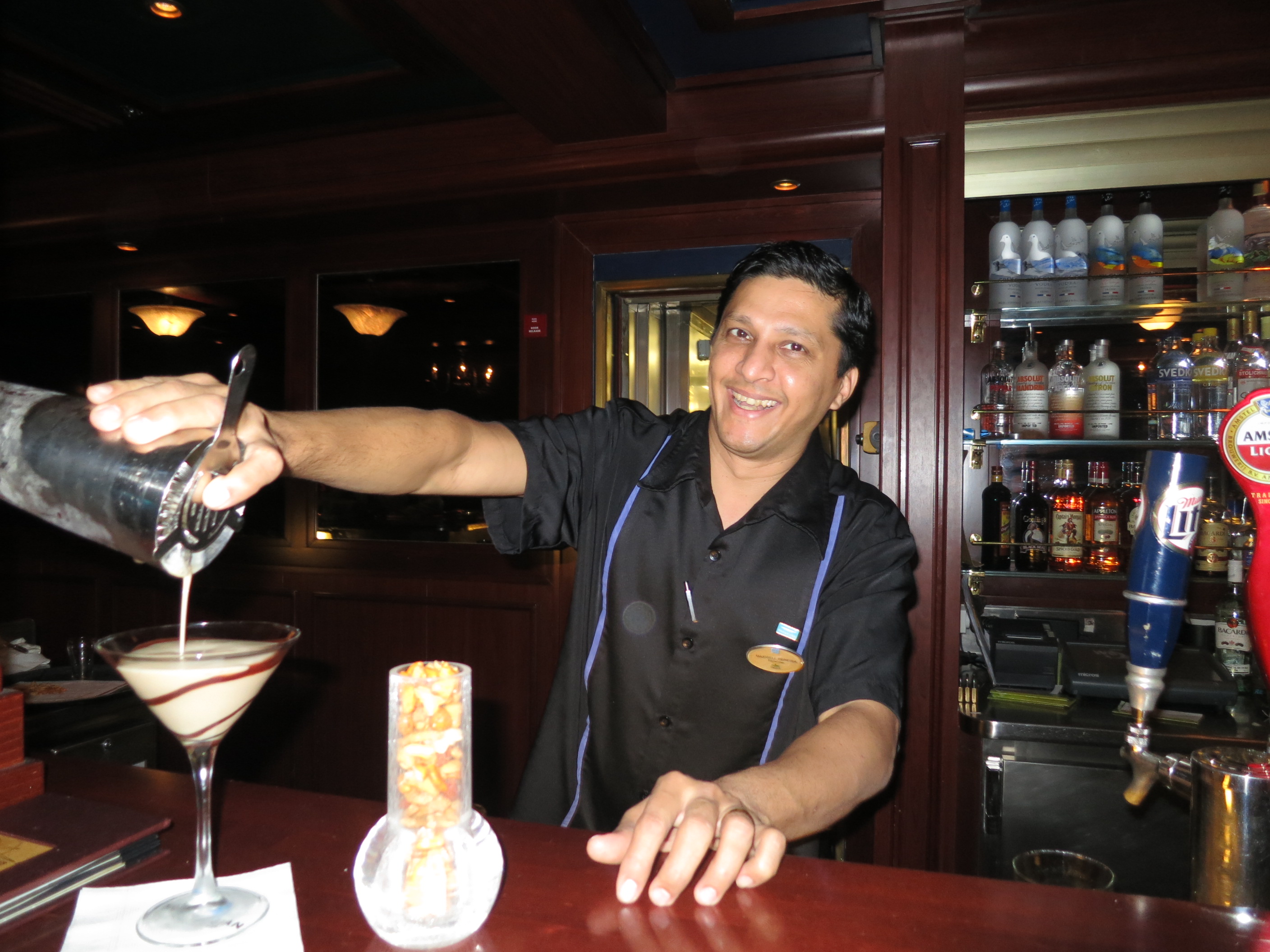
Our exceptional bartender Maxwell from the Windjammer of the Norwegian Sun. He took good care of us many nights.

Categories: City Visits, Copenhagen, Destinations, Differences, Eating, Europe, Flights, Museums, Unusual Experiences | Tags: , , , , , , , , , , , | 2 Comments

Helsinki, Finland!

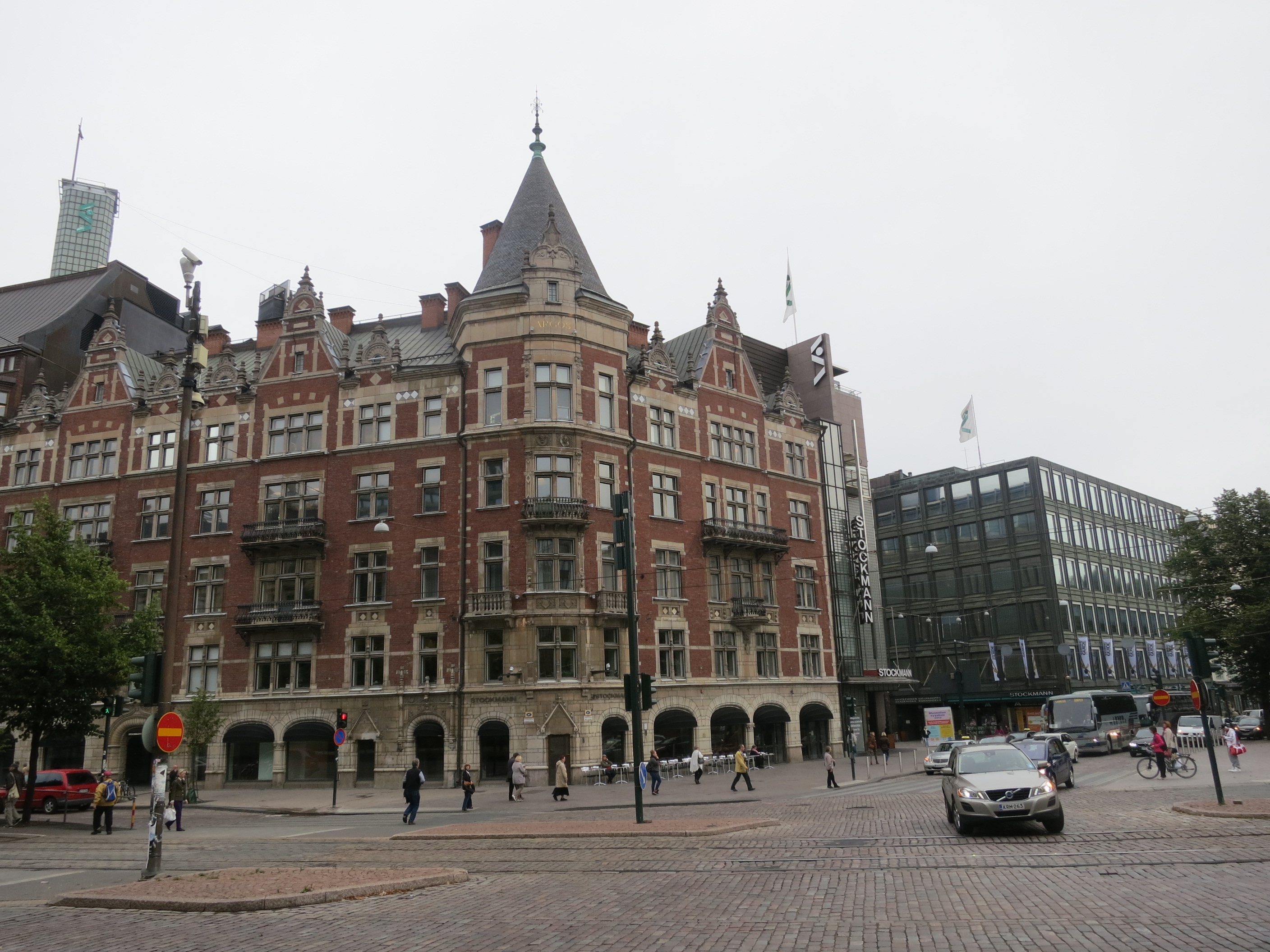
The third port of call on our Baltic Capitals cruise was Helsinki, Finland.  Talk about a place we don’t know anything about!  If someone were to ask us what Helsinki is known for, we would have a hard time coming up with an answer.  After spending the day there, we still can’t give a great answer to that question, but we can at least speak to it with a bit more confidence.

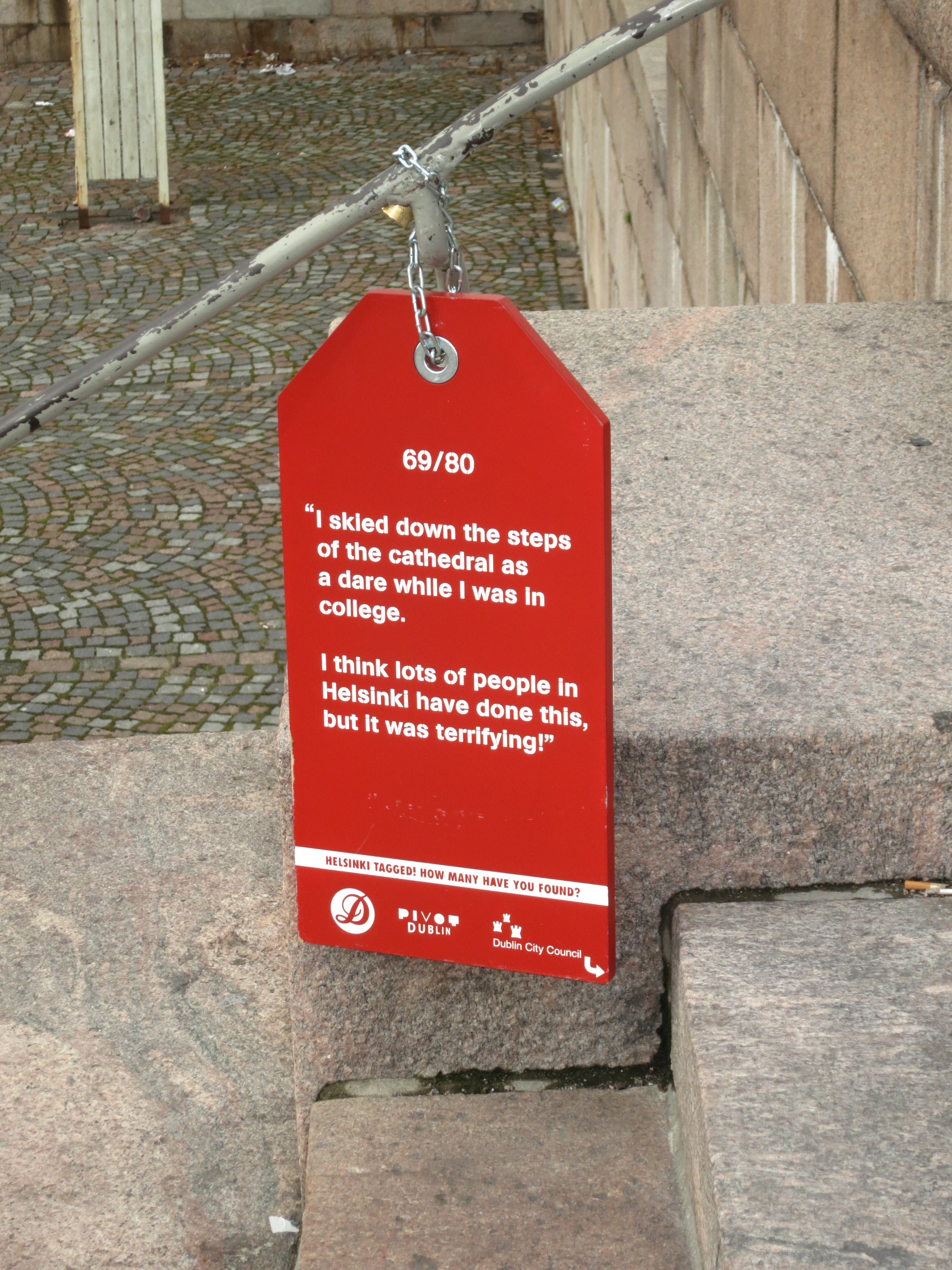
In order to make the most of our day, we got up bright and early, disembarked from the ship and made the lovely 30 minute walk from the cruise port into the city center.  One of the first things we noticed in Helsinki was the number of public art projects scattered throughout the city.  We came upon a park which had “knitted graffiti” covering many of the trees.  Essentially, people have knitted all kinds of patterns–stars, sunshines, flowers, etc.–and covered the park’s trees with them.  It is an interesting and surprising twist on the idea of graffiti.  We also noticed these red tags on many of the major landmarks.  A project called “Helsinki Tagged” has 80 different red tags spread around different landmarks throughout the city.  Each one has a quote which shares someone’s memory of that spot. These are designed to give insight into Helsinki as well as create a fun image for passersby who read them.  We were definitely amused by them, and it was fun trying to spot them as we roamed the city.

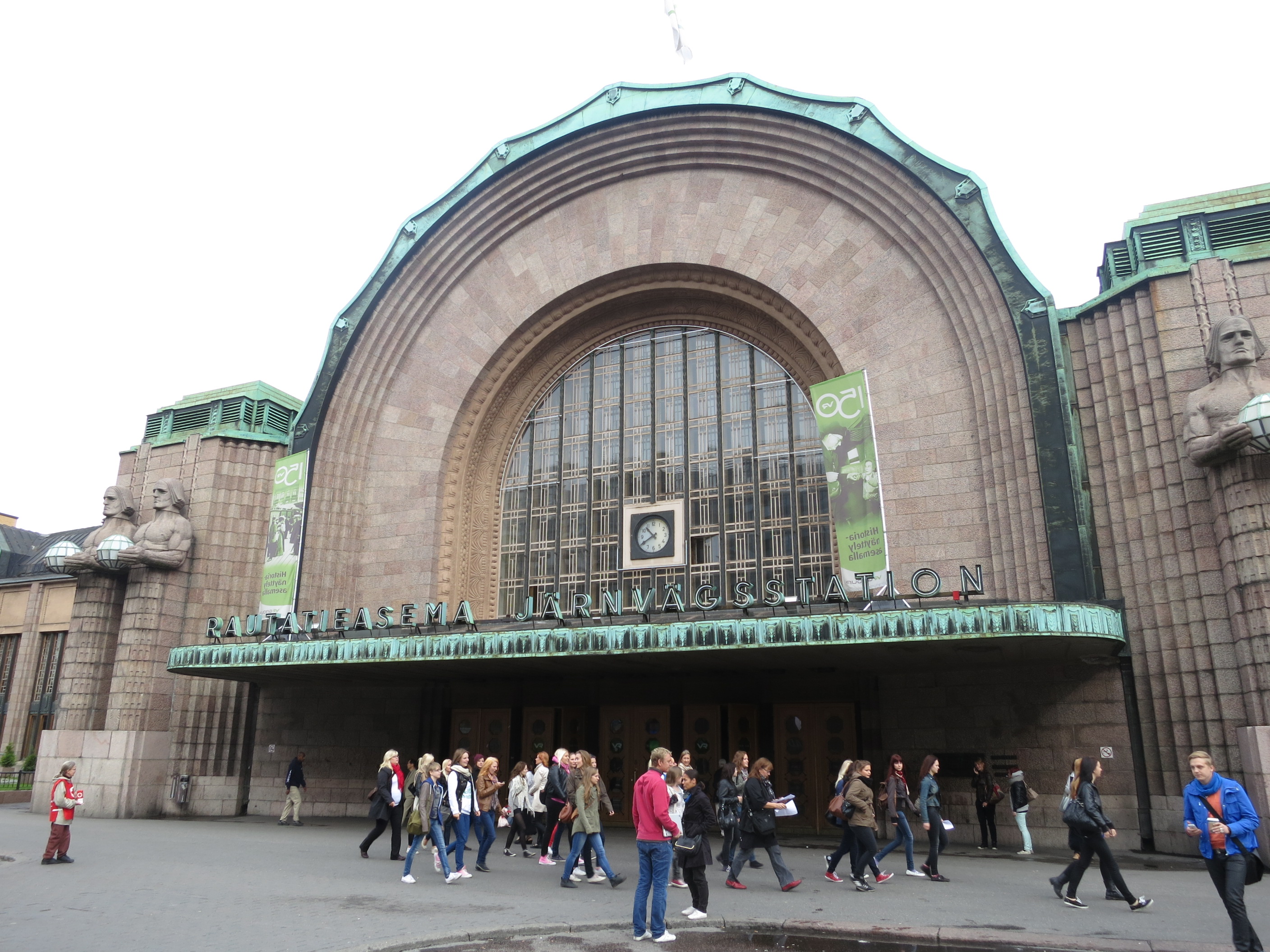
As we wound our way into the city center, admiring the public art, we soon found ourselves at the train station.  I should have known this was where Phil was leading us.  He loves trains and is very curious to see all these European train stations he has heard so much about.  Helsinki’s station is not quite as classic looking as Copenhagen’s, but it is still very impressive.  It was clearly designed for functionality, with large open spaces where people can easily find the train schedule or wait for arriving passengers.  Luckily for us, they had a small exhibit featuring the history of trains in Finland, including a discussion of how to build a system which works all year even through copious amounts of snow and ice.  As it turns out, it is more effective and efficient to have people maintain the signals so they stay free of ice and other obstructions.  They tried to do it automatically, but it didn’t work.  Not sure that’s a job I’d like to have, but hey, someone has to do it!

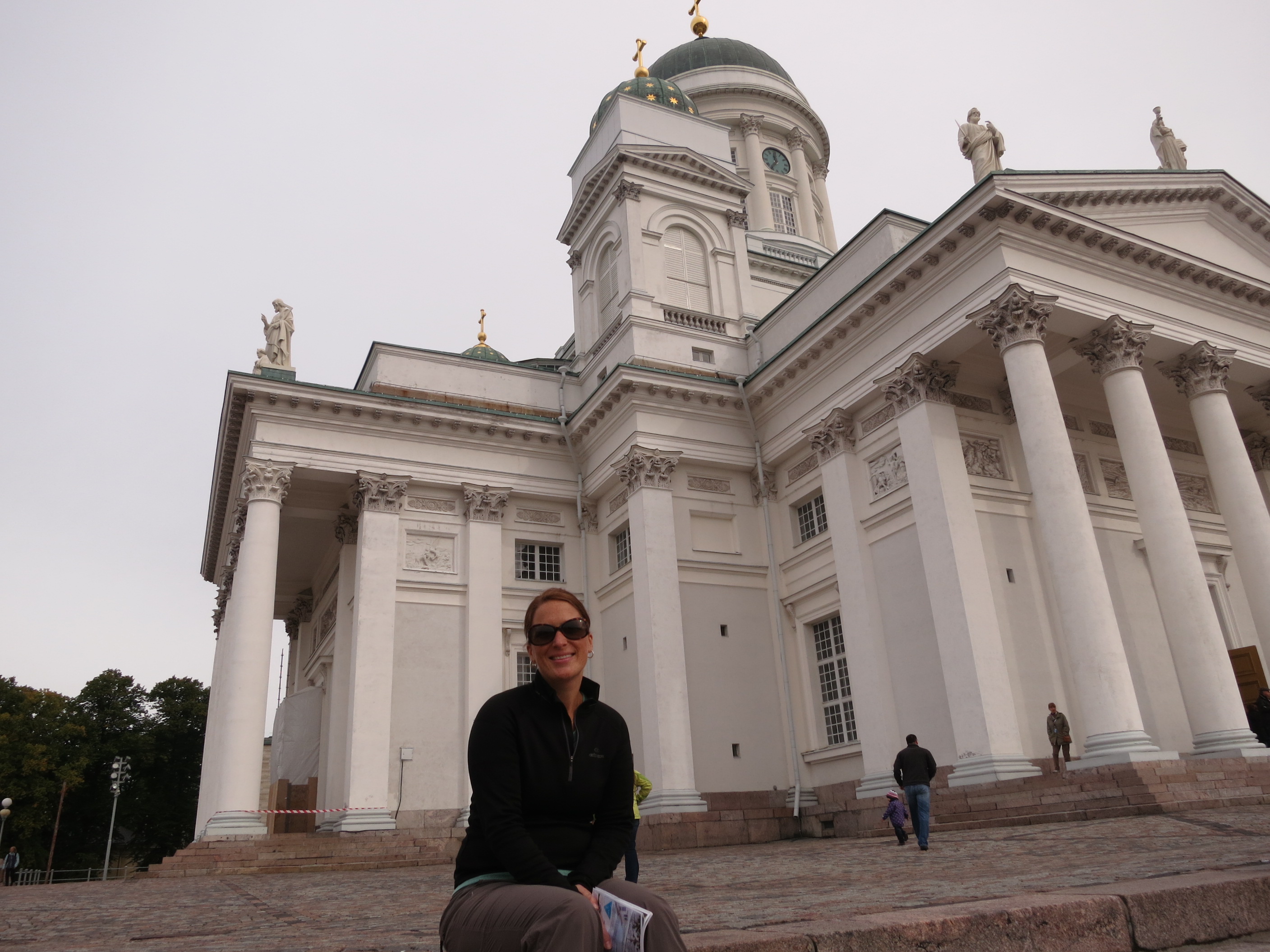
After the train station, we stumbled into the Helsinki Cathedral, a Finnish Evangelical Lutheran Cathedral which was built in 1852.  This beautiful, old cathedral is still in use today and the majority of the Finns in Helsinki belong to this parish.  As with most cathedrals, this one is filled with artwork and sculpture.  We were particularly taken with the sculptures of the 12 apostles which dot the roof.  When we endeavored to name all 12 of them, we came up short by about four.  At least we knew some! We ventured inside and discovered we had arrived just in time to wander around for a few minutes before it was closed to visitors due to accommodate a midday service.  From the steps of the cathedral we could see much of the city.  We looked on the horizon and spotted another cathedral, so we decided to head towards it and find out about it.  This red brick building turned out to be the Upenski Cathedral, the main cathedral for the Finnish Orthodox Church which also claims to be the largest Orthodox cathedral in all of Western Europe.  That is a bit surprising to me since it didn’t seem all that large.  And just like the Orthodox cathedral in St. Petersburg, there are no pews or chairs since everyone is expected to stand.  Why?  Don’t they want people to come to services?  Give ’em a chair and I bet attendance would soar!

By this point we had definitely had enough of cathedrals on our improvised self guided tour, so we headed toward the waterfront and the open air market.  As we were walking there, we heard a band playing, saw men in uniform marching and a processional of some important looking people walking into a large, gated building.  A crowd gathered around watching, so we figured something important must be happening.  We stood for a bit, watching the band and soldiers march by playing music which can only be described as patriotic.  (For all I know it could have been the Finnish National Anthem, it isn’t like I would have recognized it!)  Once the band had marched away, we headed across the street to inquire as to what we had just seen.  Apparently, this was the formal welcome for the new ambassador from Norway and this building we watched them go into was the Presidential Palace.  It was pretty awesome that we just happened to be at the right place and right time to see this event.  What a welcome!

We wandered through the market for a while, seeing that the main handicraft in Helsinki is knitting.  Sweaters, hats, gloves and socks abound in this market and I’m sure if you live in such a cold climate, these become life’s essentials.  The sky began to look ominous, so we decided to grab a late lunch and then head back to the ship.  We weren’t wrong about the Ca–it started pouring as soon as we began the 30 minute walk back.  We were wet and cold.  Luckily, Norwegian had set up hot chocolate and cookies to welcome everyone back on board.  The weather continued to get even worse and the wind really kicked up.  It wasn’t an hour after we got on board that a rumor began to spread throughout the ship–our next port of call, Stockholm, Sweden, may have to be skipped.  Much speculation and distress occurred and finally after a few hours, the captain came on and told us that due to the weather we would not be going to Stockholm.  Apparently they weren’t concerned about getting into the port, but they were concerned we might not be able to get out and get back to Copenhagen.  Of course, we were very disappointed, but after seeing the 6 meter swells in the water, it started to make sense.  Thank goodness I was wearing that motion sickness patch–there were a lot of green faces on the boat!

And so, great day in Helsinki but sadly no Stockholm for us.  That means we have 2 days at sea on the Norwegian Sun.  Free food, music, open casino and activities all day.  Sleeping, reading, hanging out in the hot tub.  I suppose there are worse things!

–Brooke

Upenski Cathedral, a Finnish Orthodox Cathedral in Helsinki.

Sittiing on the steps in front of Helsinki Cathedral.

Helsinki Tagged, public art example.

This is the inside of the Helsinki train station. Simple, functional and beautiful.

Categories: City Visits, Destinations, Diversions, Europe, Exploring, Landmarks, Rail, Trains, Uncategorized, Unusual Experiences | Tags: , , , , , , , , , , , , | 3 Comments

St. Petersburg!

Naval ShipOne of the main reasons we chose to embark on a nine night Baltic capitals cruise was to take advantage of the opportunity to visit Russia. Obtaining a Russian tourist visa on your own is actually quite difficult, so we decided to make it easy on ourselves and book shore excursions organized by Norwegian Cruise Line for our two days in the old Russian Capital of St. Petersburg.

Immediately upon arriving in St. Petersburg we started to hear talk of Peter the Great. He is the founder of the city which he modeled off other European cities like Amsterdam. Because of this, it doesn’t have a lot of traditional Russian architecture, and instead has several canals, fountains and brightly colored buildings reminiscent of old cities in Western Europe. We learned so much in our two days and only wish we would have had some time to explore it on our own.

Originally called St. Petersburg (after Saint Peter, not the Russian Czar Peter the Great), this city has been known by a few different names. It was called Petrograd for about ten years in the early 1900’s, until the name changed to Leningrad when Russia became the U.S.S.R. and was ruled by the Bolsheviks. It stayed Leningrad until 1991 when the local government finally decided to let the people decide on the name. Apparently there was some surprise that the people voted for the name to be changed back to St. Petersburg. Our tour guide quipped that her grandmother was born in St. Petersburg, lived in Petrograd, also lived in Leningrad and died in St. Petersburg and she never even moved homes!

Our first day began with a river cruise through the center of the city. Everywhere you turn there is another museum, cathedral, park or historical monument. Most notably is the Hermitage, the largest art museum in the world with over three million pieces of art. We would have loved to see it, but each excursion included a visit allotted 4-8 hours inside, and that is just a bit too much art for us. The museum was originally built for the nobility, but has become public over the years. It is housed in the Winter Palace, and its surrounding buildings where the Romanovs as well as other nobility used to reside. It is said to be impossible to see it all in two days, but we met several art enthusiasts who were willing to give it a try.

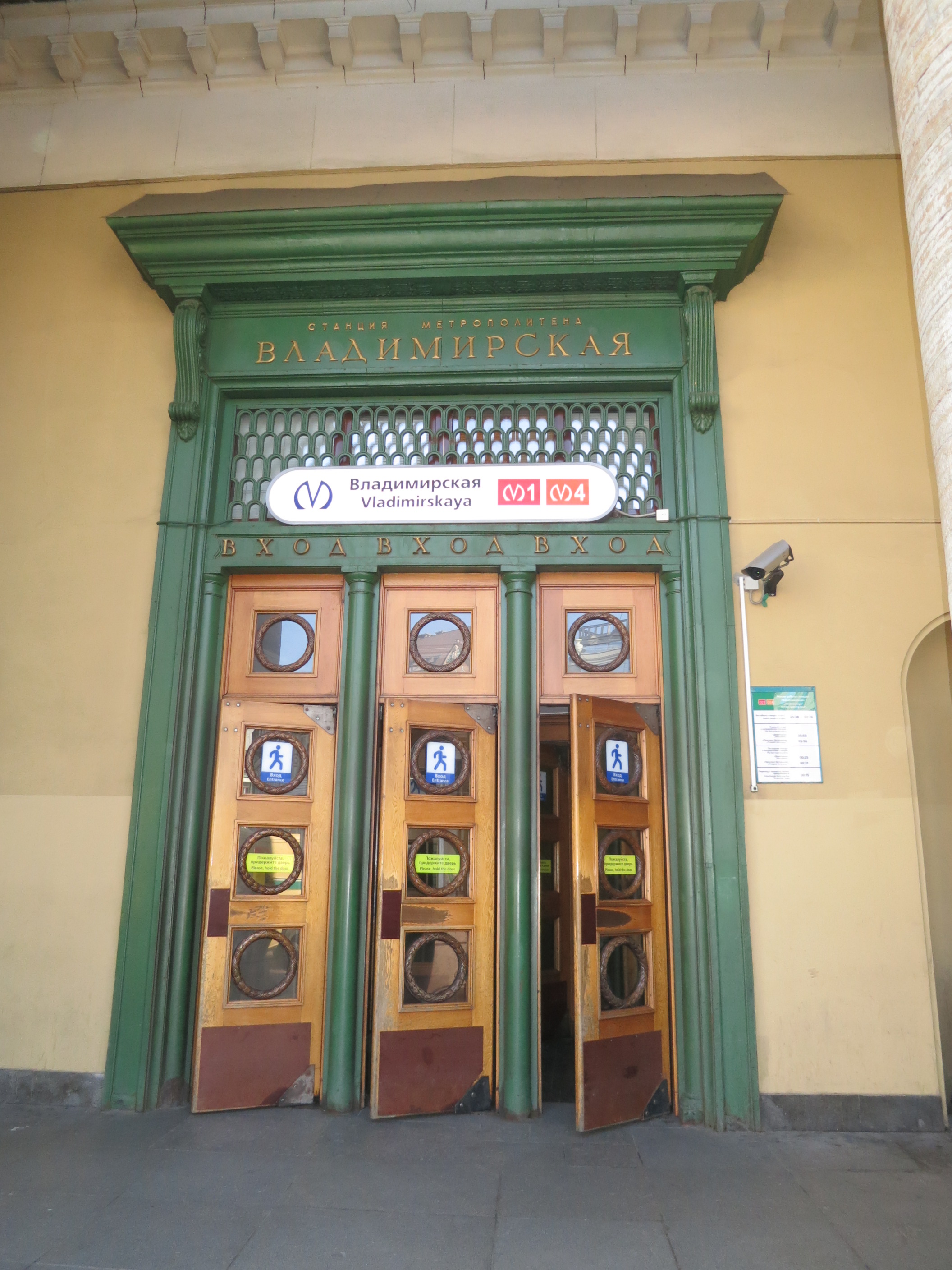
Entrance to the subway. We were actually allowed to take pictures of this!

We did not go to the Hermitage, but after visiting other landmark institutions we discovered that they are very particular about people taking photographs here. All of the museums charge tourists an additional fee to take pictures – once you have paid they give a colored sticker to place on your camera, otherwise you are liable to get fined or have your camera taken. The policy is even more strict on the subway – here, photos are not permitted in any of the stations! You can take them on the train, but none on the platform or in the buildings. This is such a shame, because their subway stations are absolutely beautiful. They are artfully designed, with huge marble columns and detailed decorations along the ceilings. It reminded us a lot of the beauty of Grand Central Station in New York City. There is even a large sculpture of Peter the Great which is set up like an art exhibit, blocked off by a velvet rope. Phil and I couldn’t help but think that this would last all of two hours (tops) in a New York subway without being vandalized and ultimately destroyed.

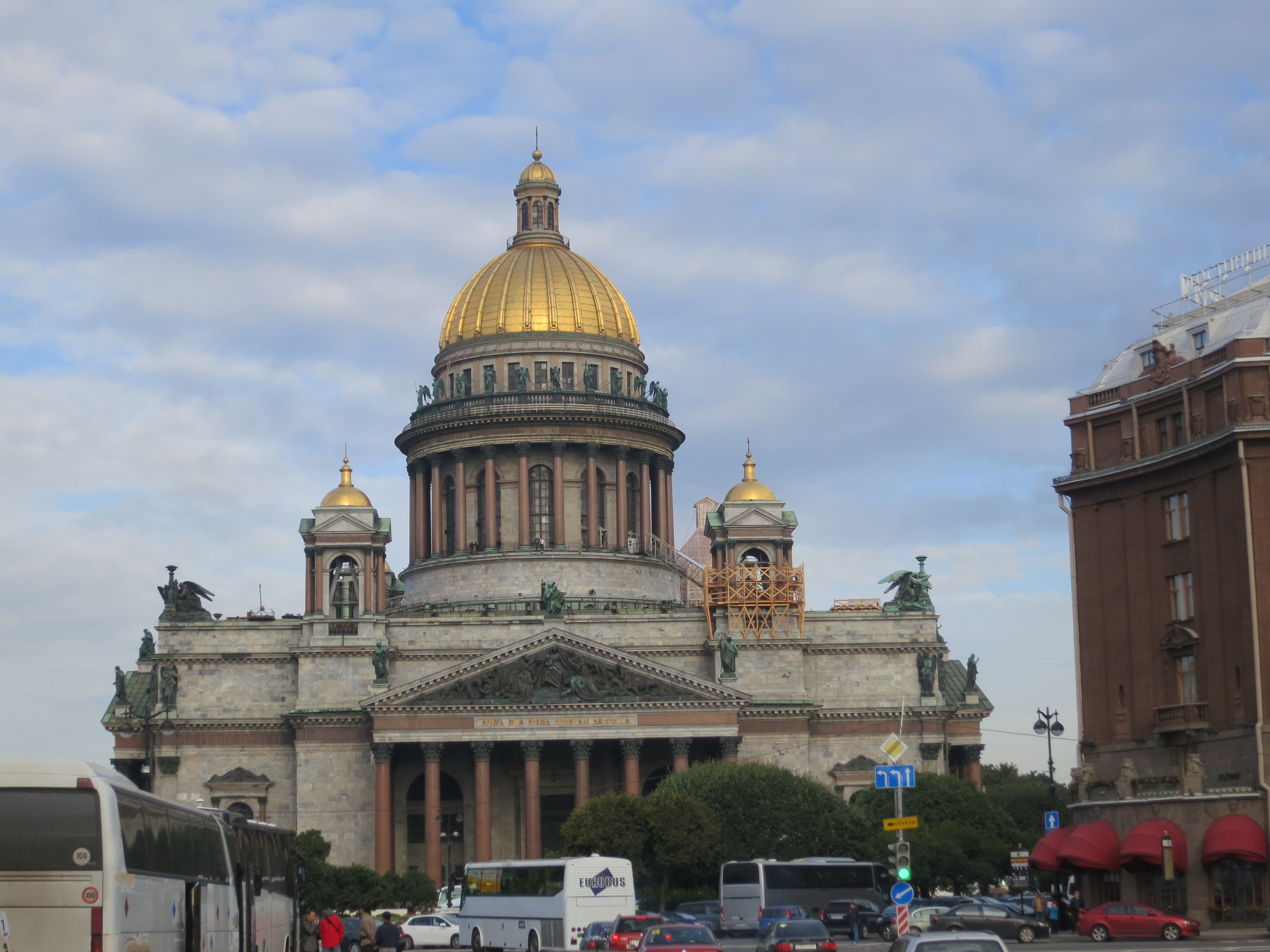
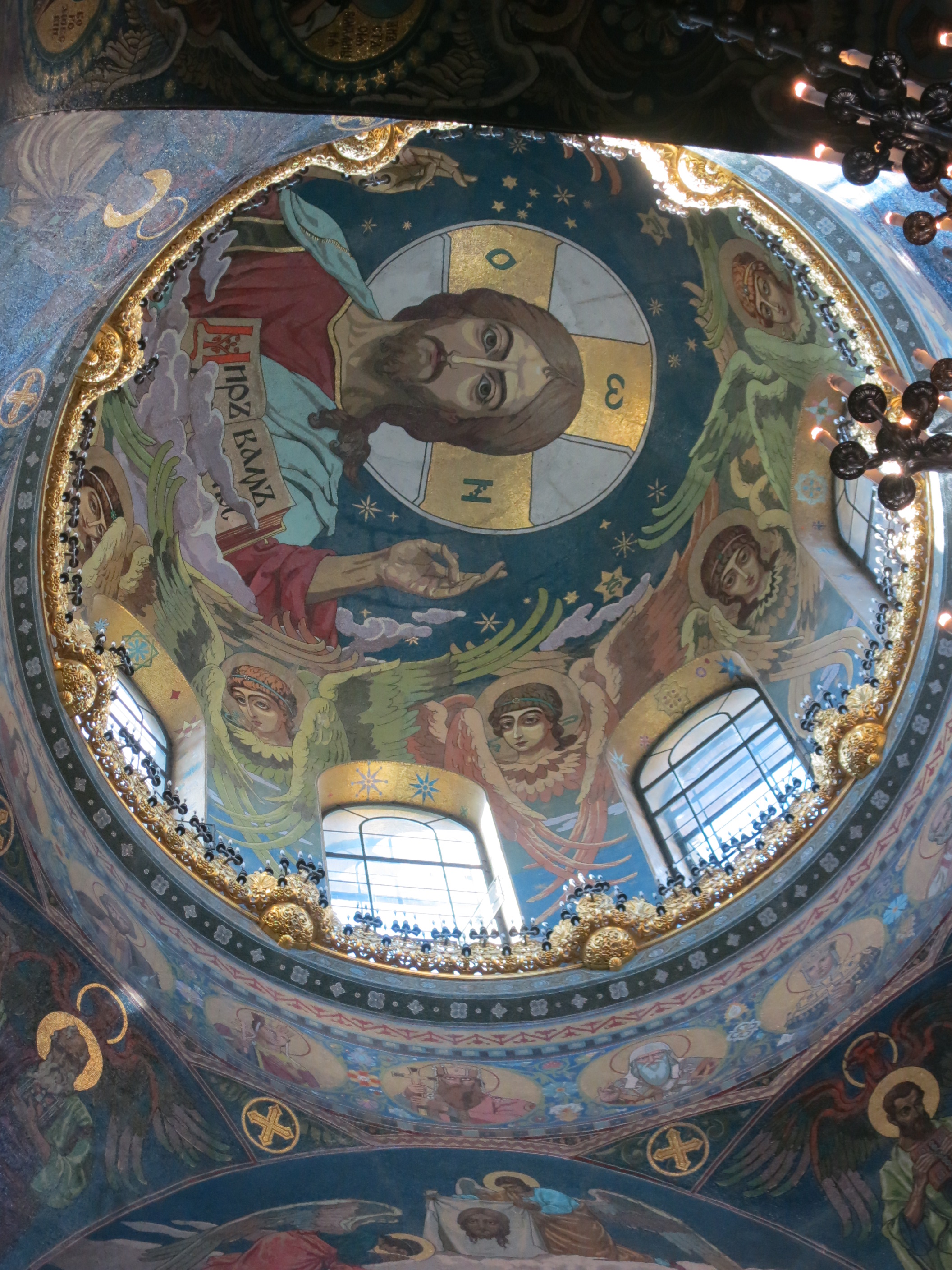
Probably the most iconic place we visited taught us an important lesson: It is very dangerous to be a czar. Sure, there is something appealing about the idea of being the leader: you get to rule the country, you have power and money and influence, but I don’t think it is worth it. Every other story we heard was about the killing of one czar or the brutal murder of another. One of the most notable stories is the centerpiece for the Spilled Blood Cathedral. Among a small number of buildings in St. Petersburg to look “Russian”, it was constructed on the site where Czar Alexander II was assassinated. Inside the cathedral, visitors can see a memorial directly above the spot where his blood was spilled–hence the colloquial name Spilled Blood Cathedral. The building itself is magnificent. It’s walls are lined with painstakingly detailed mosaics telling the stories from the Bible. In fact, this cathedral holds the largest square footage of mosaic art in the world. There was a notable absence of pews and when we inquired we were informed that parishioners are expected to stand or bow on their knees throughout the length of the service. Thanks, but I think I’ll pass.

Besides the plethora of cathedrals, museums and stories about Peter the Great, one of the most prominent topics of discussion was the weather. It is drab, dreary and depressing much of the year. Both of our tour guides emphasized the fact that St. Petersburg is on the same parallel as Anchorage, Alaska. Of course, it gets extremely cold and snowy, but even worse than that, they have less than 55 days of sunshine per year. Yikes! In the winter there is very little daylight, therefore finding distraction is important for the local people. Stereotype or not, drinking vodka seems to be the favorite distraction of most of the people here, and we got to experience it first hand.

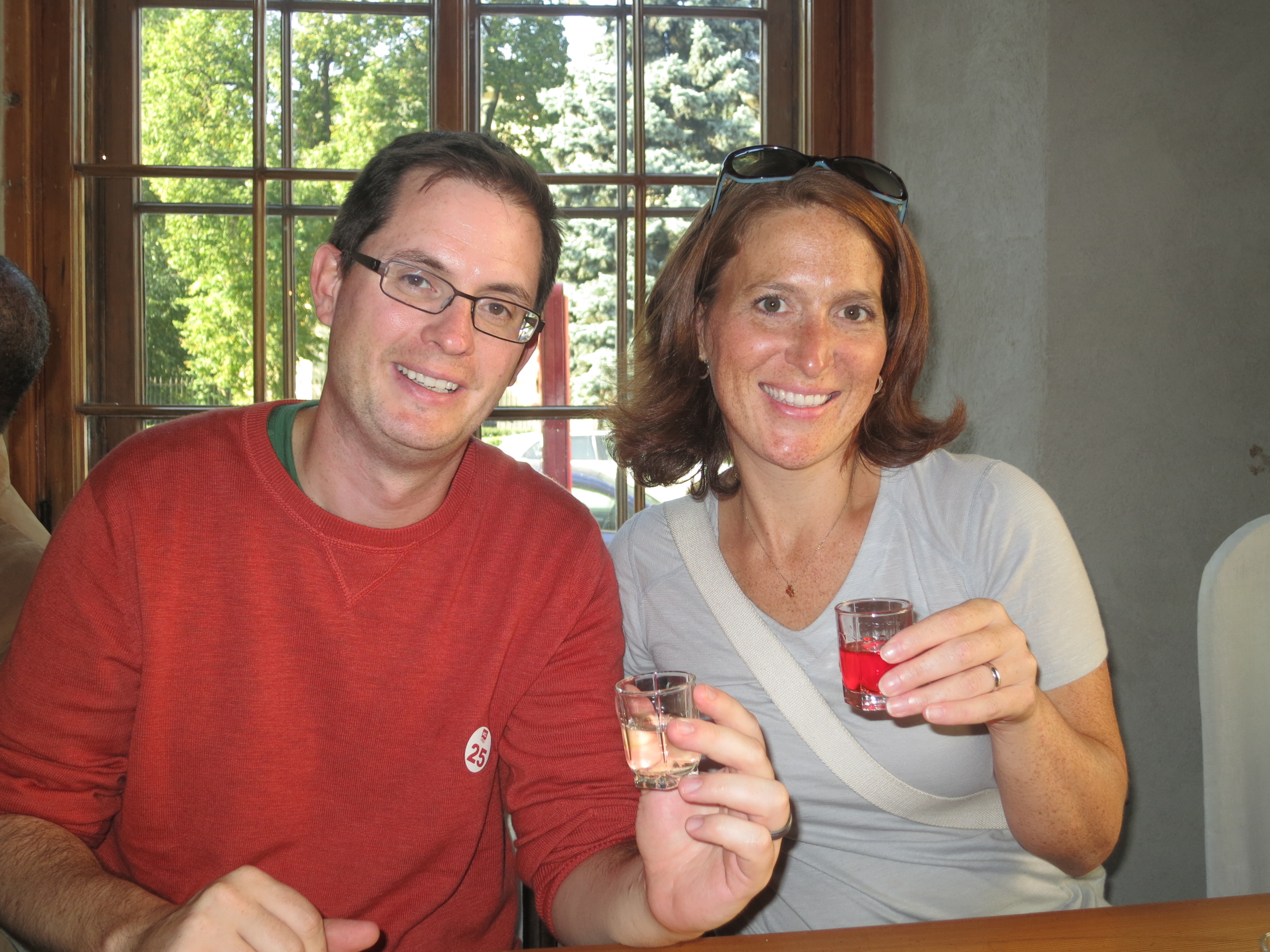
Our shore excursion on the second day in St. Petersburg was called “St. Petersburg through the eyes of the locals.” So, we did what locals do–we shopped at a mall, went to the farmer’s market to sample pickles and cottage cheese, and rode the subway. However, the most distinctly local thing we did was have a vodka tasting. That’s right! At the end of our tour, we went to restaurant where three shots of vodka were set up for each of us. There were three different kinds–horseradish, walnut, and cranberry vodka. They also set out some small pieces of toast and pickles to help wash it down. We had about 30 minutes to down all 3 shots, which was not a problem for most of us. However, it became apparent pretty quickly that some of the people in our group hadn’t done a shot of liquor in a while (not to mention three). The vodka was decent, I personally liked the walnut flavored one the best. However, what surprised us most is that there was no water on the table. No soda, no juice, nothing to wash the vodka down. This is so much different than it would have been at a tasting in America with all of its rules and regulations. Once 15 minutes had passed, most of the shots were gone and the stacking (and crashing) of shot glasses began. The crowd was certainly livelier after the shots, feeling warmer in both body and spirit, and we all understood the important role vodka plays in a country that can have such depressing weather!

All in all, St. Petersburg was a blast. We especially loved getting to see the magnificent subway system and learning a bit more about Russian history than we knew before. I’ll leave you with one more interesting note. One of the men on our tour asked the guide if Russia is a democracy. She said, “We are supposed to be a democracy, but are we? I don’t know.” She continued to talk about Vladimir Putin and extended term limits with cynicism and candor. It definitely showed us that perhaps the country has not progressed as far as Russia would have the world believe.

-Brooke

This is the ceiling of the Spilled Blood Cathedral. There was very little space on the interior walls which was not covered with some colorful artwork.

Here’s a sampling of the mosaics which cover the walls and account for the largest square footage of mosaic art in a single building in the world.

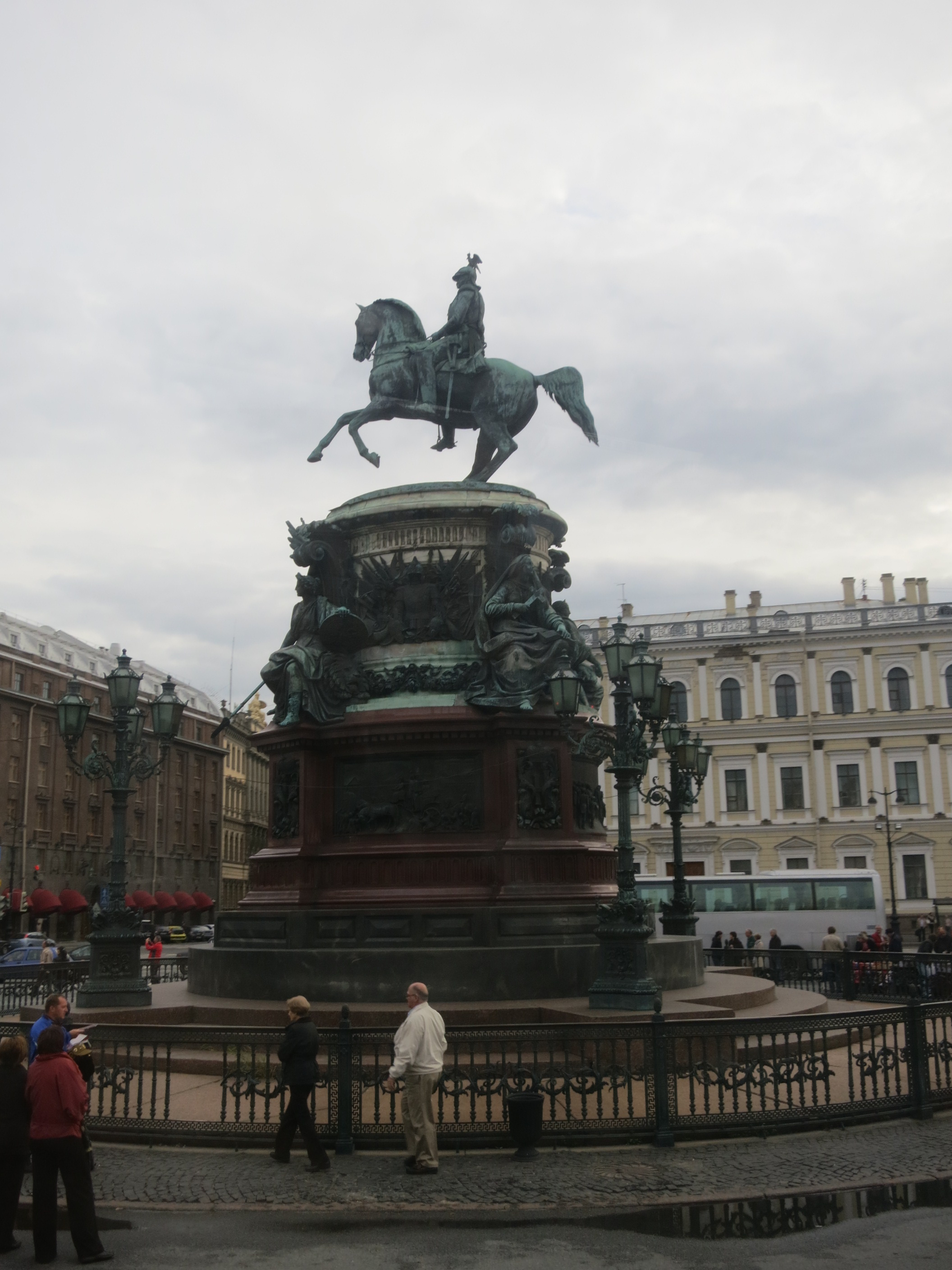
The bronze equestrian of Nicholas I s unique because it is the first horse statue in Europe to have only two support points, its rear hooves.  Impressive?  Apparently.

To celebrate St. Petersburg, the cruise ship hosted a “Taste of Russia” complete with borscht and stuffed cabbage.

Categories: City Visits, Customs, Destinations, Differences, Diversions, Europe, Exploring, Landmarks, Museums, Russia, The Cruise, Trains, Transportation, Uncategorized, Unusual Experiences | Tags: , , , , , , , , , | 2 Comments

Our time in Copenhagen Continues

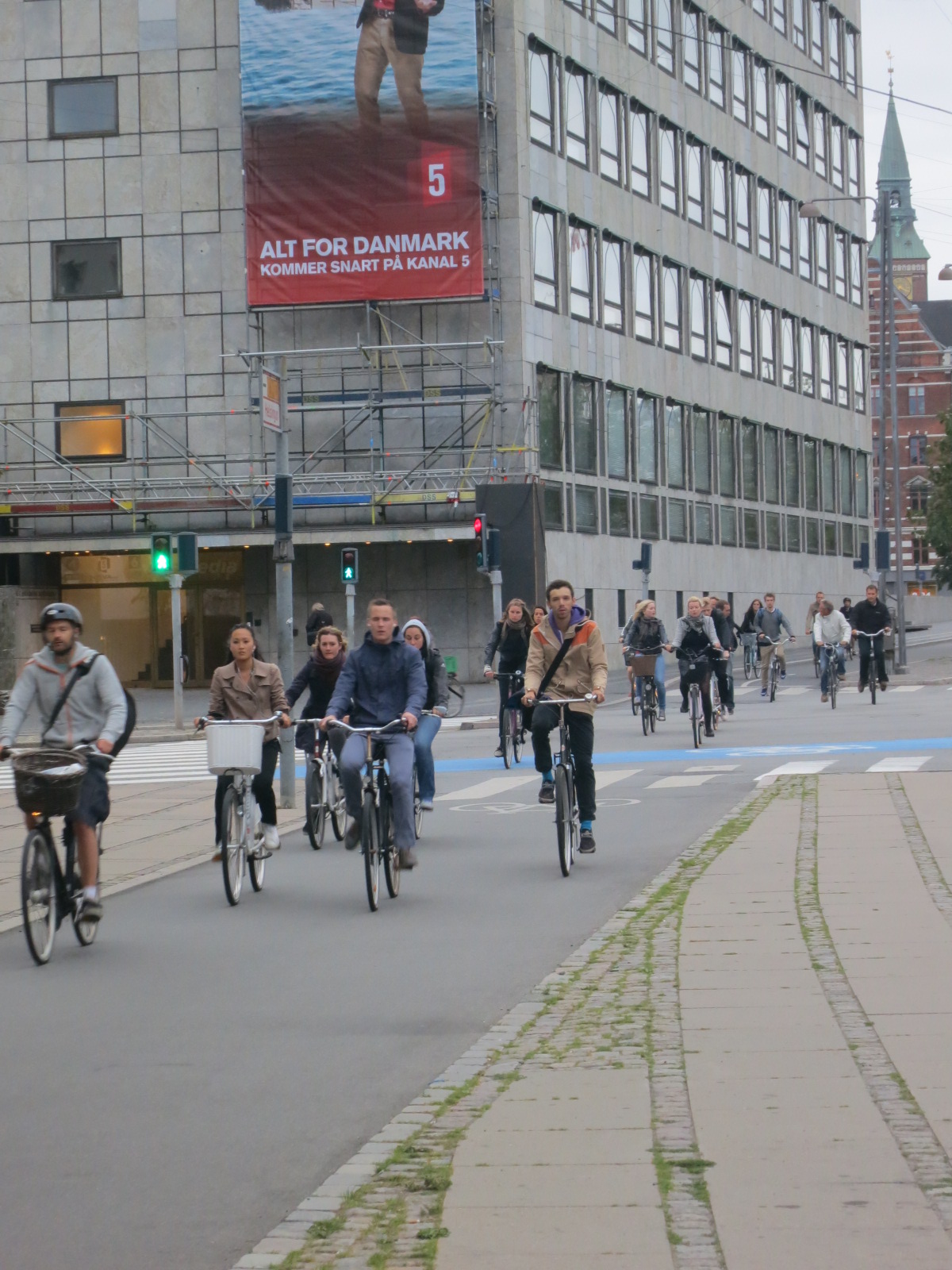
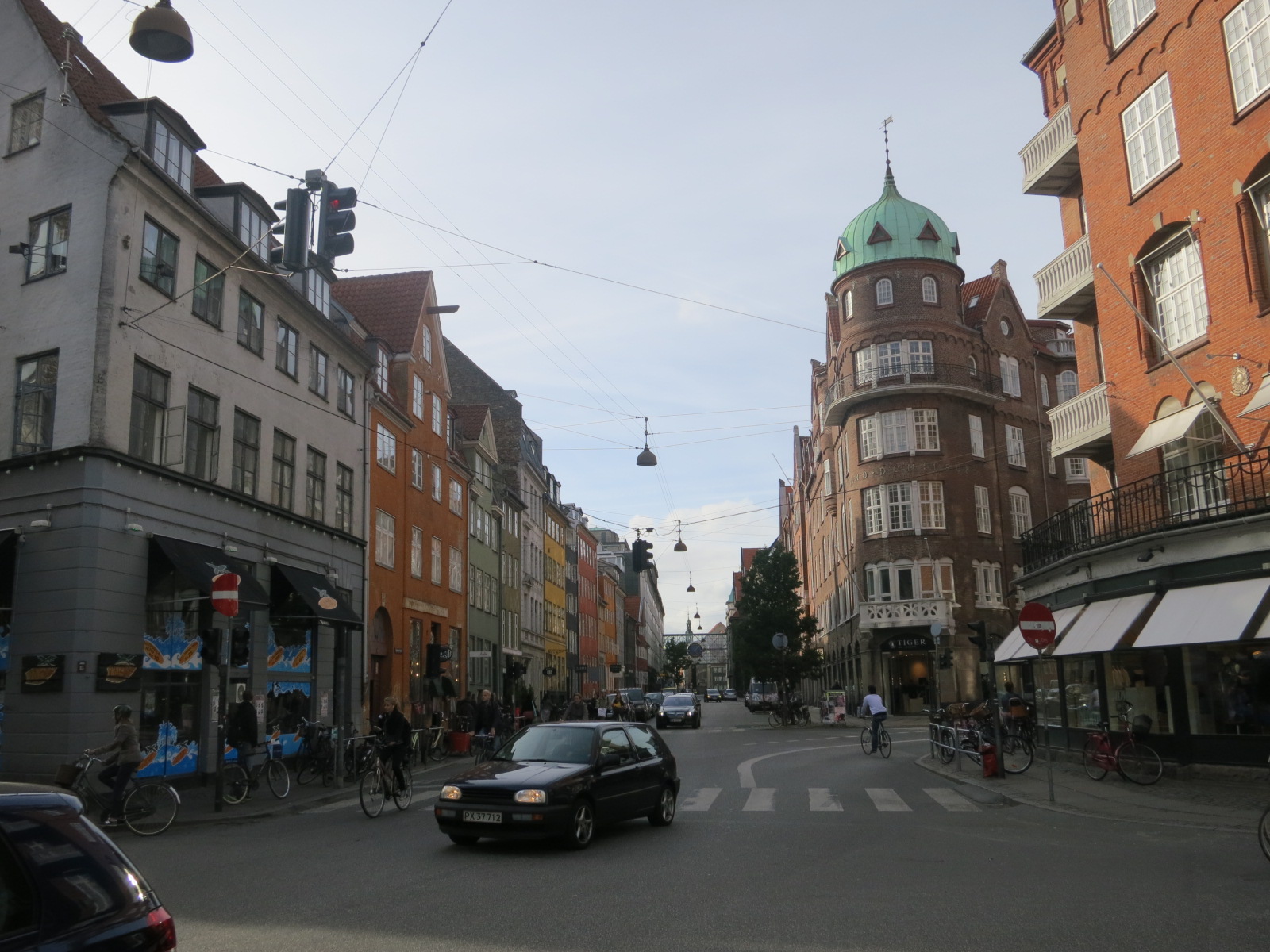
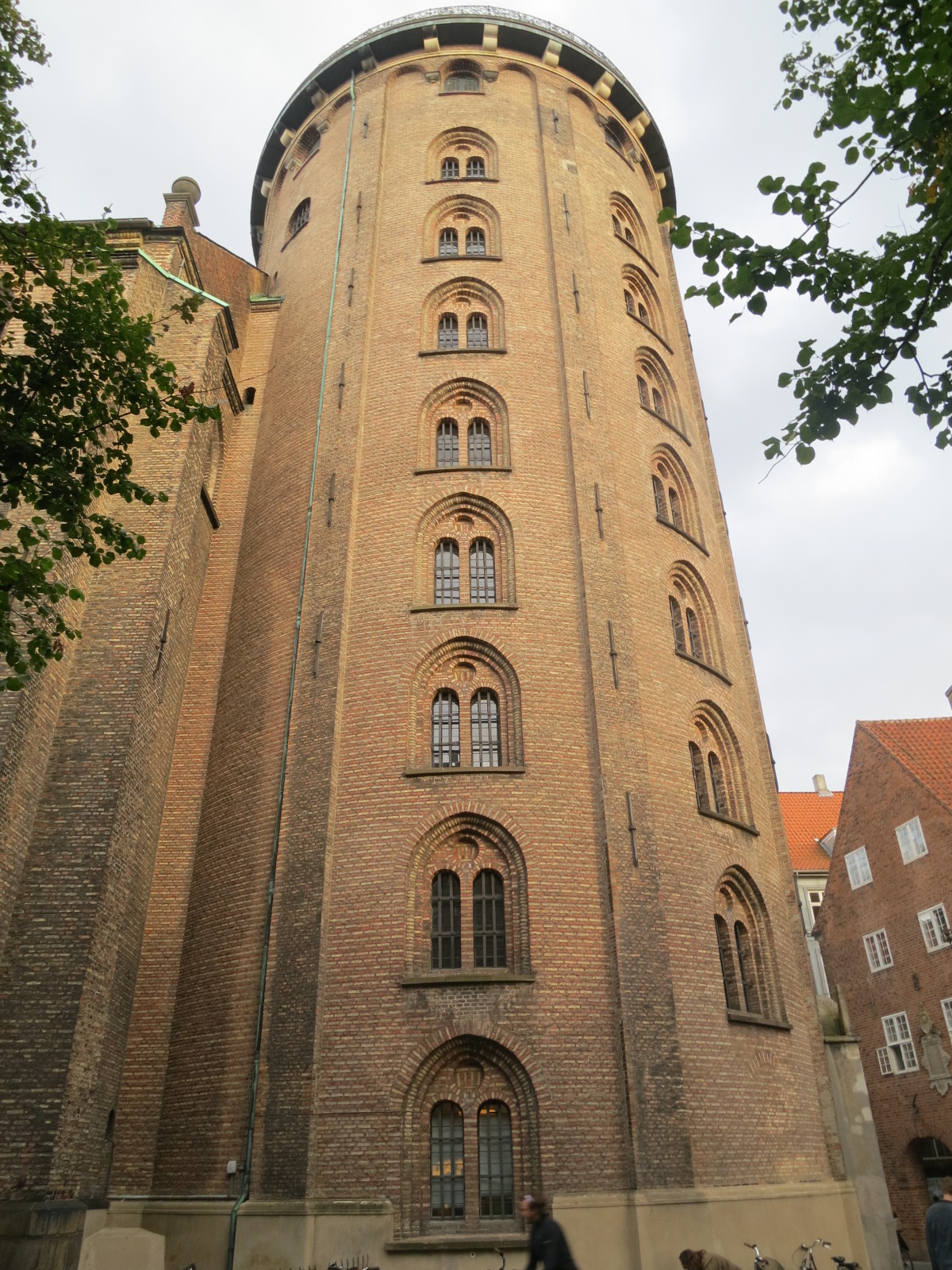
High a top Round TowerAh, just two days in Copenhagen and we already feel like we’re fitting in. I think we’re ready to be issued our bicycles now. Each day, scores of blond and blonder fit Danes ride their bicycles past me with an inviting arm outstretched asking for a high five. Or they might just be signaling a left hand turn. I’m not quite sure. I know Brooke mentioned it before, but the amount of cycling as a means of transportation is inspiring and stunning. Eveywhere you turn, there are dedicated, large bike lanes spanning a flat terrain full of polite cyclists scooting about town. We’ve also seen a couple of guys on roller skates, but we’re pretty sure that just means that their bikes are in the shop. Thus far, it’s been a blast exploring Denmark’s capital city. It’s a compact area with a sea of orange, slanted roofs and low rises that emit both an old and modern look. In one small area alone, you can walk the serpentine path to the top of the nearly 400-year old Round Tower, shop in a late 19th century storefront or stroll past the modern “Black Diamond” – the striking Royal Danish Library. The city is entirely walkable with (yet another – we’ve seen so many) stellar public transportation system comprised of buses, regional rail and an expanding subway.

People on bikesIt’s easy to think of Copenhagen as a sophisticated, classy, old-world city. Clean, organized, and cultured. As for the locals, I think that the best way to describe the people we’ve met is engaging. Once you a start a conversation with anyone from the bartender to the guy on the bus, everyone is talkative and eager to share. It doesn’t hurt that just about everyone speaks English incredibly fluently as a second language and many speak a third or even fourth language. Reading scores in Scandinavia are higher in general since virtually all television is in English with closed captioning in the native language. Hence, the country’s youth is often reading while watching television.

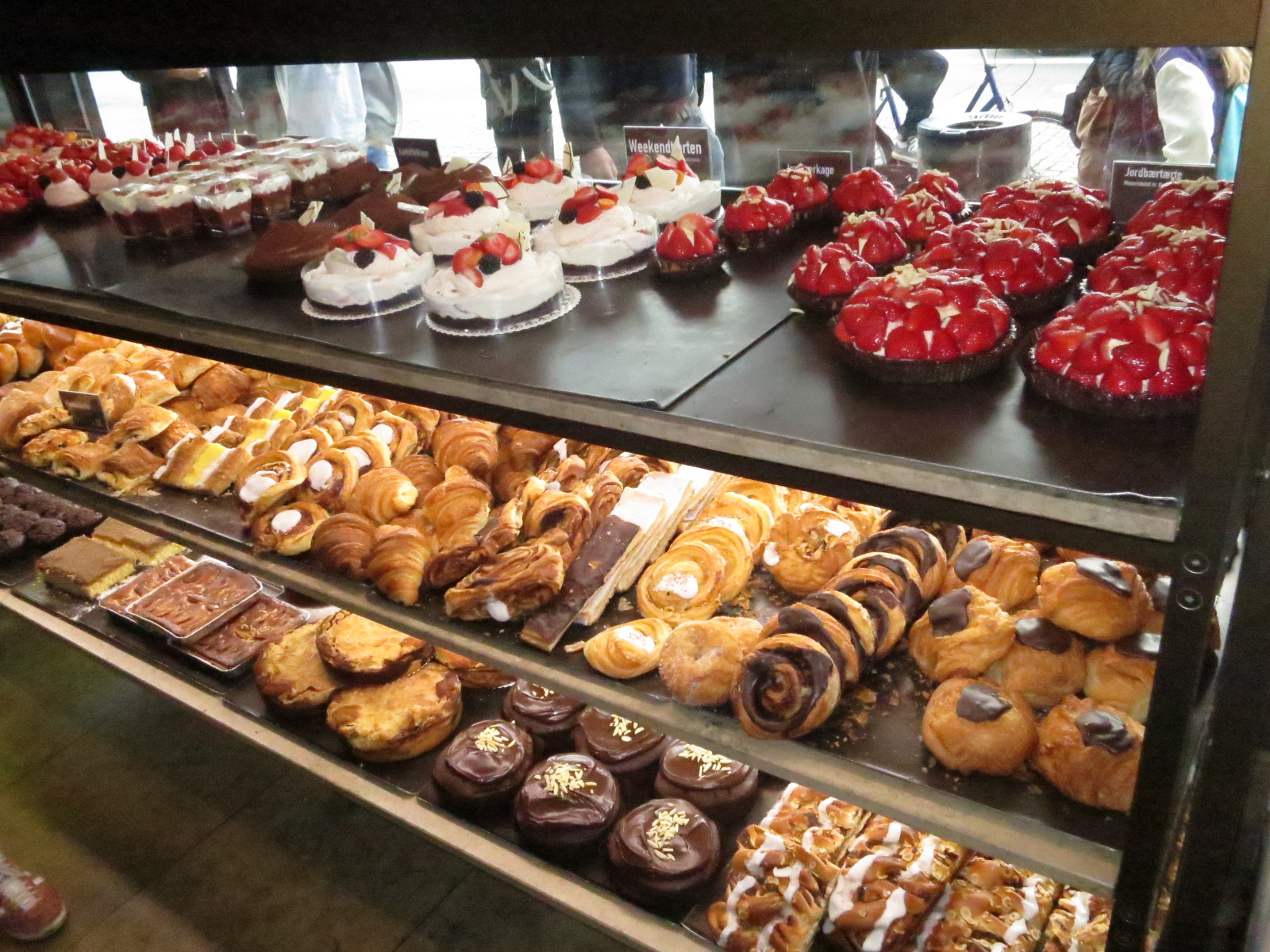
Oh my, that's deliciousWe realize that reflecting on the food is becoming a common motif in our blog, but some delicacies are too good not to share. If there is one thing Copenhagen does well it would be bakeries. Storefronts loaded with freshly baked pastries, breads, tarts and more are almost as common as ads for Carlsberg. We’ve sampled the ware and they deliver the tasty goods. We also sampled the national mid-day lunch dish – Smørrebrød (don’t worry, we can’t pronounce it either) which is essentially an open face sandwich made of everything from meatball and pickled cabbage to roast beef. Available everywhere, we stopped in an unassuming lunch place to give ’em a shot. Delicious! Only problem was that we didn’t know the custom is to order two or three since they are a bit on the smaller side. Learning as we go.

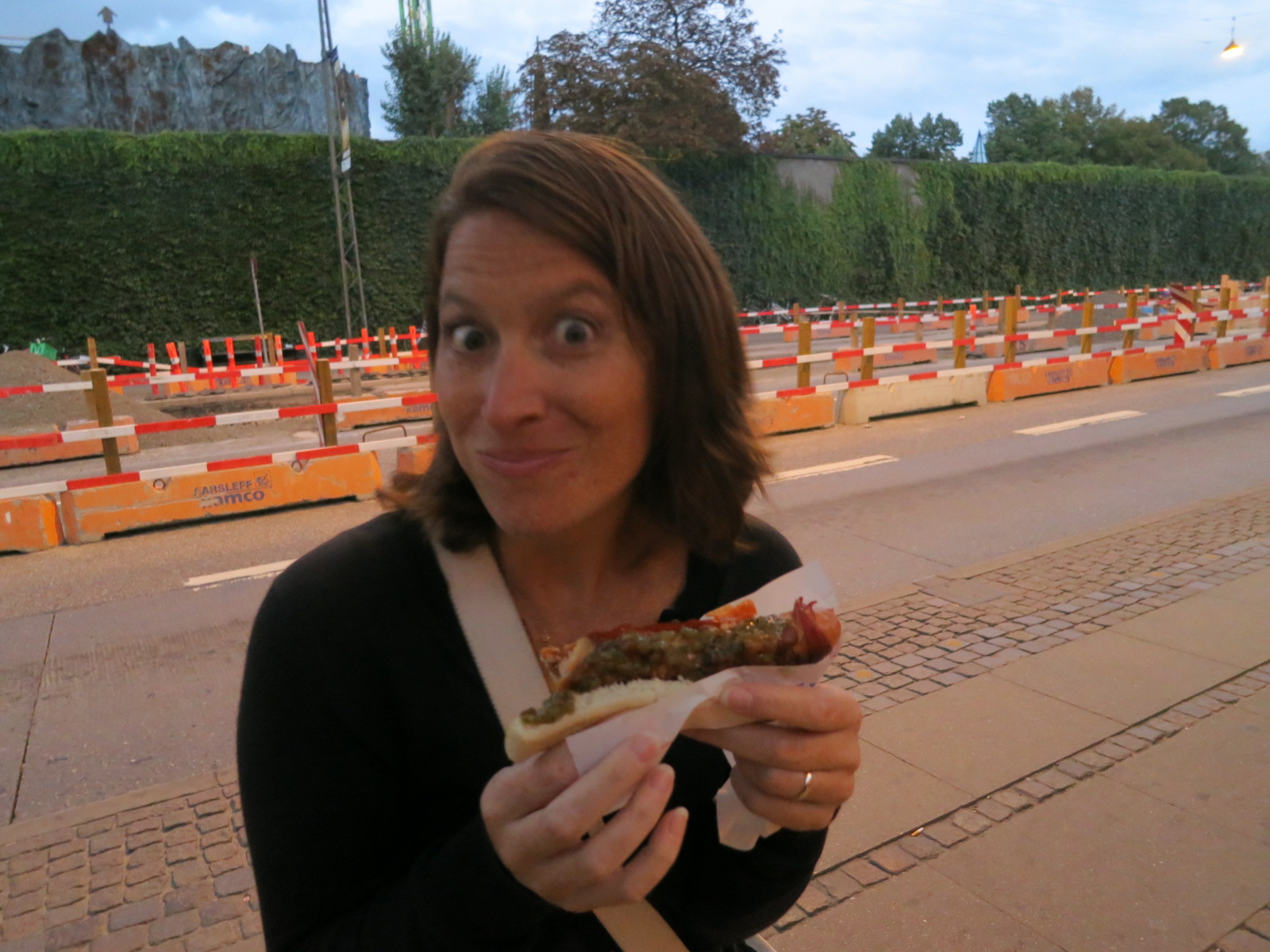
My wife with no mere everyday weinerAnother sensational “local” dish we discovered is, believe it or not, hot dogs from a street vendor. In a land known for sausage, this is some of the best street meat we’ve had in months. Large, mouth-watering sausages wrapped in bacon loaded with condiments? More, please. These put (most) NYC hot dogs to shame. And, yeah, we’re going back for another round today. Copenhagen also lays claim to the “World’s Best restaurant” – Noma. How is it? Amazing and delicious…are the words that a world traveler who could dream of being able to afford to eat there might.

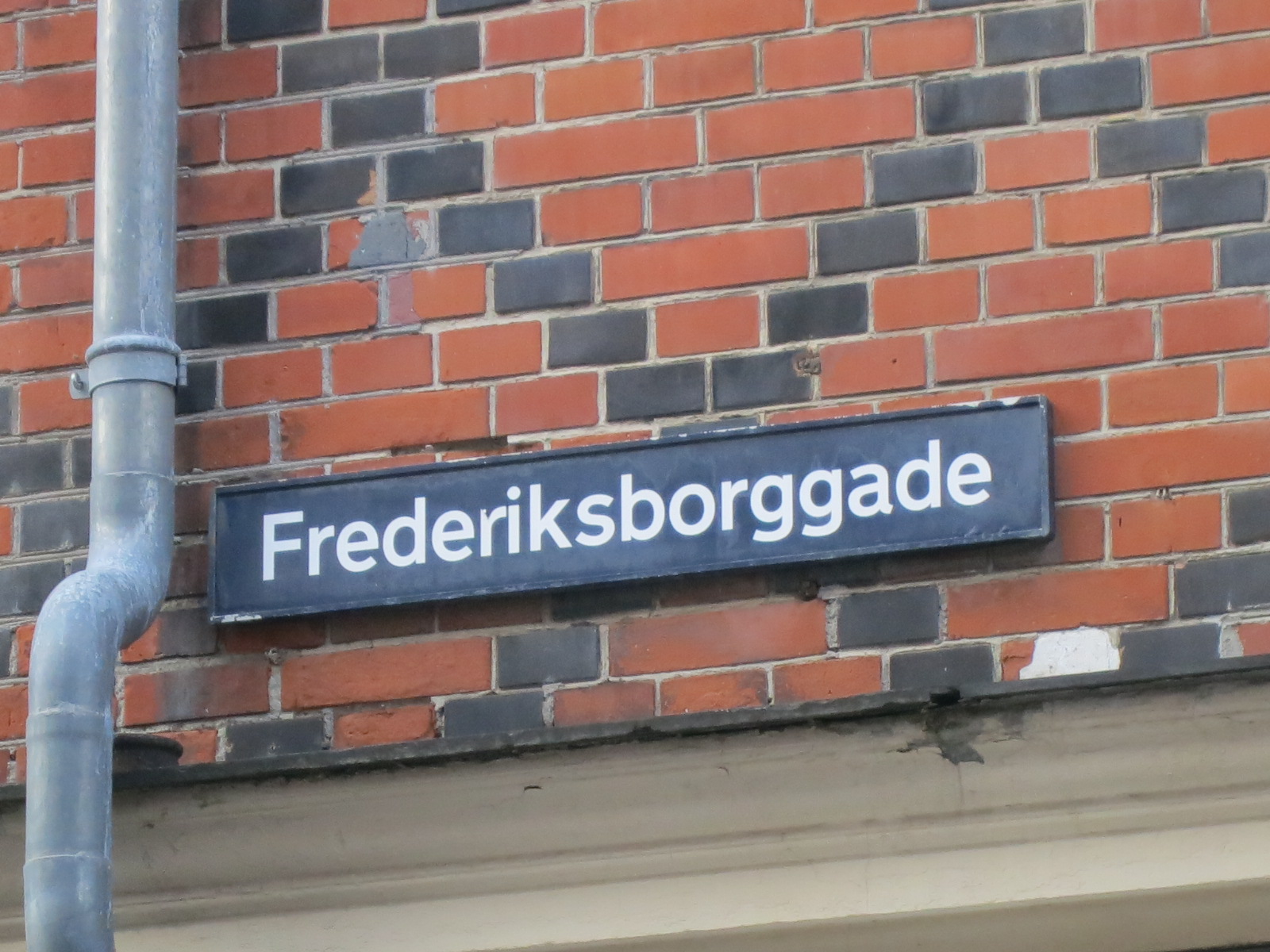
Example one of how to get lost in Copenhahgen

Street sign commonly seen in Copenhagen or example one of how to get lost

There is so much more to tell you about Copenhagen. Next time we’ll share stories of the Carlsberg Brewery, Christiana (the incredibly interesting community of squatters), and our amazing Air B ‘n B experience.

–Phil

Stunning buildings on the streets of downtown Copenhagen

Round Tower

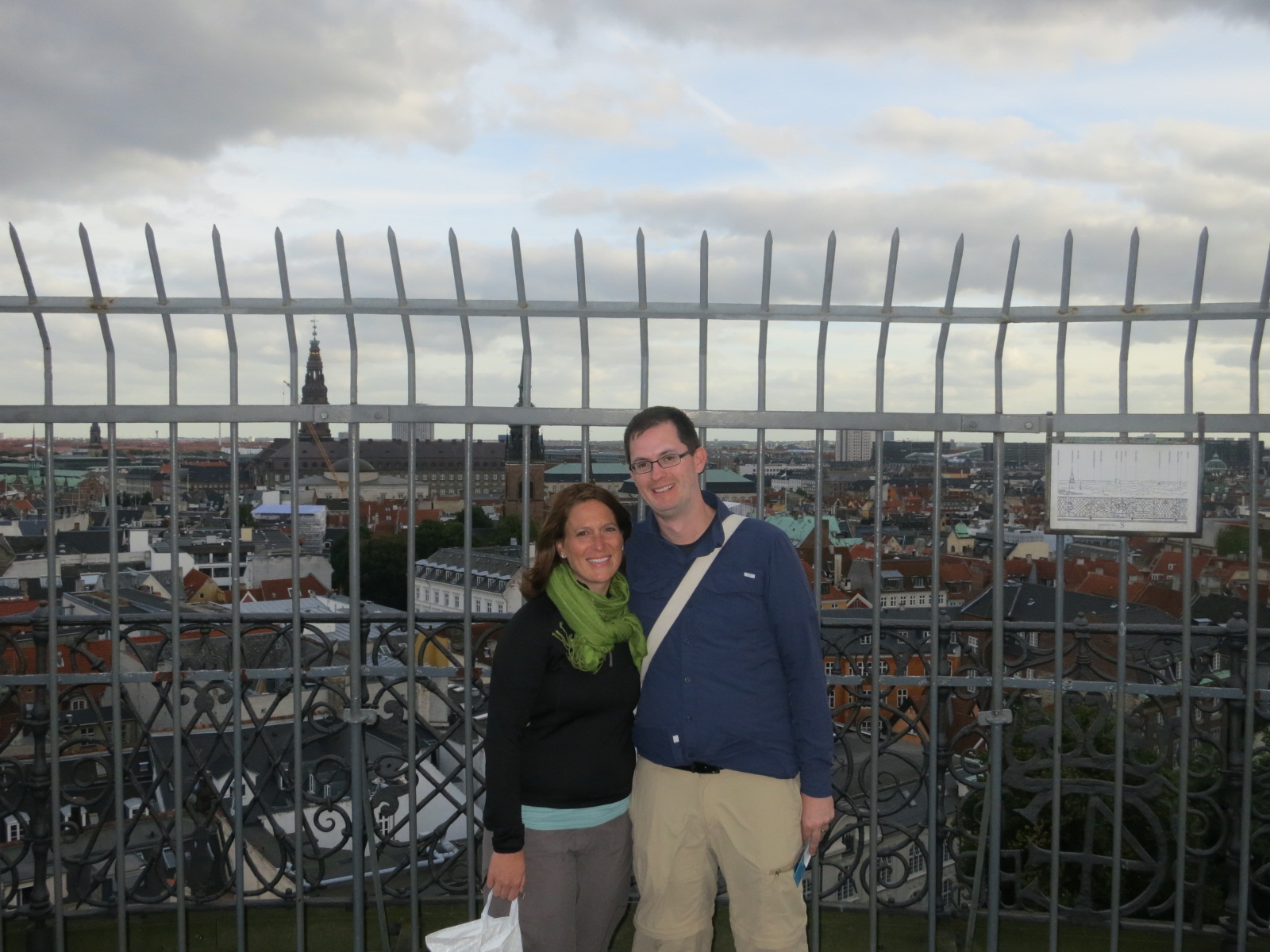
The Rundetarn- or Round Tower- build in 1642 as part of a church and observatory complex. Very, very cool walk up.


Categories: City Visits, Copenhagen, Destinations, Europe, Landmarks, Transportation, Uncategorized | Tags: , , , , , , , , , | 3 Comments

Discovering Copenhagen

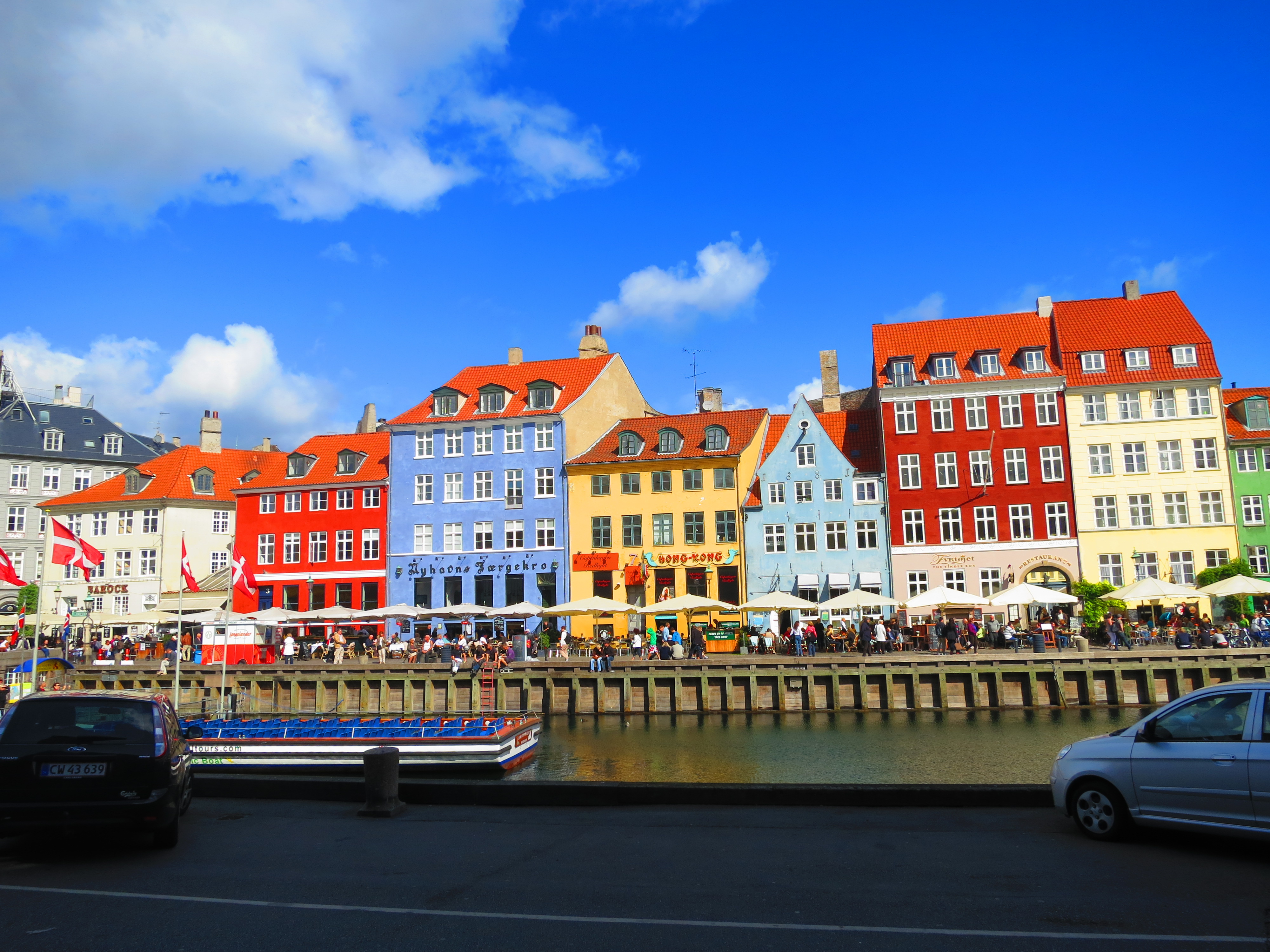
Colorful Buildings along the canalThere is no mistaking it…we are NOT in Asia anymore.  From the moment we stepped off the plane and every moment since then, it has been quite clear we are in an old European city.  But even more than that, it is clear we are in Denmark.  Everywhere we look there are beautiful blondes riding bicycles (very politely, I might add).

After a short morning run, we truly began to explore Copenhagen.  Going off recommendations, we started our day with a canal cruise.  This hour-long cruise through the winding canal system was a great way for us to see several different areas of the city so we could then determine what we really wanted to visit. When the tour-guide began speaking German, we were afraid we had gotten on the wrong boat.  We checked to make sure the tour would be in English, but she definitely wasn’t speaking English.  As it turned out, she gave all the information in three different languages–Danish, German and English.  We were relieved we would be able to understand, and again felt awful about the fact that we seem to be the only people in the world who only speak one language.  As for the tour, we especially love looking at the architecture of the city.  They really take pride in their old buildings, some of them date back hundreds of years.  However, they also have a lot of new construction, including an opera house right on the water which was built less than ten years ago.  Because of this, the newer buildings really have to be spectacular so they can stand the test of time.  Unlike Tokyo or Hong Kong, there is no race for the tallest towers or highest buildings.  In fact, there are very few skyscrapers in sight.  As we walked the streets, we kept saying that it all looks so European–old, grand, brick buildings lining the street, some with huge squares in front where people gather.  It is exactly what we pictured before we got here.

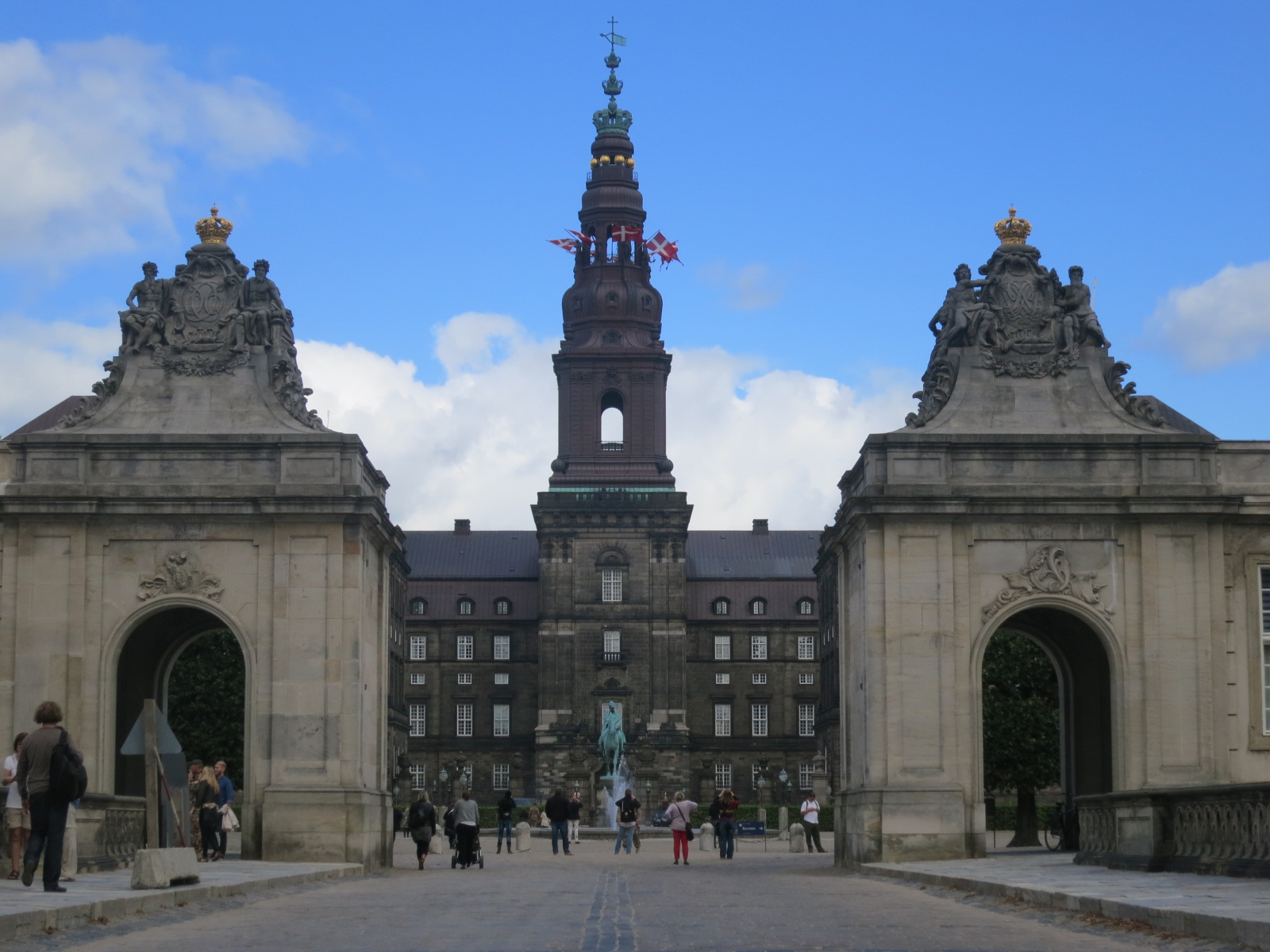
CopenhagenThe riverboat cruise inspired us to head to the National Museum so we could understand a bit more about Danish history.  As we walked over there, we saw a crowd gathered outside an old church.  Today was Flag Day or Soldier’s Day, so there were lots of celebrations and officials about town.  There were clearly secret service types outside of the church, so we thought we might glimpse the prime minister.  As it turns out, they were waiting for the Queen (Queen Margaret) to come out.  Apparently this was her private church and she was inside.  The royal family here seems to be fairly accessible to the people.  Of course, they are guarded, but people can walk the palace grounds and the royals are often spotted about town.  We waited for a bit to see Queen Margaret, but as it seemed like she wasn’t coming out anytime soon, we continued on through the Parliament grounds and over to the museum.

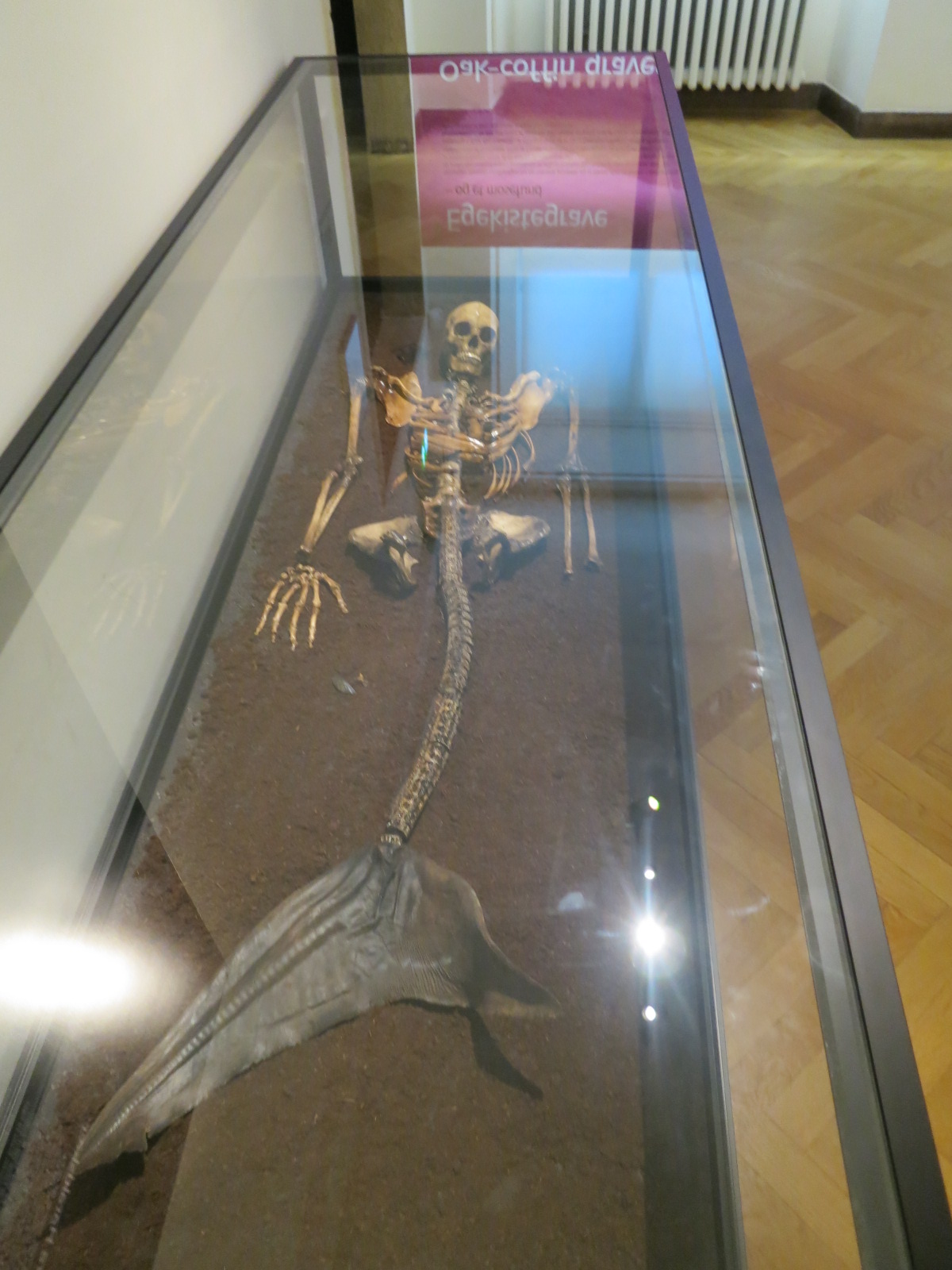
Not real!The National Museum (Nationalmuseet) has a completely free admission and is rather large, consisting of exhibits from the beginning of time through the year 2000.  That seemed a bit overwhelming to us, so we started with Danish pre-history through the Viking era.  Intermingled with the exhibits discussing burial rituals and ancient tools were art pieces that provide a “modern interpretation” of history.  Clearly the Lego version of the Deathstar from Star Wars was a piece of art.  Unfortunately, they were not all so clear and we found ourselves incredibly confused about what was real and what was art.  We questioned the exhibit showing the grave of the “bog witch” who boiled diseased children creating a dense fog over the bog. However, it was the mermaid that really made us confused.  Laying in a case are the bones of a mermaid with the story of a man who dug her up while tilling his farmland.  We looked at each other, completely unsure of what was happening.  We know mermaids aren’t real, but was the story real?  Had someone placed bones together to make it look like a mermaid and trick the farmer?  We backtracked down to the information desk to figure out what was happening.  The woman working at the museum was not at all surprised by our questions and confusion.  She cleared it up…kind of.  Bog witch–fake.  Mermaid–fake.  However, they are next to other very real graves which are genuine museum exhibits.  She told us these artists are “interpreting history in a modern way to push the limits of our thinking.”  I think that is complete garbage and they should say instead they are creating mythology to go along with the history.  It is far too confusing to figure out what is real and what is made up.  If a seven year old kid walked through there, he would walk out thinking Mermaids are real.  I don’t think that’s what they are going for.

After feeling completely confused and like I had just wasted an hour, we scrapped Danish prehistory and learned about more modern times.  It was interesting to learn of their history with Sweden and Norway as well as the other countries in the region.  There is so much history and it was all jammed so closely together that it got to be a bit overwhelming and we found ourselves skimming through parts.  In more modern times, the history is quite similar to the America– Industrial revolution, child labor laws, women’s rights, etc.  With all of this culture and history under our belts, it was time to learn what Copenhagen was really all about and we figured the best way to do that was to find a good bar.

Awesome Bar

Amid the cutesy cafes and upscale bars in a rather touristy part of town, we managed to find Lord Nelson, a basement bar specializing in craft beer filled with locals and regulars.  Our friendly brother-sister bartending team, Morton and Ricki, were awesome.  Not only did they let us try every beer they had on tap, they  encouraged us to branch out our tastes and go with beers we might not normally drink.  We both enjoyed the Kiss Me Hardy, a delicious hoppy beer named after Lord Nelson’s final words to his First Officer.  Through this discussion of beer, we also learned a bit about Morton’s favorite places in Copenhagen and a little bit about life here.  We also talked for a long time with Perm, an older gentleman who has traveled the world and was excited to talk to us about all the different places he’s been.  We asked lots of questions about the relationship between Denmark and other countries and truly learned as much there as we did at the museum.  Lord Nelson is exactly the kind of bar we’ve been looking for and we were happy to spend a couple of hours resting after touring Copenhagen.

Beautiful, but not worth itWe managed to drag ourselves away from the bar so we could head to Tivoli, one of the oldest amusement parks in the world, known for its beautiful lights and gardens.  We know it for being a huge disappointment.  We had to pay to get in, which we figured since it is an amusement park.  However, we had to also pay to do anything inside.  Rides, restaurants, games–everything cost additional money.  We walked around, unimpressed, and left thinking we could have spent our money much more wisely.  Oh well.  We were tired and ready to head home anyway.

Our first day in Copenhagen was a roaring success and we can’t wait for tomorrow.  We plan to hit the Carlsberg Brewery, Christiana and eat lots of delicious pastries.  We look forward to sharing what we find!

-Brooke

At Lord Nelson's

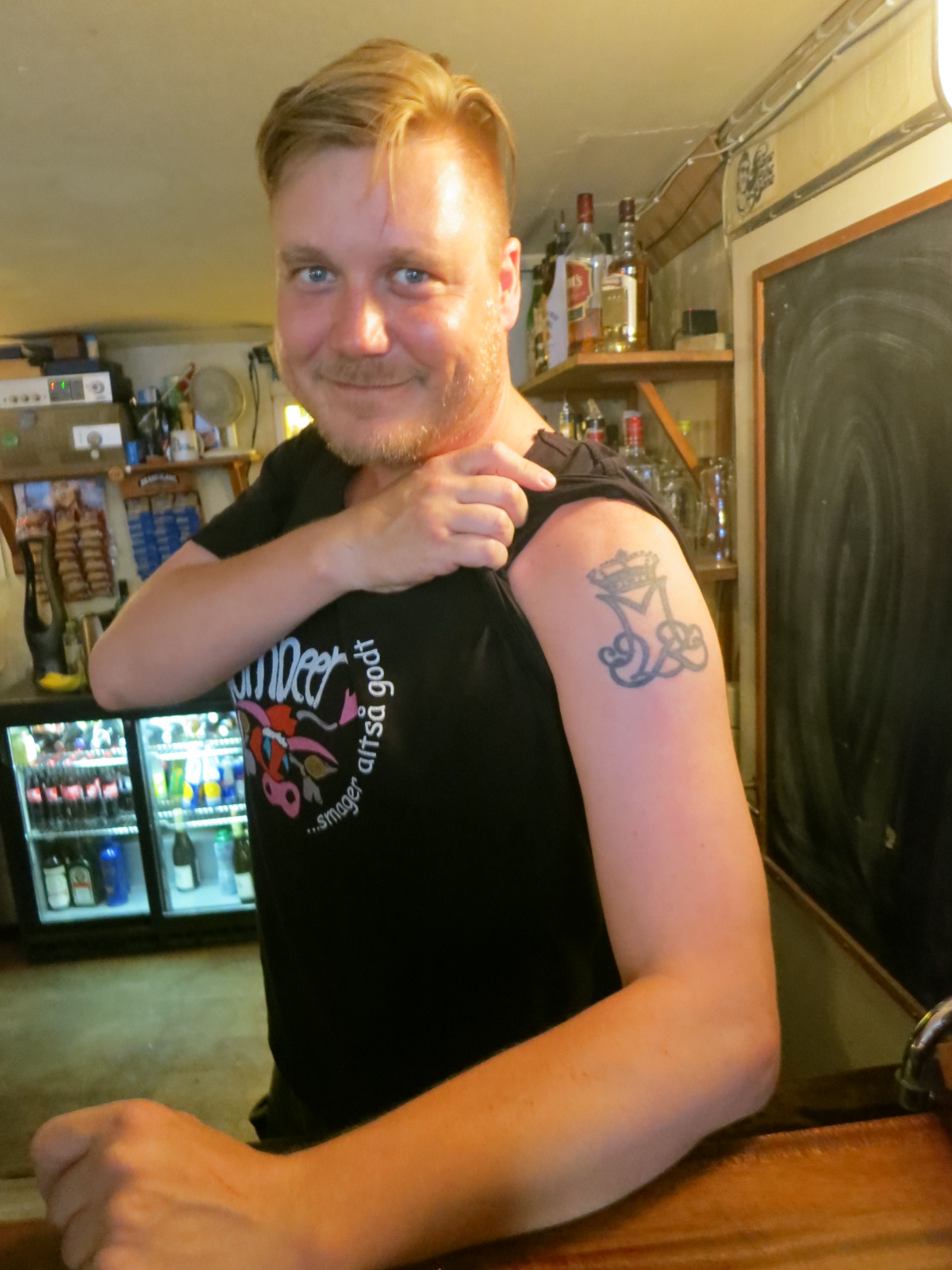
Morton, our awesome bartender at Lord Nelson’s, showing off his tattoo from his time in the Queen’s military.

Don't drink and drive boats

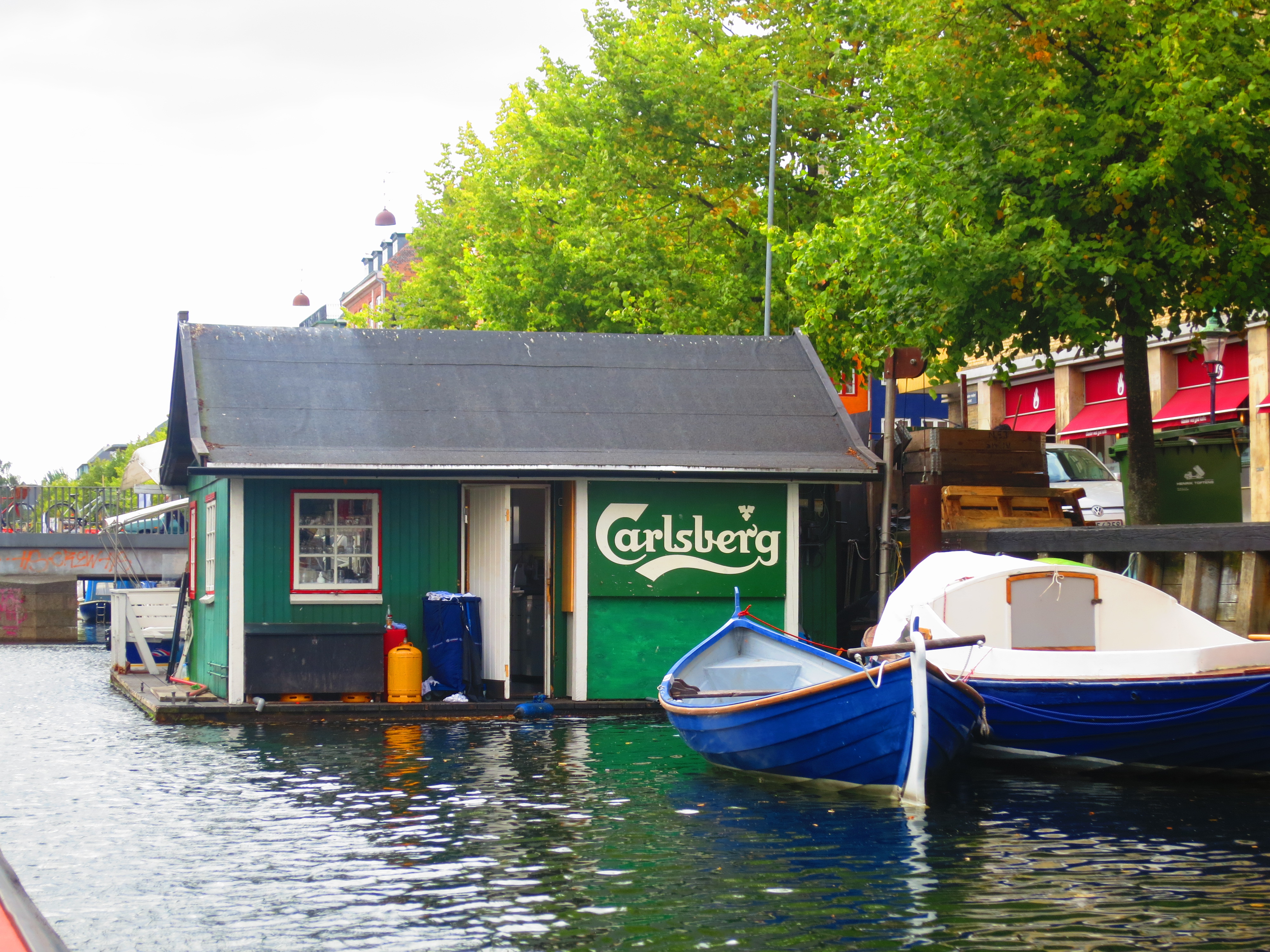
Here’s a bar right on the canal where boats can pull up to have a drink.

Soldiers

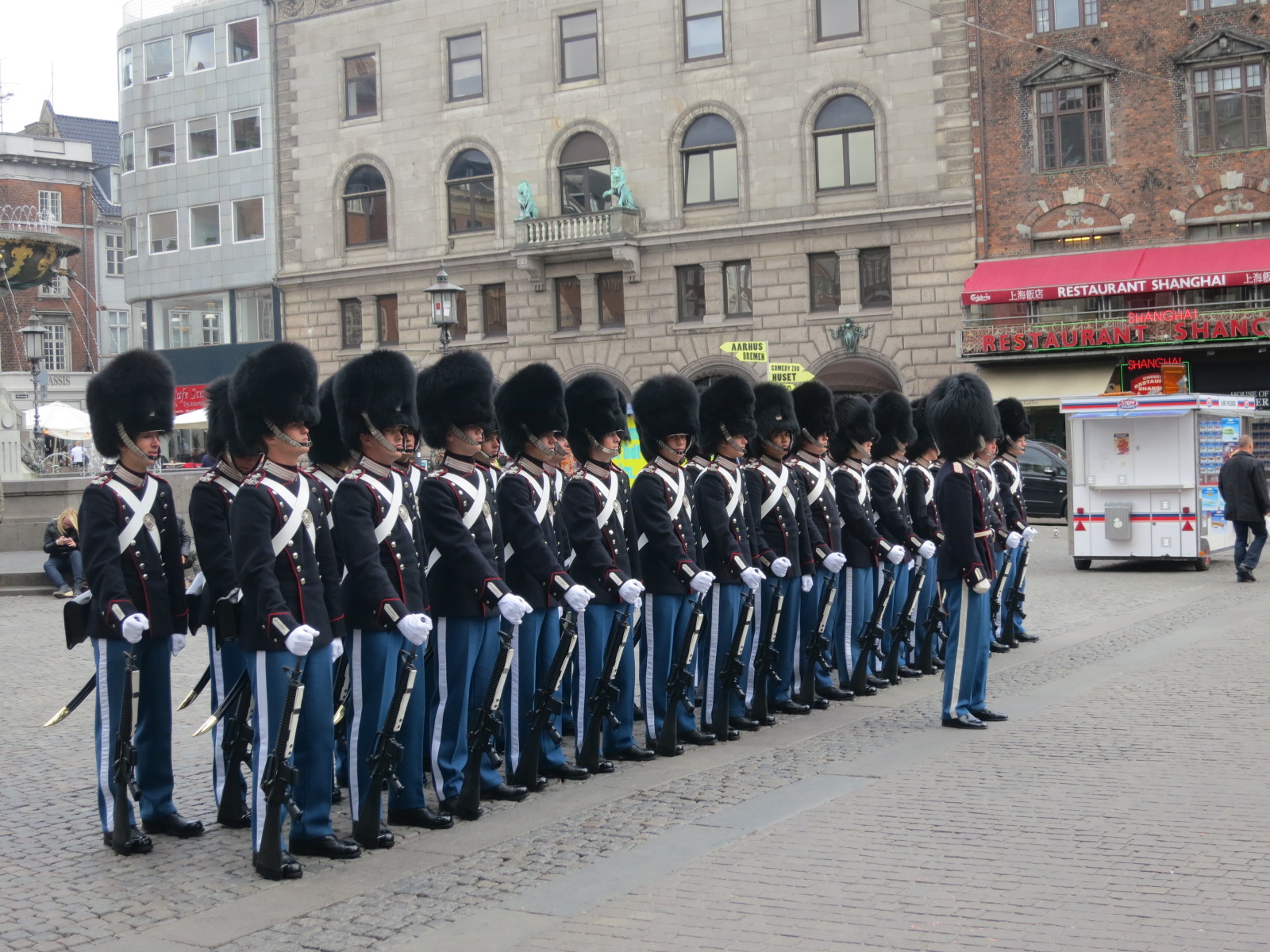
Royal Guard lining up for Flag Day events.

A typical example of the beautiful buildings that remind us we are in Europe.

Categories: Bars, City Visits, Copenhagen, Destinations, Diversions, Europe, Exploring, Museums, Uncategorized | Tags: , , , , , , , , , , , , | 4 Comments

Vietnam: Wonderful and Strange!

Brooke and Phil at Ha Long Bay!As our time in Vietnam has come to a close, we are realizing some important things.  This is truly a developing nation.  I bet it was far different 20 years ago and I’m sure it will be vastly changed 20 years from now.  In spite of that (or perhaps because of it), it has also been a wonderful place to visit and would be a great vacation destination for anyone looking for an exciting and interesting place to go.

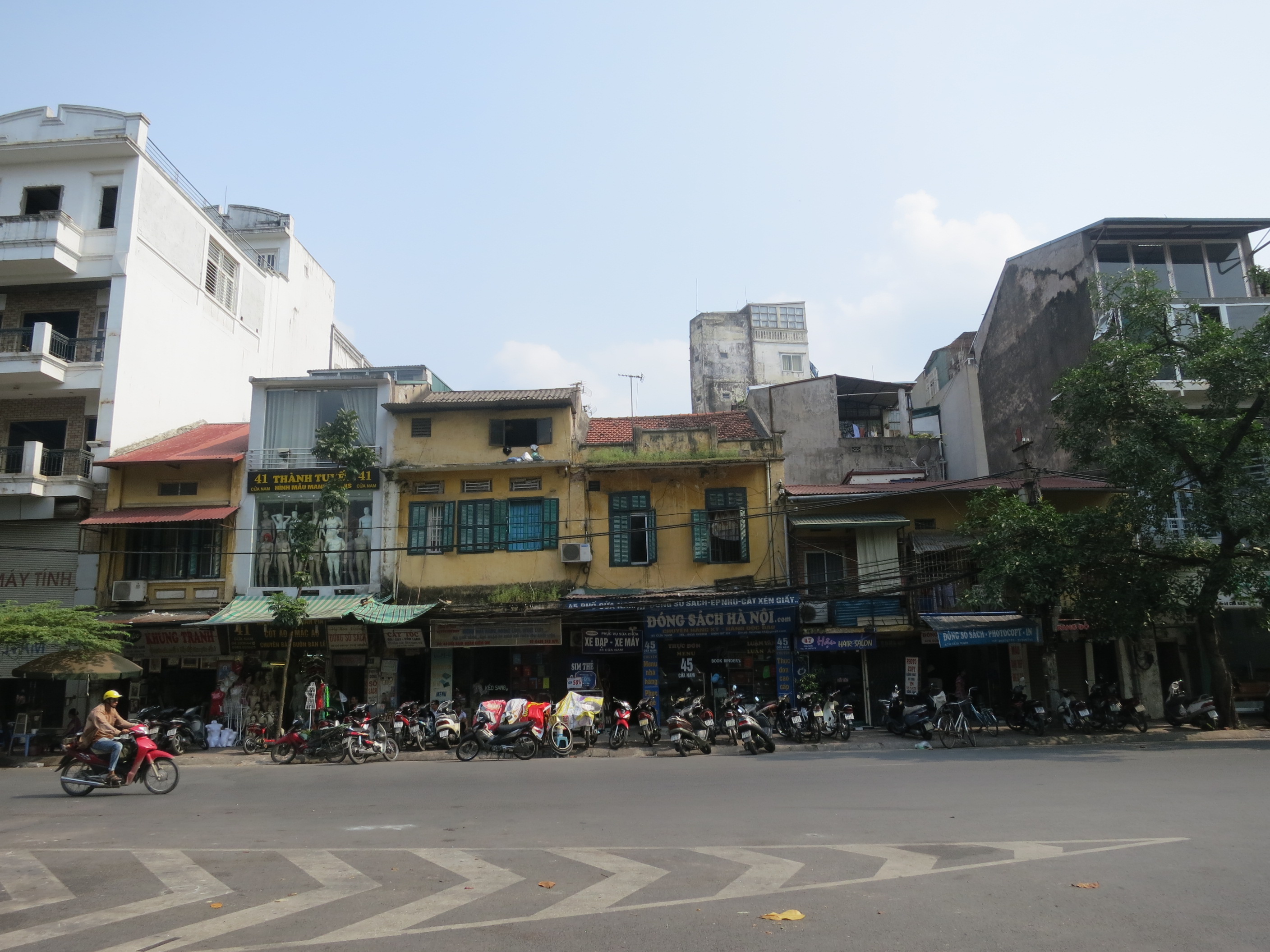
As we’ve said before, we have been staying in a section of Hanoi called the Old Quarter.  The narrow streets were developed long ago when foot traffic was the only transportation.  Today, the combination of cars, motorbikes, bicycles and walkers stretch the limits of these skinny roads.  In addition, the sidewalks where one might walk are filled with shops, people eating and drinking as well as parked motorbikes.  We looked at a few of the markets, seeing what souvenirs we could get from our time in Hanoi.   So much of what they sell is clothing and shoes.  At one store we saw a big pile of Tom’s, the canvas shoes which I love.  The concept with these is when you buy a pair, one pair is donated to a person in need.  When I saw this pile of shoes, my first instinct was that they are all fakes.  I considered them, and as we walked away I said to Phil, “I have a feeling that there will be no donation to the needy when I buy those shoes.  As a matter of fact, those may be the ones that have been donated.”  Now, I certainly am not getting on a moral high horse and we did buy some  souvenirs.  However, with the rumors of child/forced labor that abound in countries which manufacture goods cheaply, we have found ourselves a little more aware of what we purchase.

Four is too many!

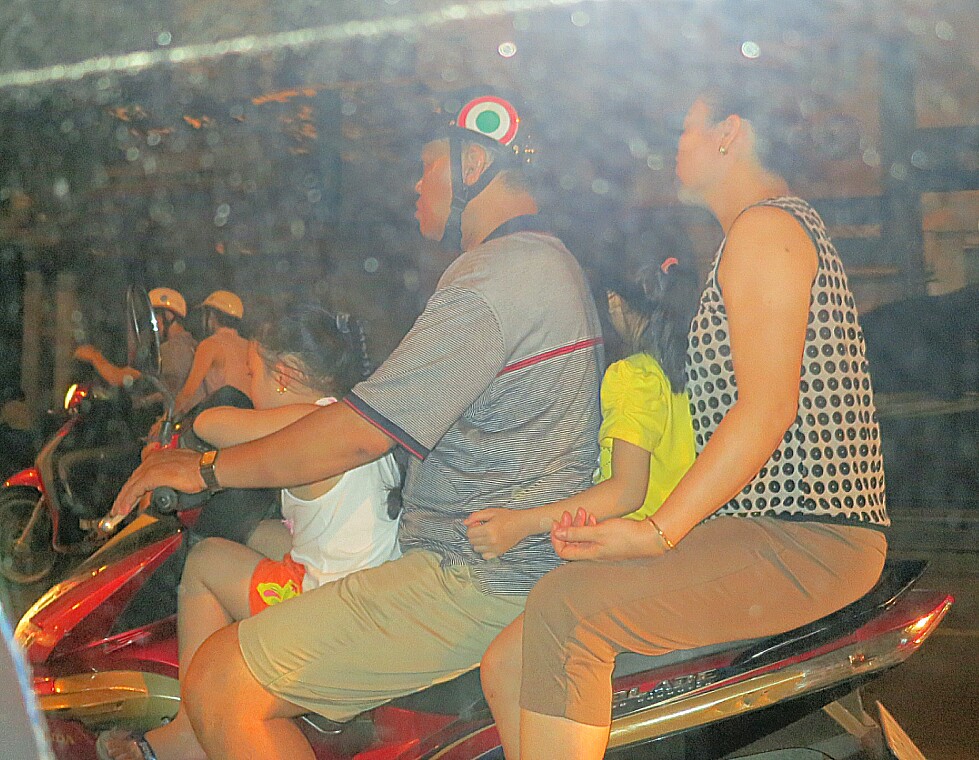
This photo is a little grainy, but can you see the two kids on the bike with their parents? No helmets, which is very typical.

Another huge sign that this is a developing nation is the general lack of safety regulations. It isn’t that we felt unsafe being there at all.  Quite the contrary.  However, the streets are filled with motorbikes, some packed four deep and children inevitably are rarely wearing helmets.  When we asked about helmet laws we  were told they are required starting at age 8.  Age 8!  The only protection for the little ones is the arms of their parents.  On several occasions, we saw children sitting on the laps of their parents in the front seat of a car, as well.  We also inquired about the driving age and after they hemmed and hawed for a moment, they told us it is 18, but no one really sticks to that.  The road regulations are not the only place where we felt this lack of safety enforcement.  It is not at all uncommon to be walking down the street and have electrical sparks shower down from work which was being done overhead.  No fencing to block the sidewalk, no sign of warning.  On more than one occasion I jumped out of the way so as not to be right underneath the spray of sparks.

The other thing that really seals it as being a developing nation is the lack of potable drinking water and the general conditions of the public toilets.  Of course, it is not uncommon to go somewhere internationally and not be able to drink the water.  However, along with that are the scams that arise from bottles of water being reused and refilled with the local water and then being sold as new.  In order to make consumers feel safe, companies like Aquafina and Evian put safety seals around the caps which ensure it has not been opened before.  In addition, the public restrooms are by and large gross.  This was to be expected.  However, the lack of toilet paper and soap only add to the feeling that things in Hanoi just aren’t very clean and visitors have to be careful not to spread germs and get sick while here.

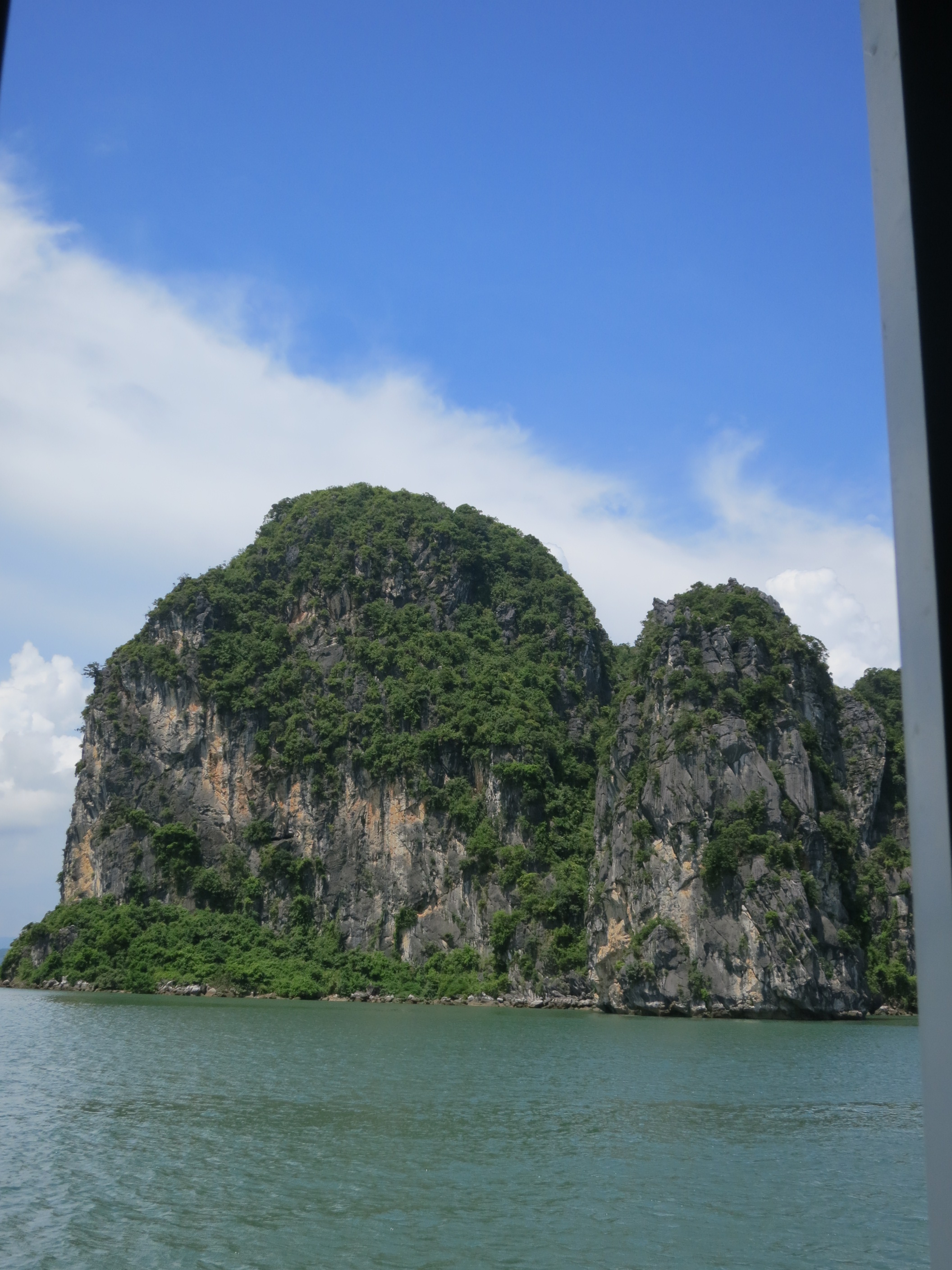
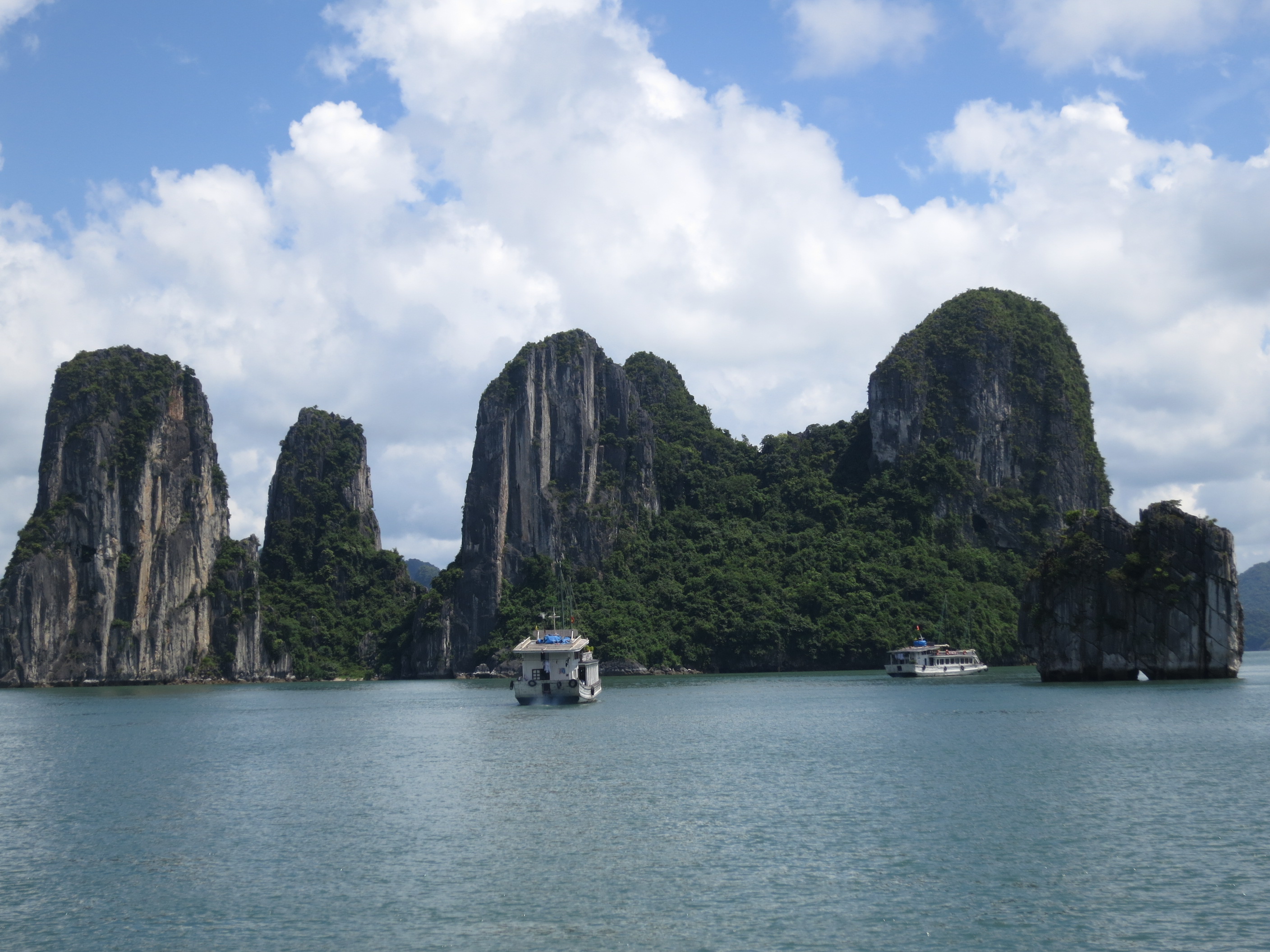
Amazing viewsI hope I haven’t scared you off, because even with all that said, Hanoi has been one of my favorite stops on the trip so far.  We were able to take a day trip to Ha Long Bay, a group of 1900 tiny islets about three hours south-east of Hanoi.  It was far to go for a day trip, and it would have been better if we had done a 2 night/3 day which is their specialty, but we’re working with tight timing.  We had a delicious lunch on board the boat, then traveled around the bay.  Our first stop was a traditional fishing village, with small homes permanently on the water.  These homes only have generators for electricity and the children only attend school up to 8th grade.  (There is a one room schoolhouse on the water and if they want to go to the upper grades they have to move to the mainland.)  We were particularly interested in the wide array of houseboats, including some made with brick and mortar.  Sadly, having people live in the bay means it is littered with trash; however, further out in the water it is absolutely gorgeous.  We made our way over to “Heavenly Cave” and walked around looking at different rock formations.  Honestly, the tour itself was a little underwhelming, but being out on the water made it all worthwhile.  It would be a wonderful place to come for a longer stay.

Just a small section of Ha Long Bay

Just a small section of the former prison, this was one of two rooms of exhibits on American POWs. John McCain’s flight suit can be seen in the rear of the room.

Our final few hours in Hanoi found us doing two things neither of us is likely to forget soon.  First, we went to Ha Loa Prison, also known as the Hanoi Hilton. This was the infamous jail where many American pilots who were shot down during the Vietnam war were taken and held prisoner for several years.  What we didn’t know is that this prison was built during the French occupation of Vietnam and was first used to imprison Vietnamese nationalists in wretched conditions.  Most of the museum focused on the horrible abuses of the French towards any Vietnamese fighting for freedom.  Exhibit after exhibit spoke of the heroism of the Vietnamese Comrades and the torturous, villainous behavior of the French.  We kept waiting for any mention of the role this prison played during the war with the U.S.  Just when we thought it wouldn’t be mentioned at all, it finally came at the end of the exhibits.  Two rooms housed photos and artifacts “showing the conditions of the Americans” during their time here. It was filled with photos of them playing volleyball, basketball and putting up Christmas decorations.  It focused a great deal on the days when the American P.O.W.s were released, even mentioning the fact that they were given a “souvenir” of their time here.  We could hardly believe it.  They essentially made it look like summer camp.  There was not one picture of the prisoners in a jail cell.  At the end, it even said the Americans were grateful for the human treatment they received.  Unbelievable! That is not the same account we have heard as Americans–just read about the experiences of Senator John McCain while he was imprisoned there.  This illustrated another example of the one-sided information that we have come to expect from the museums here.

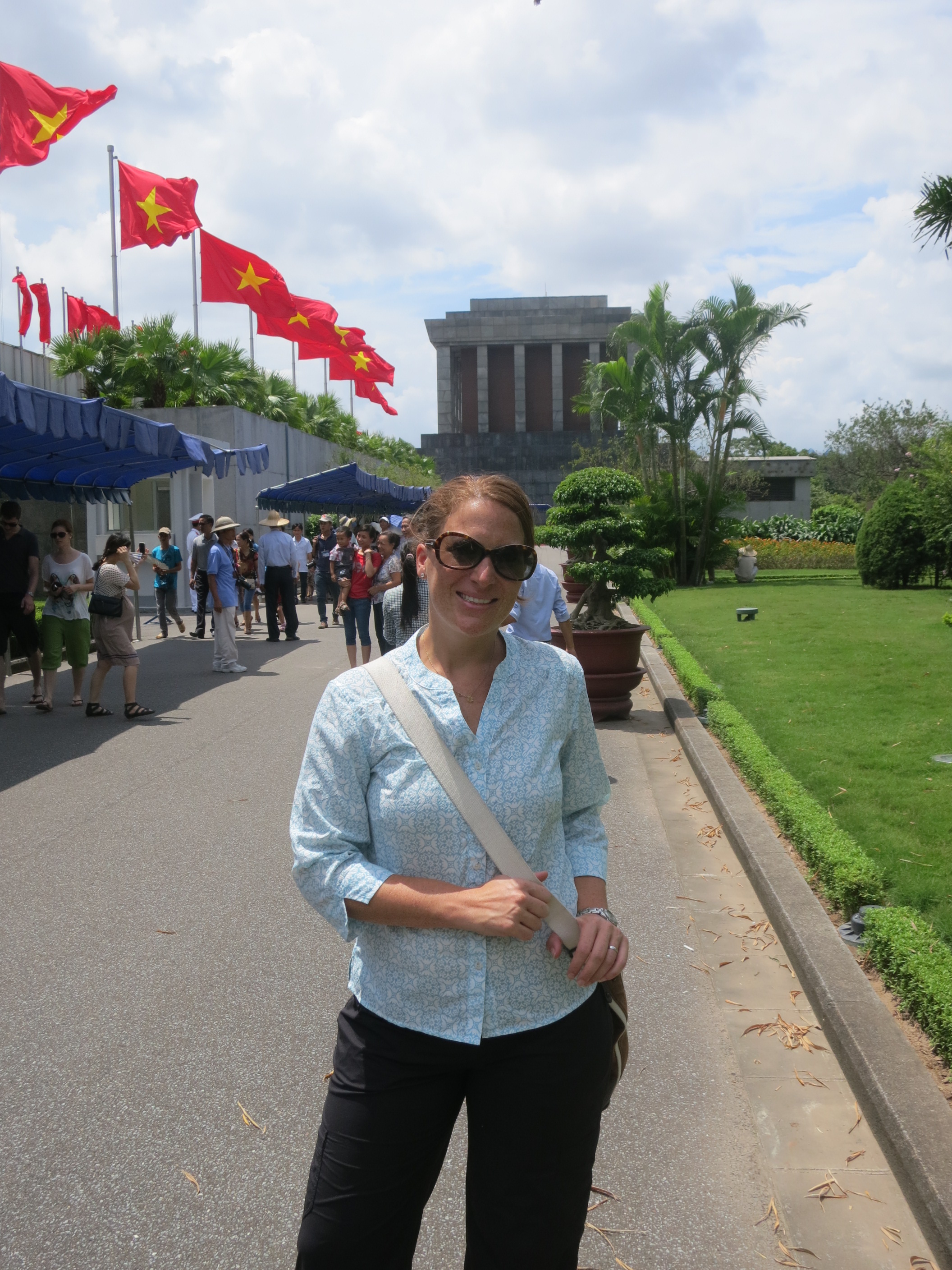
Brooke outside of Ho Chi Minh’s grand mausoleum

The final, most fascinating and most creepy thing we’ve done here is visit the Ho Chi Minh Complex, most notably the mausoleum.  Just like other important communist leaders Stalin and Mao, Ho Chi Minh’s body has been preserved, encased in glass, and is on display for public viewing.  This seemed like a unique experience that we just couldn’t miss.  First of all, the lines stretched outside the complex and down the street.  It was packed with people, partially because it was a holiday weekend.  Luckily, the lines moved very quickly and we were up to the mausoleum within 10 minutes.  We were told going in that we should wear long pants, covered shoulders and close-toed shoes.  It was very important that we be respectful.  Upon entering the mausoleum, I was instructed to take my sunglasses off the top of my head and others were told to remove hats.  As we filed around Ho Chi Minh’s body, gawking in horrified fascination, the guards moved us swiftly along.  We were not allowed to stop or walk too slowly.  The general feeling was one of excitement and intrigue.  We were afraid people would be more reverent and seem like they were in a sacred place, but there was really just a sense of curiosity.  As we walked outside, we immediately discussed what a strange experience that was.  Uncle Ho wasn’t looking too great, probably because he’s been dead since 1969.  By all accounts, this kind of fanfare is the last thing he would have wanted and doesn’t really fit with the kind of life he led.  All in all, I’m so glad we went because it is such a strange thing to do.

Adios VietnamAnd now, sadly our time in Vietnam must end.  We really wish we had more time and we are already planning to come back.  The people here are so friendly, the food has been awesome, and there is so much to see and do.  Now, we head off for a very brief 2 days in Singapore.  Interestingly, no other city has brought such a variation of opinion than Singapore.  Some people love it and say we’ll need more time.  Others have told us to skip it all together.  We met a British family living in Singapore who told us two days is just right.  We’ll go with that!

-Brooke

Categories: City Visits, Destinations, Differences, Landmarks, Museums, Unusual Experiences, Vietnam | Tags: , , , , , , , , , , , , | 3 Comments

Blog at WordPress.com.