Landmarks

Goodbye Belgrade

Sadly, our time in Belgrade has come to a close.  Tomorrow morning we board a north-bound train for Budapest, Hungry and leave Serbia behind.  Today was filled mainly with strolling through the city, taking in some last sights, and reflecting on our time in this region of the world. Though we enjoyed previous Eastern European cities, we think that Belgrade is a city we would eagerly visit again.  In fact, we believe this would make a wonderful destination with a group of friends, and we are sure our crew could have an amazing time spending a week here together.

After having a delicious coffee at one of the numerous street cafes this morning, we found ourselves walking toward the riverfront.  We spotted an old building which looked as though some event was happening inside.  Upon closer inspection, we discovered it was an art museum.  Kind of.  This grand building originally housed the Belgrade Shareholder’s Society.  It hasn’t exactly been preserved, but enough detailed remnants of its architecture remain which makes imagining its original beauty fairly easy.  Currently, “Good Life” a modern art exhibition is featured within the myriad of rooms.  The entrance fee was nominal, so we walked through the exhibits, realizing for the umpteenth time that we are not fans of this type of existential modern art.  I try to appreciate what lies before me, but I find I’m often left scratching my head and saying, “Huh?” Like the photographs of gold fillings which the artist bought at an online auction.  Or the room with paper pigs hanging from the ceiling.  This was way over my head.  It didn’t take long for us to give each other the high sign and head for the door.

The sign confused us at first–it is way too similar to the “No Smoking” signs we are used to.

We continued wandering and refocused on one of our priorities for the day–finding the perfect souvenir for our time in Belgrade.  We walked among stands which sell the traditional wares feeling completely uninspired.  It is important for us to find souvenirs that closely link with our experience in a city.  We want mementos, not just chatchkis to place on a shelf.  So, we thought about what would really speak to our time here.  As strange as it sounds, we settled on an ash tray!  We don’t smoke, nor do any of our friends, but smoking is everywhere here.  The first thing you get at a restaurant is not water or a menu or even a “hello”, it’s an ashtray.  Businesses don’t just have “No Smoking” signs, they also have “Smoking” signs which we found quite confusing early on.  In fact, cafes often sell cigarettes to their patrons who alternate eating their croissant with a puff of their cigarette.  For all of these reasons, an ashtray seemed like the perfect memento.

Laughing at our purchase we continued walking.  One aspect of Belgrade which has consistently entertained us is the amount of crazy small and ridiculously old cars which still cruise the streets.  I didn’t even know they still made the Yugo, but they are everywhere here!  And they are tiny.  We realize that Europeans drive small cars, especially when compared to Americans, but these are some of the smallest we’ve seen.  And really, it is the age that keeps surprising us.  Some of these must be 30 years old.  How they are not rusted out and falling apart is completely beyond us.  Phil thought these relics would be a great subject for a photo journalism project.
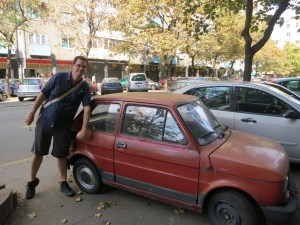
I’m not sure Phil would even fit in this thing!
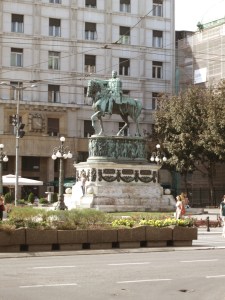
After saying our farewells to Belgrade, it was time to head back to the apartment for the moment we have been waiting for since we arrived:  Sunday Football on ESPN America.  When we learned we would be able to watch live American professional football, we were ecstatic.  Although ESPN does not broadcast NFL games on Sundays in the U.S., they must have some agreement with Fox to show games abroad.  Our excitement in anticipation of watching football and eating a home cooked meal has been brimming all week.  After the requisite 2 hours of pre-game coverage, we watched the San Francisco 49ers embarrass the New York Jets by beating them 34-0.  At half-time of the game we went to the grocery store to be met with great disappointment–it was closed.  Closed?  It was only 8:15 pm, but we did not dismay.  We walked to another grocery down the street and it had closed at 3pm today!  Sometimes we forget that we aren’t in New York and stores close early, especially on Sundays.  Somewhat disappointed, we settled for a couple of sandwiches.  Seeing the score of the game when we arrived home immediately soothed our sadness.  We are now watching one of the late games–the Saints vs. the Packers, and if we can stay up until 2:30am, we can even catch the Sunday night game.

Late night football is likely not in the cards for me since we will be leaving for the train station at 6am.  We have been so surprised by Belgrade and would encourage travelers to include this as a “must” during any trip to Eastern Europe.  Tomorrow we head to Budapest, Hungary, the leg of the trip I have been most looking forward to because we will be meeting up with two of our closest friends, Gina and Tom.  We haven’t seen a familiar face (besides one another) in about 2 months and the thought of being with close friends is almost overwhelming.  I can’t wait!

–Brooke
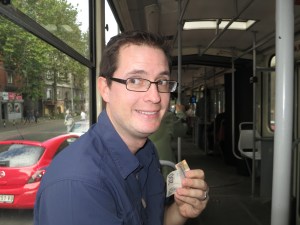
A snafu with our tram ticket was cause for great concern. Ever since seeing the ticket checkers in Sofia, Phil is terrified of them!

When inflation was at its worst, Serbia had bills with a 50 billion dinar denomination! It is a Guinness World Record.
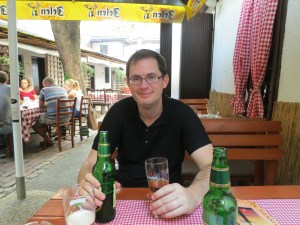
A final beer at ? Cafe. After arguments over its name, people now just refer to it as Question Mark Cafe.

Categories: Bars, City Visits, Diversions, Eastern Europe, Friends, Landmarks, Museums, Serbia, Uncategorized, Unusual Experiences | Tags: , , , , , , , | 5 Comments

Belgrade, Serbia–A Wonderful Surprise!

When planning our trip, we did not know exactly which cities we’d be visiting.  We had our flights and a basic plan, but we did not map out specifics in order to allow ourselves flexibility.  If you had asked us before we started whether or not we would visit Serbia, our answer would have been, “You never know, but probably not.”  Now, here we are, thrilled to be in the heart of Serbia: Belgrade.
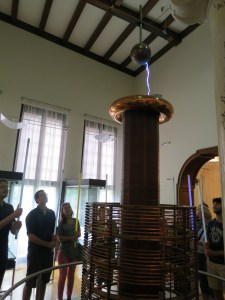
Belgrade has a lot to offer, so we decided to start our day at the Nicola Tesla Museum.  Going into this, Phil knew a lot more about Tesla than I did.  In fact, if you had asked me who Tesla was, I might have made vague reference to a crappy band who covered the song “Signs.”  As it turns out, Nicola Tesla’s inventions changed the course of human history and we all use his technology daily.  In case you are like me and don’t know who he is, Tesla is best known for inventing the alternating current (AC) electrical system.  You may have heard of the Tesla Coil, his most well known invention which is integral to the AC system.  Nicola Tesla was born in Serbia, and here in Belgrade they have a museum dedicated to celebrating his work and his contributions to human history.
The Tesla Museum was a fun, interactive and incredibly informative experience.  We were given a tour by a young woman who just graduated with a degree in electrical engineering.  Her passion and knowledge for the topic shone through in her presentation of the material. The one floor museum situated in a beautiful old 19th century home was as much about Tesla as it was about his inventions. We learned that Tesla was a legitimate genius level inventor who could never be accused of thinking small. His inventions ranged from Hydroelectricity to a theorhetical global communications array that was never completed. Especially cool was the interactive exhibits like the giant Tesla Coil and a reproduction of the world’s first remote control toy boat that was showcased in Central Park in the early 1900’s. What really helped make the museum, or any museum for that matter, is that the guides were certified experts on the subject matter and sincerely passionate about all things Tesla. After our visit, our head was swimming with fascinating facts and information about Tesla. It is truly a sensational museum!

The light bulbs are being lit by the magnetic field created around the Tesla coil. Phil’s body is the conductor. Don’t get too close or you’ll get a shock!

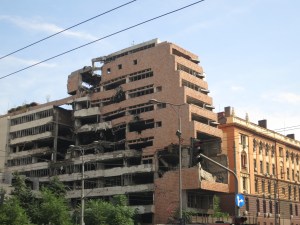
After the Tesla Museum, we slowly wandered through the city toward the Belgrade Fortress.  Our eyes were filled with wonder at seeing bombed out buildings, still in crumbling ruins, adjacent to beautiful, historic structures.  The NATO bombings of Serbia, which took place over the course of almost 3 months in 1999, have left evidence almost everywhere you look in Belgrade.  At the same time, this city already feels more forward thinking, cosmopolitan and progressive than either Bucharest or Sofia.  We were expecting a sort of sadness…or at least the feeling that they were still trying to get back on their feet.  Not only are they standing on their own two legs, Belgrade is thriving.  There are cafes, corner stores and markets everywhere.  The streets are bustling with people and the nightlife here draws visitors from all over Europe.  There is a pulse and vitality that we haven’t felt in other Eastern European cities.  However, wages are still quite low and the younger population is dwindling as they leave to find jobs in other countries which are unavailable here.  The city seems to be growing, but it is not happening at a fast enough pace for to meet the demand of people in need of jobs.

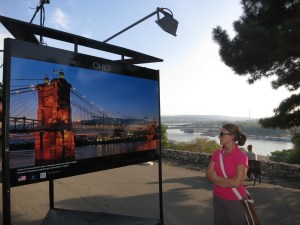
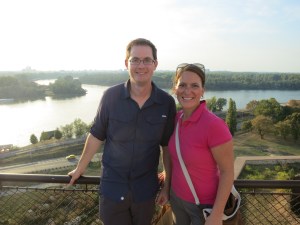
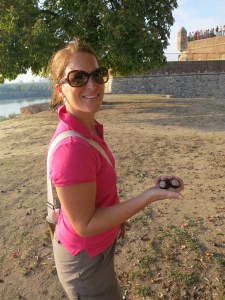
We continued to walk along Knez Mihailova, a pedestrian only street which leads toward the fortress.  We happened upon a robotics exhibition and also discovered that Serbians love their popcorn like Romanians love their pretzels.  Finally, we made it to Kalamegdan Park, a huge park created on a plateau in front of the Belgrade Fortress.  Filled with people, the park is the best place to watch the sunset at the spot where the Danube and Sava Rivers converge.  It also houses several public art pieces, including a series of photographs of depicting gorgeous landscapes from each state in America.  We got a little misty at both the photograph of the Roebling Suspension Bridge in Cincinnati, Ohio and the view of the city from New York’s Central Park.  As we gazed out over the river, talking about all things past, present and future, we realized we are missing some small things about America.  This was punctuated by our discovery of several Buckeye Trees.  The characteristic seeds lay all over the ground, and I picked them up, dreaming of home and just wishing they were made of chocolate and peanut butter (a popular treat for Ohioans).

We finally found the fortress at the top of the park.  Originally built in the 1st Century A.D., it (of course) has been destroyed several times over the years.  This is somewhat surprising because the location is the highest spot around and one could easily see the advancing enemy coming in by river.  The current fortress has been turned largely into parkland, but also houses the Military Museum, an Entomology Museum and an Observatory.  Hunger spoke louder than our desire to see these exhibits, so we plan to head back there tomorrow.  As we strolled back through the park toward the tram, we realized that we have had yet another day of perfect weather.  With the exception of Brasov, Romania, Eastern Europe has been a meteorological utopia.

It had been such a lovely day, and we were excited to experience our first real Serbian meal.  After a recommendation from our Air B ‘n B host, we went to Orasac.  Our stomachs growled on the short walk to the restaurant, so we were psyched when we spotted the sign.  The man who greeted us warned that they were busy and it might take a while for the food.  We decided to stick it out since we were already there and didn’t really have a back-up plan.  In retrospect, we should have left when we had the chance.  Annoyed that we didn’t speak Serbian, the waiter was brash and rude.  We ordered “light domestic draft”, which is how the beer was described on the menu.  No brand.  No other option.  We think it was Lav, but we aren’t completely sure.  After being told the first 3 items we asked for were unavailable with a brusque “Ney,” we hastily ordered our meals.  Willing to overlook the bad service, dirty tablecloth and crumbs at the bottom of our beer glasses, we finally drew the line.  Phil cut into his chicken skewers and they were completely uncooked on the inside.  Bright pink.  Raw.  After the experience we had thus far, we decided it wasn’t worth it to try to explain or argue.  Instead we just showed it to the waiter and asked for the check.  The message was clear and we soon left unsatisfied.  We’ve had some really amazing meals in the last week, so I suppose we were due for a stinker.

Dinner aside, today was really wonderful.  We have such a positive impression of Belgrade and we are excited to explore it further tomorrow.  We are planning to explore the Military Museum, plus partake in a bike tour which sounds awesome.  We’ll let you know how it goes!

–Brooke

Wishing these Buckeyes were the sweet treats I love so much!

The fortress offers beautiful views of the Danube and the entire city of Belgrade.


Categories: City Visits, Diversions, Eastern Europe, Europe, Exploring, Homesick, Landmarks, Museums, Serbia, Surprises, Uncategorized | Tags: , , , , , , , , , , , | 1 Comment

Rila Mountains and Monastery

What a view!Having lived in New York City for the past six years, we are somewhat starved for nature.  Yes, we try to chip away at our hunger by taking short trips outside the city or visiting my family’s cabin in the Great North Woods.  We have slowly been working our appetite back to fulfillment, but years of living in the “Concrete Jungle” leaves a lot of work to be done.  After our journey today, we feel satisfied.  The warm contentment that comes only after an amazing day surrounded by lush green forests rests solidly within our souls and we are happy.

Today, we visited the Rila Monastery which sits nestled in the Rila Mountains, the highest range in the Balkans. Bulgaria is filled with monasteries, and this one is easily the most beloved and visited by tourists.  Hostel Mostel, the hostel where we are staying, arranges daily trips for this two-and-a-half hour journey outside of Sofia.  Accompanied by our driver, Ivan, and a French traveler, we set out into the Bulgarian countryside.  As we began to wind our way up into the mountains, the warm air sweeping through the car cooled and the surrounding forests grew thick with foliage.  Feeling confident with the sharp turns, Ivan sped around bends that were starting to make me a bit queasy.  And then, out of nowhere, the monastery appeared before us.  Grateful to be there, we slowed to take in the sights.  Driving past the monastery, Ivan pointed out places to eat lunch and other points of interest, but then kept driving. We were momentarily confused, he explained that he was first going to take us to a small cave just three kilometers up the road.

The minute we climbed out of the car, the beauty overwhelmed me.  Images of my family’s home in Canada flooded my brain and immediate happiness ensued.  Ivan told us it would be a 15 minute hike to the cave.  It was balmy–65 degrees, sunny with a lovely and light breeze.   The perfect day for a hike.  I only wish I knew this was going to be part of the trip–I wore my sandals, which worked but would not have been my first choice.  Before spotting the cave entrance, we came upon an old church.  In broken English, Ivan explained that this was used hundreds of years ago by monks (we later discovered this was the original location of the monastery).

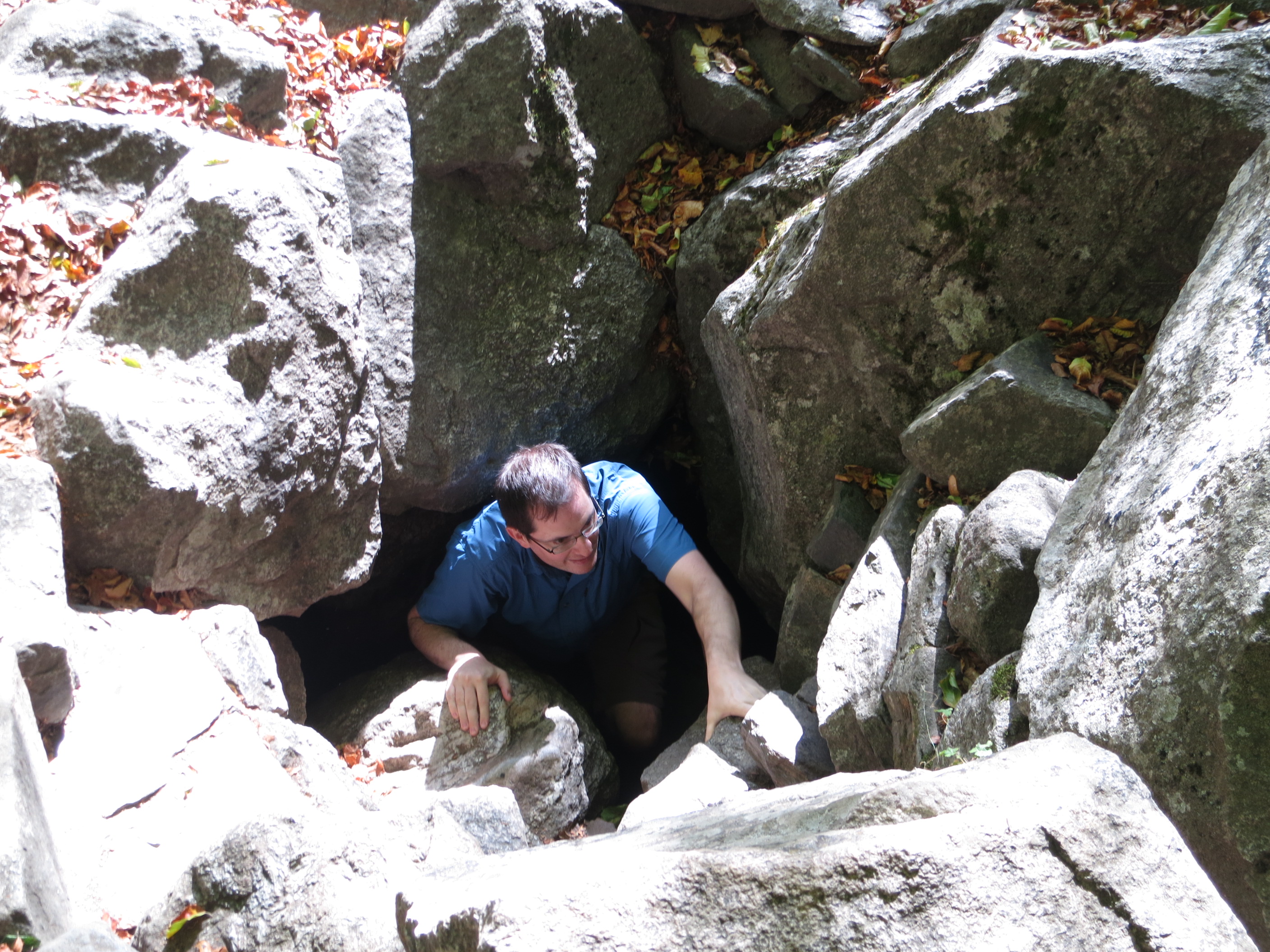
That's a backdrop that would make Olan Mills droolAfter wandering around, he led us into the cave.  Now, we have had two “cave experiences” on this trip–Waitomo Caves in New Zealand which was amazing, and Heavenly Cave in Vietnam which was underwhelming.  Those trips bare little comparison to this one.  Upon entering, Ivan told us a monk lived alone for 12 years in this cave, filling his time with prayer and religious study.  We had to double over to enter the cave which was pitch black inside.  Probably 15 feet long, 7 feet wide with maybe an 8 foot ceiling at its highest point, this was a cramped space.  Ivan lit 3 small candles to provide some light for us to see the ledge where the monk probably slept. The tiny space made it impossible to imagine living there for so long.  Ivan motioned us to a ladder in the corner which led toward daylight.  He began climbing to exit through the top of the cave and indicated we were to follow.  As I watched him squeeze through the hole at the top, my self-consciousness made me question whether or not my round hips would fit through.  I slowly started up and twisted myself into one awkward position after another until I was able to emerge on the other side.  We all made it safely through, which is an especially good thing–apparently legend has it that only those without sin can fit through the exit.  Glad we made it, though I’m not so sure the legend holds true.

After sampling some delicious spring water, we descended the slope so we could continue on to the monastery.  Phil and I found ourselves walking slowly, taking deep breaths of the crisp clean air, and wishing there were a hammock for us to spend more time soaking in the environment.  Eventually we forced ourselves back into the car, but not without lamenting the fact that beauty like this can’t really be captured in words or photos (as much as we like to try).  It can only be experienced.

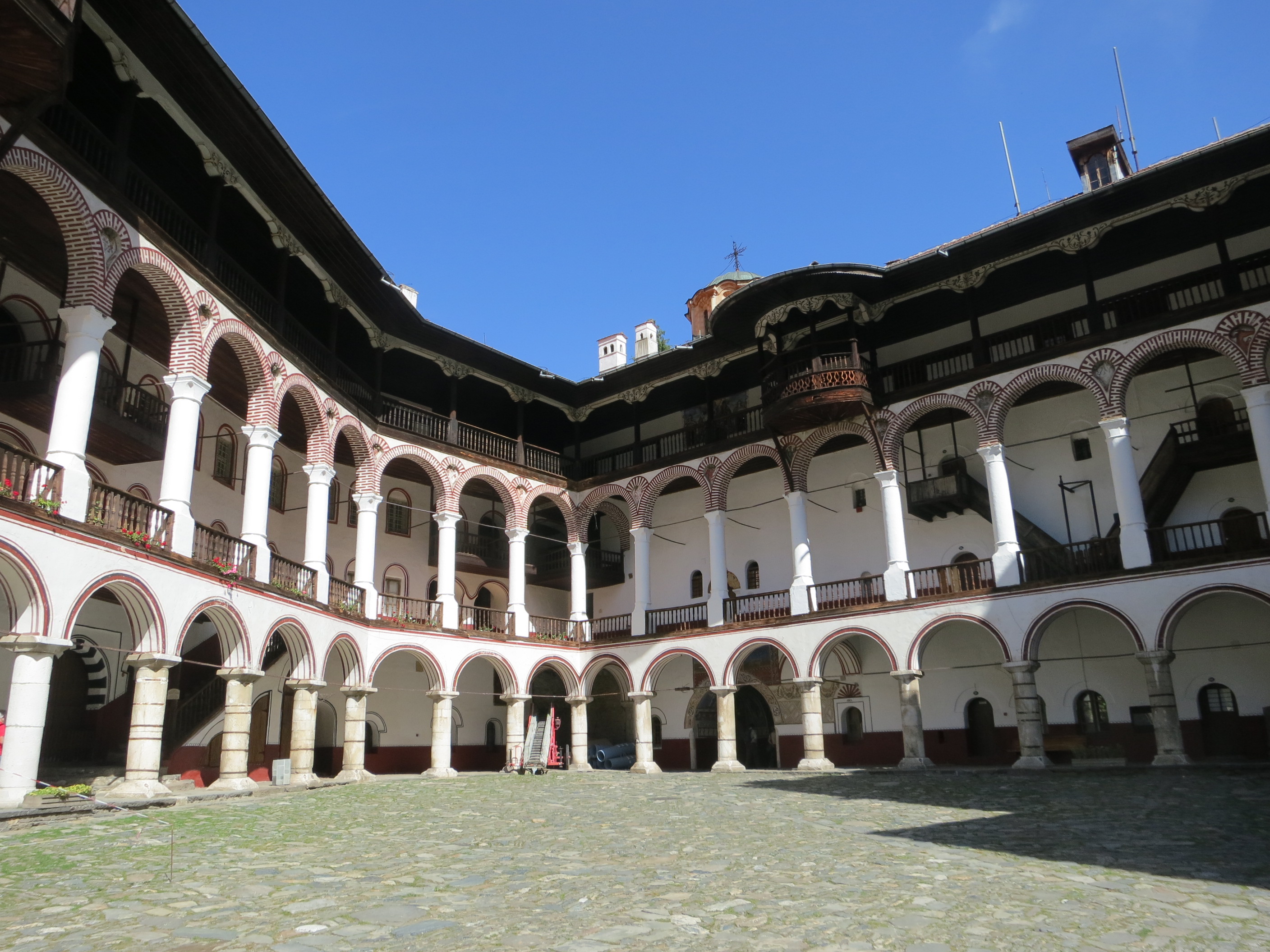
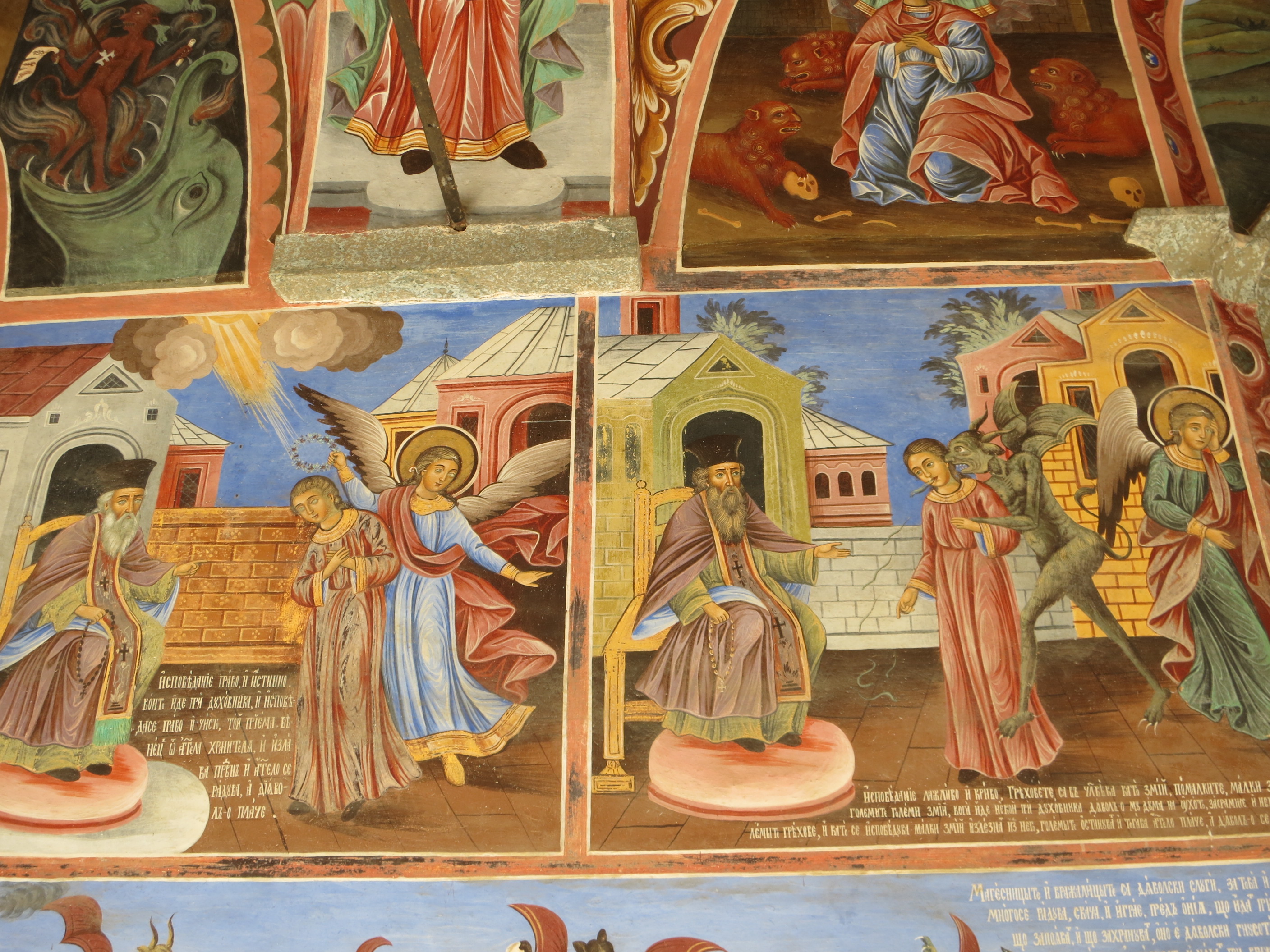
We ventured back toward the Rila Monastery.  Built in the 10th century, these grounds hold a special place of importance in the hearts of Bulgarians.  The monastery, which has been threatened by destruction from the Ottoman Empire as well as a disastrous fire, prioritizes the preservation of Bulgarian culture.  It has been rebuilt and maintained as needed throughout the years and now attracts thousands of visitors. The architecture is striking, but we were most impressed with the paintings which cover the walls of the church entrance.  Meant to teach the lessons of the Bible, these sometimes cartoonish depictions are quite entertaining.  We particularly love the facial expressions and the ways the devil tries to tempt people into doing evil deeds.  Both entertaining and educational.  What more could a person want?

After wandering the grounds for a bit, we took some time to soak in just a little more nature before we got back in the car to head to Sofia.  One of the things I found so amazing about the journey back was that in the span of twenty minutes we saw a monk checking a cell phone, a family of pigs running out of the woods into the road, a BMW speeding around a tight turn, and a farmer driving his horse-drawn cart.  This constant juxtaposition of old and new continues to emerge during our visit to Eastern Europe, and that is what makes this such a great place to be at this moment in history.

As if to punctuate the thoughts I was already having, our driver stopped by a privately owned museum (of sorts) on our way back into Sofia.  Really, it was one man’s collection of antiques that he had on display for visitors who gave a small donation.  Old cars and motorbikes caught our attention first, but it was the bust of Stalin and the wall of old TVs and radios that had us enamored.  Our French friend was fascinated by the WWII era bombs which were on display.  A cross between a museum and a junkyard, visiting this collection was the perfect end to what can only be described as a perfect day.

–Brooke

Paintings on the outside of the church designed to teach parishioners to stay away from the devil!

Phil climbing through the afore mentioned caves!

Categories: Bulgaria, City Visits, Destinations, Diversions, Eastern Europe, Hiking, Hotels, Landmarks, Uncategorized, Unusual Experiences | Tags: , , , , , , , , | 1 Comment

Beautiful Brasov and Bran!

When we arrived in Romania, many people assumed we would be heading to Transylvania, a region north of Bucharest steeped in history and well known to Westerners for its role in Bram Stoker’s Dracula.  We had no solid plans upon arrival, so we figured we might as well grab the train and head to Brasov, a city in the central region of Transylvania in the foothills of the Carpathian Mountains.

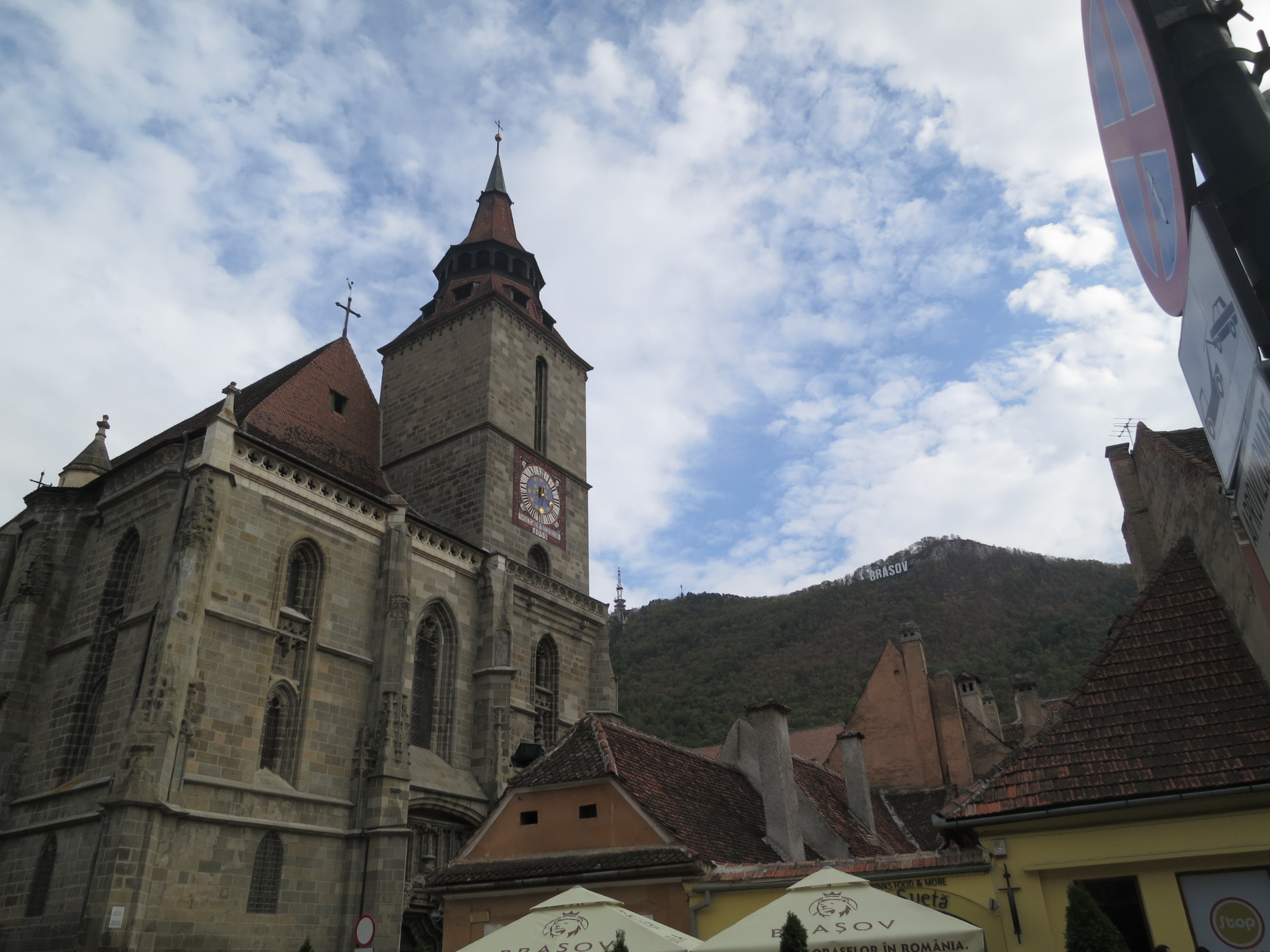
There is much to do in the Transylvania region, but to really see it all we’d have to be here for at least a week and take our time going from castle to castle.  Instead, we have only a few days, so we decided to base our exploration in the town of Brasov.  Having human settlements which date back as far as the Neolithic age, it has a rich history.  We decided to start a little closer to modern times with the town’s best known landmark, the Black Church.  Built in the 15th century, this remarkable church got its current name after being badly burned in a fire which consumed most of the town in 1689.  It has been cleaned up to the point visitors might not even realize there was ever a fire except for the four blackened statues which have been preserved in their post-flame glory.  This church marks the end of Gothic architecture in the region and claims to be the largest Gothic cathedral between Eastern and Western Europe.  Originally a Catholic cathedral, it is now Lutheran and serves the small German community here in Brasov by holding all its services in German.  The 4,000-pipe organ is still played weekly for public concerts.  Most notably, this church hold the largest collection of Turkish rugs outside of Turkey.  These were gifts over couple hundred years and are now proudly cleaned, repaired, and on display for public viewing.

We found a few things about the church particularly interesting.  One is the painted pews which designated seats for different guilds.  There were seats for the weavers, tailors, hunters, etc. all shown through symbolic paintings on the pews (we were, once again, unable to take photos inside so we cannot show you).  However, there were only 3-4 seats for each, so only the “higher-ups” in these communities garnered a seat.  The low wage workers were sent to the galleries up above.  We were also very interested in the “Black Madonna” painting.  It is a portrait of Mary being given gifts for Jesus and being attended to by angels.  Her dress was originally blue, but after the fire it turned black, therefore it has been given the name “Black Madonna”.  We had a wonderful young guide who gave a strong tour with insights we would not have otherwise had.

While there is more to see in Brasov (some of which we plan to do tomorrow) we decided to take this opportunity and head slightly south to Bran’s Castle.  Many people assume this castle was the inspiration for Bram Stoker’s Dracula.  Let me make something perfectly clear from the beginning–there is essentially NO CONNECTION!  There is the tiniest, most remote, slimmest chance that Dracula is based on Vlad the Impaler who has some miniscule connection to Bran’s castle, but the correlation is mostly created by people trying to drum up tourism.  Don’t get me wrong, the castle is awesome.  And Vlad the Impaler was awful.  But those two things aren’t really related.  Perhaps I’m getting ahead of myself…let me start from the beginning.

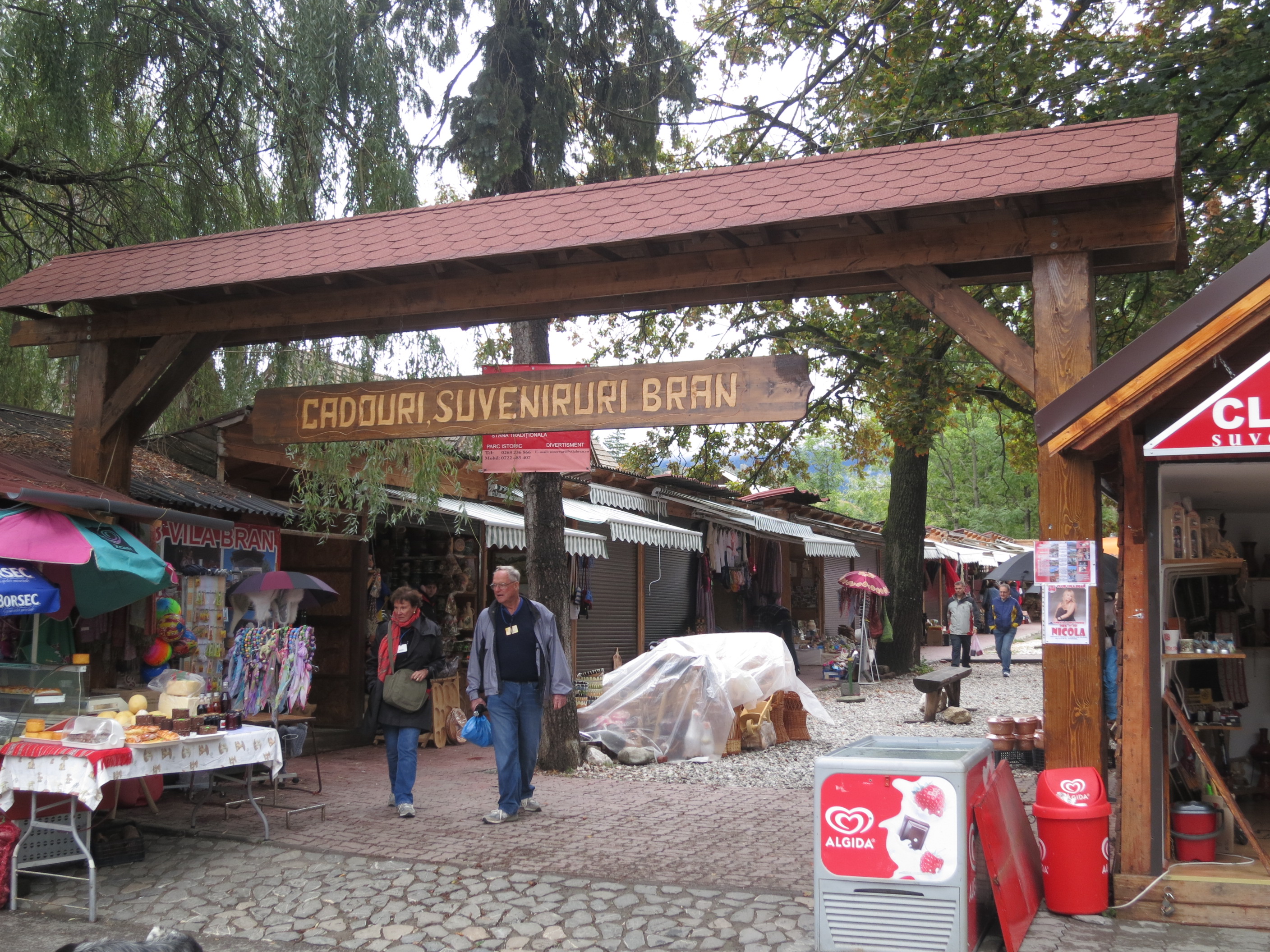
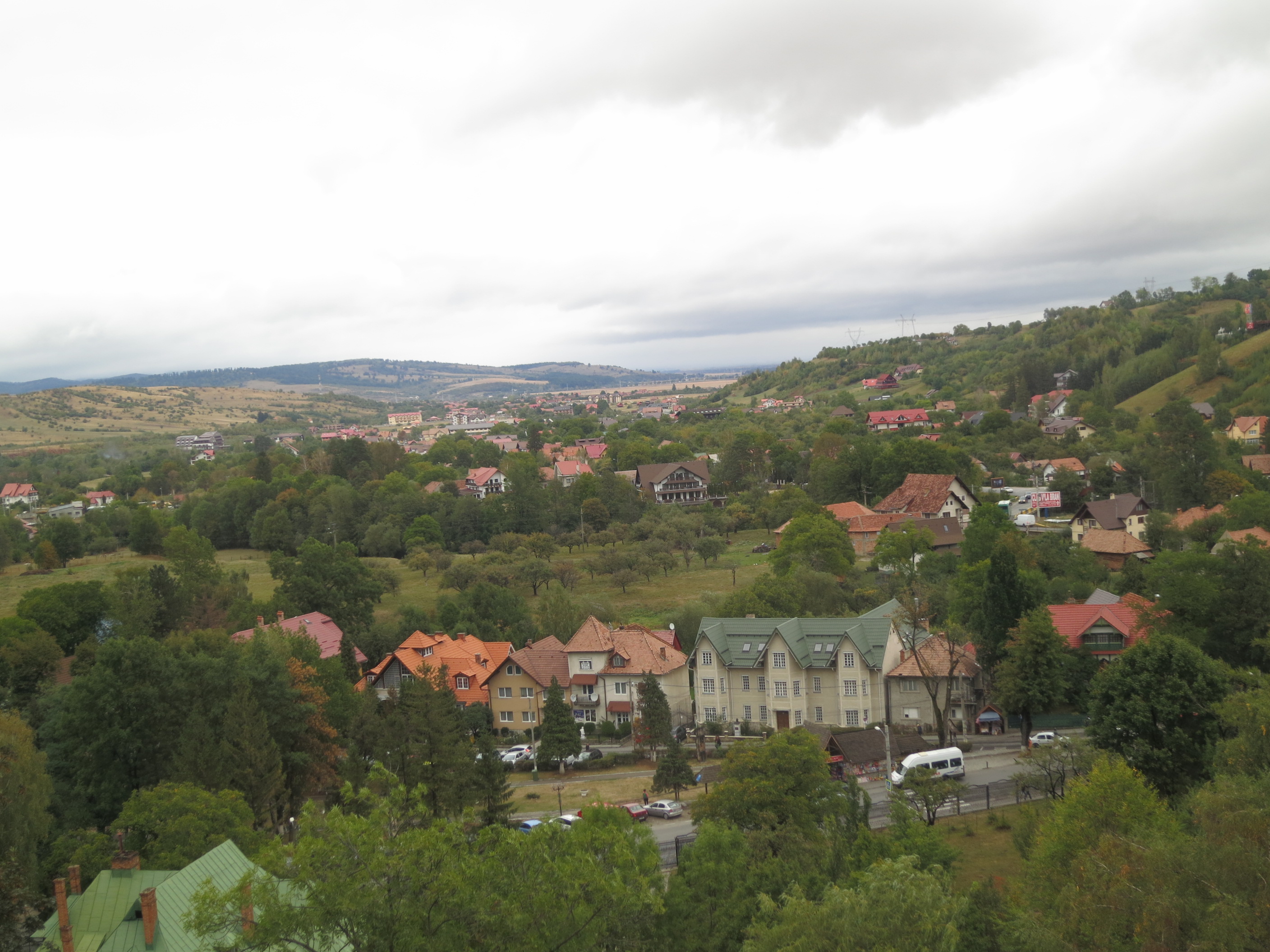
Bran is a fairly easy bus ride just 45 minutes south of Brasov.  As we pulled into town we could see Bran Castle sitting up in the hillside.  It looks rather small from the outside, but once inside it is actually quite cavernous and impressive.  Housing impressively creaky floors and drafty hallways, Bran Castle has a long history dating back to the 15th century.  It has had royal residents as recently as the late 1940’s and is one of the only castles we’ve been in that we could imagine living in.  Many of the original rooms have been refurbished to suit more modern living.  It has beautiful views and a fireplace in each room to help keep us warm–it was a chilly 48 degrees today so we kind of wish those fireplaces actually had wood burning in them!


There were two rooms dedicated to explaining the connection between Bram Stoker’s Dracula and Bran Castle.  Let me break it down for you–Vlad Dracul was a prince in Transylvania.  He had a son, Vlad the Impaler, who killed people by running a stake from – brace yourself – through their anus to their throat without hitting any vital organs thus producing a slow and painful death. He was also rumored to be ruthless and enjoy drinking blood–hence the connection to Dracula.  That’s about it. Dracula is a completely made up character by Bram Stoker.  We still aren’t sure what the actual connection is to this castle; Stoker never came close to visiting Romania.  It doesn’t really matter, though, because the castle is pretty cool all on its own.  The Dracula connection does make for some fun and kitschy souvenirs and a couple of haunted houses in the town center.

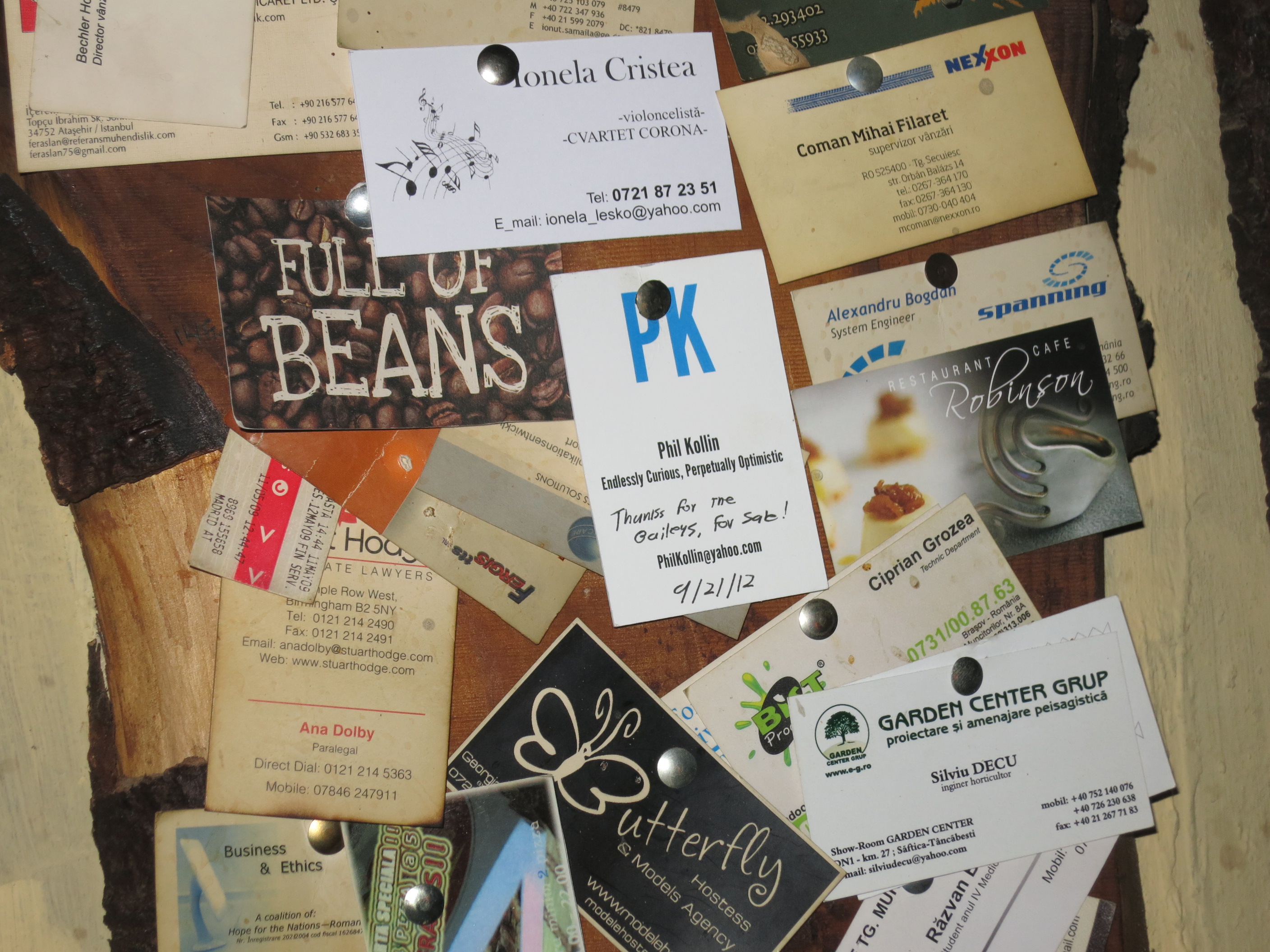
After our visit to Bran, we had planned to head to Rasnov to visit this cool fortress, but it was so cold and so rainy, we just couldn’t bring ourselves to get off the bus.  Instead, we warmed ourselves over some delicious Guinness at Deane’s Pub listening to a big band play some jazz and swing.  There’s something surreal about singing along to Sinatra’s New York, New York while sitting in a pub in Brasov, Romania.  On our way home we stopped off for a nightcap at For Sale, a cozy little bar whose walls are covered with the patrons’ business cards.  We had a drink, posted our business cards on the wall just for good measure, and now are attempting to warm up back in our room.  We think this weather must be unseasonably cold as the heat has not yet been turned on in our hotel.  (Oh well…it feels like we are back in our apartment in New York.)  Now, we plan our next steps.  We aren’t sure exactly what lies ahead, but after a little more exploration of Brasnov tomorrow, it looks like we are headed to Sofia, Bulgaria.  Wish us luck!

–Brooke

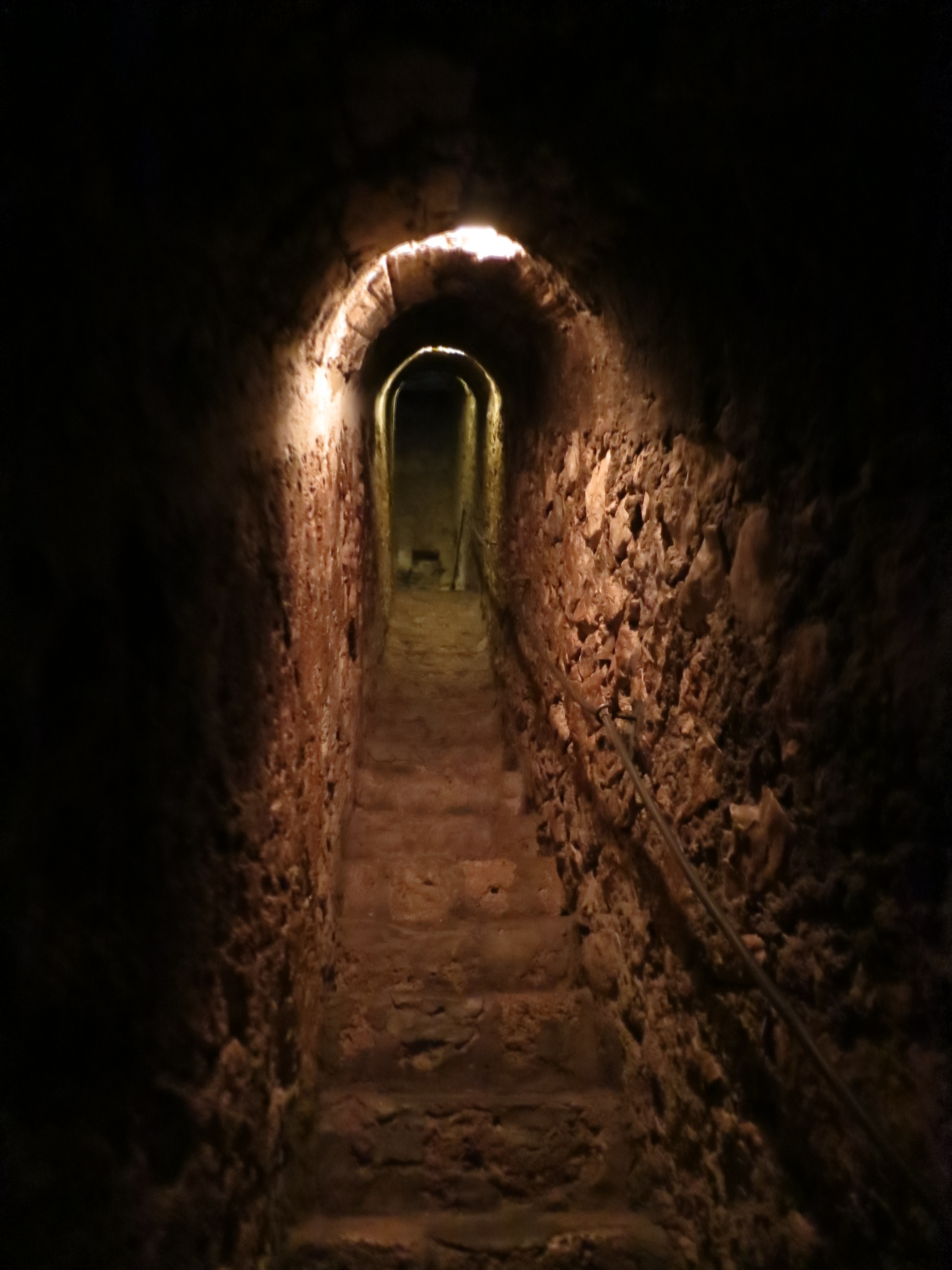
Creepy hidden staircase inside Bran Castle. I wouldn’t want to be in here for long!

Phil isn’t really meant for the castle lifestyle–he is way too tall!

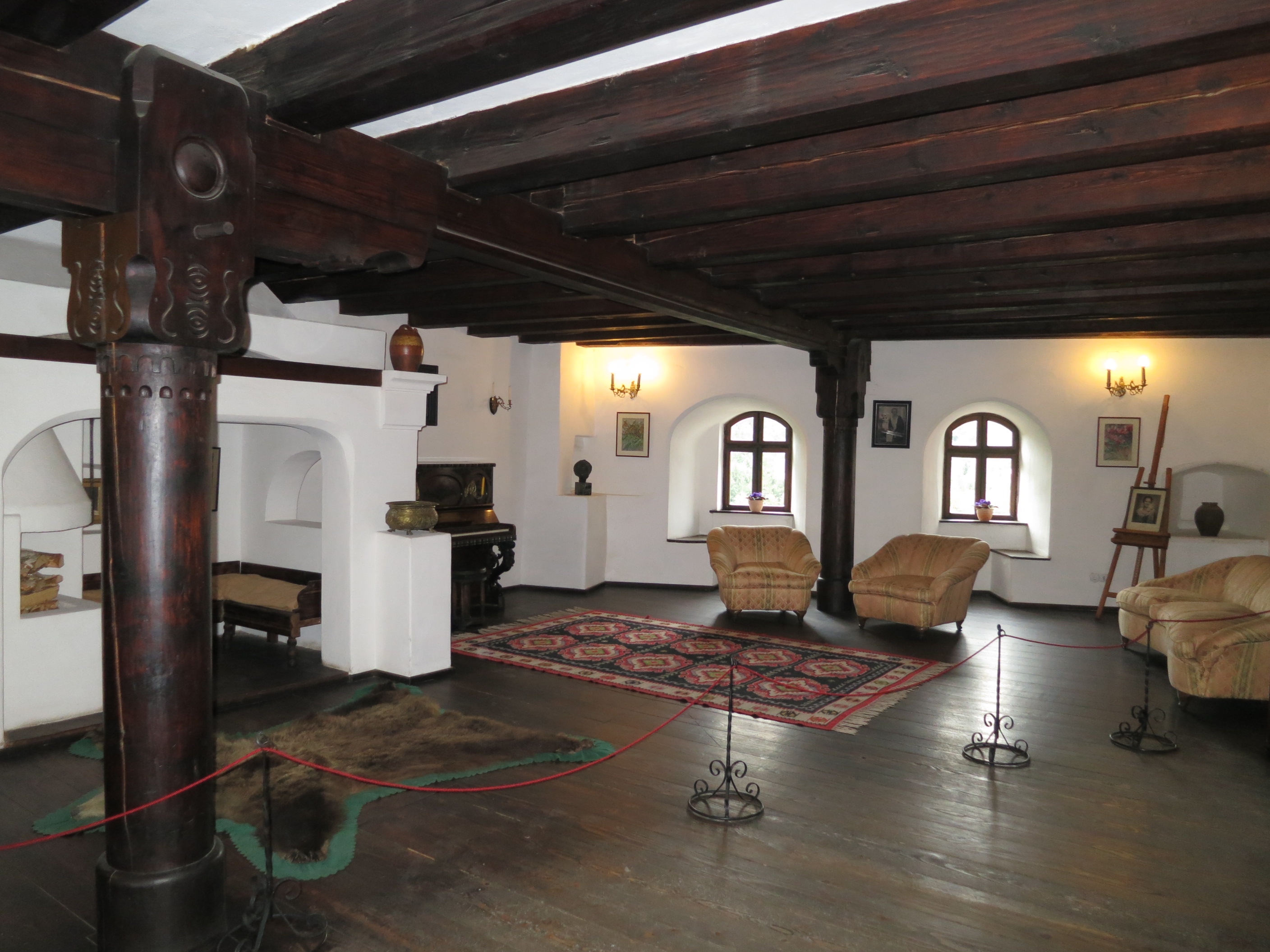
We thought this room actually looked like a room people would live in unlike so many of the cold, sterile rooms of the castle.

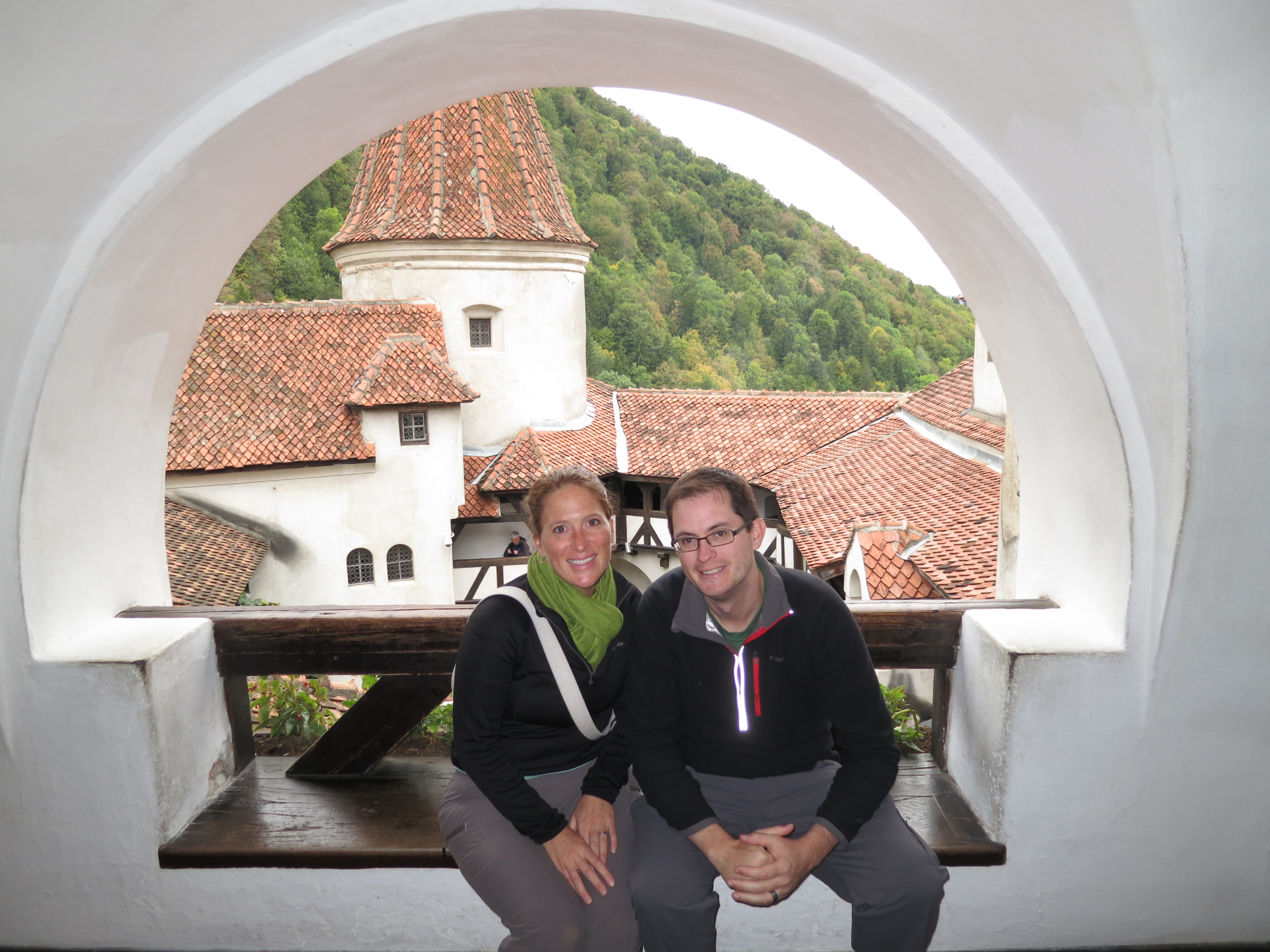
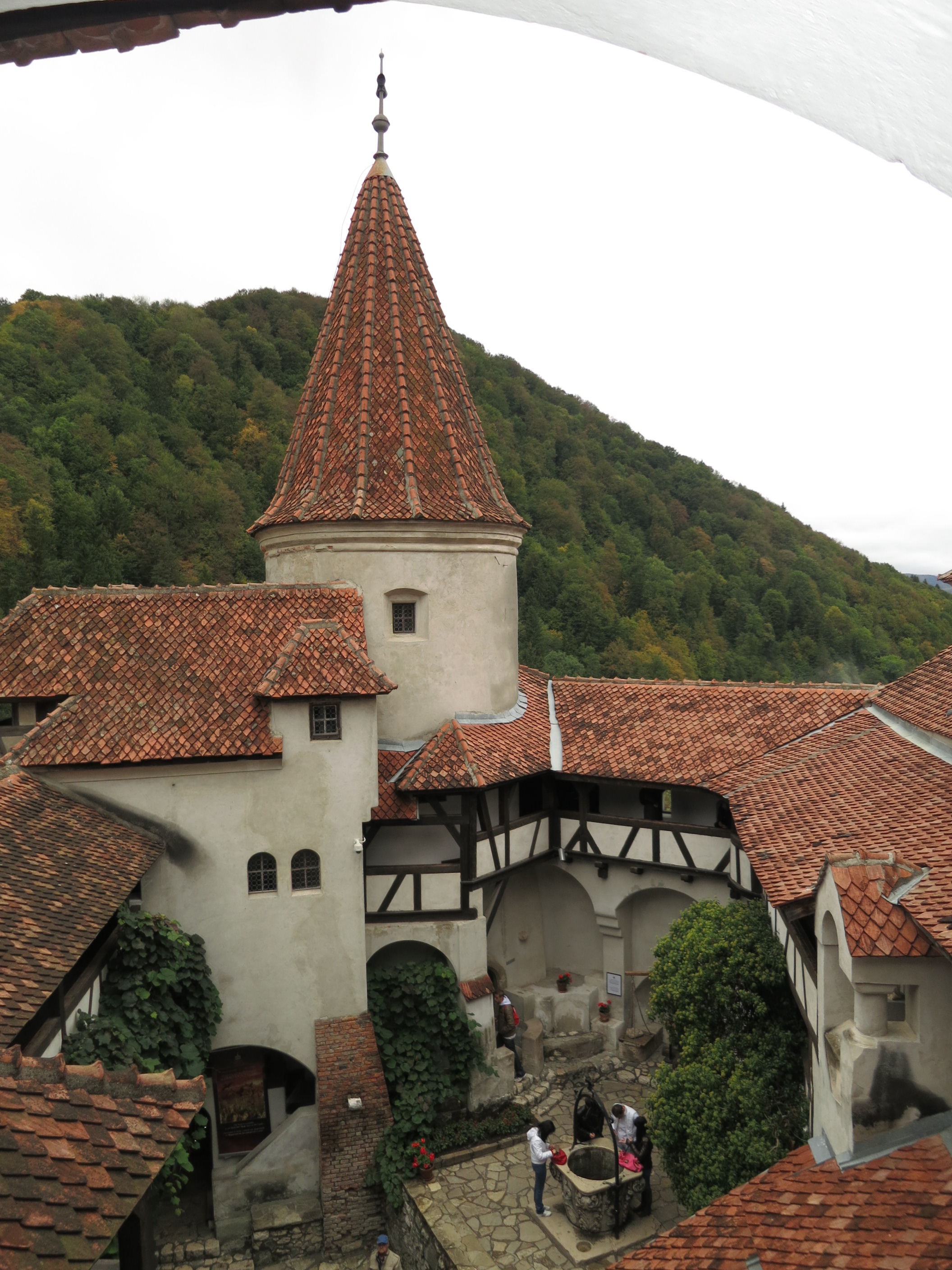
The inner courtyard at Bran Castle.

Categories: castles, Clothes, Destinations, Diversions, Europe, Exploring, Landmarks, Romania, Self Guided Tours, Uncategorized | Tags: , , , , , , , | 2 Comments

Bucharest: A Fixer Upper!

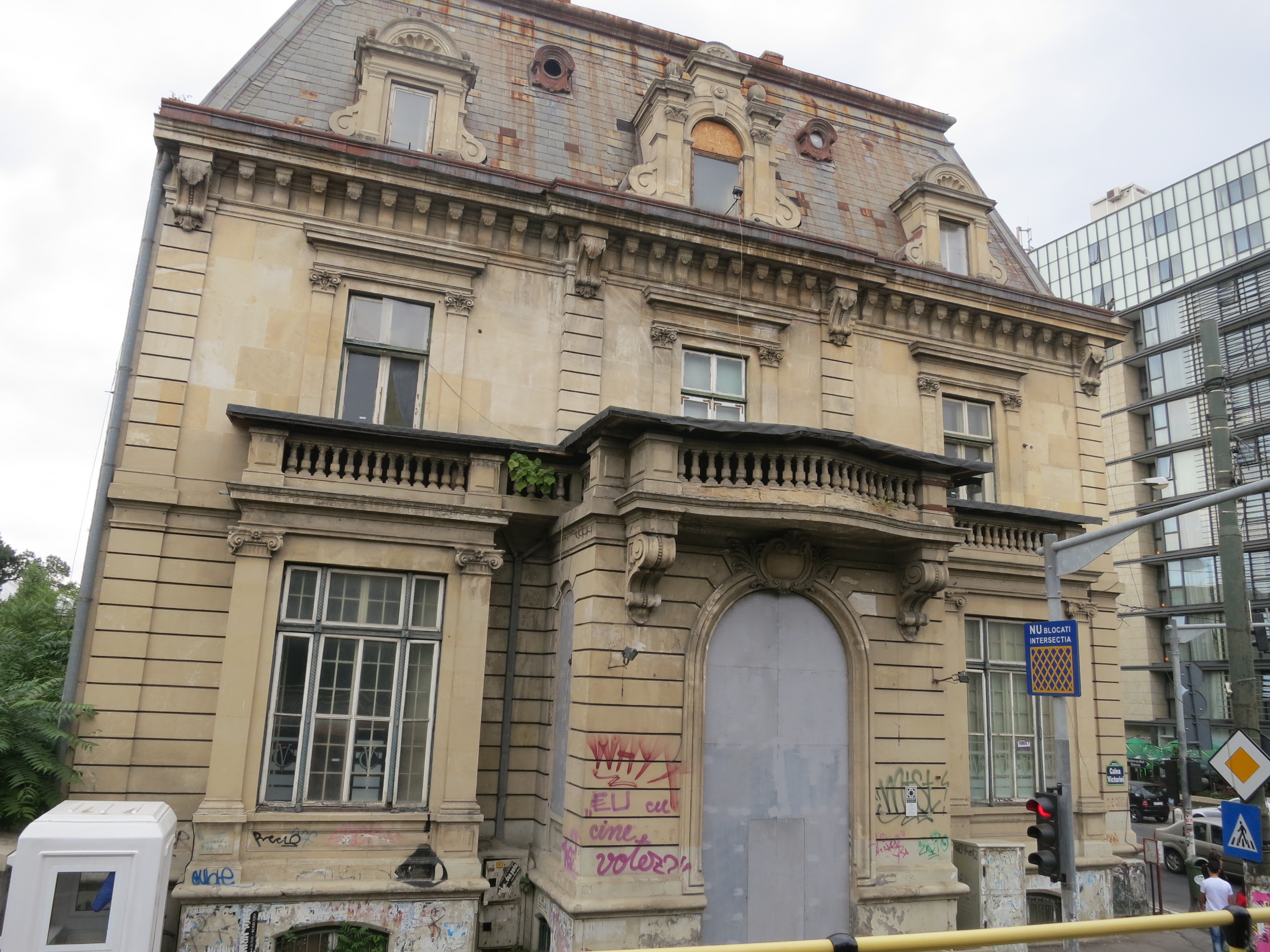
Imagine you go looking at a house or an apartment, and it’s nice, but it needs work.  The ceiling in the living room has a water spot, the roof needs to be replaced and the kitchen needs a complete overhaul.  The bathroom is functional, but a little dingy.  That’s the impression I get about Bucharest.  It has some amazing old buildings, beautiful architecture and vast green spaces, but it could use some work.  Some of the buildings have been kept up with vigor and look like they did on they day they were built, but determining which ones will be kept up seems a bit random.  Much of the architecture is dirty, with busted windows and scattered graffiti.  And there are lots of parks.  Big, spread out parks which encourage outdoor activities.  The one across the street from our hotel is always filled with people and is kept up nicely.  Well, pretty nice.  There is bird poop covering pretty much everything.  While this park is maintained pretty well, the park that sits outside of the Parliament building looks like it hasn’t had any real landscaping done in over a year.  It is this paradox that seems to define Bucharest.  On the one hand it is beautiful, but turn a corner and you have to dodge the stray dogs wandering the street and beware the loose wires hanging low over the sidewalks.

The perfect example of a building with the potential to be lovely, but which is really just neglected and busted up.

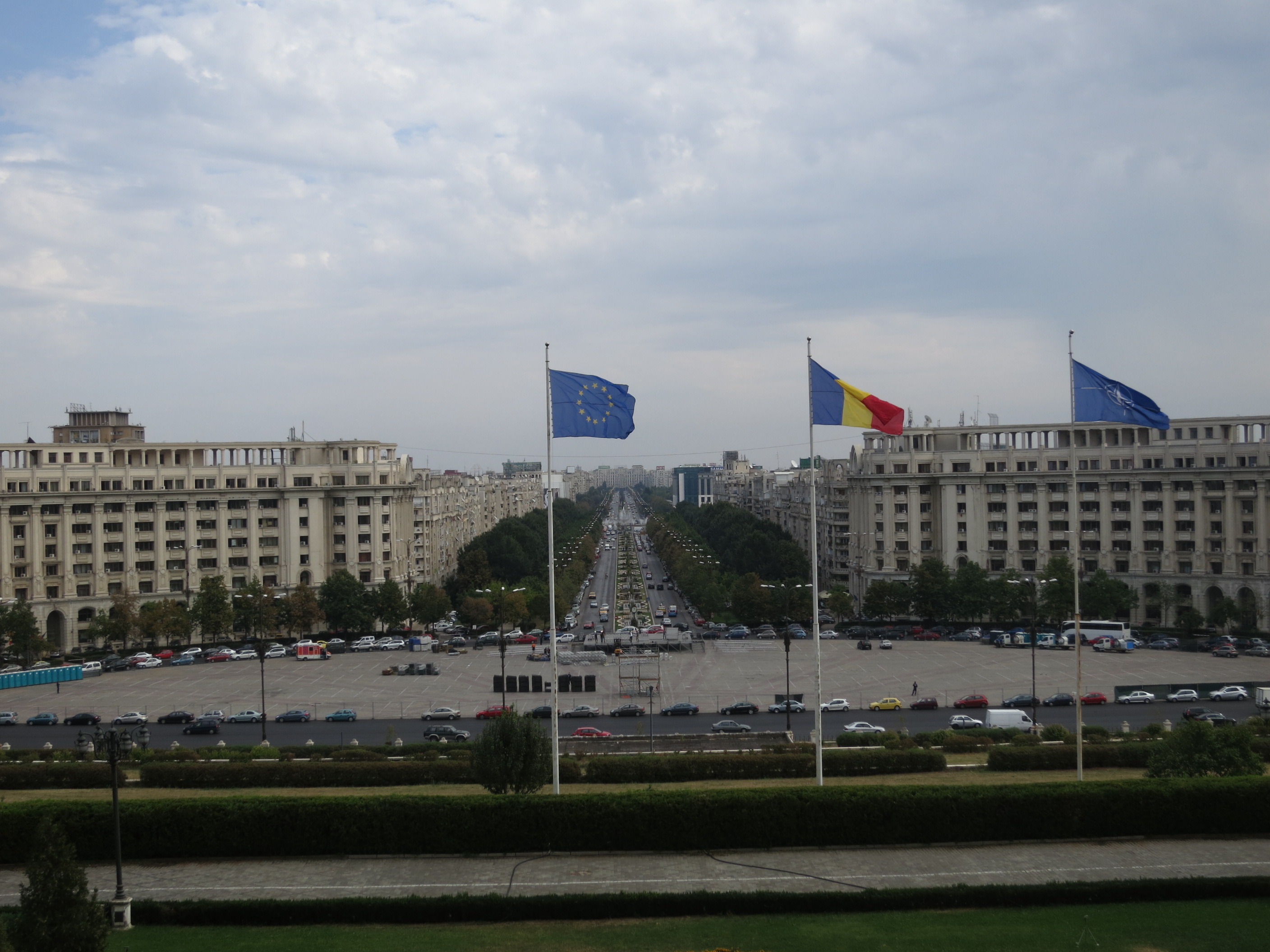
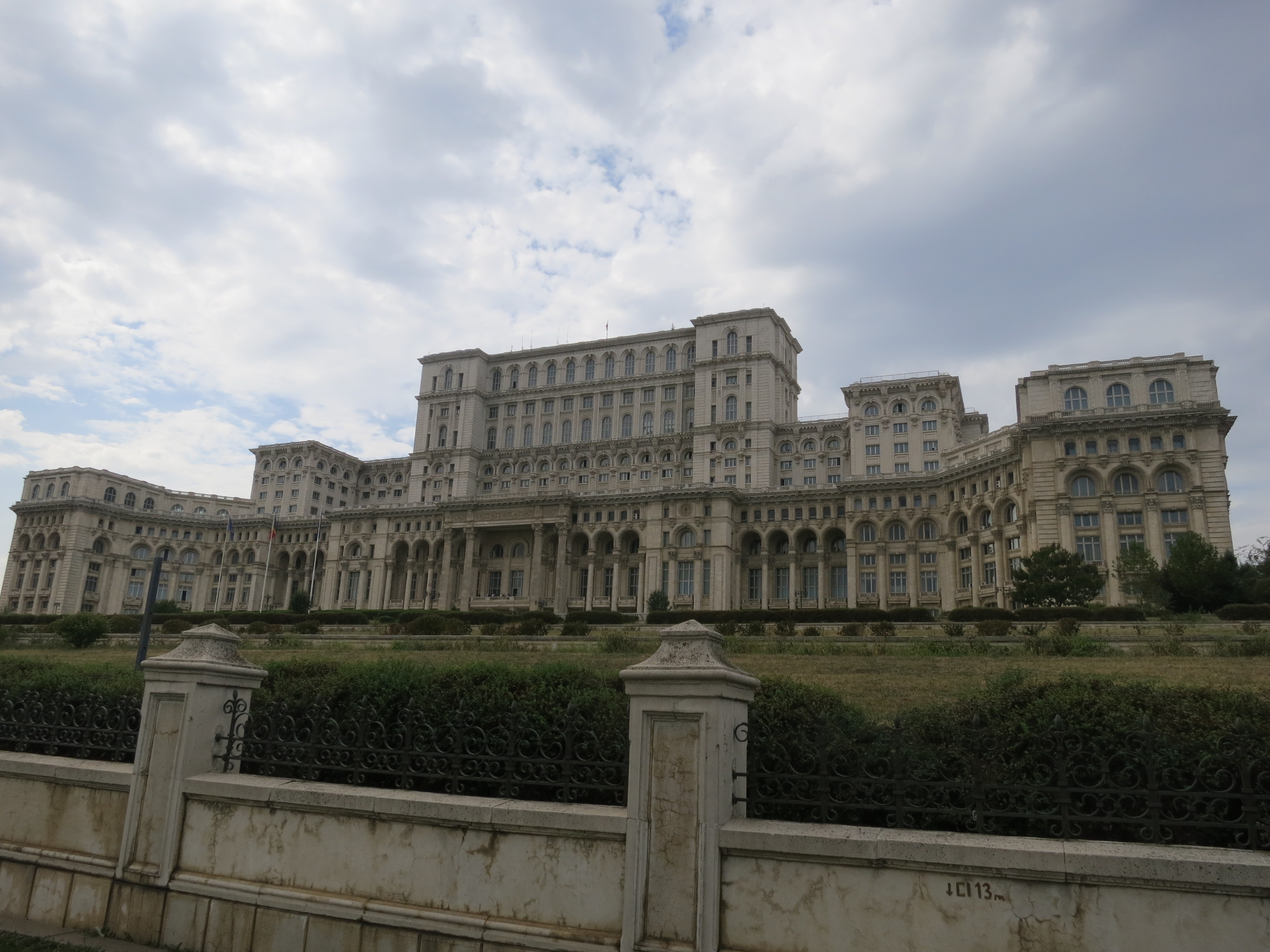
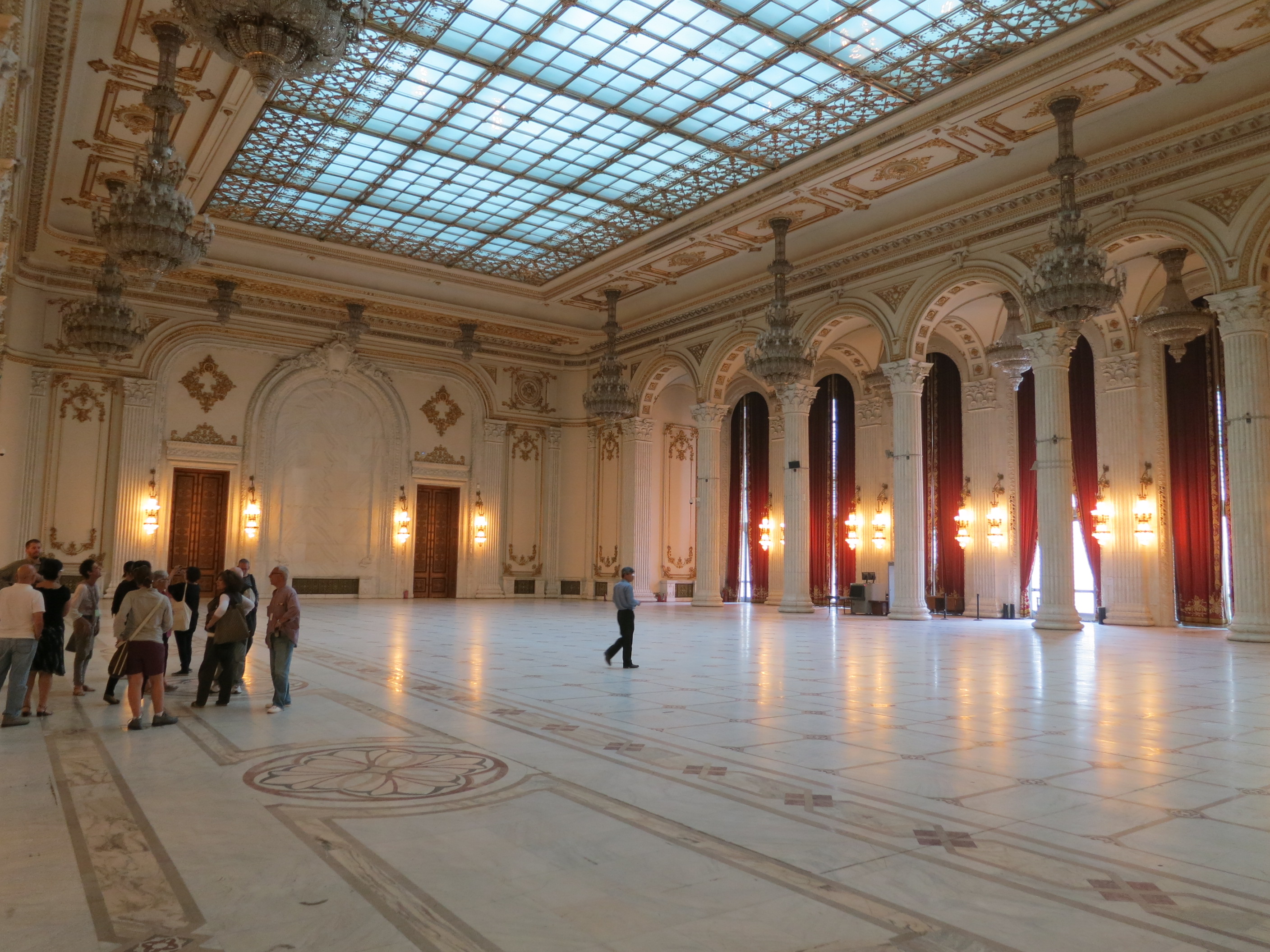
All this being said, we have really enjoyed discovering this city and learning about a part of the world whose history is incredibly complex and interconnected to the surrounding nations.  Our main event for today was a visit to the Parliamentary Palace, home to both chambers of the Romanian Parliament.  This building is absolutely gigantic–actually, it is the second largest government building behind the Pentagon in Washington, D.C..  It looks like an old building, but it has actually been less than 20 years since its construction was completed.  The former Romanian Communist Dictator, Nicolae Ceausescu, built it as a part of his “reconstruction” of Bucharest.  After visits to North Korea and China, he was inspired to raze a stunning 90% of the historic center of the city, destroying monasteries, museums, hospitals and thousands of residences displacing over 40,000 people.  Not only did he build the Parliament building, but also a huge main boulevard meant to outshine the Champs de Elysees in Paris.  It does look rather grand now, but so many people were displaced from their homes during this time that many people resorted to suicide. The entire area was made over and the centerpiece is definitely the parliamentary building.  It required 700 architects to design and building began in 1985.  Its design centered around the whims of Ceausescu, however he did not live to see it completed.

Romania was a tough place to be in the 1980’s.  Ceausescu limited electricity, food, water and all basic supplies.  Schools shut down because they did not have enough electricity to run.  People didn’t work because they spent their days in lines for their ration of food.  The people got to a breaking point in December of 1989.  There were protests in central Bucharest, Ceausescu and his family fled but were hunted down and assassinated on Christmas Day.  After that, the new government decided to finish the Parliamentary Palace so the man power and resources which had already been put into it would not go to waste.  When we took the tour, it was very interesting to hear all of the parts of the building that Ceausescu designed just for himself.  For example, he was only 5’2″, so he wanted the stairs to fit his footsteps perfectly.  He made them rebuild the marble staircase 3 times.  He also left huge frames on walls where his portrait would have hung.  He has an entrance that was designed for his use only–of course, that was just a plan which he never lived to see through.

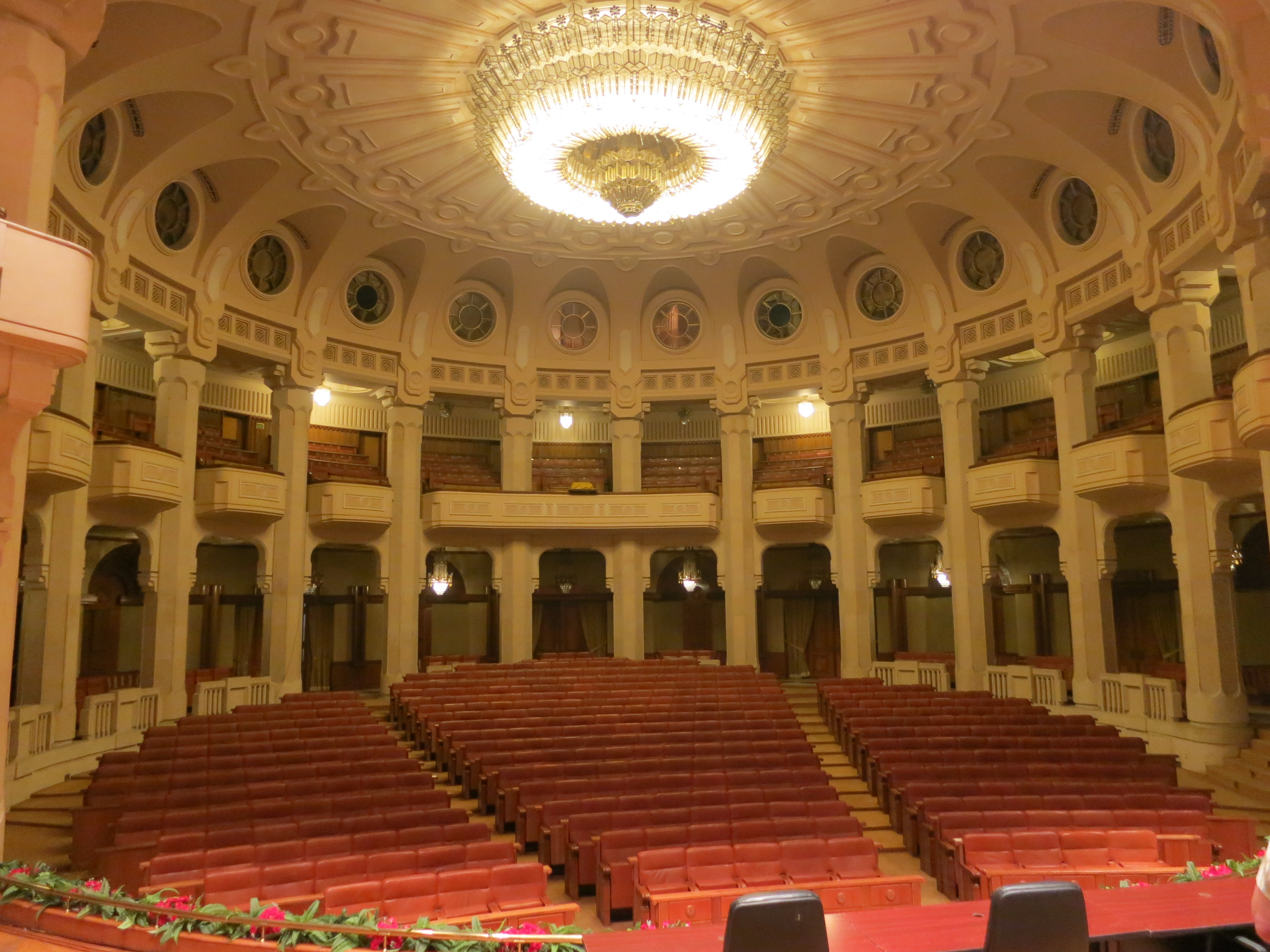
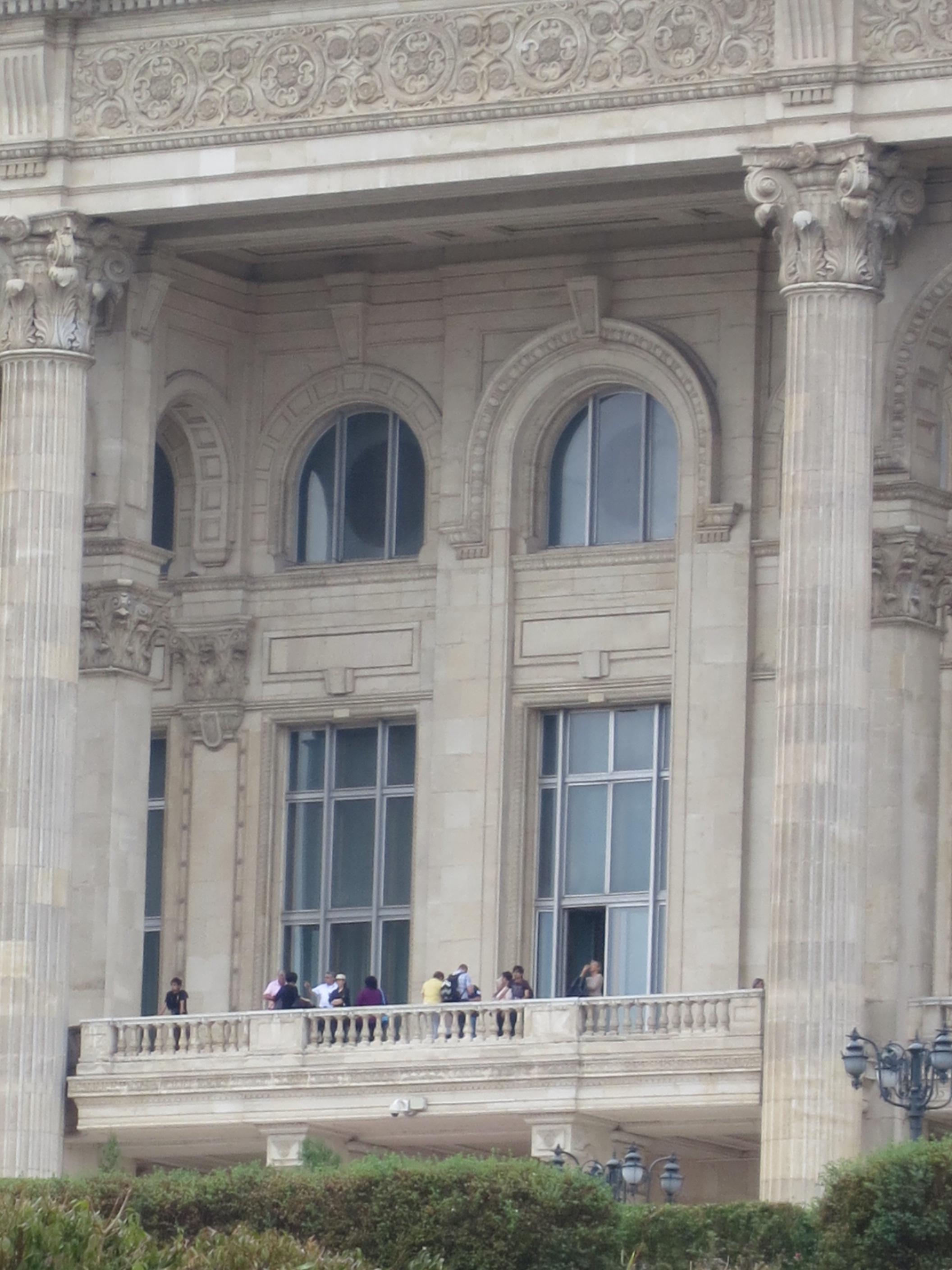
The building itself is really something special.  It is constructed entirely of Romanian materials, from the marble to the carpet.  Some of the drapes were hand embroidered by nuns at a local monastery.  Our guide told us they didn’t want to do this work, but Ceausescu said he would destroy their monastery if they refused.  I think there was a lot of that kind of coerced work which was done for this project. It looks more like a royal palace than a state government building with over the top opulence clearly having greater importance than functionality.  The rooms now largely sit empty, waiting for conferences or other corporate events.  We were shown to the beautiful terrace which looks out on the main boulevard.  The first person ever to look out onto an adoring crowd from this terrace was none other than Michael Jackson.  This is where he famously said he was happy to be in Budapest–whoops!  Wrong city, but an easy mistake to make.  It must be since George Bush made the same mistake from the same spot some years later.

Can you see the empty framed space on the wall? This is where the dictator’s portrait would have hung.

When we finished the tour, we had walked approximately 1.5 kilometers and had only seen 5% of the building.  It goes 12 floors above ground and 7 floors below.  It has a bunker suited for nuclear war.  This place is truly massive.  It seems as though much of it is empty or rarely used, and they keep lights off and elevators out of service in order to save on electricity.

Things in Bucharest certainly seem to be better than they were in the 1980’s, but there still seems to be a long way to go.  This city has all the necessary infrastructure–highways, bridges, metro stations–but it could use a face lift.  It needs some people to really invest themselves in cleaning it up.  I’m not sure if that will happen anytime soon.  The man working the front desk at our hotel told us that their current president, Basescu, was just voted out by a majority of the Romanian people.  However, due to a loophole in the constitution regarding low voter turn-out, he will maintain his office despite the wishes of the people.  It reminds us a bit of Russia–is it a democracy?  Not really.

–Brooke

The George Enescu Building, a beautiful example of what many of the buildings here have the potential to look like.

It is hard to capture in photos just how massive the Parliamentary Palace truly is. Trust us…it’s big!

Can you see how small the people appear? This is the infamous balcony where MJ made his gaff!

Here is one of many examples of random wires hanging in the street. Is it live? Hopefully not, but I’m not going to be the one to find out!

Categories: City Visits, Europe, Exploring, Landmarks, Romania, Uncategorized | Tags: , , , , , , | 6 Comments

Helsinki, Finland!

The third port of call on our Baltic Capitals cruise was Helsinki, Finland.  Talk about a place we don’t know anything about!  If someone were to ask us what Helsinki is known for, we would have a hard time coming up with an answer.  After spending the day there, we still can’t give a great answer to that question, but we can at least speak to it with a bit more confidence.

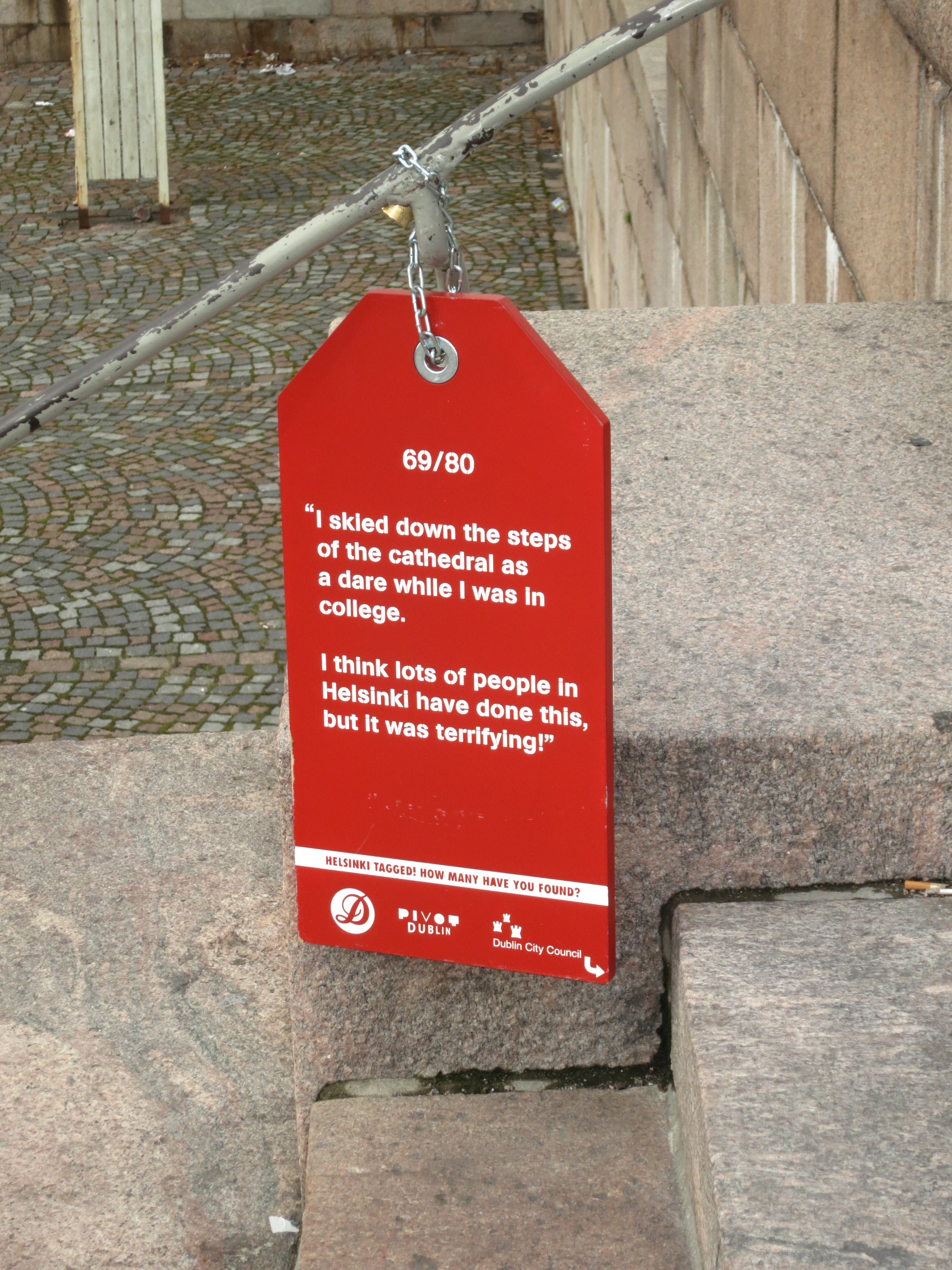
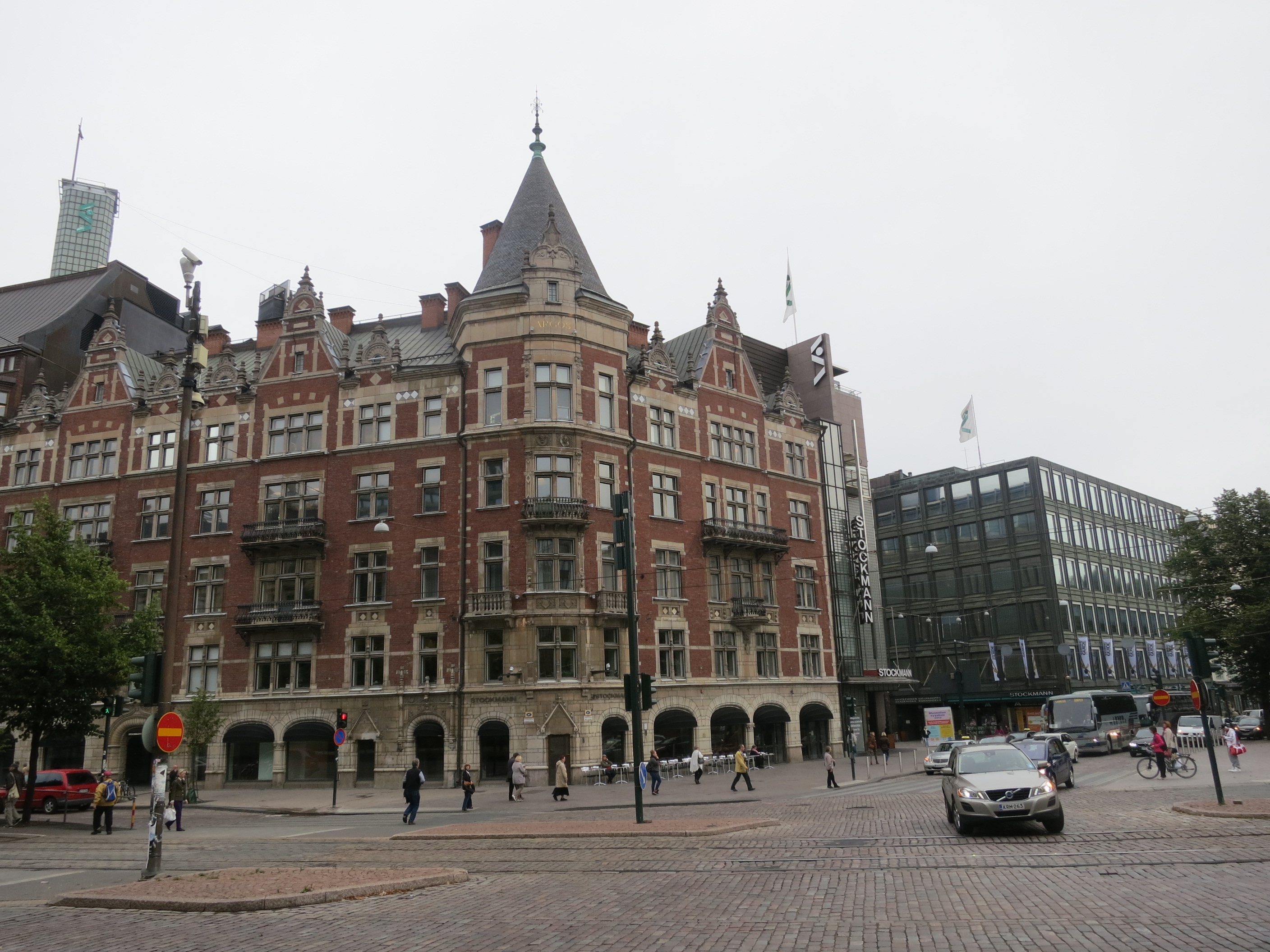
In order to make the most of our day, we got up bright and early, disembarked from the ship and made the lovely 30 minute walk from the cruise port into the city center.  One of the first things we noticed in Helsinki was the number of public art projects scattered throughout the city.  We came upon a park which had “knitted graffiti” covering many of the trees.  Essentially, people have knitted all kinds of patterns–stars, sunshines, flowers, etc.–and covered the park’s trees with them.  It is an interesting and surprising twist on the idea of graffiti.  We also noticed these red tags on many of the major landmarks.  A project called “Helsinki Tagged” has 80 different red tags spread around different landmarks throughout the city.  Each one has a quote which shares someone’s memory of that spot. These are designed to give insight into Helsinki as well as create a fun image for passersby who read them.  We were definitely amused by them, and it was fun trying to spot them as we roamed the city.

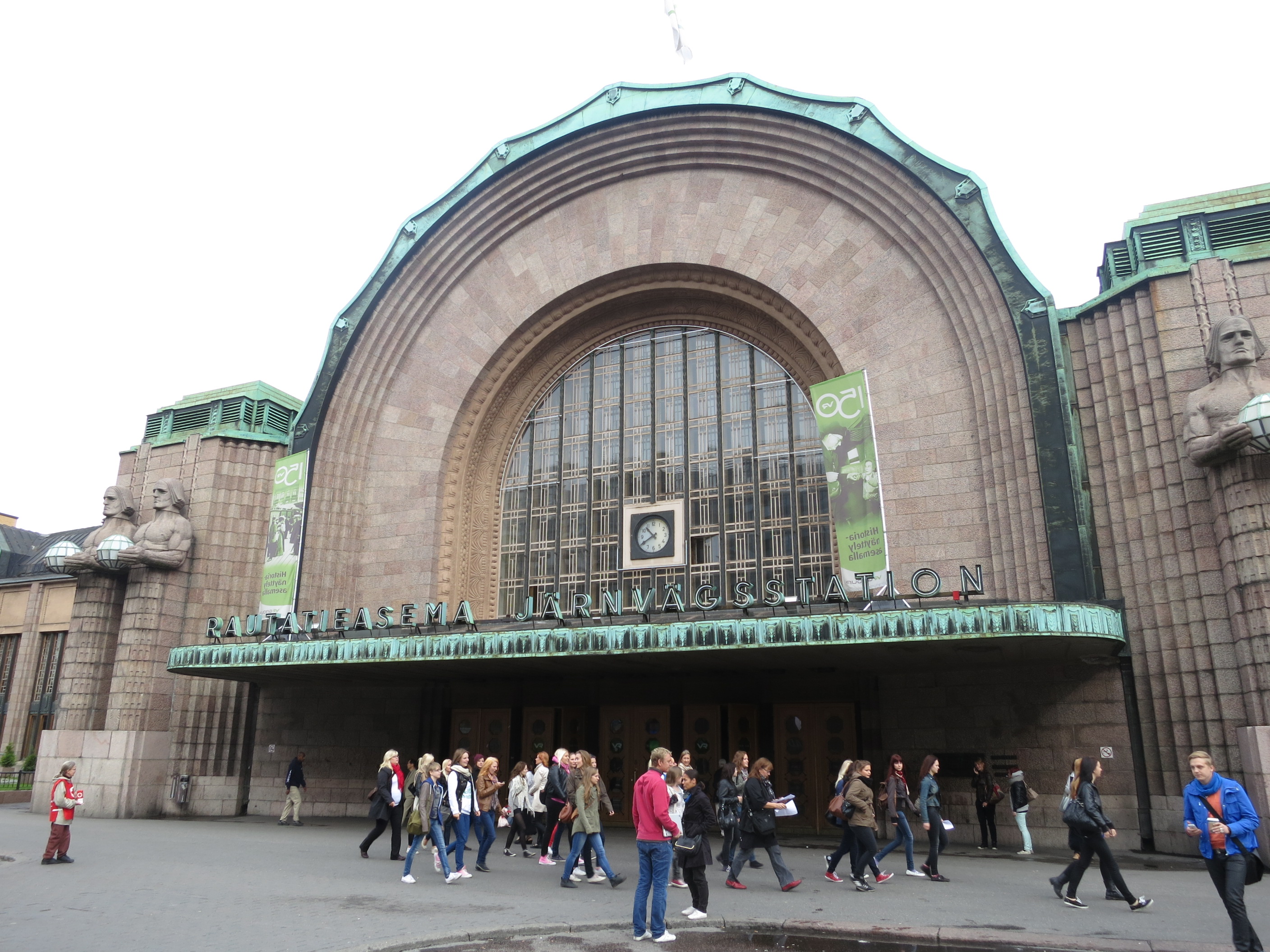
As we wound our way into the city center, admiring the public art, we soon found ourselves at the train station.  I should have known this was where Phil was leading us.  He loves trains and is very curious to see all these European train stations he has heard so much about.  Helsinki’s station is not quite as classic looking as Copenhagen’s, but it is still very impressive.  It was clearly designed for functionality, with large open spaces where people can easily find the train schedule or wait for arriving passengers.  Luckily for us, they had a small exhibit featuring the history of trains in Finland, including a discussion of how to build a system which works all year even through copious amounts of snow and ice.  As it turns out, it is more effective and efficient to have people maintain the signals so they stay free of ice and other obstructions.  They tried to do it automatically, but it didn’t work.  Not sure that’s a job I’d like to have, but hey, someone has to do it!

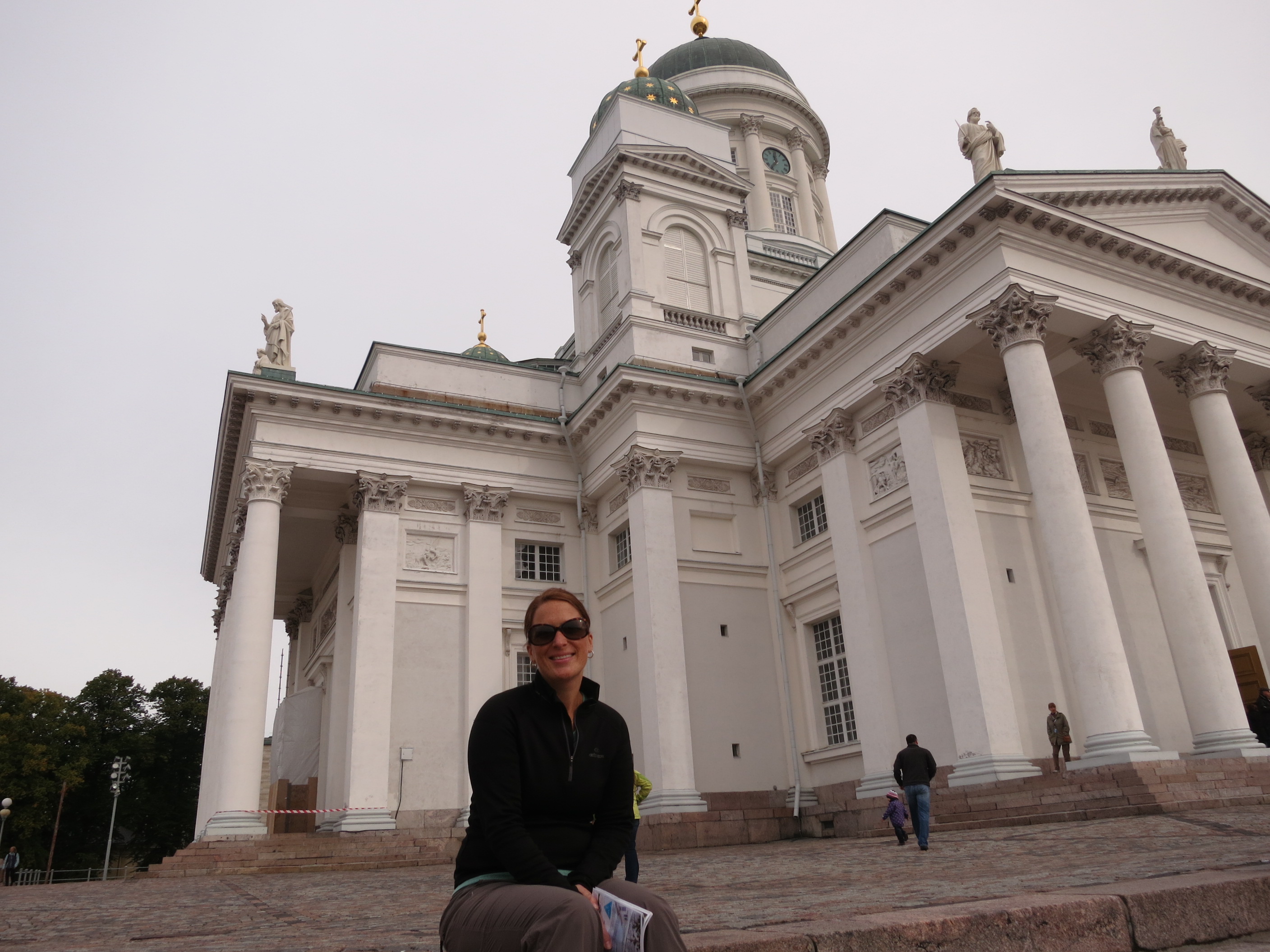
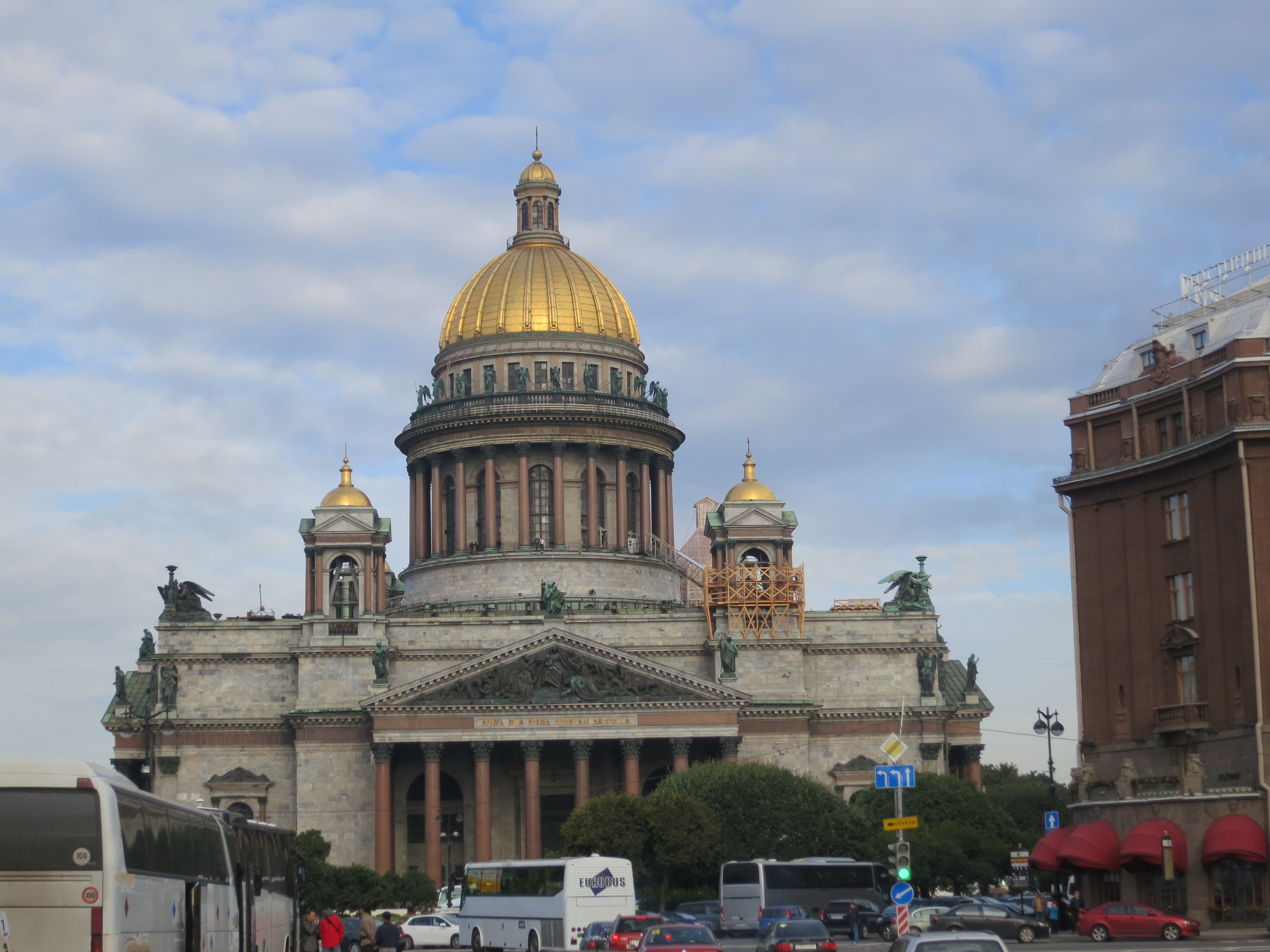
After the train station, we stumbled into the Helsinki Cathedral, a Finnish Evangelical Lutheran Cathedral which was built in 1852.  This beautiful, old cathedral is still in use today and the majority of the Finns in Helsinki belong to this parish.  As with most cathedrals, this one is filled with artwork and sculpture.  We were particularly taken with the sculptures of the 12 apostles which dot the roof.  When we endeavored to name all 12 of them, we came up short by about four.  At least we knew some! We ventured inside and discovered we had arrived just in time to wander around for a few minutes before it was closed to visitors due to accommodate a midday service.  From the steps of the cathedral we could see much of the city.  We looked on the horizon and spotted another cathedral, so we decided to head towards it and find out about it.  This red brick building turned out to be the Upenski Cathedral, the main cathedral for the Finnish Orthodox Church which also claims to be the largest Orthodox cathedral in all of Western Europe.  That is a bit surprising to me since it didn’t seem all that large.  And just like the Orthodox cathedral in St. Petersburg, there are no pews or chairs since everyone is expected to stand.  Why?  Don’t they want people to come to services?  Give ’em a chair and I bet attendance would soar!

By this point we had definitely had enough of cathedrals on our improvised self guided tour, so we headed toward the waterfront and the open air market.  As we were walking there, we heard a band playing, saw men in uniform marching and a processional of some important looking people walking into a large, gated building.  A crowd gathered around watching, so we figured something important must be happening.  We stood for a bit, watching the band and soldiers march by playing music which can only be described as patriotic.  (For all I know it could have been the Finnish National Anthem, it isn’t like I would have recognized it!)  Once the band had marched away, we headed across the street to inquire as to what we had just seen.  Apparently, this was the formal welcome for the new ambassador from Norway and this building we watched them go into was the Presidential Palace.  It was pretty awesome that we just happened to be at the right place and right time to see this event.  What a welcome!

We wandered through the market for a while, seeing that the main handicraft in Helsinki is knitting.  Sweaters, hats, gloves and socks abound in this market and I’m sure if you live in such a cold climate, these become life’s essentials.  The sky began to look ominous, so we decided to grab a late lunch and then head back to the ship.  We weren’t wrong about the Ca–it started pouring as soon as we began the 30 minute walk back.  We were wet and cold.  Luckily, Norwegian had set up hot chocolate and cookies to welcome everyone back on board.  The weather continued to get even worse and the wind really kicked up.  It wasn’t an hour after we got on board that a rumor began to spread throughout the ship–our next port of call, Stockholm, Sweden, may have to be skipped.  Much speculation and distress occurred and finally after a few hours, the captain came on and told us that due to the weather we would not be going to Stockholm.  Apparently they weren’t concerned about getting into the port, but they were concerned we might not be able to get out and get back to Copenhagen.  Of course, we were very disappointed, but after seeing the 6 meter swells in the water, it started to make sense.  Thank goodness I was wearing that motion sickness patch–there were a lot of green faces on the boat!

And so, great day in Helsinki but sadly no Stockholm for us.  That means we have 2 days at sea on the Norwegian Sun.  Free food, music, open casino and activities all day.  Sleeping, reading, hanging out in the hot tub.  I suppose there are worse things!

–Brooke

Upenski Cathedral, a Finnish Orthodox Cathedral in Helsinki.

Sittiing on the steps in front of Helsinki Cathedral.

Helsinki Tagged, public art example.

This is the inside of the Helsinki train station. Simple, functional and beautiful.

Categories: City Visits, Destinations, Diversions, Europe, Exploring, Landmarks, Rail, Trains, Uncategorized, Unusual Experiences | Tags: , , , , , , , , , , , , | 3 Comments

St. Petersburg!

Naval ShipOne of the main reasons we chose to embark on a nine night Baltic capitals cruise was to take advantage of the opportunity to visit Russia. Obtaining a Russian tourist visa on your own is actually quite difficult, so we decided to make it easy on ourselves and book shore excursions organized by Norwegian Cruise Line for our two days in the old Russian Capital of St. Petersburg.

Immediately upon arriving in St. Petersburg we started to hear talk of Peter the Great. He is the founder of the city which he modeled off other European cities like Amsterdam. Because of this, it doesn’t have a lot of traditional Russian architecture, and instead has several canals, fountains and brightly colored buildings reminiscent of old cities in Western Europe. We learned so much in our two days and only wish we would have had some time to explore it on our own.

Originally called St. Petersburg (after Saint Peter, not the Russian Czar Peter the Great), this city has been known by a few different names. It was called Petrograd for about ten years in the early 1900’s, until the name changed to Leningrad when Russia became the U.S.S.R. and was ruled by the Bolsheviks. It stayed Leningrad until 1991 when the local government finally decided to let the people decide on the name. Apparently there was some surprise that the people voted for the name to be changed back to St. Petersburg. Our tour guide quipped that her grandmother was born in St. Petersburg, lived in Petrograd, also lived in Leningrad and died in St. Petersburg and she never even moved homes!

Our first day began with a river cruise through the center of the city. Everywhere you turn there is another museum, cathedral, park or historical monument. Most notably is the Hermitage, the largest art museum in the world with over three million pieces of art. We would have loved to see it, but each excursion included a visit allotted 4-8 hours inside, and that is just a bit too much art for us. The museum was originally built for the nobility, but has become public over the years. It is housed in the Winter Palace, and its surrounding buildings where the Romanovs as well as other nobility used to reside. It is said to be impossible to see it all in two days, but we met several art enthusiasts who were willing to give it a try.

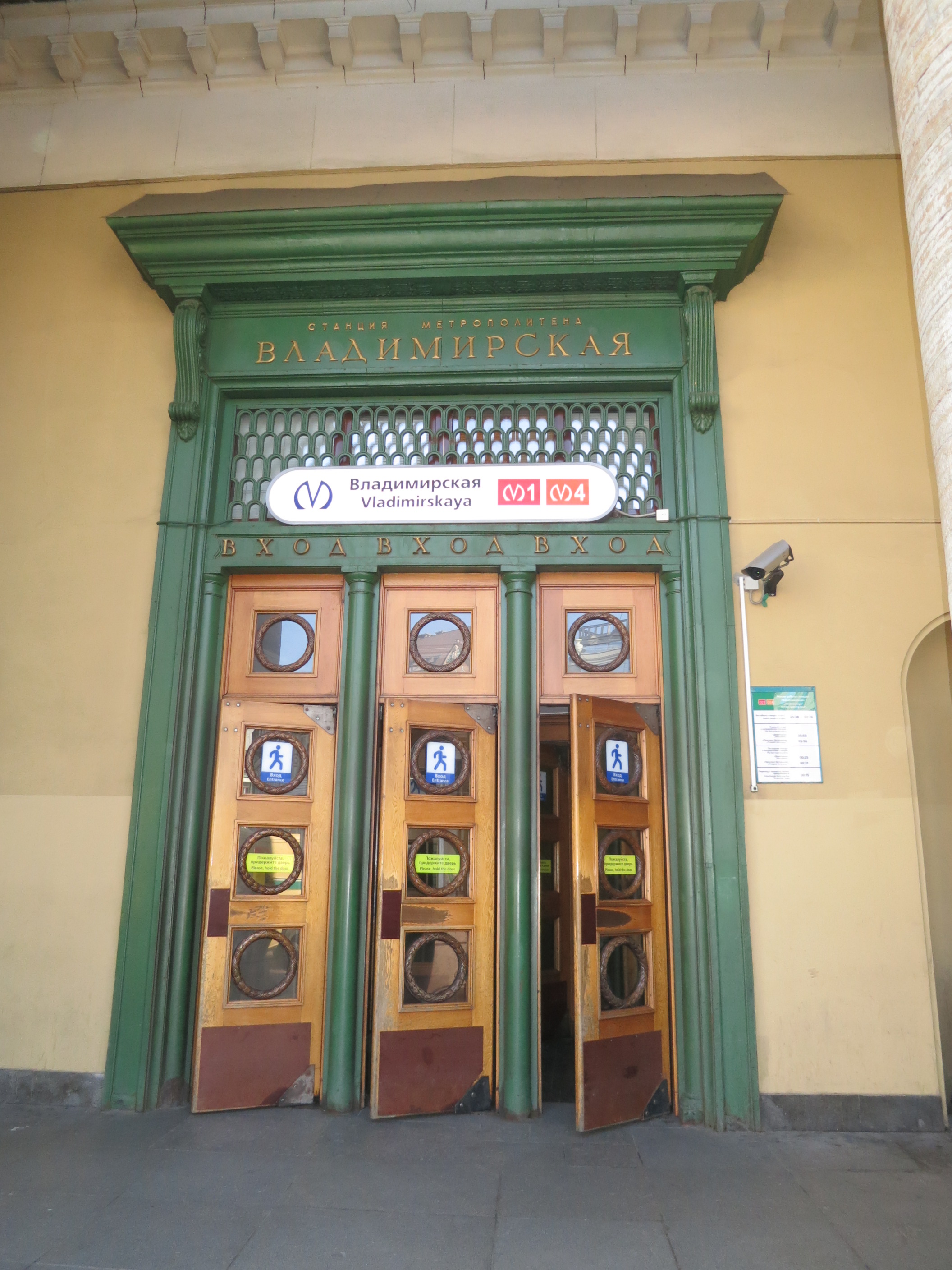
Entrance to the subway. We were actually allowed to take pictures of this!

We did not go to the Hermitage, but after visiting other landmark institutions we discovered that they are very particular about people taking photographs here. All of the museums charge tourists an additional fee to take pictures – once you have paid they give a colored sticker to place on your camera, otherwise you are liable to get fined or have your camera taken. The policy is even more strict on the subway – here, photos are not permitted in any of the stations! You can take them on the train, but none on the platform or in the buildings. This is such a shame, because their subway stations are absolutely beautiful. They are artfully designed, with huge marble columns and detailed decorations along the ceilings. It reminded us a lot of the beauty of Grand Central Station in New York City. There is even a large sculpture of Peter the Great which is set up like an art exhibit, blocked off by a velvet rope. Phil and I couldn’t help but think that this would last all of two hours (tops) in a New York subway without being vandalized and ultimately destroyed.

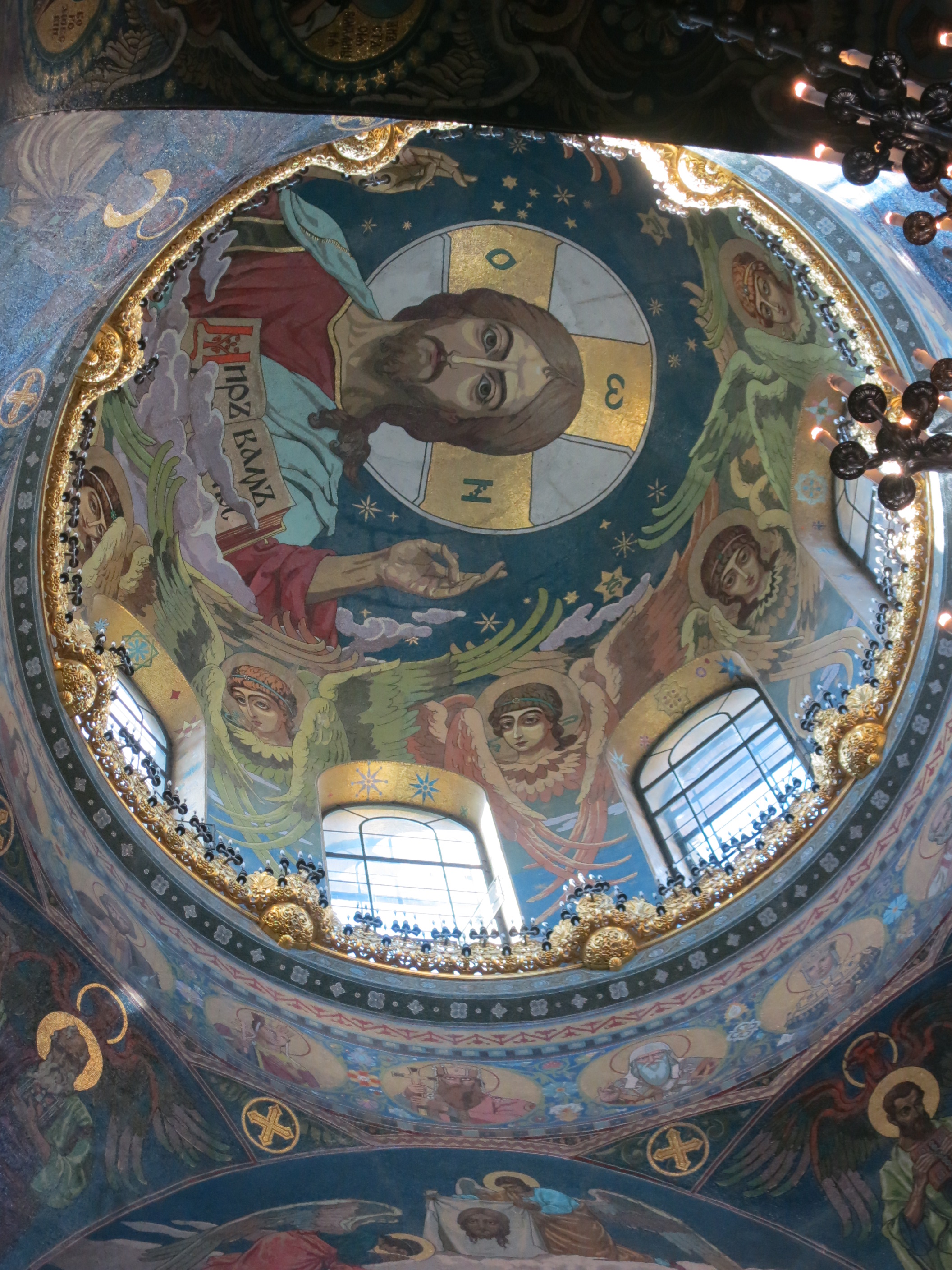
Probably the most iconic place we visited taught us an important lesson: It is very dangerous to be a czar. Sure, there is something appealing about the idea of being the leader: you get to rule the country, you have power and money and influence, but I don’t think it is worth it. Every other story we heard was about the killing of one czar or the brutal murder of another. One of the most notable stories is the centerpiece for the Spilled Blood Cathedral. Among a small number of buildings in St. Petersburg to look “Russian”, it was constructed on the site where Czar Alexander II was assassinated. Inside the cathedral, visitors can see a memorial directly above the spot where his blood was spilled–hence the colloquial name Spilled Blood Cathedral. The building itself is magnificent. It’s walls are lined with painstakingly detailed mosaics telling the stories from the Bible. In fact, this cathedral holds the largest square footage of mosaic art in the world. There was a notable absence of pews and when we inquired we were informed that parishioners are expected to stand or bow on their knees throughout the length of the service. Thanks, but I think I’ll pass.

Besides the plethora of cathedrals, museums and stories about Peter the Great, one of the most prominent topics of discussion was the weather. It is drab, dreary and depressing much of the year. Both of our tour guides emphasized the fact that St. Petersburg is on the same parallel as Anchorage, Alaska. Of course, it gets extremely cold and snowy, but even worse than that, they have less than 55 days of sunshine per year. Yikes! In the winter there is very little daylight, therefore finding distraction is important for the local people. Stereotype or not, drinking vodka seems to be the favorite distraction of most of the people here, and we got to experience it first hand.

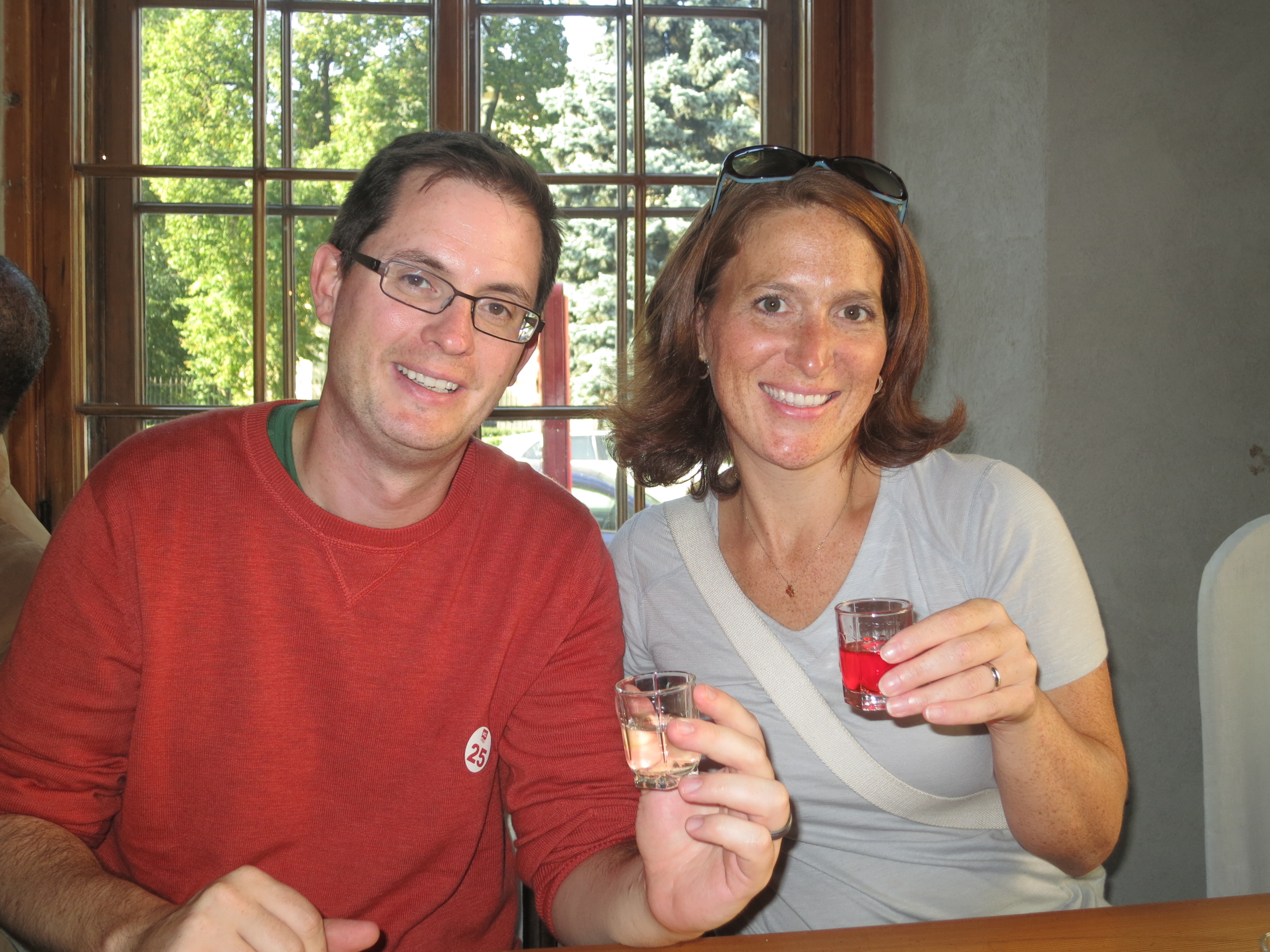
Our shore excursion on the second day in St. Petersburg was called “St. Petersburg through the eyes of the locals.” So, we did what locals do–we shopped at a mall, went to the farmer’s market to sample pickles and cottage cheese, and rode the subway. However, the most distinctly local thing we did was have a vodka tasting. That’s right! At the end of our tour, we went to restaurant where three shots of vodka were set up for each of us. There were three different kinds–horseradish, walnut, and cranberry vodka. They also set out some small pieces of toast and pickles to help wash it down. We had about 30 minutes to down all 3 shots, which was not a problem for most of us. However, it became apparent pretty quickly that some of the people in our group hadn’t done a shot of liquor in a while (not to mention three). The vodka was decent, I personally liked the walnut flavored one the best. However, what surprised us most is that there was no water on the table. No soda, no juice, nothing to wash the vodka down. This is so much different than it would have been at a tasting in America with all of its rules and regulations. Once 15 minutes had passed, most of the shots were gone and the stacking (and crashing) of shot glasses began. The crowd was certainly livelier after the shots, feeling warmer in both body and spirit, and we all understood the important role vodka plays in a country that can have such depressing weather!

All in all, St. Petersburg was a blast. We especially loved getting to see the magnificent subway system and learning a bit more about Russian history than we knew before. I’ll leave you with one more interesting note. One of the men on our tour asked the guide if Russia is a democracy. She said, “We are supposed to be a democracy, but are we? I don’t know.” She continued to talk about Vladimir Putin and extended term limits with cynicism and candor. It definitely showed us that perhaps the country has not progressed as far as Russia would have the world believe.

-Brooke

This is the ceiling of the Spilled Blood Cathedral. There was very little space on the interior walls which was not covered with some colorful artwork.

Here’s a sampling of the mosaics which cover the walls and account for the largest square footage of mosaic art in a single building in the world.

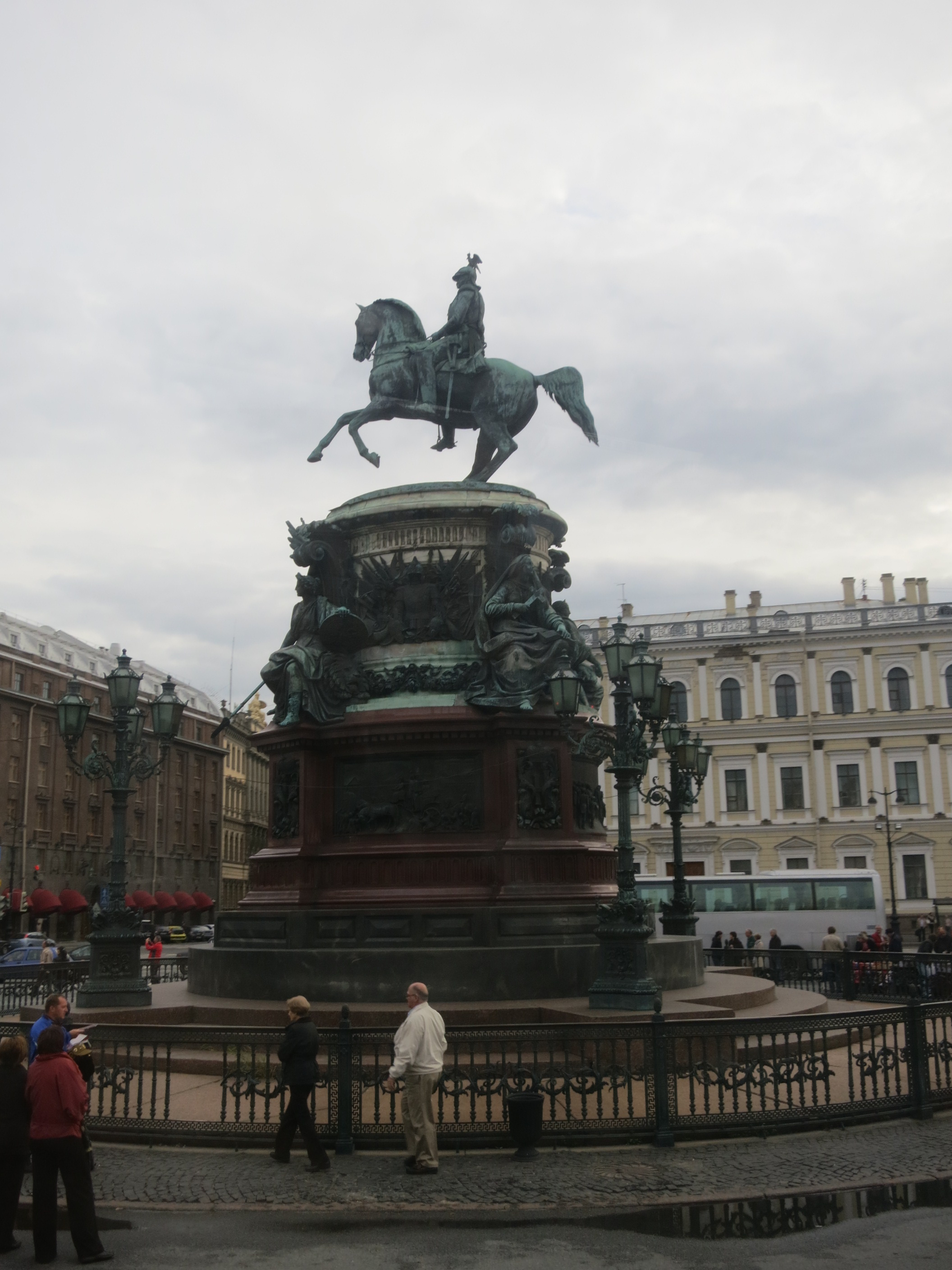
The bronze equestrian of Nicholas I s unique because it is the first horse statue in Europe to have only two support points, its rear hooves.  Impressive?  Apparently.

To celebrate St. Petersburg, the cruise ship hosted a “Taste of Russia” complete with borscht and stuffed cabbage.

Categories: City Visits, Customs, Destinations, Differences, Diversions, Europe, Exploring, Landmarks, Museums, Russia, The Cruise, Trains, Transportation, Uncategorized, Unusual Experiences | Tags: , , , , , , , , , | 2 Comments

Blog at WordPress.com.