Landmarks

Our time in Copenhagen Continues

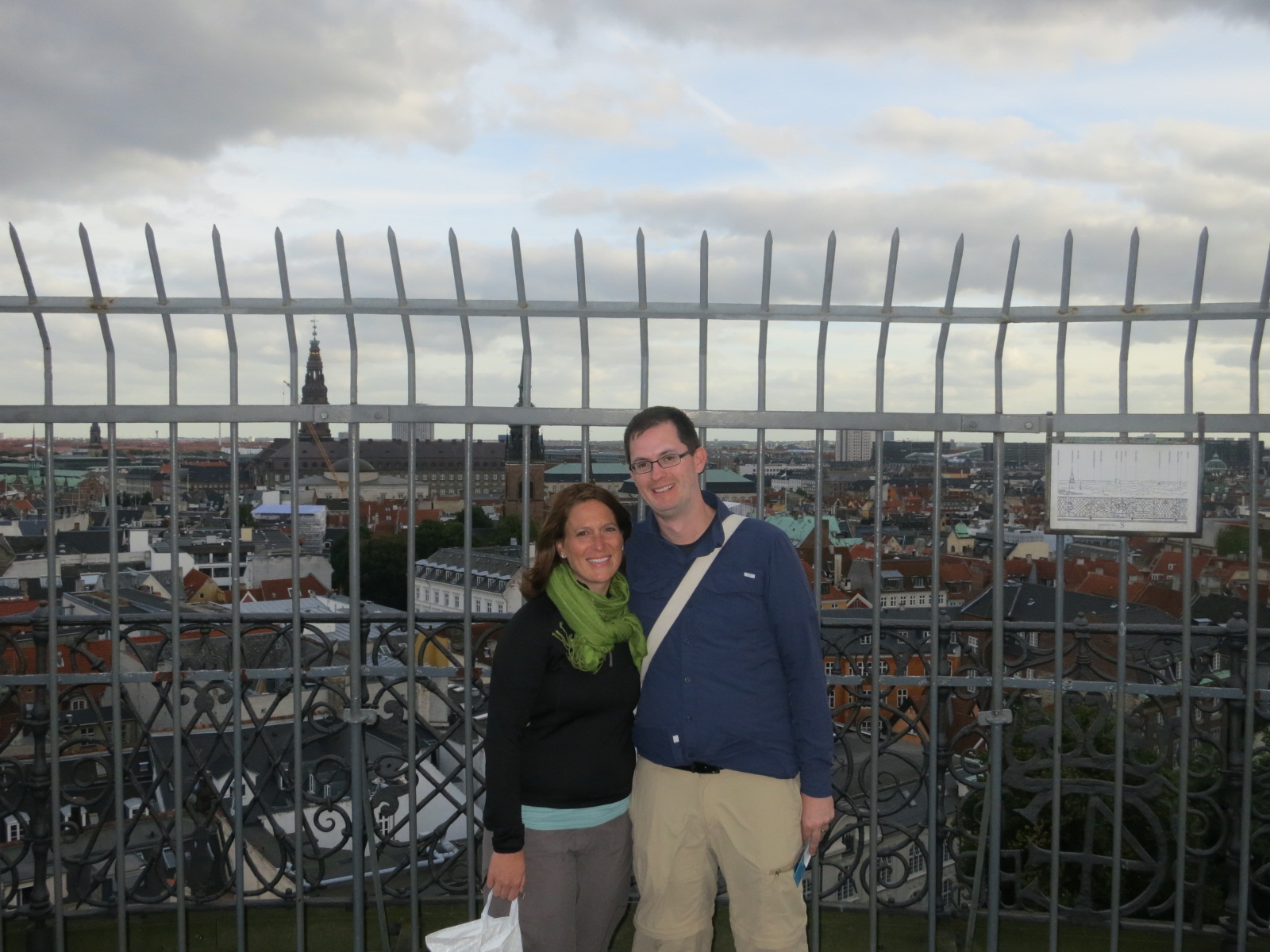
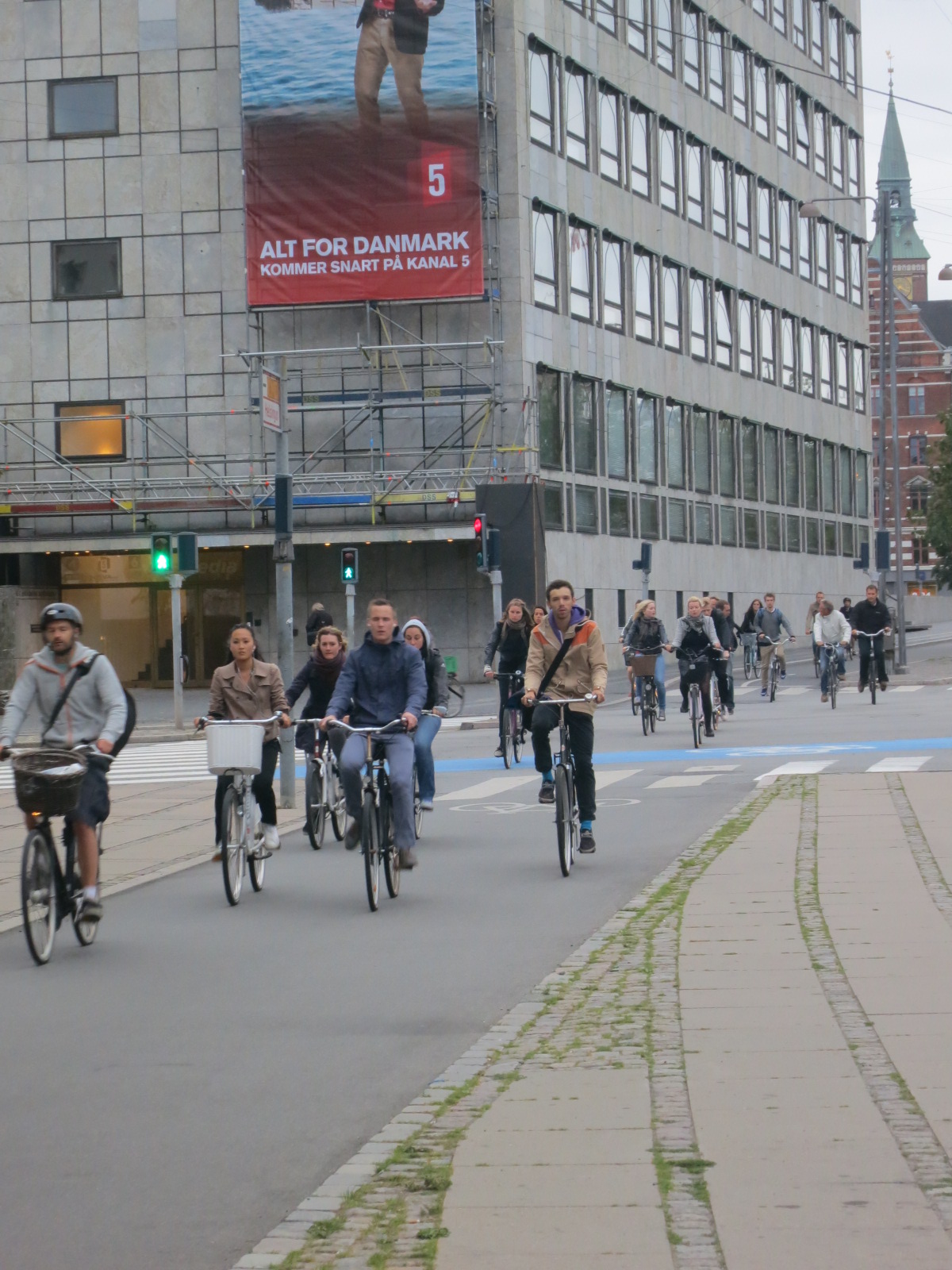
High a top Round TowerAh, just two days in Copenhagen and we already feel like we’re fitting in. I think we’re ready to be issued our bicycles now. Each day, scores of blond and blonder fit Danes ride their bicycles past me with an inviting arm outstretched asking for a high five. Or they might just be signaling a left hand turn. I’m not quite sure. I know Brooke mentioned it before, but the amount of cycling as a means of transportation is inspiring and stunning. Eveywhere you turn, there are dedicated, large bike lanes spanning a flat terrain full of polite cyclists scooting about town. We’ve also seen a couple of guys on roller skates, but we’re pretty sure that just means that their bikes are in the shop. Thus far, it’s been a blast exploring Denmark’s capital city. It’s a compact area with a sea of orange, slanted roofs and low rises that emit both an old and modern look. In one small area alone, you can walk the serpentine path to the top of the nearly 400-year old Round Tower, shop in a late 19th century storefront or stroll past the modern “Black Diamond” – the striking Royal Danish Library. The city is entirely walkable with (yet another – we’ve seen so many) stellar public transportation system comprised of buses, regional rail and an expanding subway.

People on bikesIt’s easy to think of Copenhagen as a sophisticated, classy, old-world city. Clean, organized, and cultured. As for the locals, I think that the best way to describe the people we’ve met is engaging. Once you a start a conversation with anyone from the bartender to the guy on the bus, everyone is talkative and eager to share. It doesn’t hurt that just about everyone speaks English incredibly fluently as a second language and many speak a third or even fourth language. Reading scores in Scandinavia are higher in general since virtually all television is in English with closed captioning in the native language. Hence, the country’s youth is often reading while watching television.

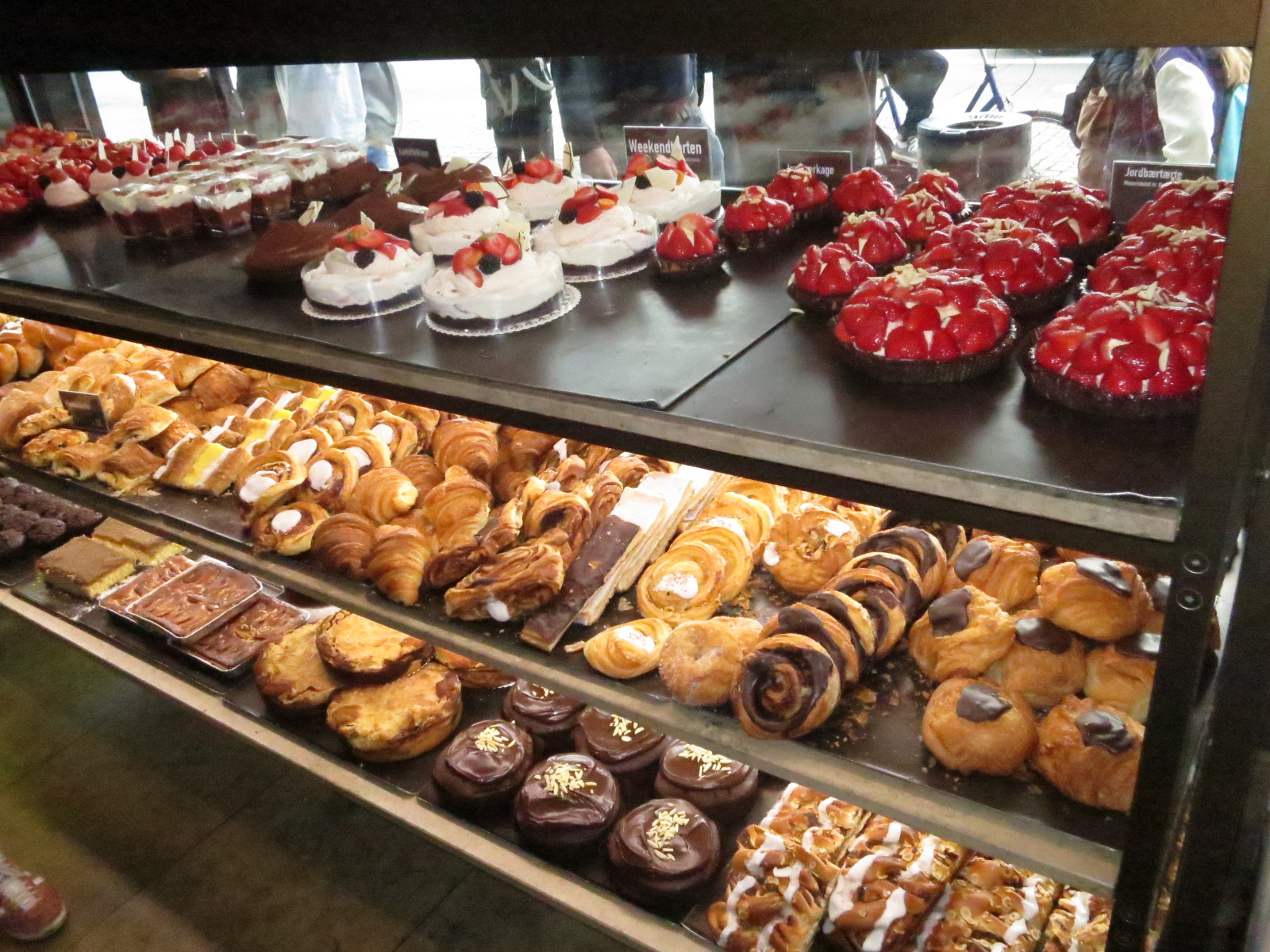
Oh my, that's deliciousWe realize that reflecting on the food is becoming a common motif in our blog, but some delicacies are too good not to share. If there is one thing Copenhagen does well it would be bakeries. Storefronts loaded with freshly baked pastries, breads, tarts and more are almost as common as ads for Carlsberg. We’ve sampled the ware and they deliver the tasty goods. We also sampled the national mid-day lunch dish – Smørrebrød (don’t worry, we can’t pronounce it either) which is essentially an open face sandwich made of everything from meatball and pickled cabbage to roast beef. Available everywhere, we stopped in an unassuming lunch place to give ’em a shot. Delicious! Only problem was that we didn’t know the custom is to order two or three since they are a bit on the smaller side. Learning as we go.

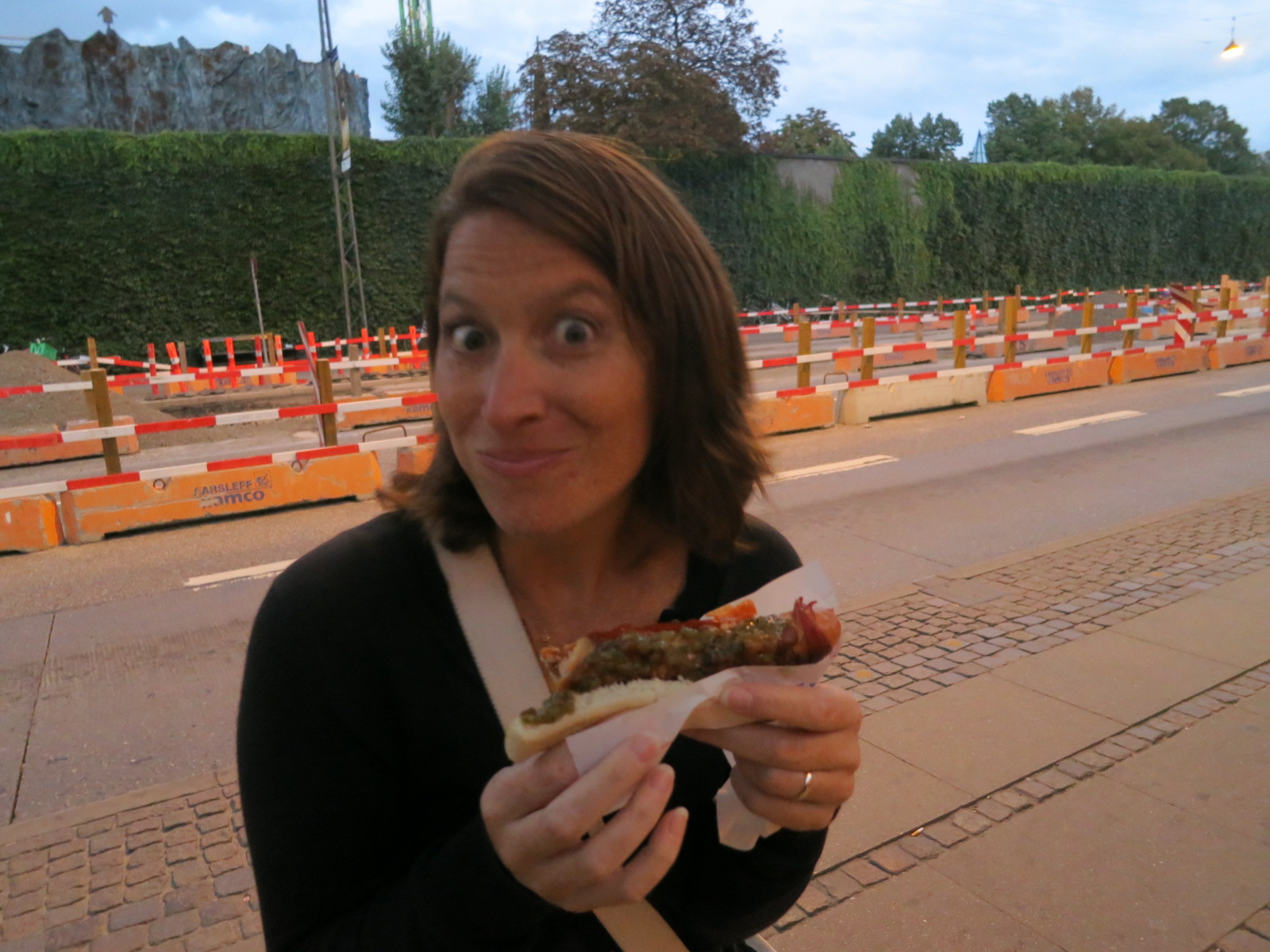
My wife with no mere everyday weinerAnother sensational “local” dish we discovered is, believe it or not, hot dogs from a street vendor. In a land known for sausage, this is some of the best street meat we’ve had in months. Large, mouth-watering sausages wrapped in bacon loaded with condiments? More, please. These put (most) NYC hot dogs to shame. And, yeah, we’re going back for another round today. Copenhagen also lays claim to the “World’s Best restaurant” – Noma. How is it? Amazing and delicious…are the words that a world traveler who could dream of being able to afford to eat there might.

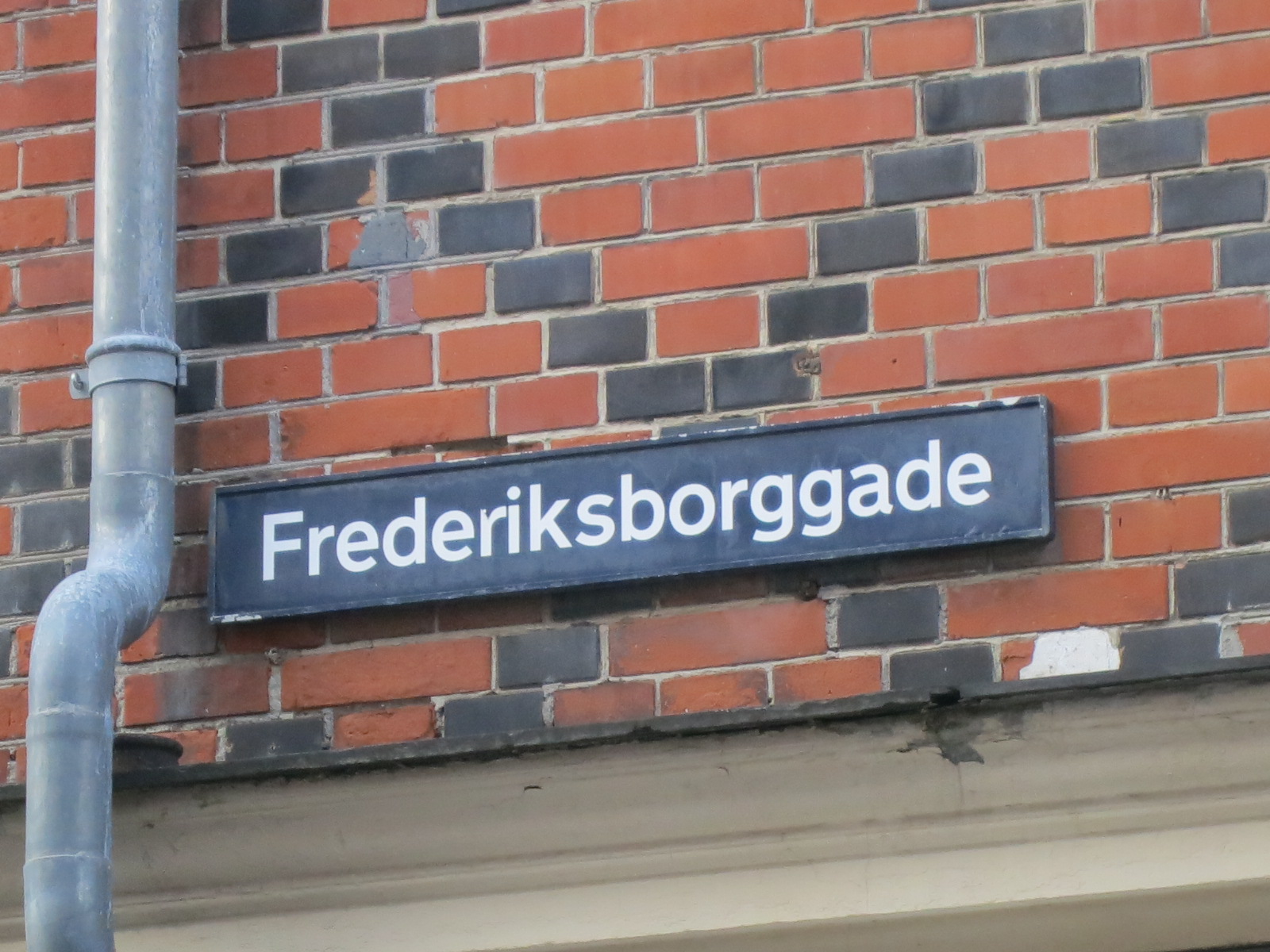
Example one of how to get lost in Copenhahgen

Street sign commonly seen in Copenhagen or example one of how to get lost

There is so much more to tell you about Copenhagen. Next time we’ll share stories of the Carlsberg Brewery, Christiana (the incredibly interesting community of squatters), and our amazing Air B ‘n B experience.

–Phil

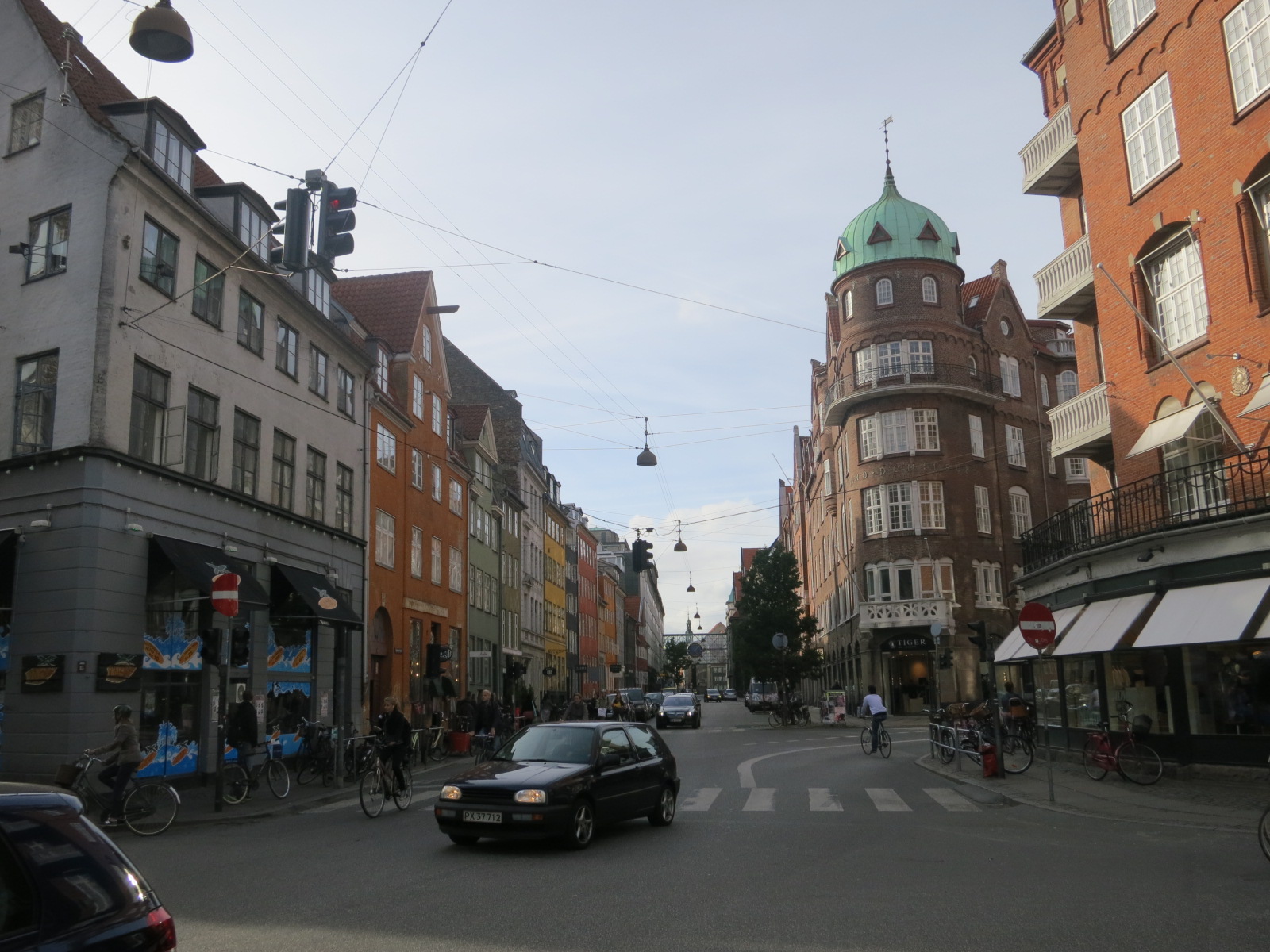
Stunning buildings on the streets of downtown Copenhagen

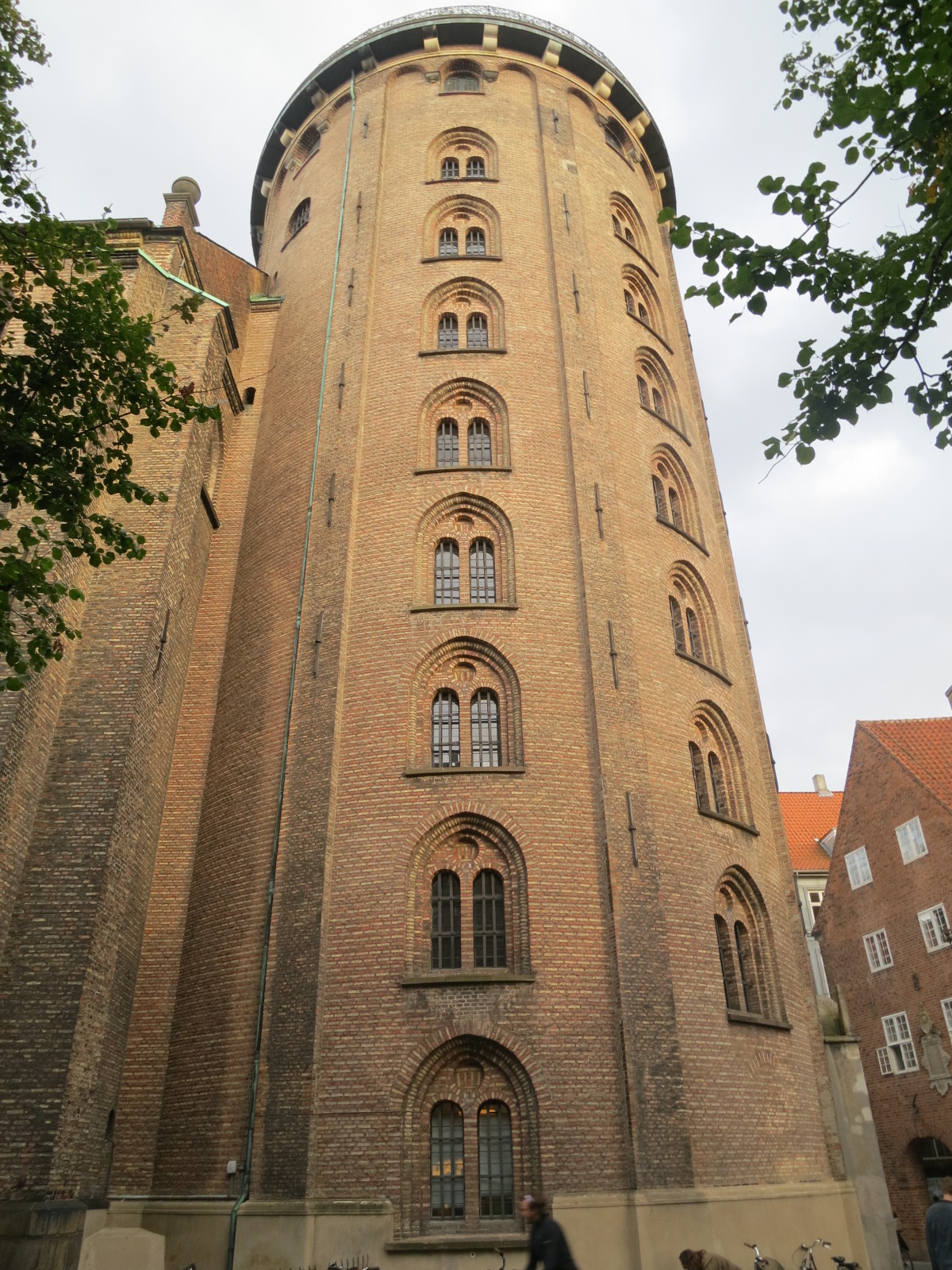
Round Tower

The Rundetarn- or Round Tower- build in 1642 as part of a church and observatory complex. Very, very cool walk up.


Categories: City Visits, Copenhagen, Destinations, Europe, Landmarks, Transportation, Uncategorized | Tags: , , , , , , , , , | 3 Comments

Vietnam: Wonderful and Strange!

Brooke and Phil at Ha Long Bay!As our time in Vietnam has come to a close, we are realizing some important things.  This is truly a developing nation.  I bet it was far different 20 years ago and I’m sure it will be vastly changed 20 years from now.  In spite of that (or perhaps because of it), it has also been a wonderful place to visit and would be a great vacation destination for anyone looking for an exciting and interesting place to go.

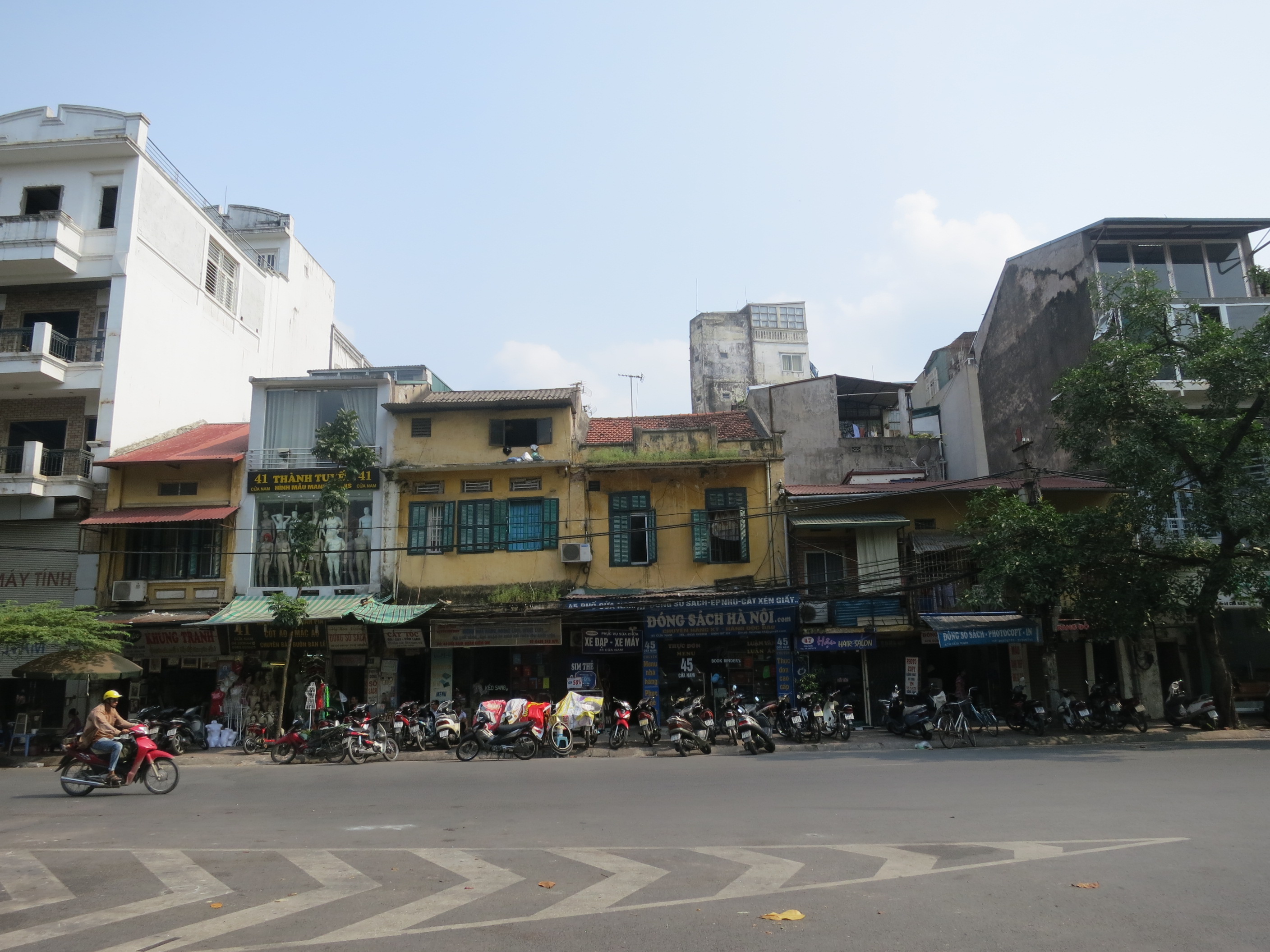
As we’ve said before, we have been staying in a section of Hanoi called the Old Quarter.  The narrow streets were developed long ago when foot traffic was the only transportation.  Today, the combination of cars, motorbikes, bicycles and walkers stretch the limits of these skinny roads.  In addition, the sidewalks where one might walk are filled with shops, people eating and drinking as well as parked motorbikes.  We looked at a few of the markets, seeing what souvenirs we could get from our time in Hanoi.   So much of what they sell is clothing and shoes.  At one store we saw a big pile of Tom’s, the canvas shoes which I love.  The concept with these is when you buy a pair, one pair is donated to a person in need.  When I saw this pile of shoes, my first instinct was that they are all fakes.  I considered them, and as we walked away I said to Phil, “I have a feeling that there will be no donation to the needy when I buy those shoes.  As a matter of fact, those may be the ones that have been donated.”  Now, I certainly am not getting on a moral high horse and we did buy some  souvenirs.  However, with the rumors of child/forced labor that abound in countries which manufacture goods cheaply, we have found ourselves a little more aware of what we purchase.

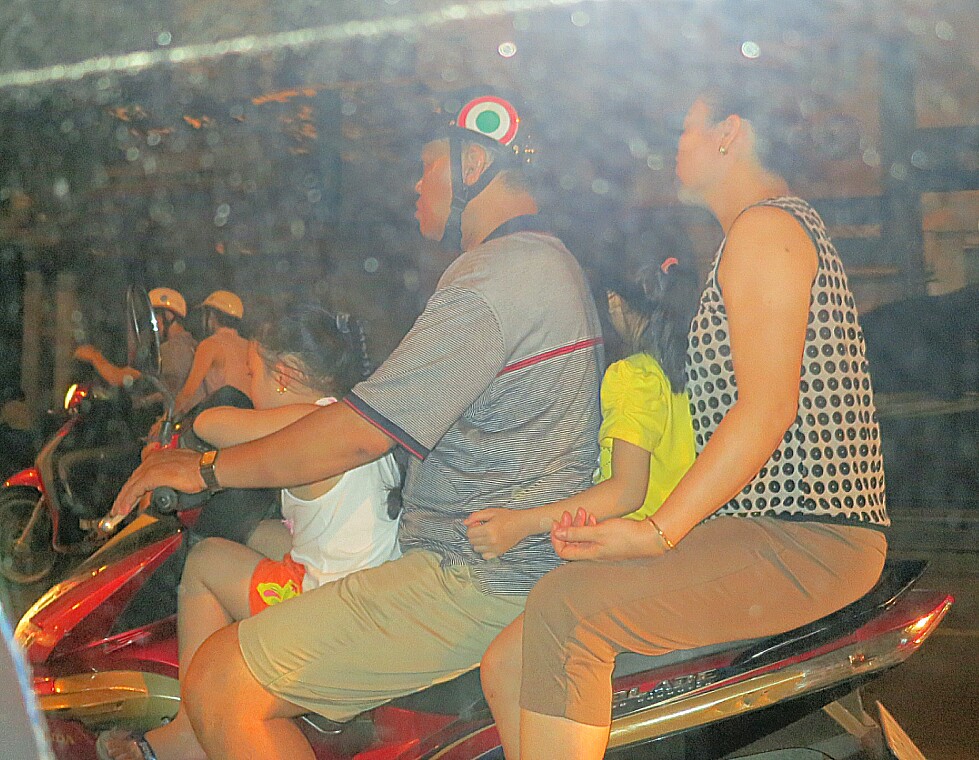
Four is too many!

This photo is a little grainy, but can you see the two kids on the bike with their parents? No helmets, which is very typical.

Another huge sign that this is a developing nation is the general lack of safety regulations. It isn’t that we felt unsafe being there at all.  Quite the contrary.  However, the streets are filled with motorbikes, some packed four deep and children inevitably are rarely wearing helmets.  When we asked about helmet laws we  were told they are required starting at age 8.  Age 8!  The only protection for the little ones is the arms of their parents.  On several occasions, we saw children sitting on the laps of their parents in the front seat of a car, as well.  We also inquired about the driving age and after they hemmed and hawed for a moment, they told us it is 18, but no one really sticks to that.  The road regulations are not the only place where we felt this lack of safety enforcement.  It is not at all uncommon to be walking down the street and have electrical sparks shower down from work which was being done overhead.  No fencing to block the sidewalk, no sign of warning.  On more than one occasion I jumped out of the way so as not to be right underneath the spray of sparks.

The other thing that really seals it as being a developing nation is the lack of potable drinking water and the general conditions of the public toilets.  Of course, it is not uncommon to go somewhere internationally and not be able to drink the water.  However, along with that are the scams that arise from bottles of water being reused and refilled with the local water and then being sold as new.  In order to make consumers feel safe, companies like Aquafina and Evian put safety seals around the caps which ensure it has not been opened before.  In addition, the public restrooms are by and large gross.  This was to be expected.  However, the lack of toilet paper and soap only add to the feeling that things in Hanoi just aren’t very clean and visitors have to be careful not to spread germs and get sick while here.

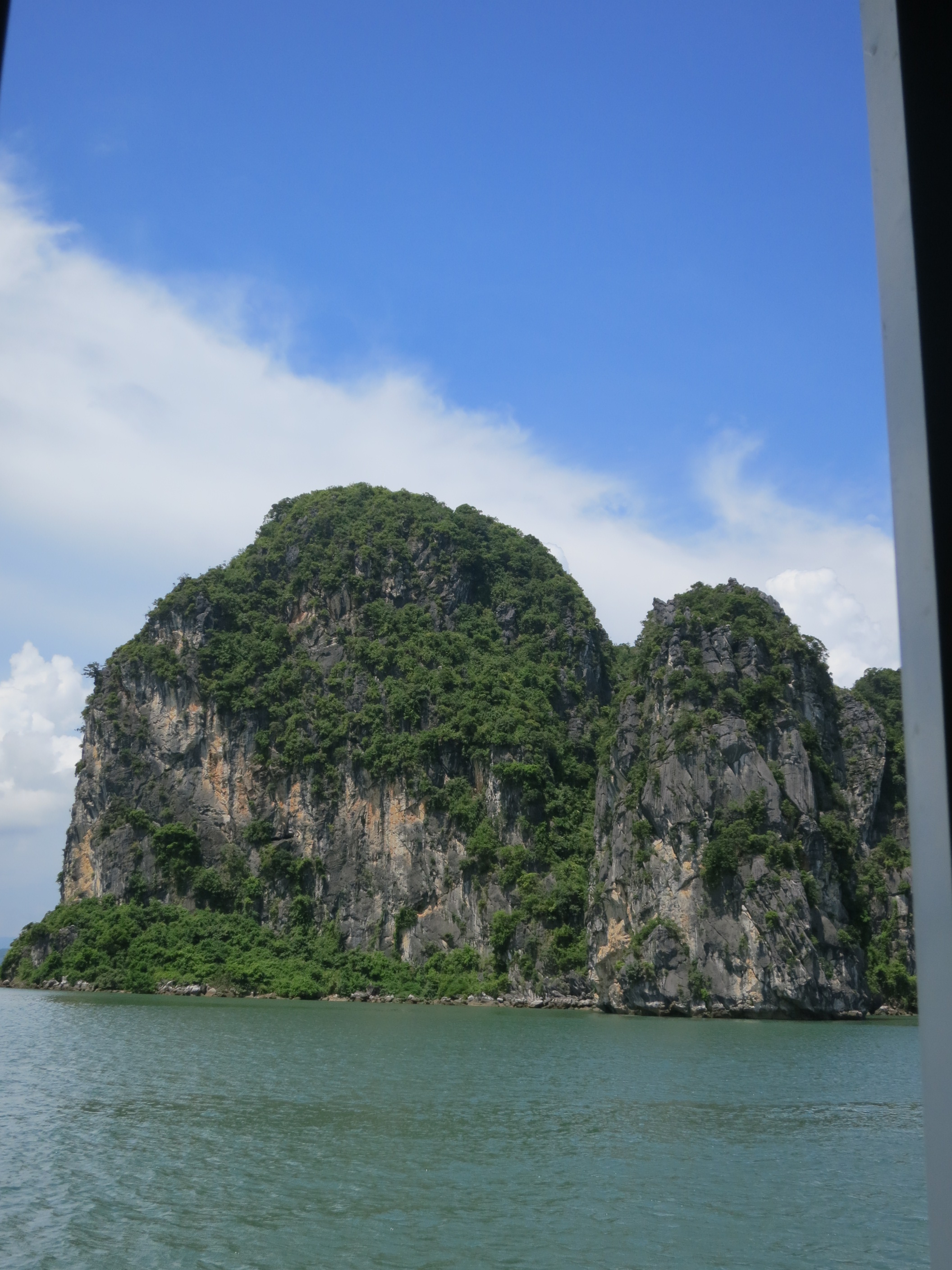
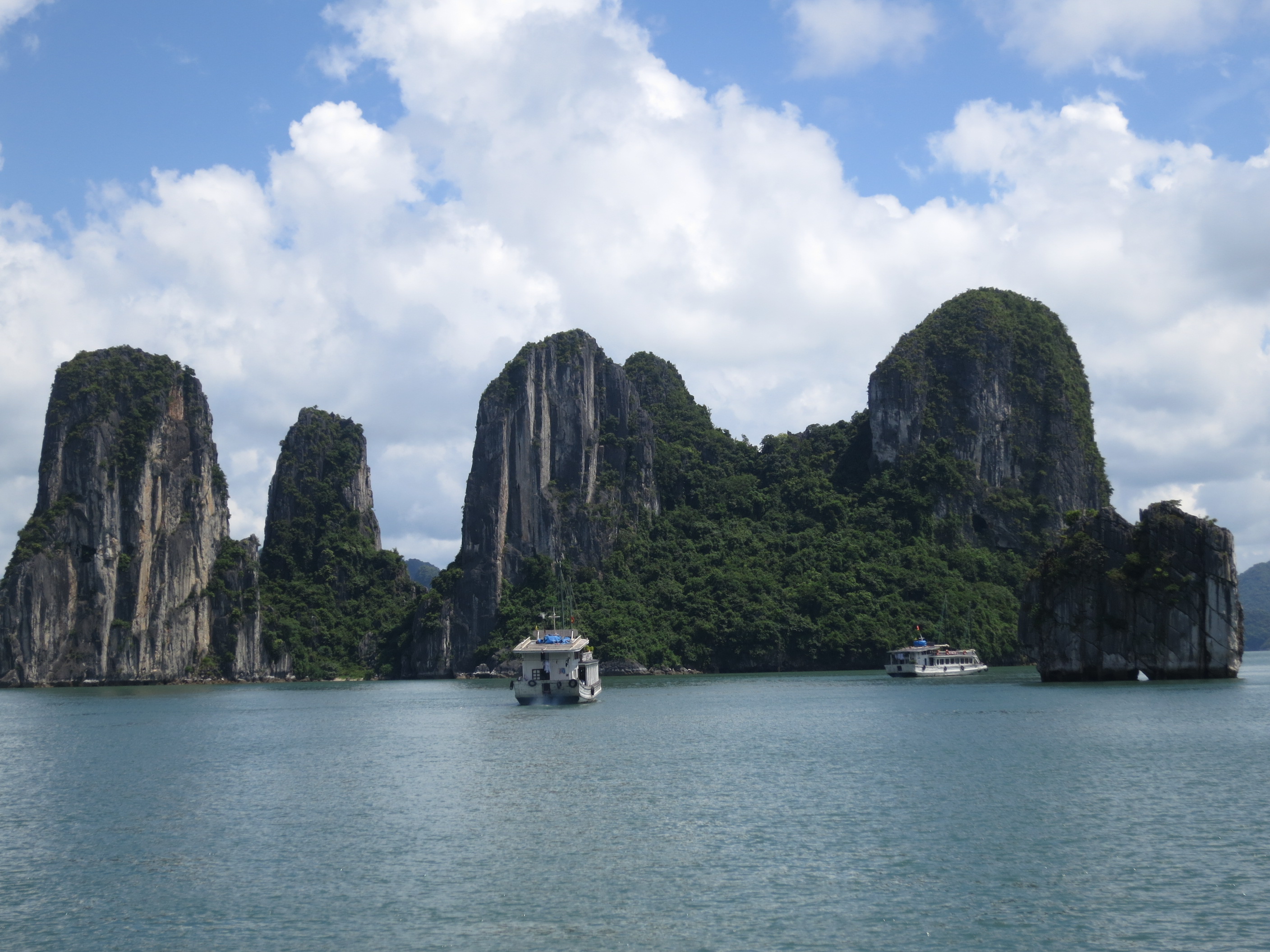
Amazing viewsI hope I haven’t scared you off, because even with all that said, Hanoi has been one of my favorite stops on the trip so far.  We were able to take a day trip to Ha Long Bay, a group of 1900 tiny islets about three hours south-east of Hanoi.  It was far to go for a day trip, and it would have been better if we had done a 2 night/3 day which is their specialty, but we’re working with tight timing.  We had a delicious lunch on board the boat, then traveled around the bay.  Our first stop was a traditional fishing village, with small homes permanently on the water.  These homes only have generators for electricity and the children only attend school up to 8th grade.  (There is a one room schoolhouse on the water and if they want to go to the upper grades they have to move to the mainland.)  We were particularly interested in the wide array of houseboats, including some made with brick and mortar.  Sadly, having people live in the bay means it is littered with trash; however, further out in the water it is absolutely gorgeous.  We made our way over to “Heavenly Cave” and walked around looking at different rock formations.  Honestly, the tour itself was a little underwhelming, but being out on the water made it all worthwhile.  It would be a wonderful place to come for a longer stay.

Just a small section of Ha Long Bay

Just a small section of the former prison, this was one of two rooms of exhibits on American POWs. John McCain’s flight suit can be seen in the rear of the room.

Our final few hours in Hanoi found us doing two things neither of us is likely to forget soon.  First, we went to Ha Loa Prison, also known as the Hanoi Hilton. This was the infamous jail where many American pilots who were shot down during the Vietnam war were taken and held prisoner for several years.  What we didn’t know is that this prison was built during the French occupation of Vietnam and was first used to imprison Vietnamese nationalists in wretched conditions.  Most of the museum focused on the horrible abuses of the French towards any Vietnamese fighting for freedom.  Exhibit after exhibit spoke of the heroism of the Vietnamese Comrades and the torturous, villainous behavior of the French.  We kept waiting for any mention of the role this prison played during the war with the U.S.  Just when we thought it wouldn’t be mentioned at all, it finally came at the end of the exhibits.  Two rooms housed photos and artifacts “showing the conditions of the Americans” during their time here. It was filled with photos of them playing volleyball, basketball and putting up Christmas decorations.  It focused a great deal on the days when the American P.O.W.s were released, even mentioning the fact that they were given a “souvenir” of their time here.  We could hardly believe it.  They essentially made it look like summer camp.  There was not one picture of the prisoners in a jail cell.  At the end, it even said the Americans were grateful for the human treatment they received.  Unbelievable! That is not the same account we have heard as Americans–just read about the experiences of Senator John McCain while he was imprisoned there.  This illustrated another example of the one-sided information that we have come to expect from the museums here.

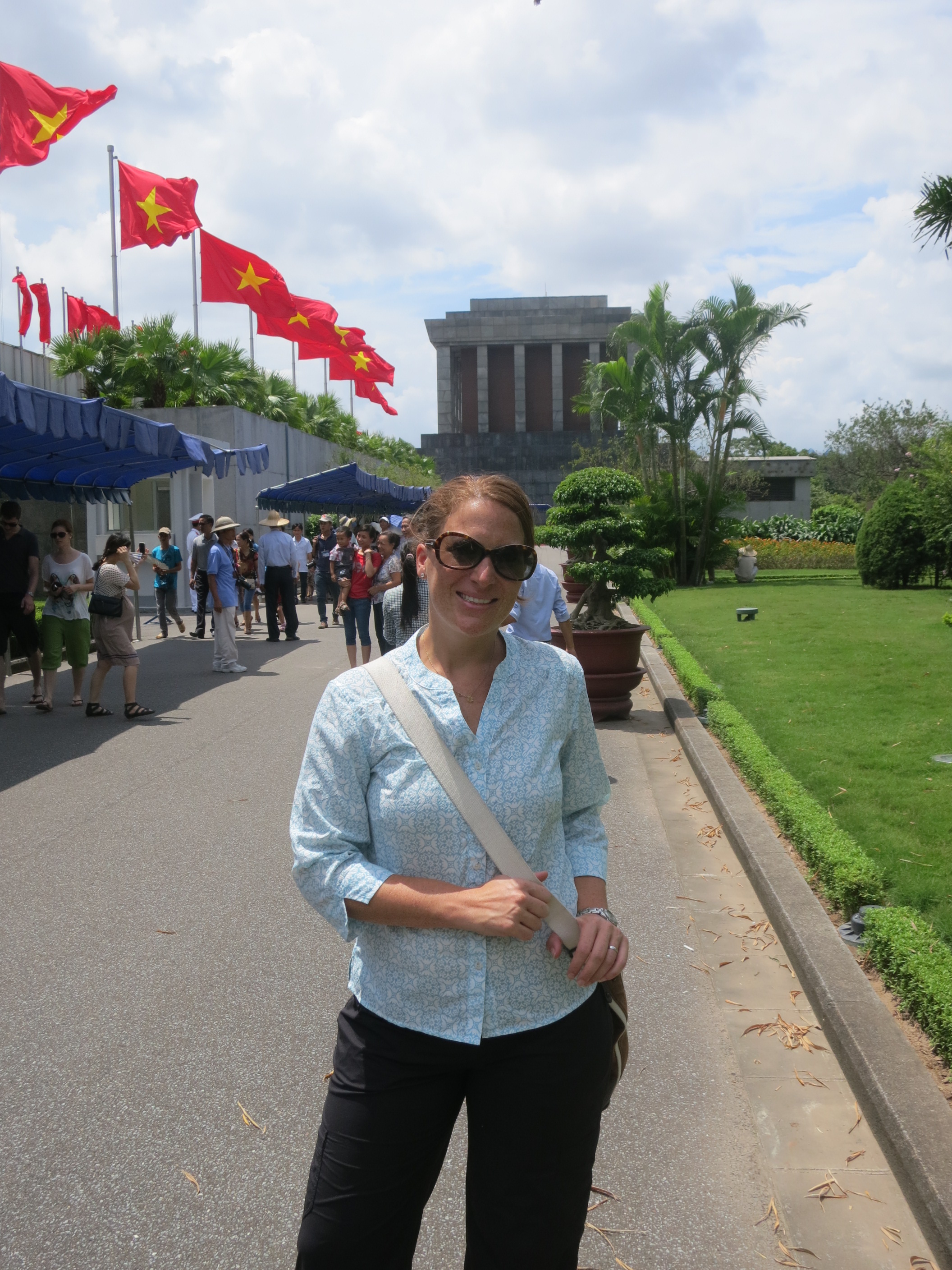
Brooke outside of Ho Chi Minh’s grand mausoleum

The final, most fascinating and most creepy thing we’ve done here is visit the Ho Chi Minh Complex, most notably the mausoleum.  Just like other important communist leaders Stalin and Mao, Ho Chi Minh’s body has been preserved, encased in glass, and is on display for public viewing.  This seemed like a unique experience that we just couldn’t miss.  First of all, the lines stretched outside the complex and down the street.  It was packed with people, partially because it was a holiday weekend.  Luckily, the lines moved very quickly and we were up to the mausoleum within 10 minutes.  We were told going in that we should wear long pants, covered shoulders and close-toed shoes.  It was very important that we be respectful.  Upon entering the mausoleum, I was instructed to take my sunglasses off the top of my head and others were told to remove hats.  As we filed around Ho Chi Minh’s body, gawking in horrified fascination, the guards moved us swiftly along.  We were not allowed to stop or walk too slowly.  The general feeling was one of excitement and intrigue.  We were afraid people would be more reverent and seem like they were in a sacred place, but there was really just a sense of curiosity.  As we walked outside, we immediately discussed what a strange experience that was.  Uncle Ho wasn’t looking too great, probably because he’s been dead since 1969.  By all accounts, this kind of fanfare is the last thing he would have wanted and doesn’t really fit with the kind of life he led.  All in all, I’m so glad we went because it is such a strange thing to do.
Adios VietnamAnd now, sadly our time in Vietnam must end.  We really wish we had more time and we are already planning to come back.  The people here are so friendly, the food has been awesome, and there is so much to see and do.  Now, we head off for a very brief 2 days in Singapore.  Interestingly, no other city has brought such a variation of opinion than Singapore.  Some people love it and say we’ll need more time.  Others have told us to skip it all together.  We met a British family living in Singapore who told us two days is just right.  We’ll go with that!

-Brooke

Categories: City Visits, Destinations, Differences, Landmarks, Museums, Unusual Experiences, Vietnam | Tags: , , , , , , , , , , , , | 3 Comments

Beyond Hong Kong’s City Center

Last night in Hong KongToday was our last full day in Hong Kong, so rather than stay in the center of the city as we have been, we decided to get out and see something a bit different. With our Big Bus Tour passes from yesterday, we were able to get out and see another side of this lovely city-state.

We got up nice and early to make the most of the day and in hopes that we might beat the heat a bit (no real luck there).  We climbed aboard the Star Ferry which took us over to Hong Kong Island.  From there, we boarded the open-air Big Bus and began our journey away from downtown.  It took a while for us to get out of the city center, since traffic here is quite thick.  However, once we passed through an immensely long tunnel, we could feel the difference almost immediately.  Sure, there are still giant buildings, but fewer people and there was generally a more remote vibe.

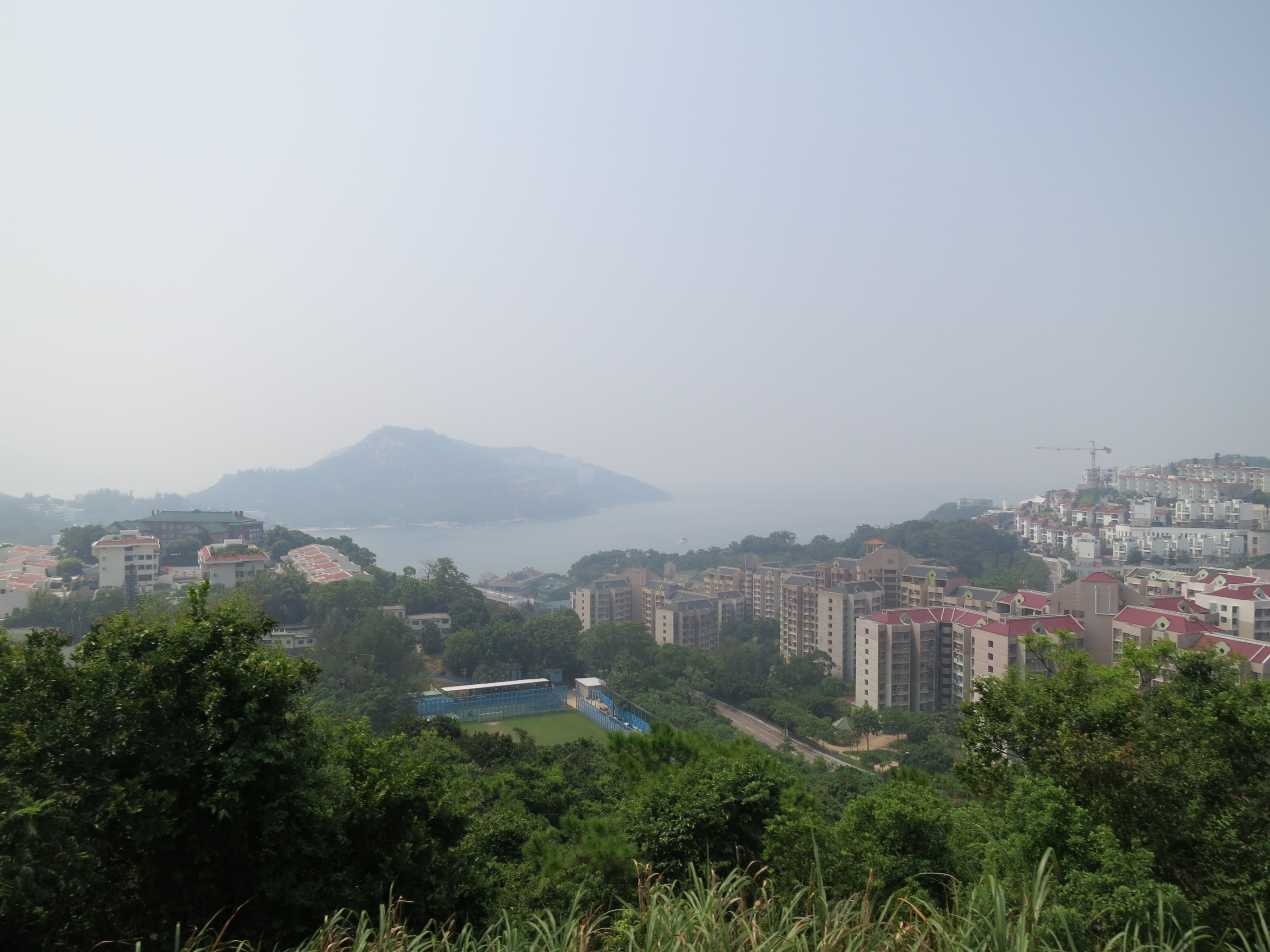
Great tour bus!One of the first things to catch our eye was this amazing amusement park called Ocean Park, which has the coolest roller coaster we have ever seen.  Because land here is at a premium, the amusement park bought two different pieces of land on either side of a huge hill.  The two sections are connected by a super-long gondola which looked very scary to me.  The awesome part though was this twisting and turning roller coaster on the side of the hill overlooking the South China Sea.  That must have some of the best views of any roller coaster in the world (granted, it is so hazy here right now that they probably can’t see much of anything).  We didn’t want to take the time do an amusement park, and I have a tendency to vomit when riding such roller coasters, but it looks like an awesome time for people who are into that kind of thing.

As we wound our way through narrow roads along the coast of the South China Sea’s Repulse Bay and Deep Water Bay, we heard tales of the many rich and famous people who have vacationed here over the years.  There have been a couple of famous movies filmed here including “Love is a many Splendored Thing” and it soon became clear that this area is a playground for the wealthy.  Perhaps it was the beach-side Ferrari dealership that gave it away or it could have been the Lamborghini we saw driving past us.  Either way, it is clear these beaches provide a nice getaway for people living in Hong Kong who need a bit of respite.  If we were here longer, we would have definitely spent some time swimming and lounging on the beach.

A view of the seaThe next beach town we came to was Stanley, famous for its huge Stanley Market.  We had heard this was a great stop, so we decided to hop off the bus and see what we could.  The market spread across several blocks, twisting and turning like a maze.  As with all of these, there are lots of items that repeat themselves and you can find in any market in Hong Kong.  However, there were also handmade crafts, beautiful clothiers and handmade jewelry.  Phil found lots of toys to play with and was especially impressed by the remote-control car that could climb up a wall.  We found a few little tokens to buy here, but I could tell Phil was starting to lose interest in shopping after about an hour, so we hopped back on the bus and left Stanley.

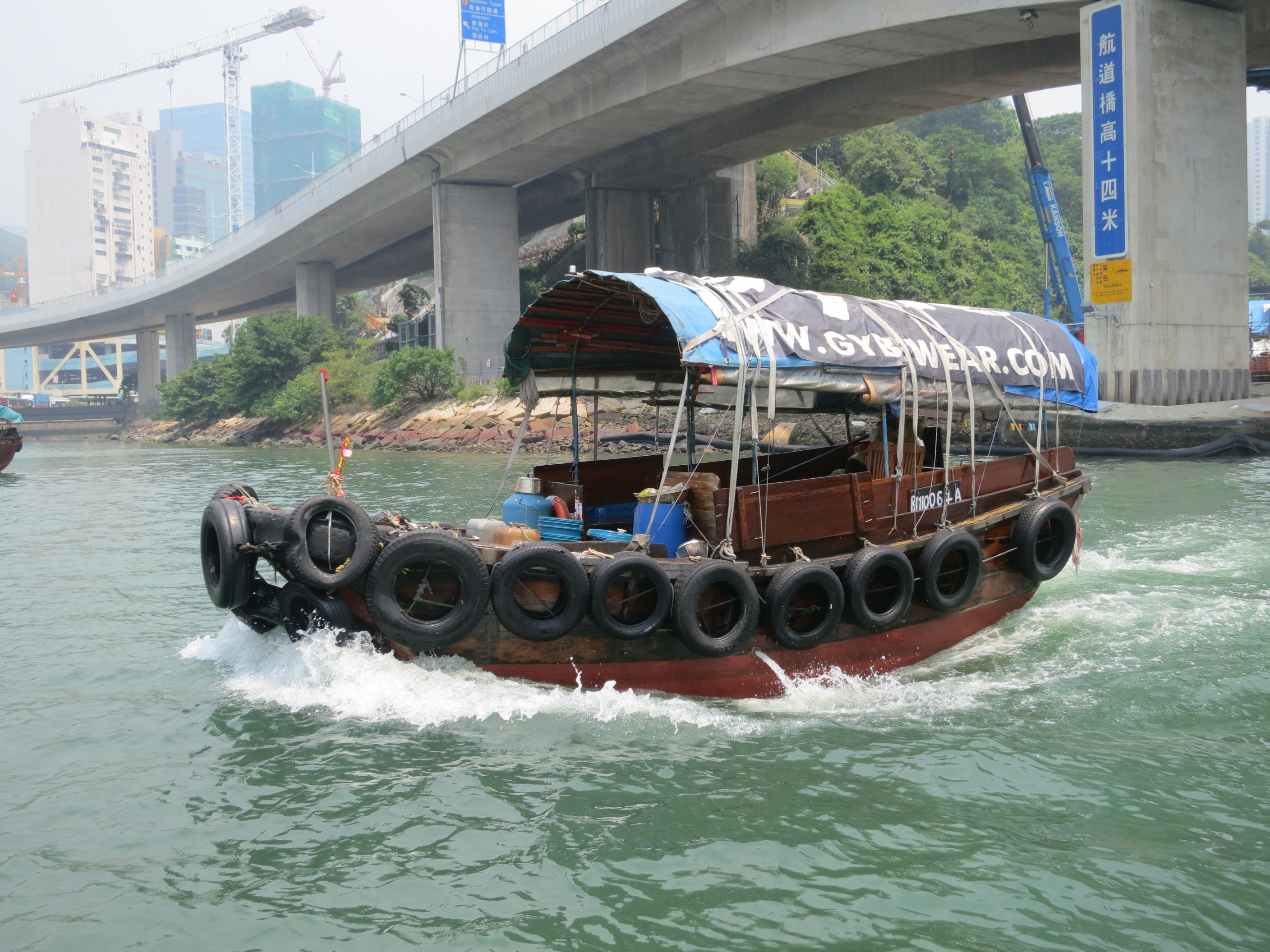
Our final stop on the bus tour was probably the coolest.  We were dropped in historic Aberdeen, a town which used to be primarily a fishing village, it still houses many people making their living in this way.  It has been known for centuries as the home to a group of people called Tanka (which is now considered an inappropriate word and instead they are called “Boat People”).  These people have lived their lives as fisherman, living on junks in the water.  Over the years, the government has tried to get them to move out of the bay, but there are still several who live here.  As part of our tour, we got the opportunity to ride a Sampan, a flat-bottomed wooden boat.  We puttered through the harbor,  saw a huge floating restaurant called “Jumbo’s” and looked at boats that range from resembling mansions and some which resemble shanties.  The financial paradox is overwhelmingly clear and really fascinating.  We could tell there were still many people who make their homes on these boats, but we also saw a number of people who are just making their living as fisherman.  It is fun to think about their catch today going on the table of a local restaurant tonight.
Riding on the Sampan

Exhausted from riding in the blazing sun all day, we decided it was time for a break.  After a good rest in our air-conditioned room, we headed out for a final night in Hong Kong.  We found an awesome bar called Castro’s, the first bar in Asia to really feel like our kind of place.  Friendly bartenders, small but not overcrowded, with delicious draft beer.  Hanging out here, looking down on the neon-filled streets below, and rehashing all that we’ve learned and experienced while being here was the perfect punctuation mark for our visit.  We are a little sad to leave Hong Kong because we could easily spend a ton of time here, but alas we must travel onward.  Tomorrow, Vietnam!


–Brooke

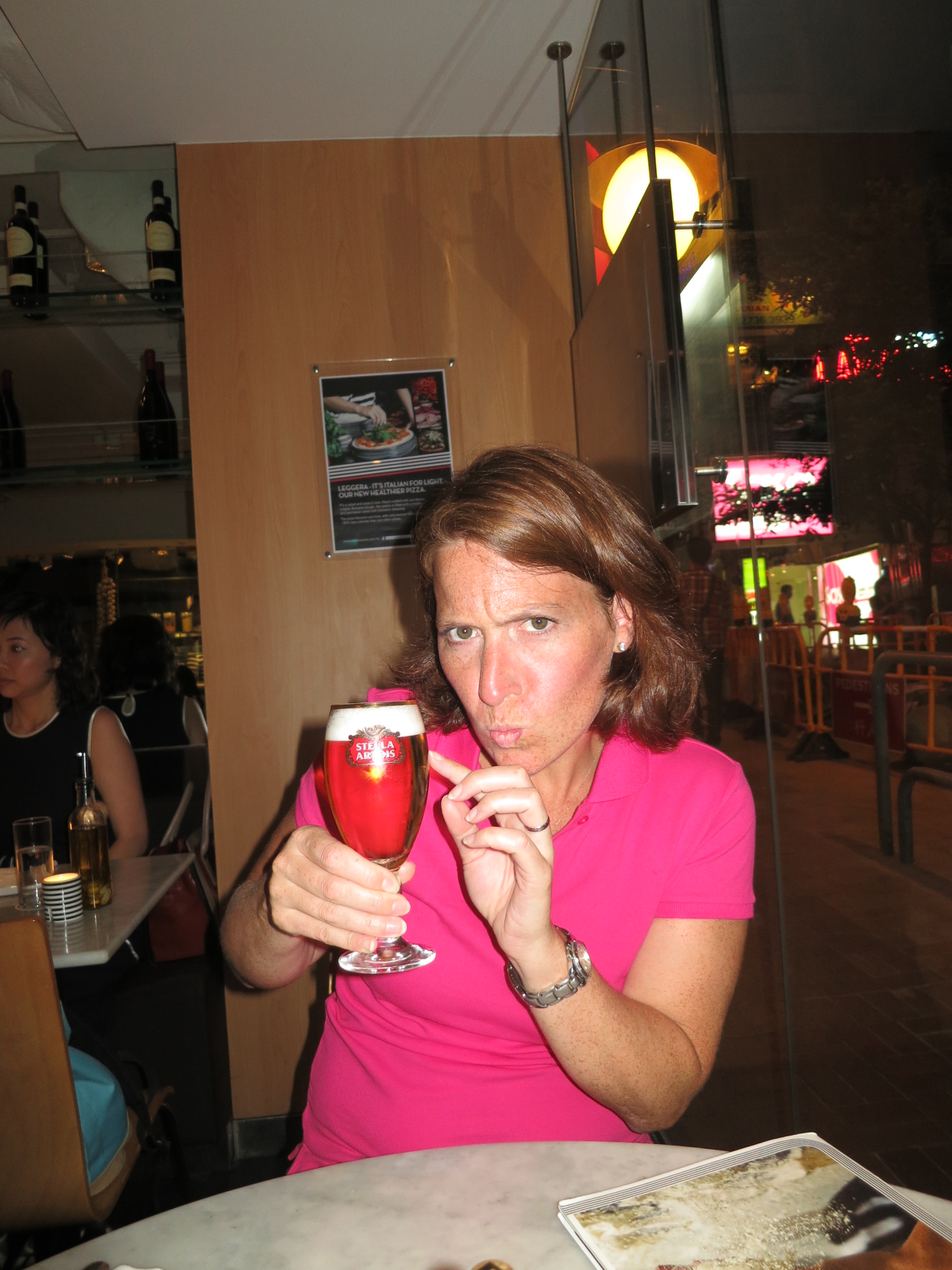
Itty-bitty beer

Drinking a half-pint of Stella with dinner. It’s so little!

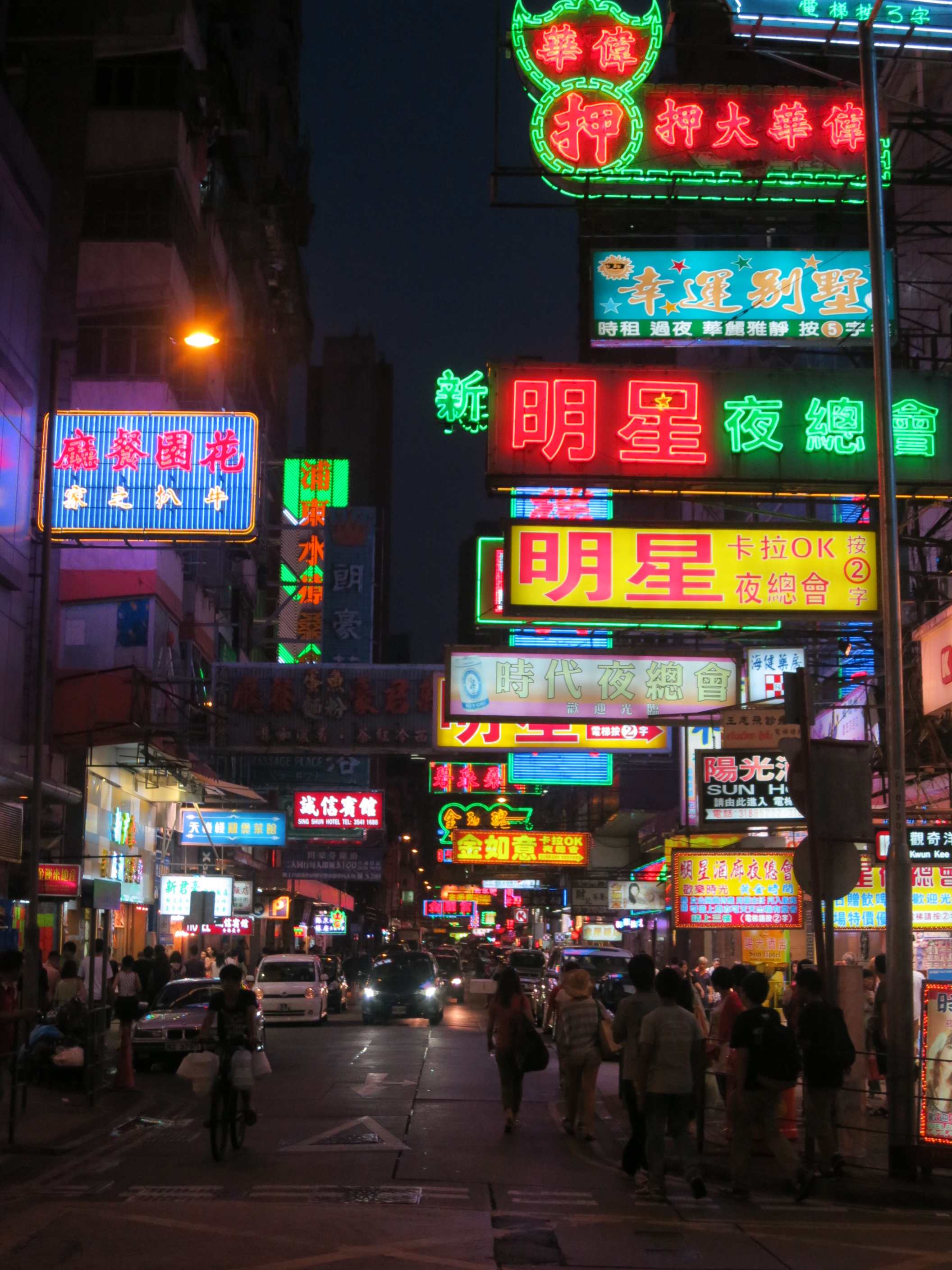
The busy streets

Even late into the evening, the streets in Hong Kong are bustling with people.

In Aberdeen Harbor

Here is a traditional Sampan which fishermen use daily. It isn’t the steadiest of boats, but it can turn on a dime!

Categories: China, City Visits, Customs, Destinations, Diversions, Exploring, Landmarks, Uncategorized | Tags: , , , , , , , , , , | 5 Comments

Hong Kong

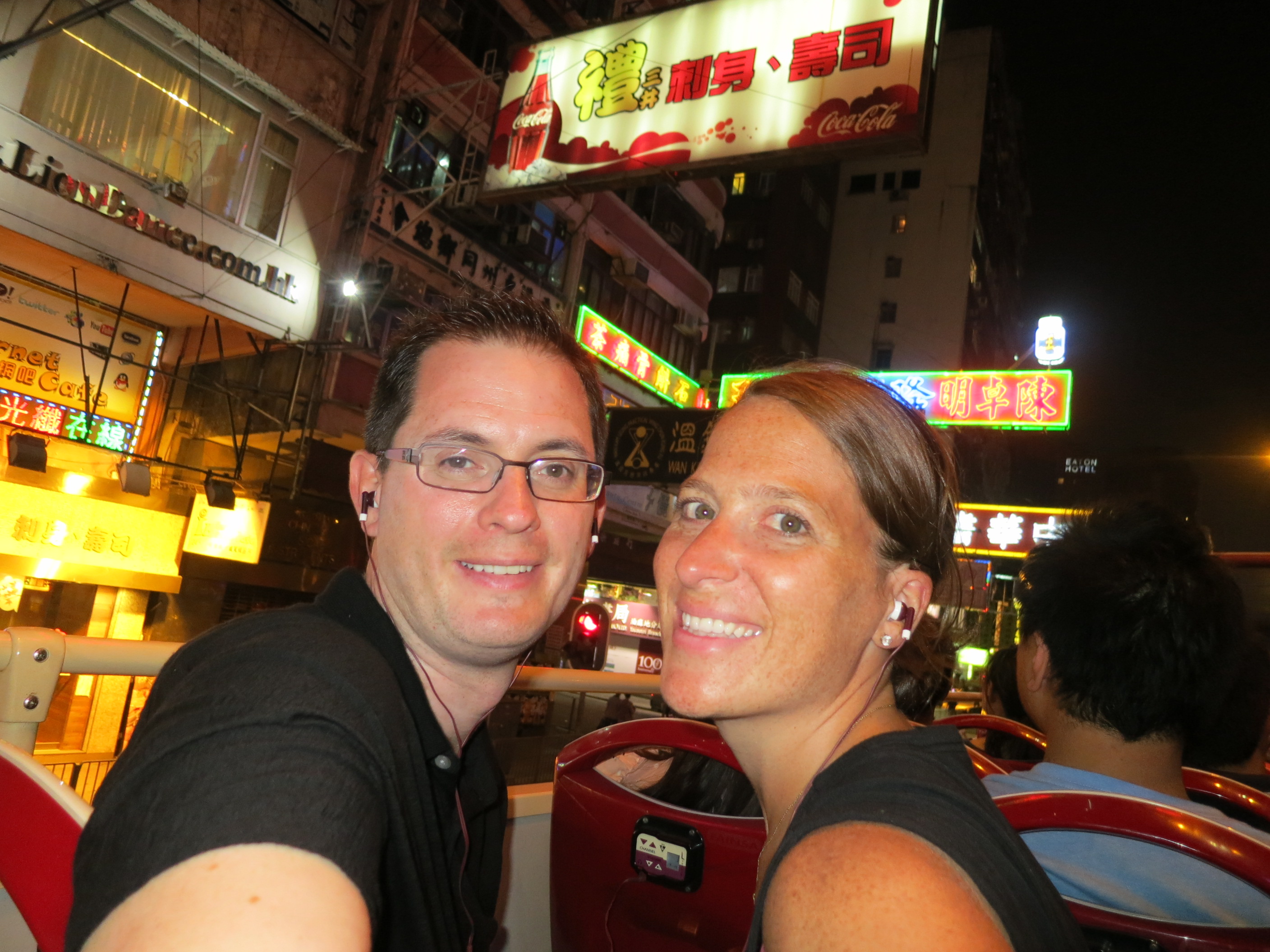
Cool Neon SignsDespite our many miscommunications and all efforts to the contrary, we managed to get on the right bus heading for Hong Kong!  Yay, off to experience a new part of China…technically.  It certainly does not feel like we are still in China.  Our first clue that Hong Kong would be different from Guangzhou was when we were required to go through customs and immigration.  No, Hong Kong is not under British control any longer.  It hasn’t been since 1997, however we had to wait in line for over an hour, fill out forms, get our passports inspected and then stamped in order to get in.  It was one of the most complex border crossings we have experienced yet, especially considering we didn’t really cross a border.

Hong Kong is a big place, but when discussing the city of Hong Kong, it really has two parts to it–the Hong Kong Island side and the Kowloon side.  We are staying on the Kowloon side, in the heart of it all.  This is as close to feeling like the middle of Times Square as I have felt on our trip thus far.  We are surrounded by stores, bars and a slew of restaurants.  When we walk down the street, we are approached every 15 seconds by a guy trying to sell us designer suits, watches and handbags.  It certainly isn’t a place I would want to live or even visit for too long, but it is really convenient being in the center of it all.  The Hong Kong Island side is the center for business and industry.  The skyline is filled with mammoth buildings, each one more impressive than the next, touting their company name in bold neon lights.  Every major bank and brand you can imagine has a spot on its waterfront, from HSBC to Hyundai.  It is a short ferry ride from Kowloon and it rivals New York City in its visual spectacle of high rises and well-dressed business people.

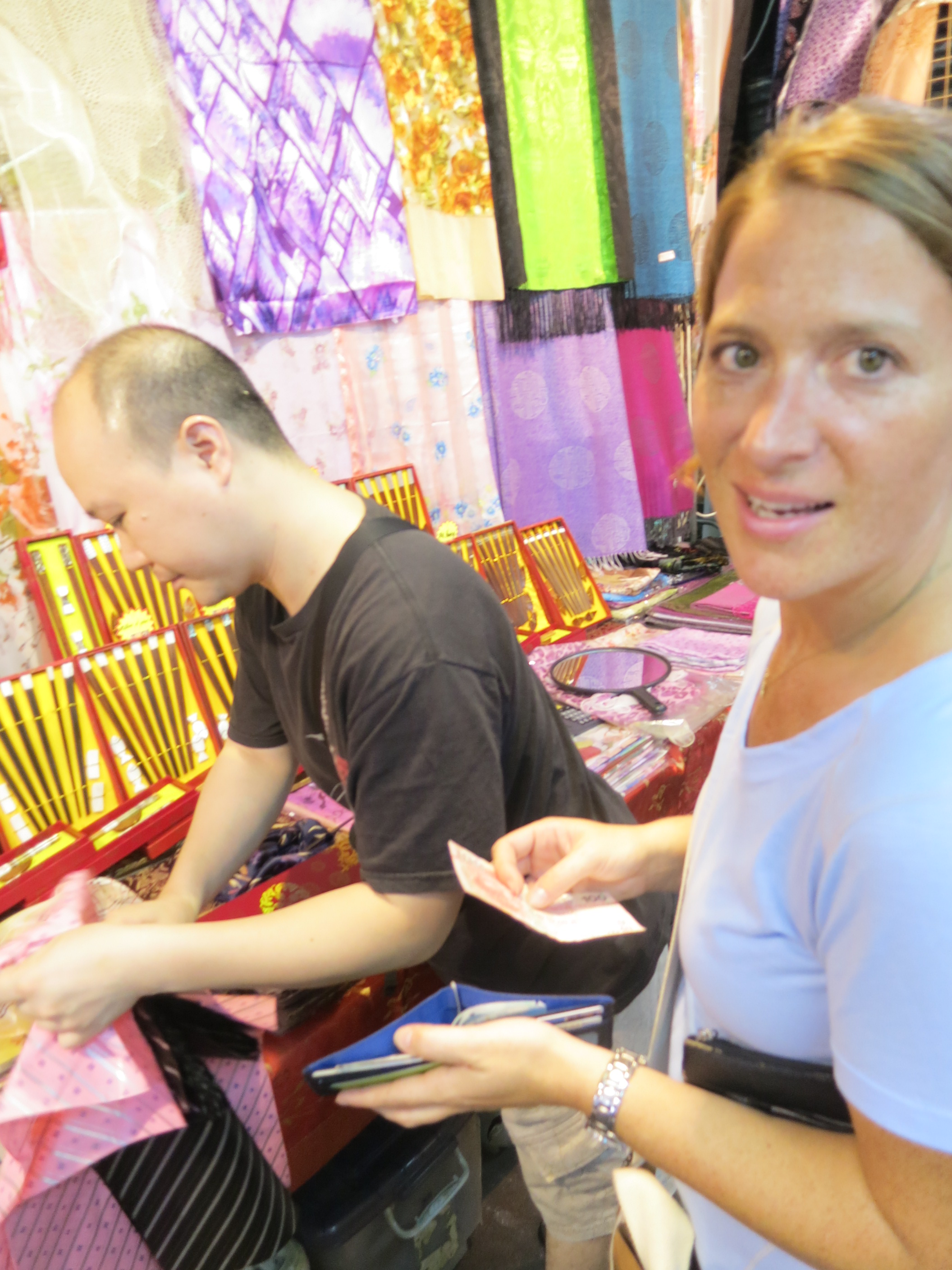
Bargains,, BargainsThese two sides of Hong Kong are part of what gives it a really awesome vibe.  It is urban and chic, with high-end shopping that overshadows 5th Avenue any day of the week.  But, at the same time it feels like an old city holding onto its traditions.  The Kowloon side is known for its markets, where vendors sell everything from knock-off handbags to high-end electronics.  As you might expect, nothing has a price marked and everything is negotiable.  While walking through the Night Market, Phil saw a set of bowls he liked and when he asked the price, the lady told him they were $165 Hong Kong Dollars (about $22 USD).  I immediately said that was too much and then the bargaining began.  She said she’d give them to us for $150.  When we walked away and said we had to think about it, she grabbed Phil, handed him a calculator and said, “How much?  How much you want?”  Phil punched in 100, figuring she’d say no.  It took her a minute, but she said yes.  I then began to dig through my wallet only to discover we only had $81 HKD.  We told her we didn’t have enough, so she asked if we had any American money.  We told her we didn’t and said we’d come back.  As we began to walk away, she shook her head, sighed heavily and said, “Okay.”  We were a little shocked.  We couldn’t believe that our lack of cash led to half-price bowls.  If only we had planned it that way we might be considered keen negotiators.  Oh well, we’ll take it!

As you might imagine, a city with so much to offer is packed with tourists.  In fact, this is probably the most touristy city we’ve visited thus far.  That suits us fine, and it is really interesting to see all kinds of people and hear a dozen different languages being spoken in the span of 20 minutes.  We are engaging in typical tourist activities, while also trying to involve ourselves with some locals.  The best way we’ve found to do this is by talking with the people at our hostel, Hop Inn.  They live and work in Hong Kong and have given us really excellent suggestions on local cuisine and places to get away from the tourists.  They led us to our two favorite meals we’ve had in a while, and we found ourselves smiling when we were in the equivalent to a New York City diner, curt manager and all.  It kind of felt like home.  As for the local fare, they love their instant noodles and bread.  My god, we have eaten so much bread we are turning into dough balls.  I never associated Chinese food with bread, but they love it here.  We had a hot buttered roll, drenched with sweetened condensed milk this morning.  Amazing.  I think  I’ll be bringing that idea back with me!

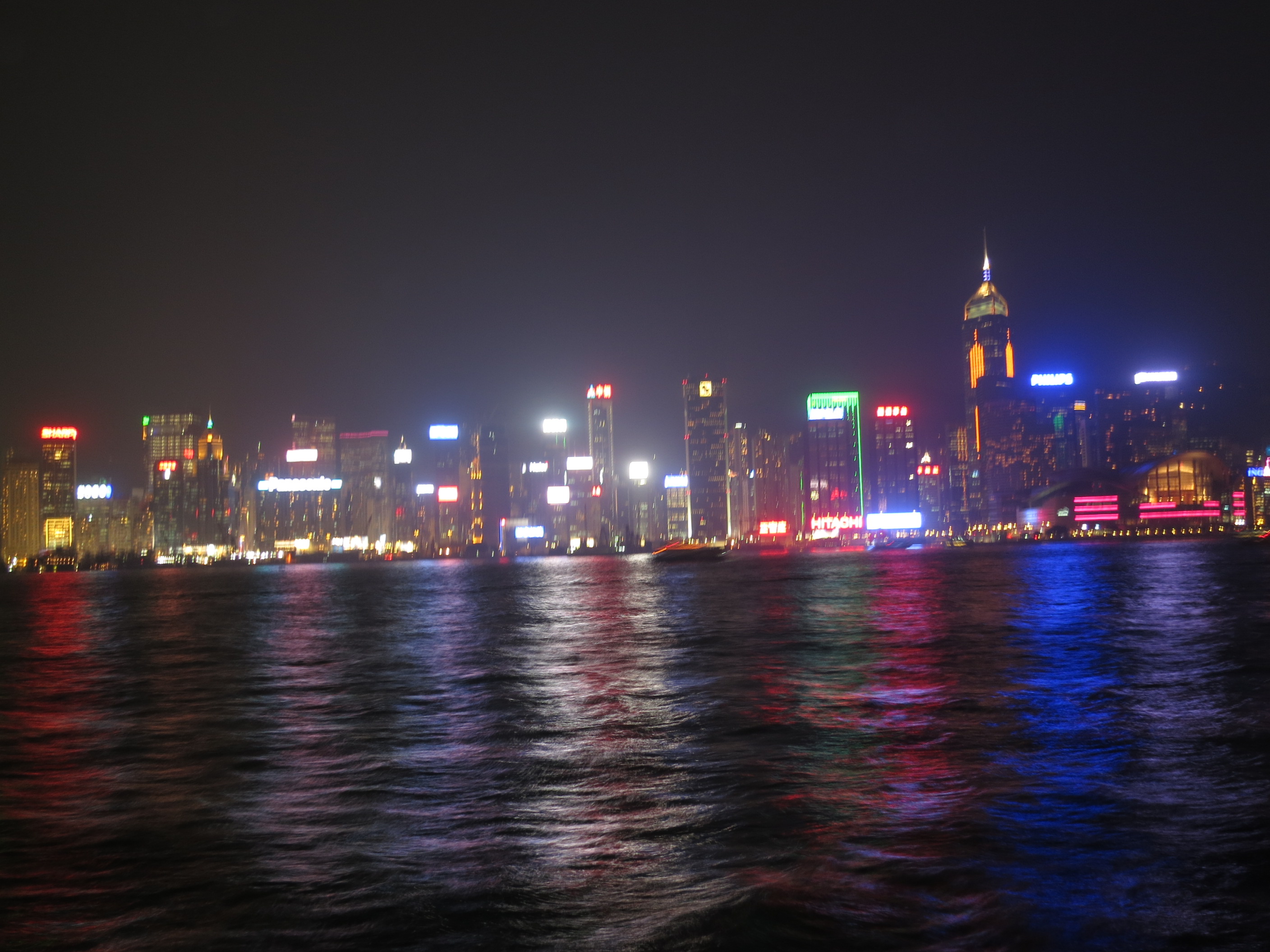
Hong Kong Big Bus tourWe ended our day with an hour-long bus tour of the Kowloon side of Hong Kong.  At 7pm it was only 90 degrees, much more tolerable than the heat of day.  It was easy to forget our sweaty thighs as we cruised through the city.  The streets, with neon signs hanging everywhere, are truly like something off a movie set.  It is exactly what you picture in your mind when you think of Hong Kong.  The tour ended with us on the waterfront, watching the nightly light display.  The skyscrapers on the shoreline dance with lights and beam lasers into the night sky set in time with music.  It was quite a vision–really spectacular.  Tomorrow we continue to discover Hong Kong Island by heading out to the countryside, going to Stanley Market and maybe even visiting a fishing village.  Phil also wants to head to Macau, but I’d hate for him to lose all of our money trying his hand at some Chinese table game he’s never played.  Well, maybe he’ll have beginners luck!

–Brooke

Ferry with Hong Kong's Tallest Building in the background

One of several ferries found in Victoria Harbor with Hong Kong’s Tallest Building in the background

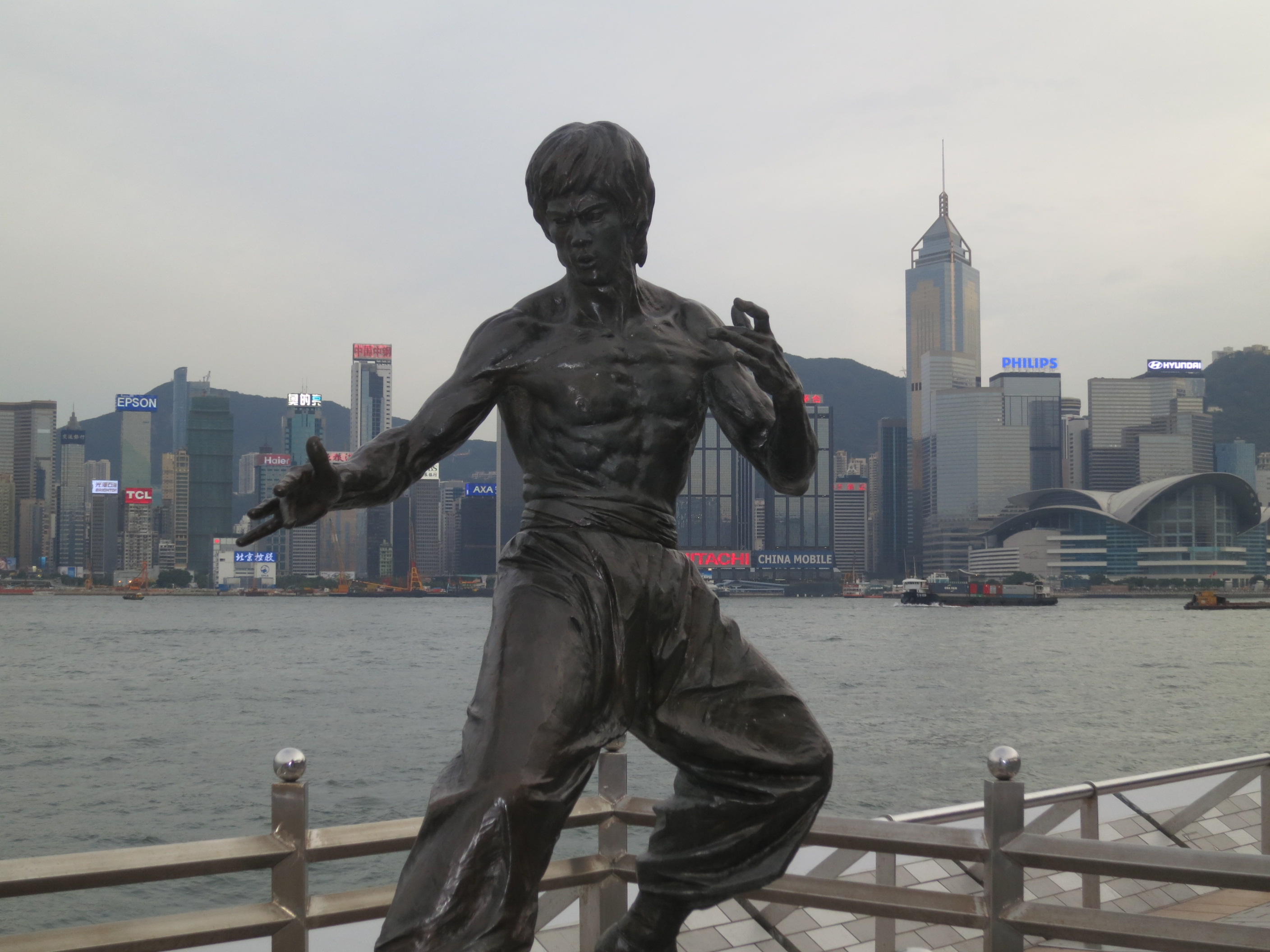
Statue of Hong Kong's favorite son: Bruce Lee

Statue of Hong Kong’s favorite son: Bruce Lee

Spectacular Tokyo Skyline at Night

Spectacular Hong Kong Skyline at Night

Categories: China, City Visits, Customs, Discounts, Eating, Exploring, Landmarks, Uncategorized, Unusual Experiences | Tags: , , , , , , , , , , , , | 4 Comments

Climbing Mt. Fuji

“Why Climb Mt. Everest? Because it‘s there!” -Explorer George Mallory

“Why Climb Mt. Fuji? Because we’re in Japan!” -Phil

The Summit of Mt. Fuji!We did it! Brooke and I conquered and vanquished Mt. Fuji. We managed to climb all the way up and all the way back down Japan’s tallest peak/largest mountain/giant dormant volcano. There are no two ways about it: it was a hard climb. Leg muscles churning, cardio flowing as we hiked from 2,700 meters to the summit at a whopping 3,776 meters  We figured that this was a can’t miss excursion –especially since we were lucky to be here during the brief Fuji climbing season of July 1st– August 31st.  Check that one off the list. The day has been hard on the feet. And the calves. And the shoulders. Brooke said it was the most strenuous hike she’s ever done and it was the biggest climb I’ve done in many years. We’re tired, sore and a bit exhausted, but thrilled we were able to complete the climb.What a way to end our visit to Japan!

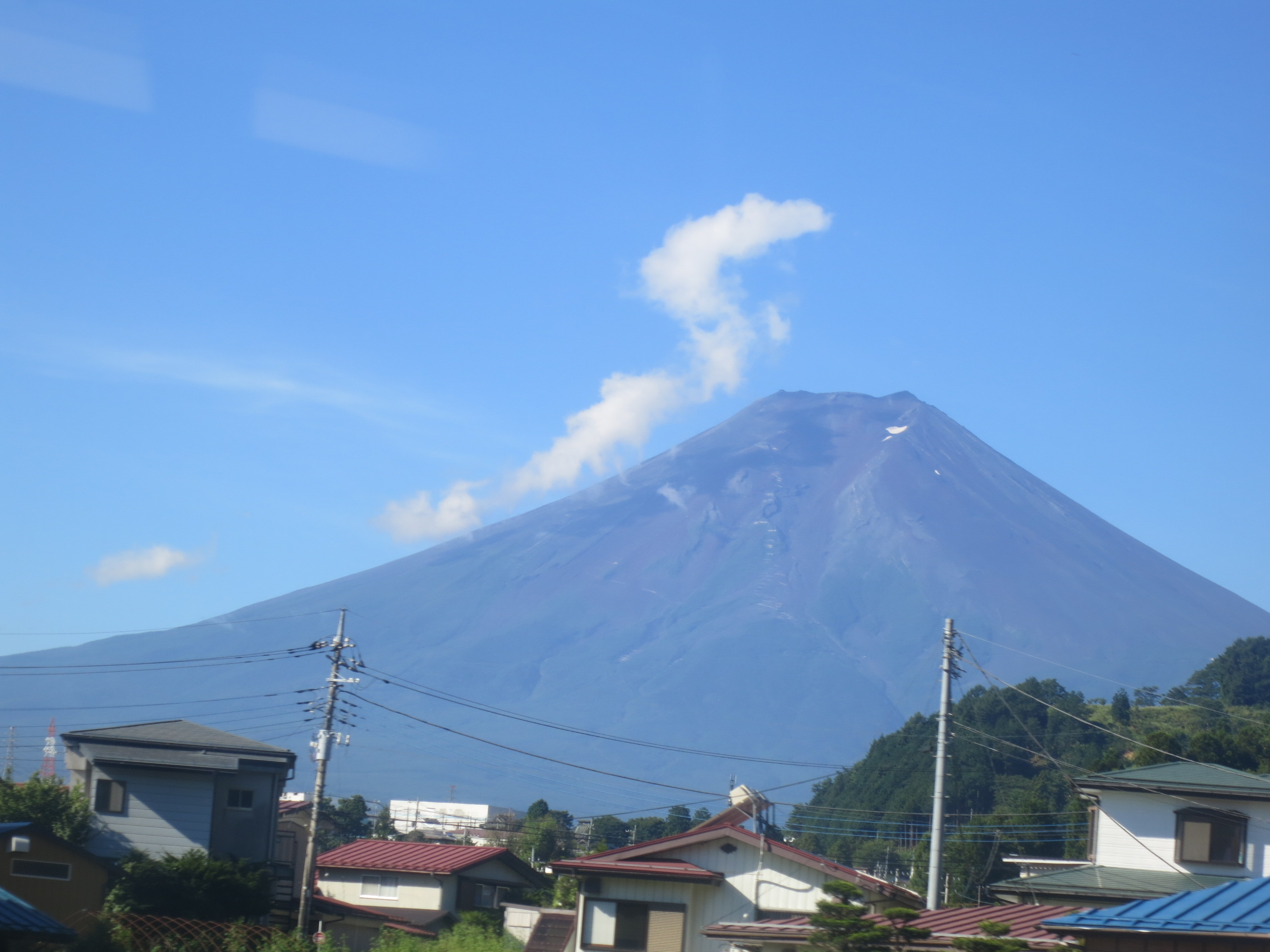
Fuji from a distanceWe set off early in the morning to make our way from Sagamihara  to the Mt. Fuji area which involved four trains, a bus and an angry station agent who yelled at us in Japanese. On the long ride out, we watched the landscape change from big city to scenic, hilly countryside. We had a glimpse of Fuji from the train window; our first chance to size up what we’re going to be up climbing in the hours ahead. We rode the bus up to the fifth station which, at an elevation of about 7,800 feet, is where most hikers begin their climb. It was packed with some people just completing a sunrise climb, to others getting started to even more who were just hanging out. But to be fair, it seems to be packed with people just about everywhere in Japan. Onward! We began our mountain climb with a walk down the trail to the lower section of Fuji. Brooke and I both managed to dodge any symptoms of altitude sickness of which we had been warned. And the weather, which can change on a dime, held up wonderfully during our entire time on the mountain.

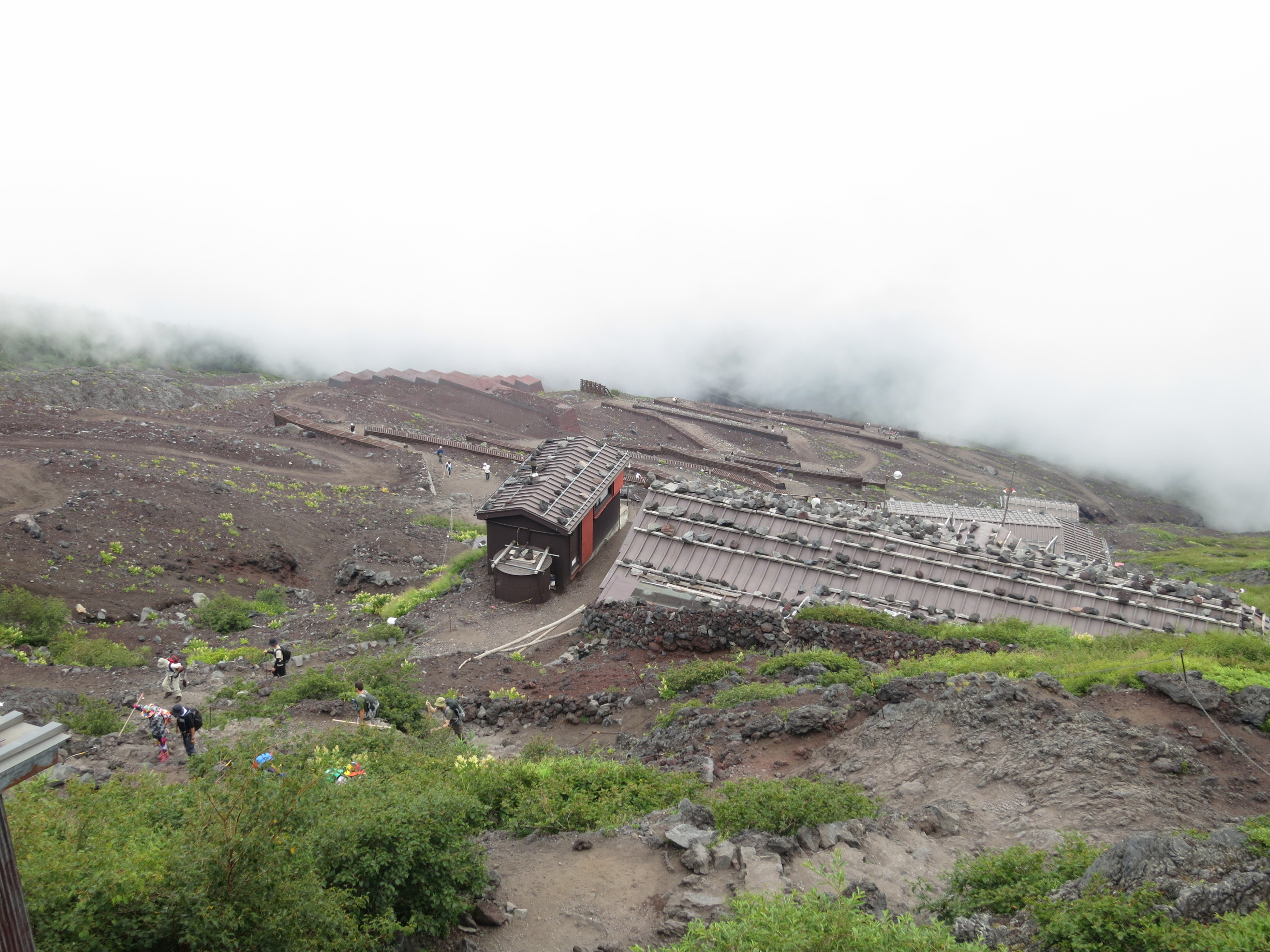
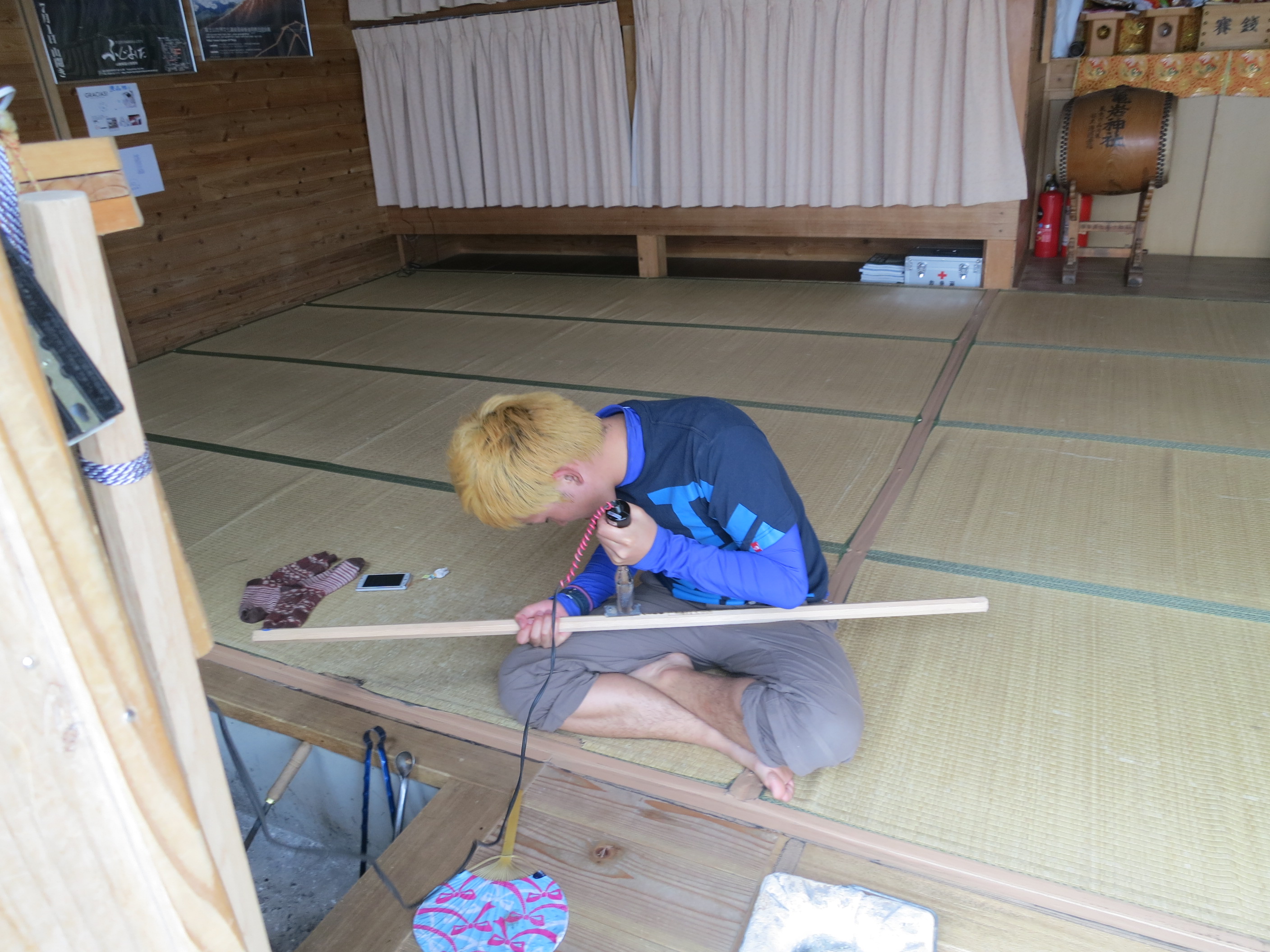
Since Fuji-San sticks out alone, we were quickly up higher than anything within sight. The mountain truly does tower over the country side. There are huts and stations at different altitudes up the mountain. For 200 Yen (about $2.50), each hut will “stamp” your walking stick (a simple wood stick purchased before starting the hike) with a custom wood burn. In lieu of views on the way up due to some morning clouds, we have stamped walking sticks to commemorate our experience. The further you go, you find that the climb becomes steeper and the bottled water becomes more expensive. We certainly passed people who were headed back down after giving up on reaching the summit.  By the time we even reached the 7th Station, that felt like an accomplishment in itself. One of the most surprising thing we saw were a number of people enjoying a cigarette during their climbing breaks. Come on, people! Fresh mountain air! Lung capacity!
So far below!When the clouds did clear, we could see back down on how far we’d already climbed. Whew! It became a little bit harder to catch our breath at 9,000 feet and breaks became more frequent, but we were not to be defeated! At about 1.5 km away, we could SEE the top. We found ourselves even more determined to reach the summit when we saw 7-year old children and grandmothers on the climb. Ego tends to click in when you start thinking there is no way that they’re going to climb the mountain and I’m not!

Eventually and with much rejoicing, Brooke and I reached the summit in about six hours – which is an about average time but it felt like a huge win. A true accomplishment! Going up station by station. Bit by bit. Man, we can’t emphasise enough how difficult those last 400 meters were. They saved the toughest climb for the end – that ascent from the 9th station is just a killer. Lots of breaks. Lots of slow going. But you start getting in the mentality of just putting one foot in front of the other to make it to the top (as inspired by here).

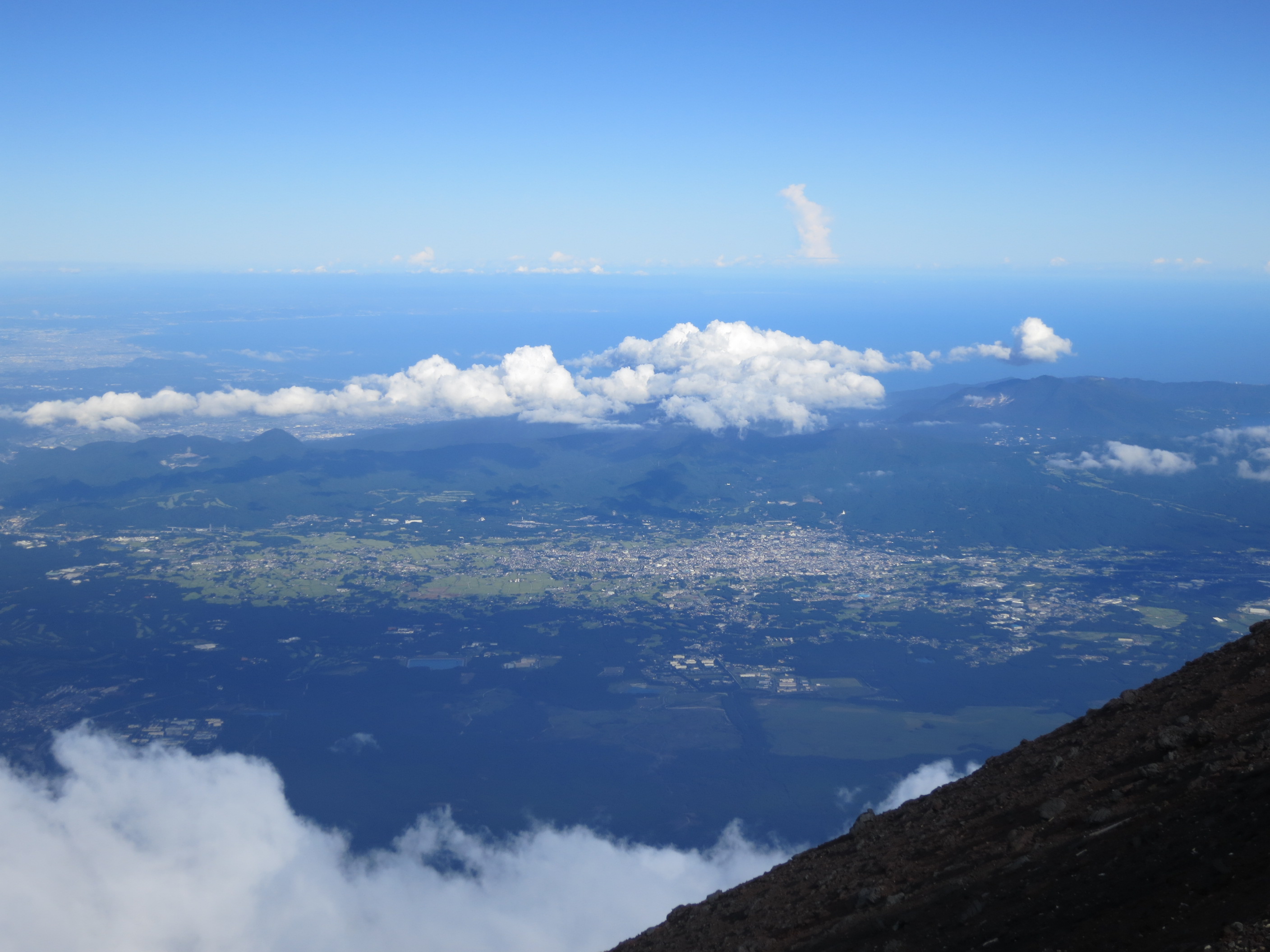
Amazing Views from Mt. FujiAfter a bit of resting and examining the top, we began our descent. On the way down, we met Yon and Sean – travelers out of Santa Barbara, California also visiting Japan. We were treated to some extraordinary views below as the sky cleared. Visibility for miles meant that we even spotted Tokyo’s Sky Tree Tower way in the distance. Contrary to what people had told us, coming down was NOT harder than climbing up. We were able to chat leisurely the whole way down while half-walking, half-sliding on loose rock (with many near falls) and curving, switch back trails. All in all, it made for a comparatively quick walk. Looking back up at the summit, I determined that hell would be being told to turn around and climb back up.

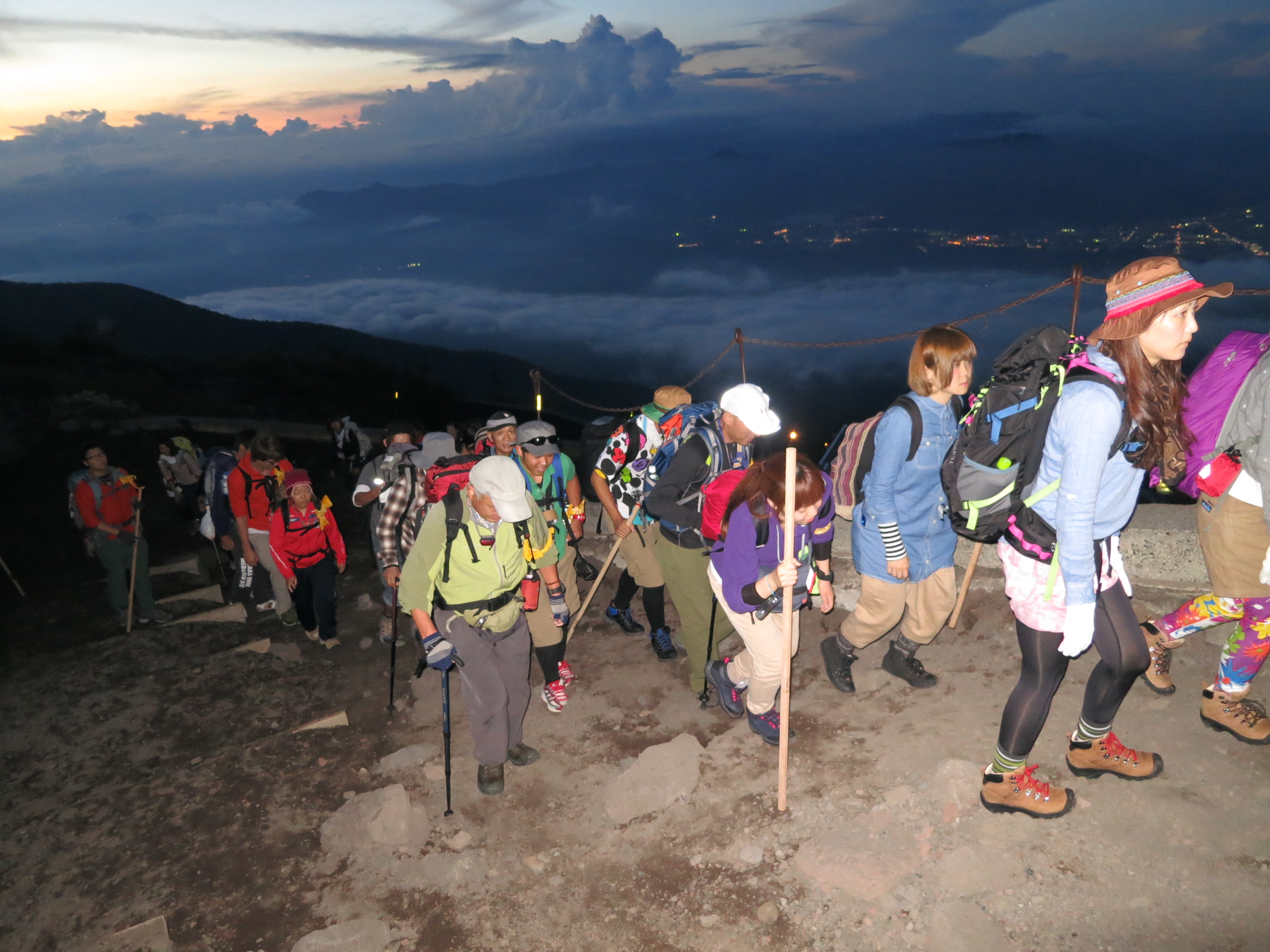
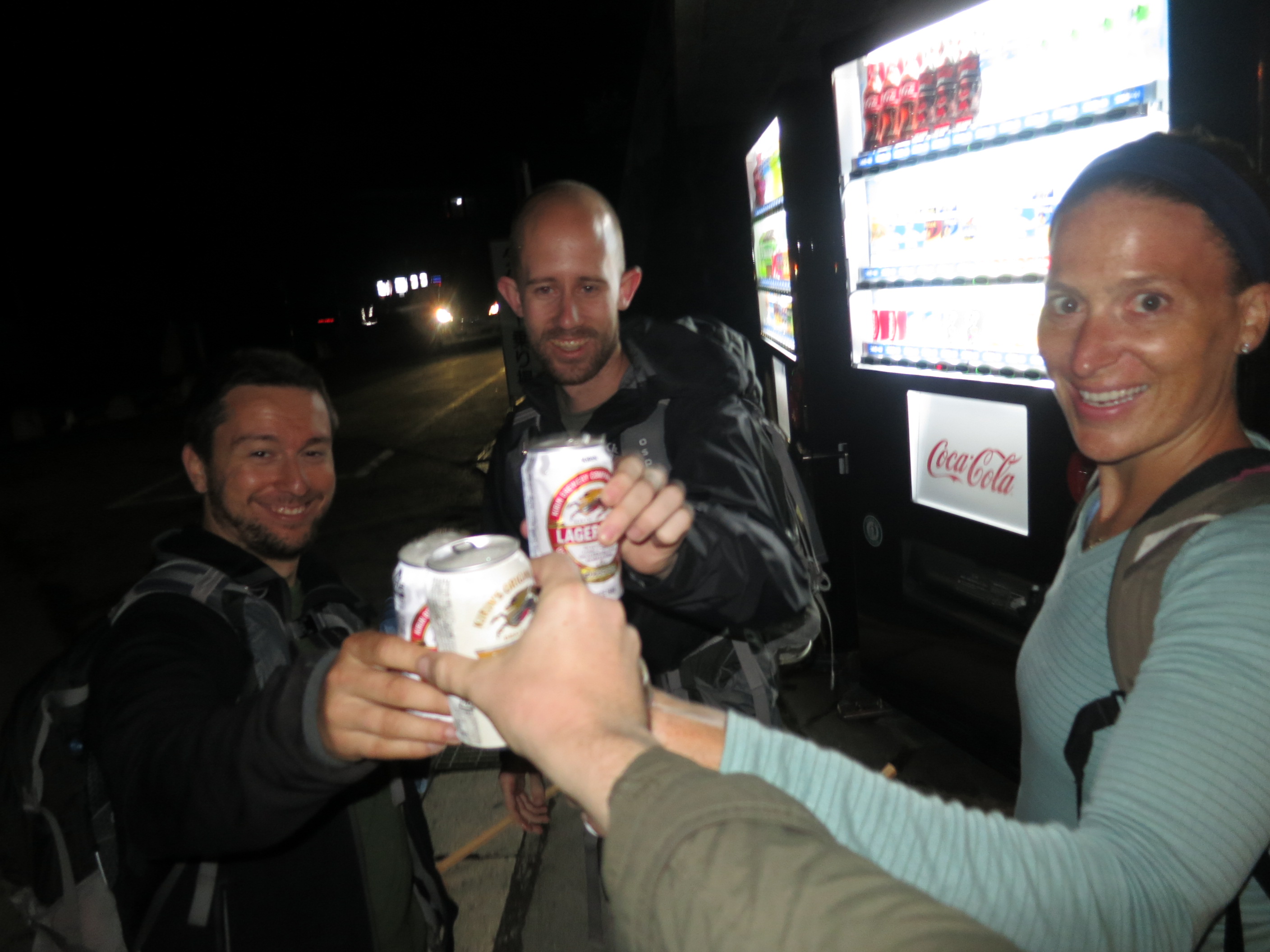
Going up at nightWe made the descent in three hours. Also not bad! We broke out the flashlights for the final kilometers as the sun set. Along the way, we passed large groups of people with headlamps who were just starting a night climb – which seems a bit miserable to us, but to each their own. Upon reaching our original starting point, we were exhausted but had made some new friends. Yon, Sean, Brooke and I ended our ten hours at Mt. Fuji sitting on a curb, toasting Kirin Beer fresh from a vending machine. That was one beer that went down easy. While waiting on the bus, Brooke gave me the best gift she has even given me: half of her cold, delicious beer.

Toasting with a beer!Riding the bus away from Fuji, we traded notes with some other Americans who made the climb. Wherever we go, we keep finding lots of well-traveled westerners to converse with which is kinda fun. Overall, today was a fantastic day that ended with us feeling tired but accomplished. And now we can say that we’ve climbed to the top of Japan’s tallest mountain. We climbed Mt. Fuji!And that’s pretty cool.

-Phil

PS- I had this catchy, funny, odd number from the video mash-up group Fall On Your Sword in my head the whole time I was climbing, so I thought I would share.

Brooke in the clouds

Brooke in the clouds high above!

Signs pointing our way to the top!

Burning the stamp into our stick at station 7

Categories: Hiking, Japan, Landmarks, Tokyo, Trains, Unusual Experiences | Tags: , , , , , , , , , | 13 Comments

Miyajima and Mazda

After visiting Peace Memorial Park and Museum in Hiroshima, we decided we needed to do something different. Something totally unrelated to the atomic bomb and the events which follwed. One of the things that is so great about this trip is the fact that we find ourselves in interesting and unique places that we never even knew existed even a month ago. Miyajima Island, about 45 minutes outside of Hiroshima, is just that place.A beautiful Island

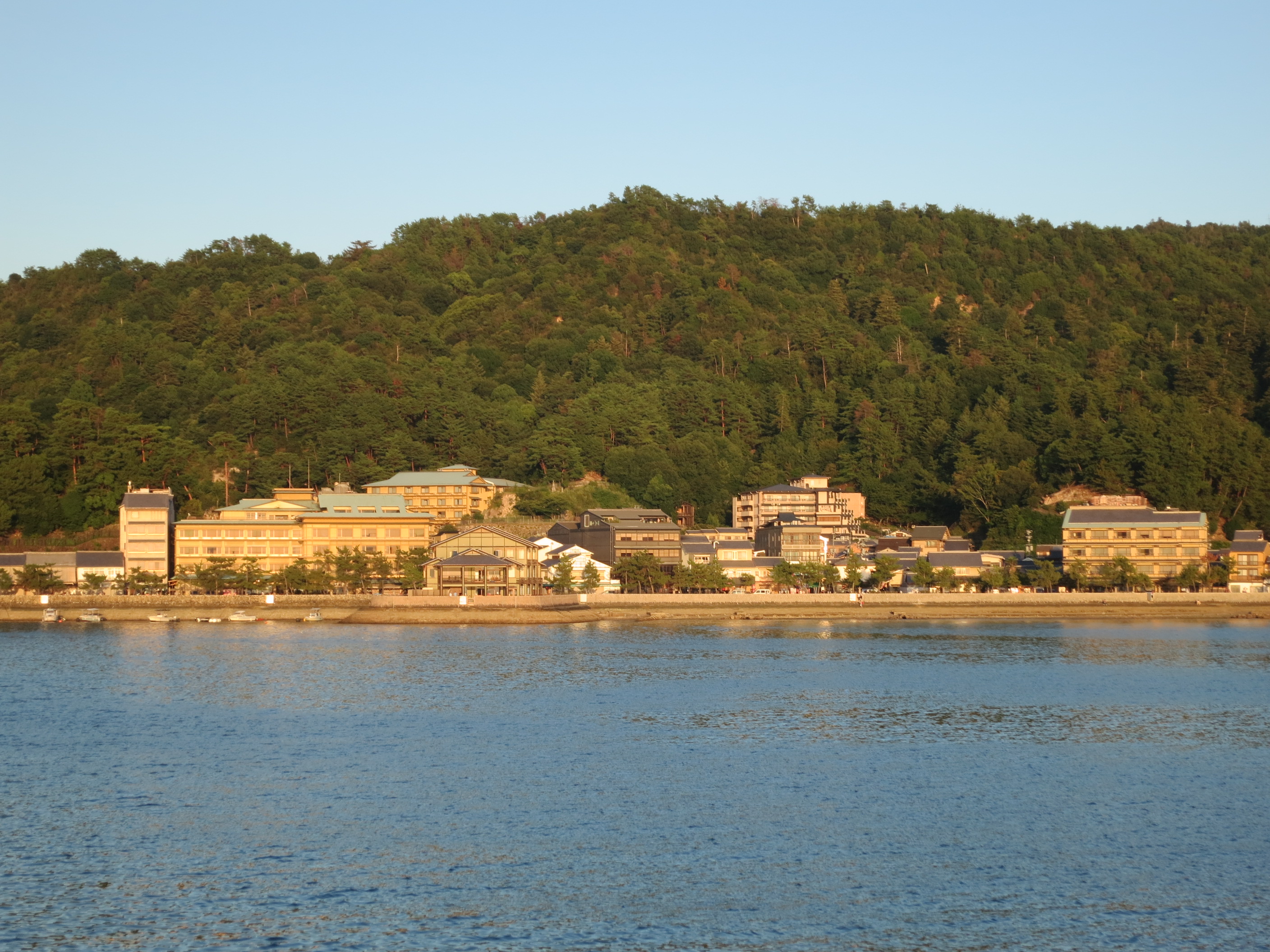
Miyajima is a renowned tourist attraction in Japan and is most widely known for its beautiful shrine gate. When I read the descriptions, what drew me most to visiting this island is the flame burning near the temple at the top. I know this sounds strange, but apparently this flame has been burning continually since it was lit 1,200 years ago. Twelve hundred years! That is utterly amazing. So, without knowing much more than this, we made the journey out of Hiroshima, first taking the street car, then the train, then a ferry! Many modes of transportation are required to get there, but Miyajima is totally worth it. Once again, our JR Pass paid for itself as the trip out and back didn’t cost us a single Yen.

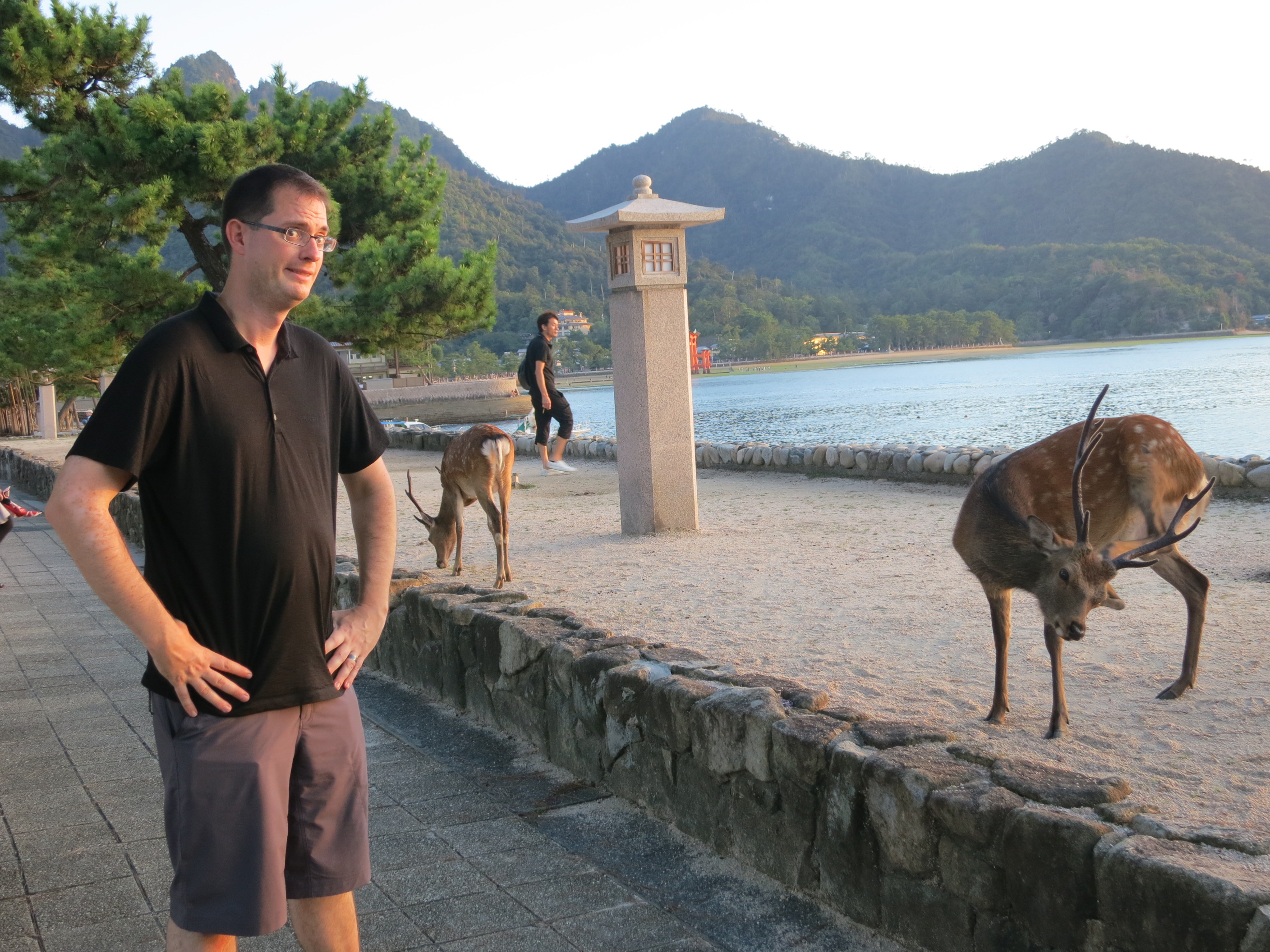
Domestic Deer?When we first stepped off the short ferry ride and began walking around the island one thing struck us immediately–the amount of “wild” deer. I say “wild” because they really seem quite domesticated and docile. Having grown up in Ohio, I am used to deer which run away at the sound of people or cars. I expect deer to be skittish and elusive. Not these deer. They walk amongst the people like they are pets. People are told not to feed them, and we didn’t see any of that happening, but people were definitely petting the deer and even touching their antlers. Phil and I kept our distance, but at one point the deer came right up to me, sniffed my bag and kept going. We saw one deer steel a bag of snacks from the back of a man’s wheelchair. It was very strange and a little unsettling.

Gorgeous!Because we got there so close to sunset, we were unable to go up the ropeway which would have taken us to the 1200 year old flame, but it was totally worth missing to get to view the brilliant red shrine gate of Itsukushima-jinja at sunset. This huge gate is set out in the water, so at low tide visitors can walk up to it and at high tide it looks as though it is floating. It is one of the most sensational sights we have seen thus far. We realized that most of our time in Japan has been spent in bustling cities and crowded areas. Miyajima at sunset is the complete opposite. Sure, lots of people were there taking photos and watching the sun slide behind the mountains, but it was incredibly quiet and tranquil. We sat for almost an hour, watching the sun go down and the stars come out. It was really majestic.

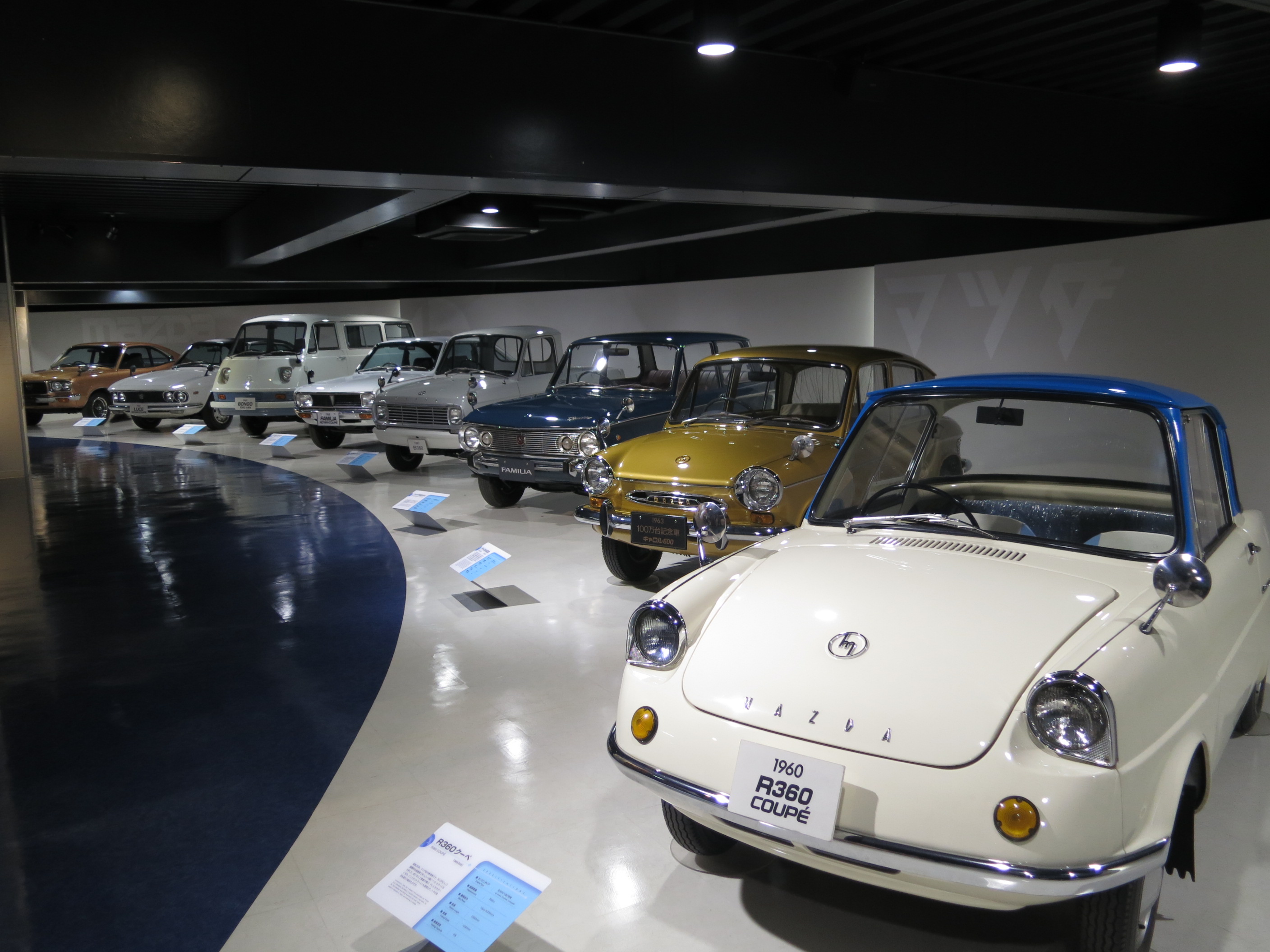
Our final morning in Hiroshima found us touring the Mazda Museum. I’m not really a car buff and I certainly don’t know what makes Mazda different from any other type of car, but it was so great getting to take this tour. First of all, the facilities are absolutely huge. We were not allowed to take pictures of the outside buildings, but did learn that the assembly line is 7km long, the longest in the world. In addition, this Mazda facility has its own private bridge which is 500 meters long making it one of the longest privately owned bridges in the world. They also have a private port where their ships transport up to 5000 cars at a time to different areas overseas (it takes 14 days to transport a car from Hiroshima to Northern California).

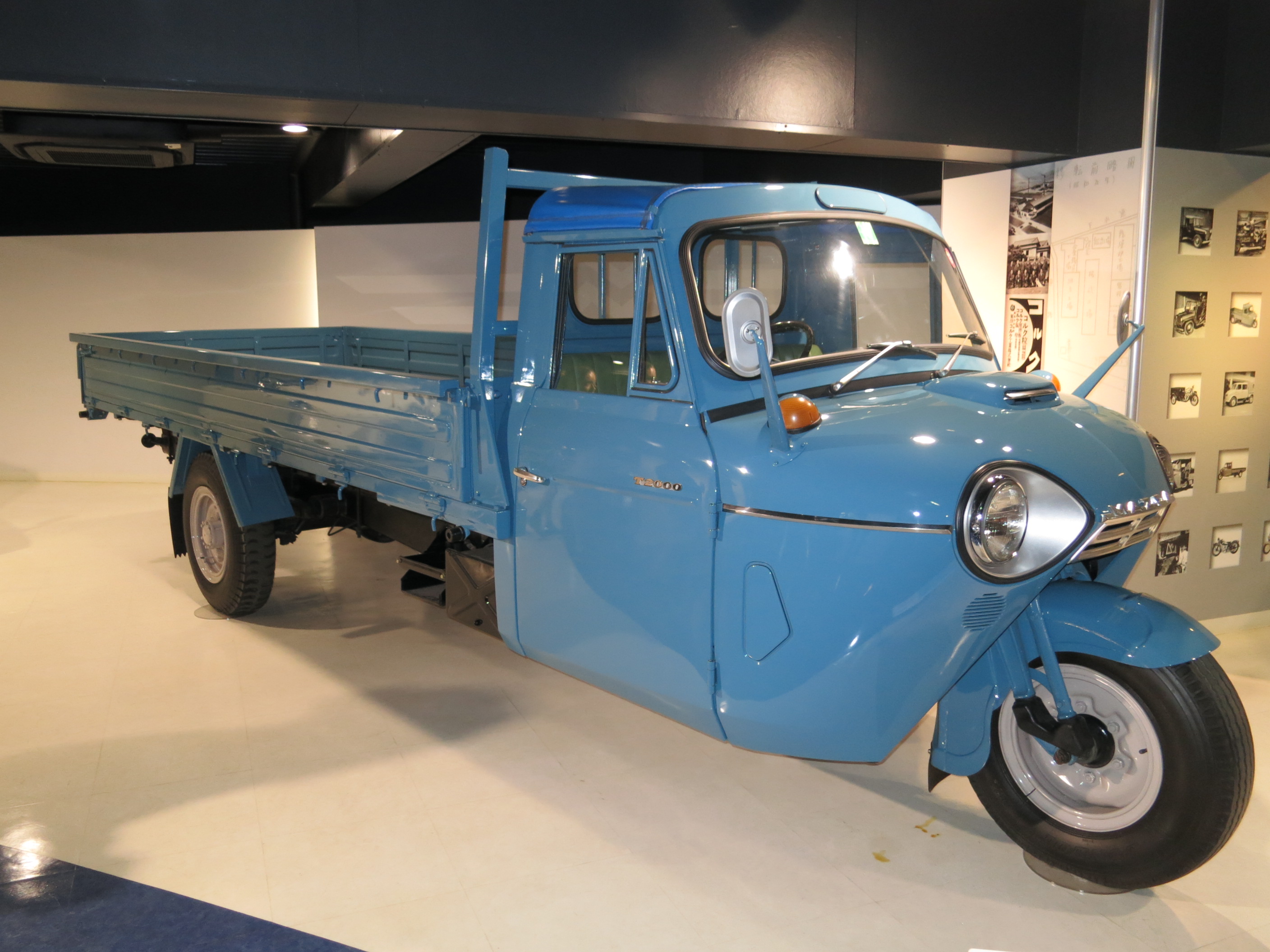
Mazda Museum

The tour was really great, starting with a little history of the company and moving through the years. Of course there were 2 major parts which were most spectacular. First, we got to see some of the classic Mazda cars. They were absolutely beautiful. We even saw a Cosmo Sport, a sports car from the sixties which is very rare because it is entirely hand made; there were only 1200 in existence. I also thought the 3-wheeled trucks were awesove me–these were the first motor-vehicles Mazda ever made. I think I could drive one of these as my everyday vehicle!Love this truck

But to be honest, the best part of tour was actually getting to see the assembly line. It was amazing. The cars would creep down the conveyer belt while workers put different parts into place. We were surprised to see different models of cars being made on the same line. We figured that would get confusing, but they clearly have a way of keeping it all straight. We were especially fascinated by the machine that put adhesive around the edges of the windows, windshields and rear windows. It knew exactly where to go–it really is like magic. The cars are put together from start to finish at this plant, and it takes about 15 hours per car. They make about 1,000 cars per day. Absolutely amazing. Unfortunately, we weren’t allowed to take pictures of the assembly line, but just trust me when I tell you it is one of the most intricate and interesting things you can see–we could have stood there watching all day.

Toy Truck?After visiting the Mazda Museum, we decided it was time to leave Hiroshima and head back towards Tokyo. We can’t believe how quickly our time in Japan is going, although that seems to be a pretty consistent theme of our trip so far. Now, we spend the day buying souvenirs and shipping some things home (we have the benefit of using the U.S. Postal Service on base). However, the most important thing we are going to do today is get prepared for tomorrow–the day we climb Japan’s tallest peak – Mt. Fuji!

-Brooke

Miyajima gate at sunset

The shrine gate at sunset is truly a sight to behold. The tide is coming in at this moment, but at high tide it looks like it is floating.
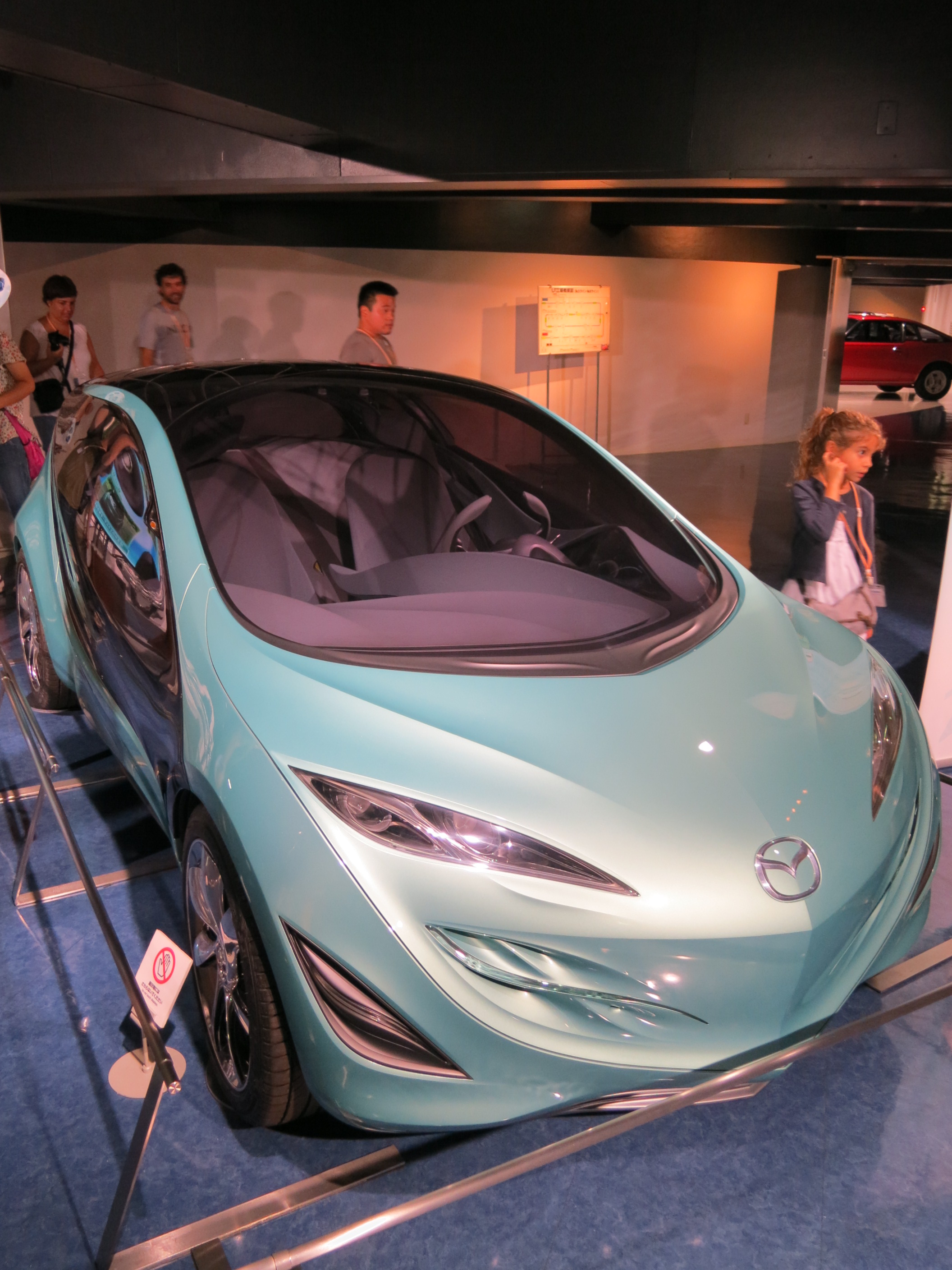
Going Green
One of Mazda’s concept cars. In an effort to “go green” there are grooves on the roof to collect rain water, filter it, and pour into a bottle for the driver to drink. Really!?

Categories: City Visits, Destinations, Diversions, Exploring, Japan, Landmarks, Museums, Relaxing, Temples, Unusual Experiences | Tags: , , , , , , | 4 Comments

Visiting Hiroshima

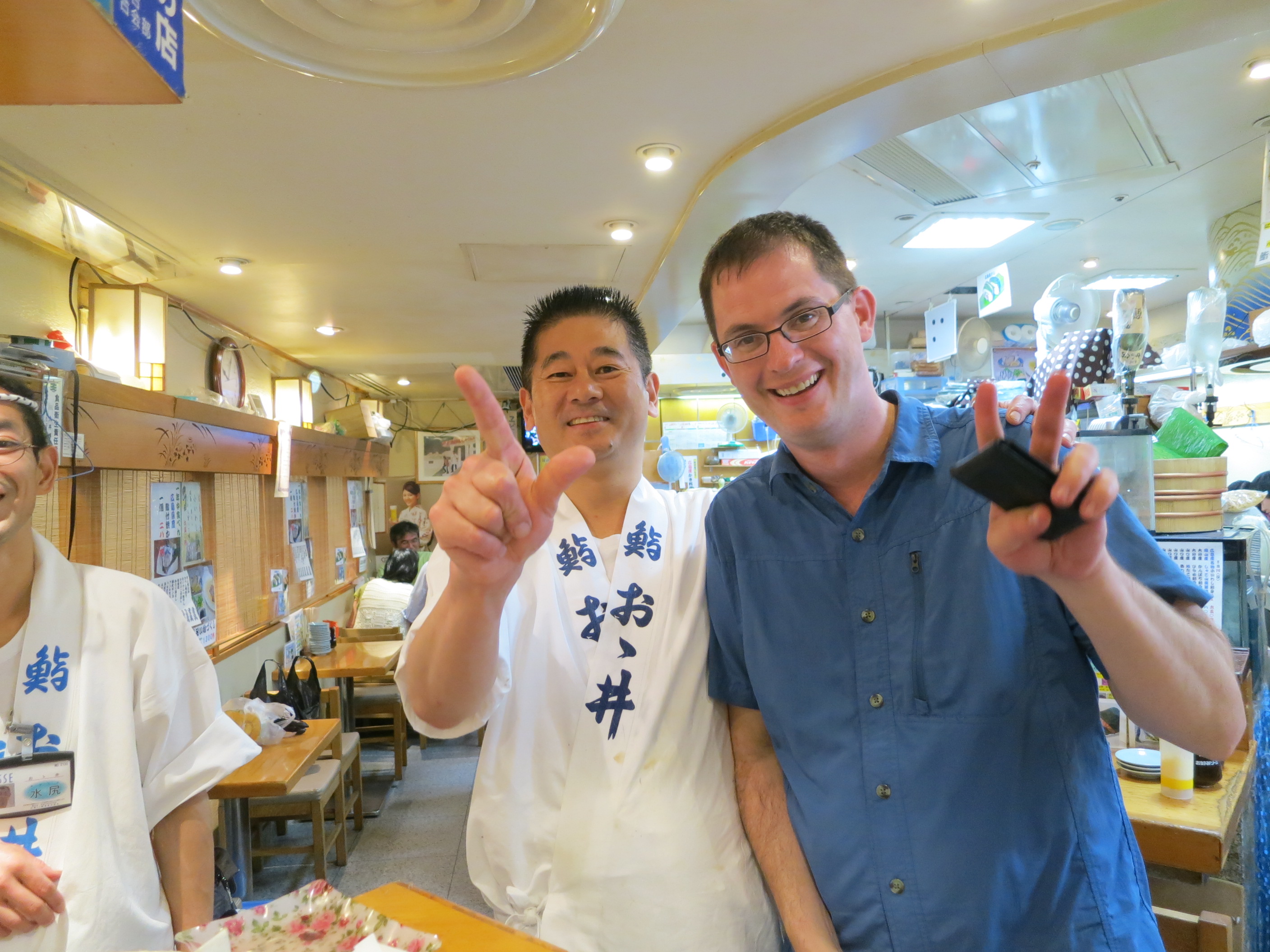
New foods!We’ve made our way on the Shinkansen from Kyoto to Hiroshima leaving behind Shoguns, Geishas, Kimonos and Pagodas and ready to see a new city. It was a quick two hour ride on the Shinkansen. After arriving in the early evening, we set out to grab some dinner. Very quickly, we discovered Okonomiyaki – Hiroshima’s signature dish. Okonomiyaki is best described as a noodle pancake loaded with cabbage, sprouts, egg, meat and more – all cooked on a griddle. Locals take pride in their Okonomiyaki and it is as ubiquitous as chili is to Cincinnati or deep dish style pizza is to Chicago. The verdict? Inexpensive and tasty! Can’t wait to go back tomorrow for another round before we head out of town! The very friendly owner of the particular restaurant we visited was insistent on giving me his card. You can visit his site here.

Hiroshima is a lively, colorful city that uses street cars of all sizes, models and years as their signature public transportation. Running up and down the major streets, the street cars are the main way we’ve been getting across town. After a relaxing night at Hiroshima’s wonderful Hana Hostel, we made our way to Peace Memorial Park and The Peace Memorial Museum – part of a whole complex dedicated to the memory of the atomic bombing of Hiroshima and to creating lasting worldwide peace..

Memorial at HiroshimaThe museum and park certainly qualify as “must visits” in Japan. The nearly-free museum is well done, informative and paints a complex picture of the really widespread, horrific destruction done by the atomic bomb. It was interesting and informative and solemn, but structured to teach and share to make sure that all remember. Brooke and I walked away glad we took the time to tour the museum and grounds surrounding this incredibly important, watershed event in human history. It is also the first time we’ve really come to understand the specific impact of an atomic attack on a specific place.

The museum has such a tactile component with archives full of items from the blast that you can touch and hold. Showing these human, personal items helps to establishes a more intimate connection with what happened here 67 years ago. One eye-catching exhibit was the stopped wristwatch reflecting the exact minute that the bomb went off- it is literally a snapshot of time. The personal stories and archived items, and especially the photographs from the city after the bombing are unsettling, but that’s to be expected and kind of the point.

Archives at Hiroshima MuseumWe found it really interesting how the current generation of Hiroshima locals really shoulder the city’s legacy from the past. The city is a rebuilt place, but they are urging people to never forget what has happened here. The museum has a clear focus on their dedication to peace and ending nuclear proliferation. In fact, the sitting mayors of Hiroshima have sent a letter of protest to a country each time their nation has tested an atomic weapon over the last forty years. Copies of these letters fill up two or three full walls within the museum. We also applaud their mulit-lingual exhibits that show the desire to spread peace across all peoples. I get that this is supposed to be a message of warning, but it does sort of make the future looks grim and bleak. I saw a sign on the way out indicating that this should be a “warning to future generations.” Indeed.

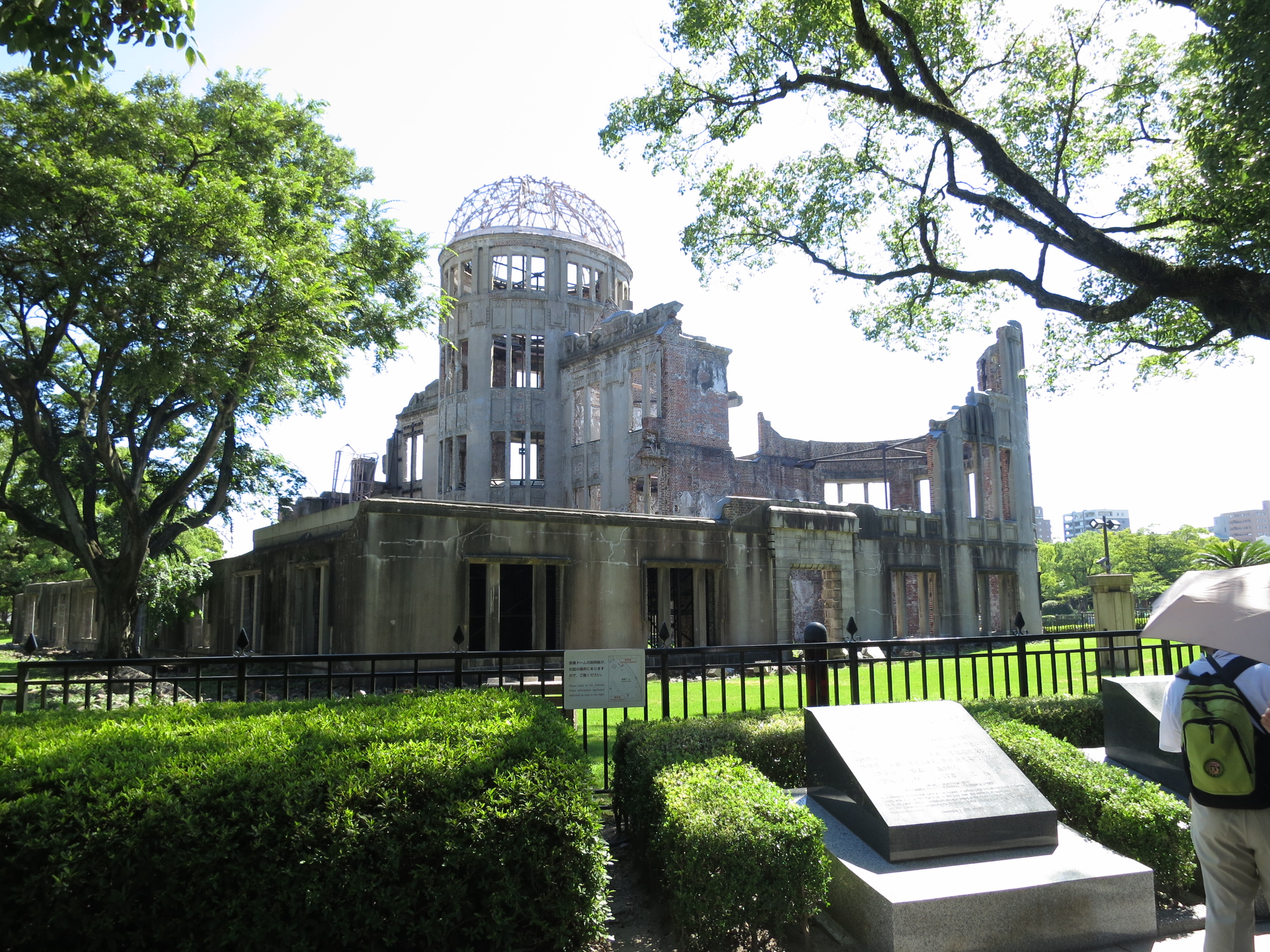
After leaving the museum, meandering through Peace Park was its own striking experience because you’re standing in the near exact bombing spot that you had just studied inside. It’s all preserved green space now with the cenotaph, flame of peace and the Childen’s Peace Monument which was built in a response to the well-known story of Sadako Sasaki- the cancer stricken girl who made a 1,000 paper cranes. Is is an astonishing tale that’s simply heartbreaking. The most notable building was the so called “A-dome” structure: the shell of a building close to the center of the bombing that was one of the very few to remain intact.

The "A-Dome"We walked away from the area and took some time to compose our thoughts and consider our experiences. Hiroshima is in no way a depressing city and its desire to be focused on peace rather than tragedy is quite clear. We understand why some people may avoid visiting this city, but we would definitely try to convince them otherwise. No matter what your political views or beliefs about nuclear weapons, the story of Hiroshima and its people deserve our attention and remembrance. There is more to our visit to Hiroshima which is a bit more uplifting and fun, but we will tell you all about that tomorrow.

-Phil

Phil and The noodle pancake owner guy

Phil and the owner of the Okonomiyaki joint

Another view of the really striking A-dome.

Another view of the really striking A-dome. It’s been preserved to look exactly as it did right after 8:15 AM on August 6th, 1945. Everything else around it was just obliterated.

Categories: City Visits, Destinations, Exploring, Hotels, Japan, Landmarks, Museums, Transportation | Tags: , , , , , , , , , | 4 Comments

Blog at WordPress.com.