Author Archives: Brooke

Beautiful Vitosha…or Not

Upon arrival in Sofia, our friendly hostel workers gave us a map with suggestions of things to do.  Top on the list:  enjoy Vitosha Natural Park.  Similarly, when we went on our walking tour of Sofia, one of the first things the guide said to us is that Vitosha is not to be missed–having a mountain peak that reaches 2290 meters just 30 minutes outside of the city makes Sofia unique to other Eastern European capitals.  So we figured, this is a must do.  A can’t miss.  Today was the day we would hike Vitosha.

In our research, we discovered that Vitosha is a very popular weekend destination for both visitors and locals.  There is actually a chair lift that takes guests part of the way to the top.  There, ambitious visitors can hike to the top, or less adventurous types can connect to another chairlift which takes them to the peak.  There is also a gondola that leaves from a separate town at the base and takes people all the way to the peak without any switching.  We were so excited for all of these options–this way we could ride up and hike down (I know, we’re taking the easy way).  Sadly, we learned that the chairlifts and gondola only run Friday to Sunday.  Our stay in Sofia is Monday-Wednesday, so chairlifts are not an option for us.  Damn.
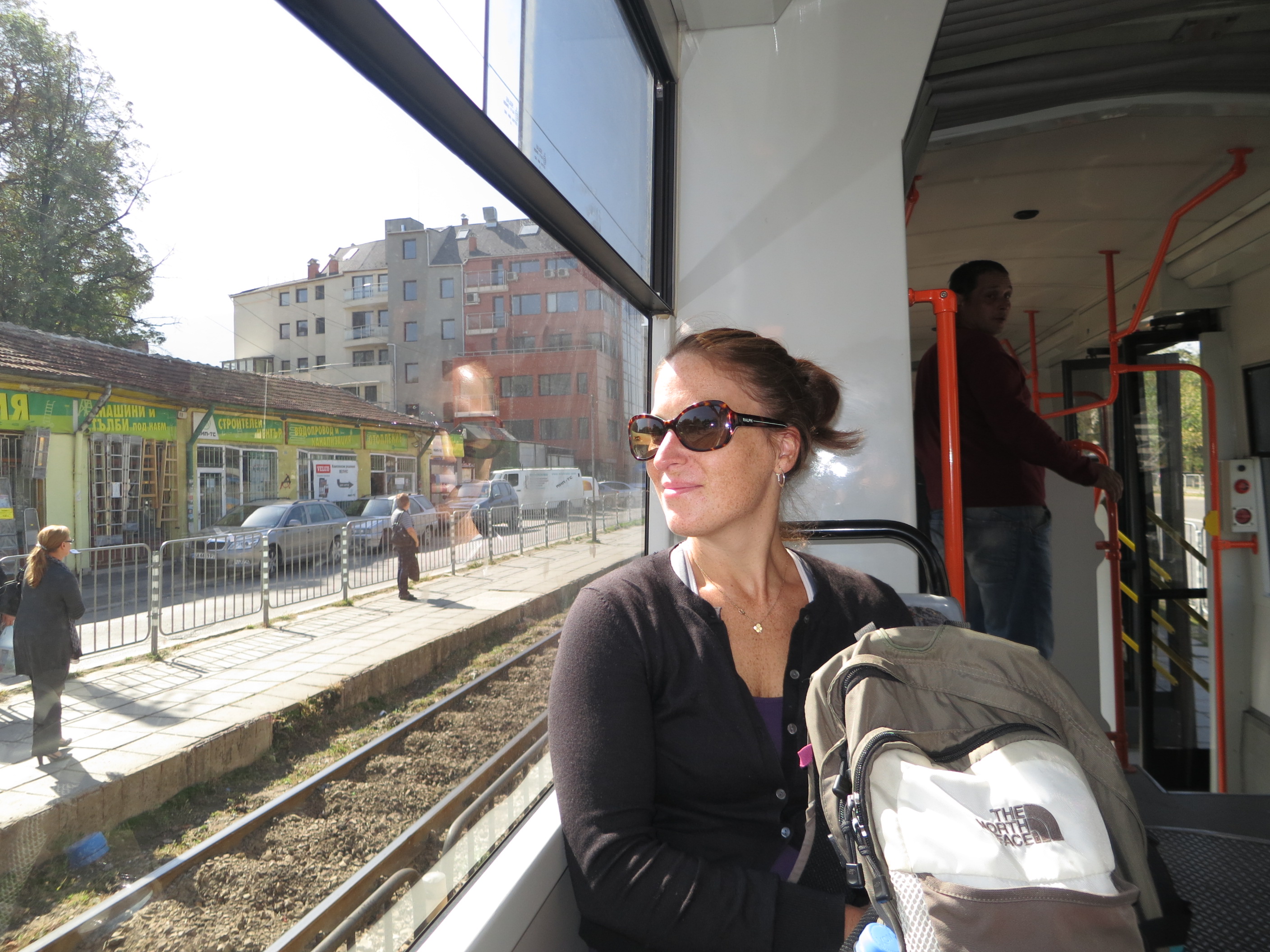
Okay, we are young.  We are healthy.  We climbed Mt. Fuji, for god’s sake!  We can hike up to the top, right?  Of course.  We set out on Tram #5 to the end of the line where “it’s very clear” how to hike up the mountain.  When we arrived at our stop, we exited the train and were surrounded by a run-down park with stray dogs (of course), some locals hanging around, and a rickety set of steps which led further into the woods.  After stopping for directions in a hotel whose stairs tried to permanently injure Phil, we trekked up the steps to begin our journey.  These led to a set of paths up the mountain.  Awesome.  We were there.  Except, there were at least 4 different paths.  Time for a map.  What?  No maps in English, only Cyrillic, an alphabet we can’t read.  Okay, that wasn’t going to stop us.  Nobody really speaks English, but everyone we spoke to pointed up, smiled and said, “Vitosha”.  So, we looked at each path and decided to follow the one that actually had another person on it.

So, here’s the thing:  it was quiet.  I mean, we didn’t see a single other hiker anywhere.  And, we didn’t have a map.  Though the trails were clearly laid out paths, they weren’t marked so we couldn’t be sure we were headed in the right direction, and more importantly, getting back down the same way might be tricky.  And then there are the bears.  In my reading before arrival in Bulgaria, I read that one of the wonderful things about this country is that its forests are still filled with natural elements like bears, lynxes and rare birds which other European countries are losing.  Rare birds–awesome.  Lynxes–uh, okay.  Bears–no way!  I’ve heard enough horror stories and been warned enough times about these dangerous creatures that I am really scared of bears.  What are the odds we would run into one on this hike?  I don’t honestly know–we weren’t exactly going into this exactly “well-researched”.

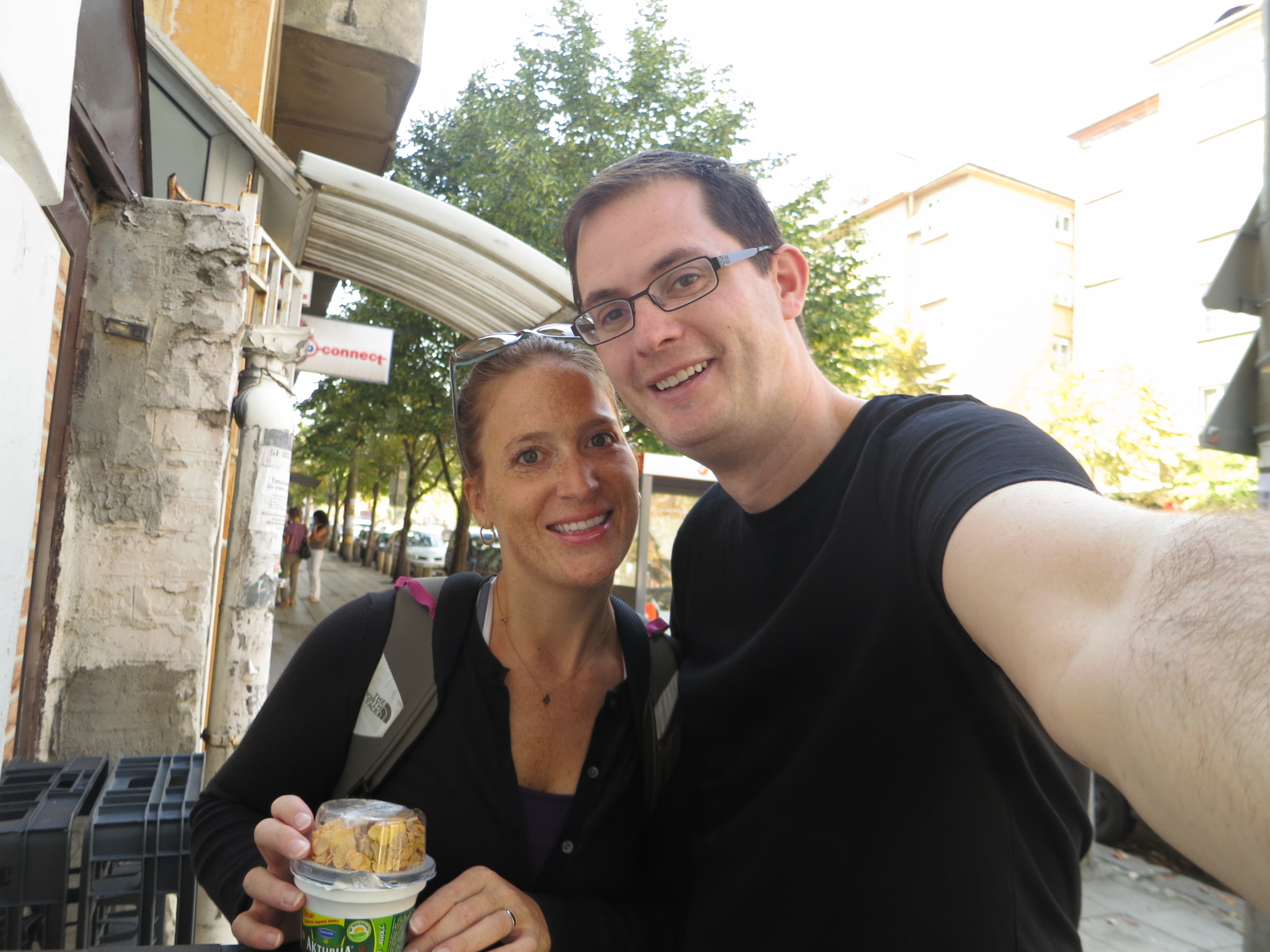
Phil’s delicious breakfast to prepare him for our unexpected day. Affordable, too, at only $1.20!

If there had been lots of other hikers around, I would have been fine.  If we would have had a map, I would have been okay.  If there were park rangers hanging about, I’d have felt confident.  But we had none of these things, and pretty soon the random noises in the forest started to freak me out.  So, I bailed.  I told Phil that I really wasn’t comfortable doing this.  For all the reasons I’ve already mentioned, I said I thought we should turn around and try something different.  I felt kind of bad, but being the wonderful partner he is, Phil agreed instantly and understood my concerns.  Great.  Now, for plan B.

Coming up with a plan B required we find a little help either from friendly locals or from the internet.  We spotted a hostel and figured they would be able and willing to help us on our journey.  We climbed the stairs, found the receptionist and asked our usual first question, “Do you speak English?”  She replied, “Deutsch.”  Hmmm, we don’t speak German.  We don’t really know any German at all (except for “Sprechen sie Deutsch?” and we already had an answer for that).  We were really wishing we had our German-speaking friend Drew to help us out at this moment.  Luckily, she was nice enough to give us their WiFi password and let us sit on their steps and do a little research.  After quite a bit of looking, we discovered there is a bus that takes people to the top of Vitosha!  Awesome.  All we had to do was go back into Sofia, catch the bus and the rest was a breeze.

Of course, things are never easy.  We finally worked our way to the spot where the bus terminal was supposed to be only to find it wasn’t a bus terminal at all.  It looked like it maybe used to be a bus terminal, but at this point it was just some bus stops and a turnaround that didn’t look to be in use any longer.  When we asked the proprietor of a nearby pizza stand, he was able to point us in the right direction.  After a little hunting (and asking for a little more help), we were able to find bus #64 heading to Vitosha.  Awesome.  This is the bus 3 different people (plus our online research) told us would take us to the top.  We were on our way now.  Nothing could stop us.  But, just to be sure, when we got on the bus we asked the driver, “Vitosha?”  He looked puzzled and shook his head.  I tried again, but this time I also traced the shape of a mountain in the air with my finger and he said, “Da.”  Great, two tickets please.

At this point, all we had to do was get off once we got to the top.  We started picking up passengers and slowly climbing through the neighborhoods at the base of the forest.  We didn’t really look like we were headed into the forest, more just an outer neighborhood of Sofia, but we figured as long as we were heading uphill, we were good to go.  We passed some movie studios and a monastery.  Soon thereafter, we definitely felt a shift in momentum as the bus started heading downhill.  He was picking up speed by the second and it seemed forever until the next stop.  At that point, we knew.  Almost immediately we knew we weren’t going to make it.  We would not see the top of Vitosha.  Defeated and weary, we rode the bus back down to the last stop, got out in a neighborhood we did not recognize, and ate the lunch we had packed for our hike.  It was over.  It’s important to know when to call it quits.  This was it for us.  It was only 4pm, the day was not completely lost, but we were not going to spend any more time trying to reach the top of the elusive Vitosha.
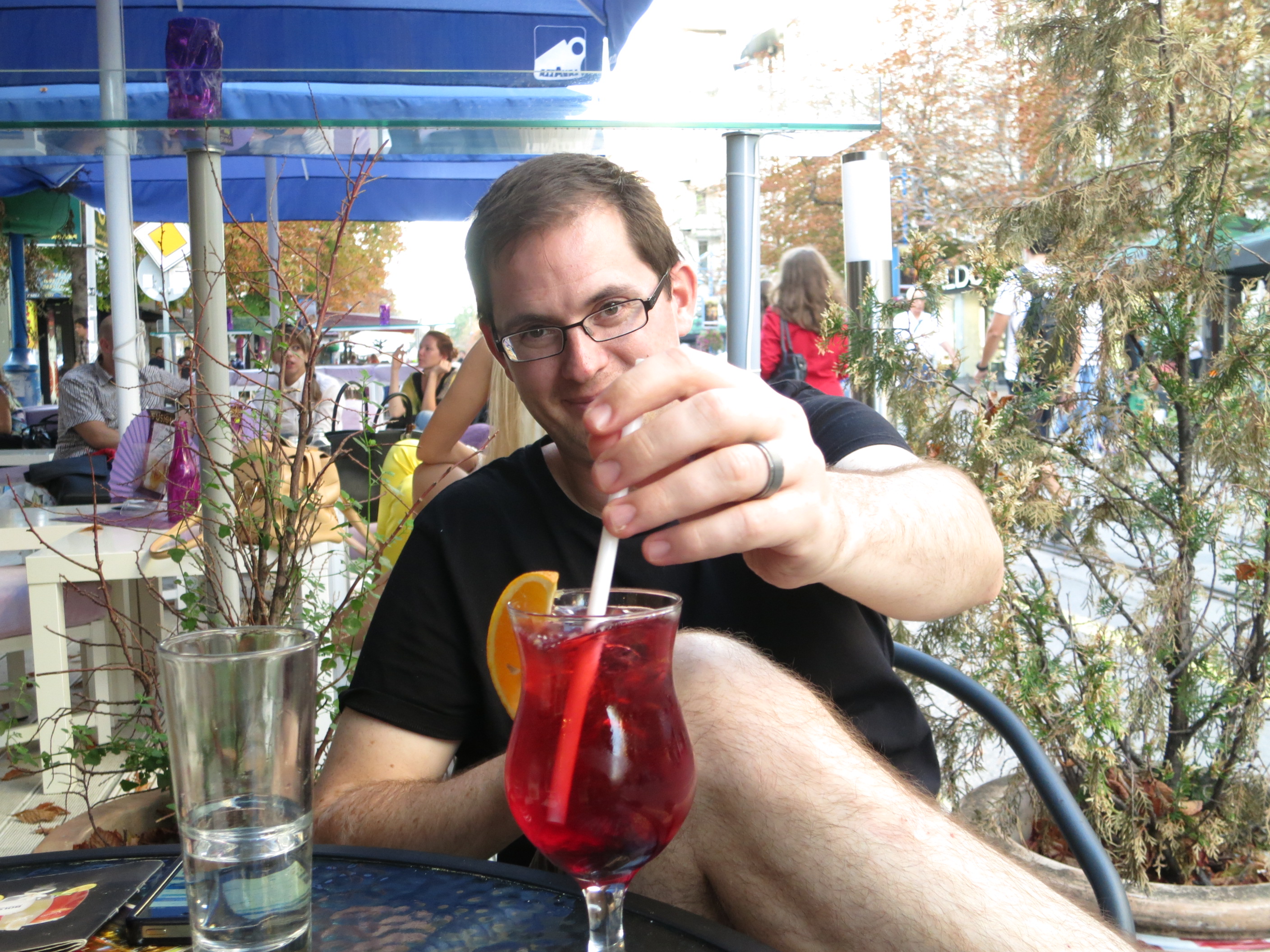
The rest of the afternoon shaped up nicely with a few drinks to help ease our frustration, lots of productive planning and a lovely dinner of traditional Bulgarian food at Divaka.  We felt a little better when we overheard a girl who is staying at our hostel tell someone on the phone that she, too, tried to get to the top of Vitosha today but after hours of walking, gave up.  That’s something, I guess. As you can see, sometimes the attempt at a destination makes for a pretty good story alone. Besides, we win more than we lose, so days like these don’t really bother us when we have a comfortable bed, a delicious meal and an exciting tomorrow planned.

-Brooke
Categories: Bulgaria, City Visits, Destinations, Diversions, Eastern Europe, Eating, Hiking, Reflections, Safety, Uncategorized | Tags: , , , , , , | 12 Comments

Beautiful Brasov and Bran!

When we arrived in Romania, many people assumed we would be heading to Transylvania, a region north of Bucharest steeped in history and well known to Westerners for its role in Bram Stoker’s Dracula.  We had no solid plans upon arrival, so we figured we might as well grab the train and head to Brasov, a city in the central region of Transylvania in the foothills of the Carpathian Mountains.

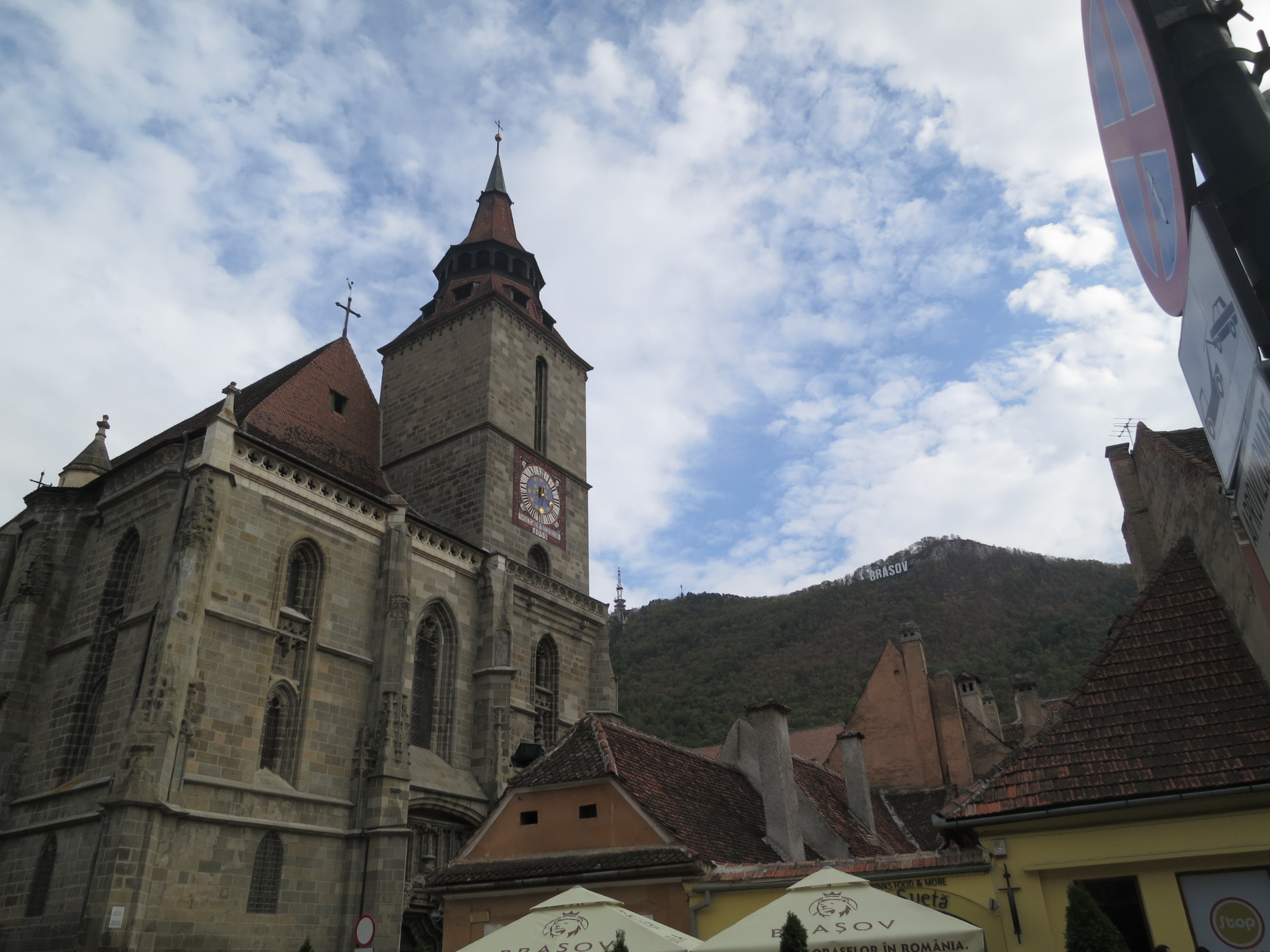
There is much to do in the Transylvania region, but to really see it all we’d have to be here for at least a week and take our time going from castle to castle.  Instead, we have only a few days, so we decided to base our exploration in the town of Brasov.  Having human settlements which date back as far as the Neolithic age, it has a rich history.  We decided to start a little closer to modern times with the town’s best known landmark, the Black Church.  Built in the 15th century, this remarkable church got its current name after being badly burned in a fire which consumed most of the town in 1689.  It has been cleaned up to the point visitors might not even realize there was ever a fire except for the four blackened statues which have been preserved in their post-flame glory.  This church marks the end of Gothic architecture in the region and claims to be the largest Gothic cathedral between Eastern and Western Europe.  Originally a Catholic cathedral, it is now Lutheran and serves the small German community here in Brasov by holding all its services in German.  The 4,000-pipe organ is still played weekly for public concerts.  Most notably, this church hold the largest collection of Turkish rugs outside of Turkey.  These were gifts over couple hundred years and are now proudly cleaned, repaired, and on display for public viewing.

We found a few things about the church particularly interesting.  One is the painted pews which designated seats for different guilds.  There were seats for the weavers, tailors, hunters, etc. all shown through symbolic paintings on the pews (we were, once again, unable to take photos inside so we cannot show you).  However, there were only 3-4 seats for each, so only the “higher-ups” in these communities garnered a seat.  The low wage workers were sent to the galleries up above.  We were also very interested in the “Black Madonna” painting.  It is a portrait of Mary being given gifts for Jesus and being attended to by angels.  Her dress was originally blue, but after the fire it turned black, therefore it has been given the name “Black Madonna”.  We had a wonderful young guide who gave a strong tour with insights we would not have otherwise had.

While there is more to see in Brasov (some of which we plan to do tomorrow) we decided to take this opportunity and head slightly south to Bran’s Castle.  Many people assume this castle was the inspiration for Bram Stoker’s Dracula.  Let me make something perfectly clear from the beginning–there is essentially NO CONNECTION!  There is the tiniest, most remote, slimmest chance that Dracula is based on Vlad the Impaler who has some miniscule connection to Bran’s castle, but the correlation is mostly created by people trying to drum up tourism.  Don’t get me wrong, the castle is awesome.  And Vlad the Impaler was awful.  But those two things aren’t really related.  Perhaps I’m getting ahead of myself…let me start from the beginning.

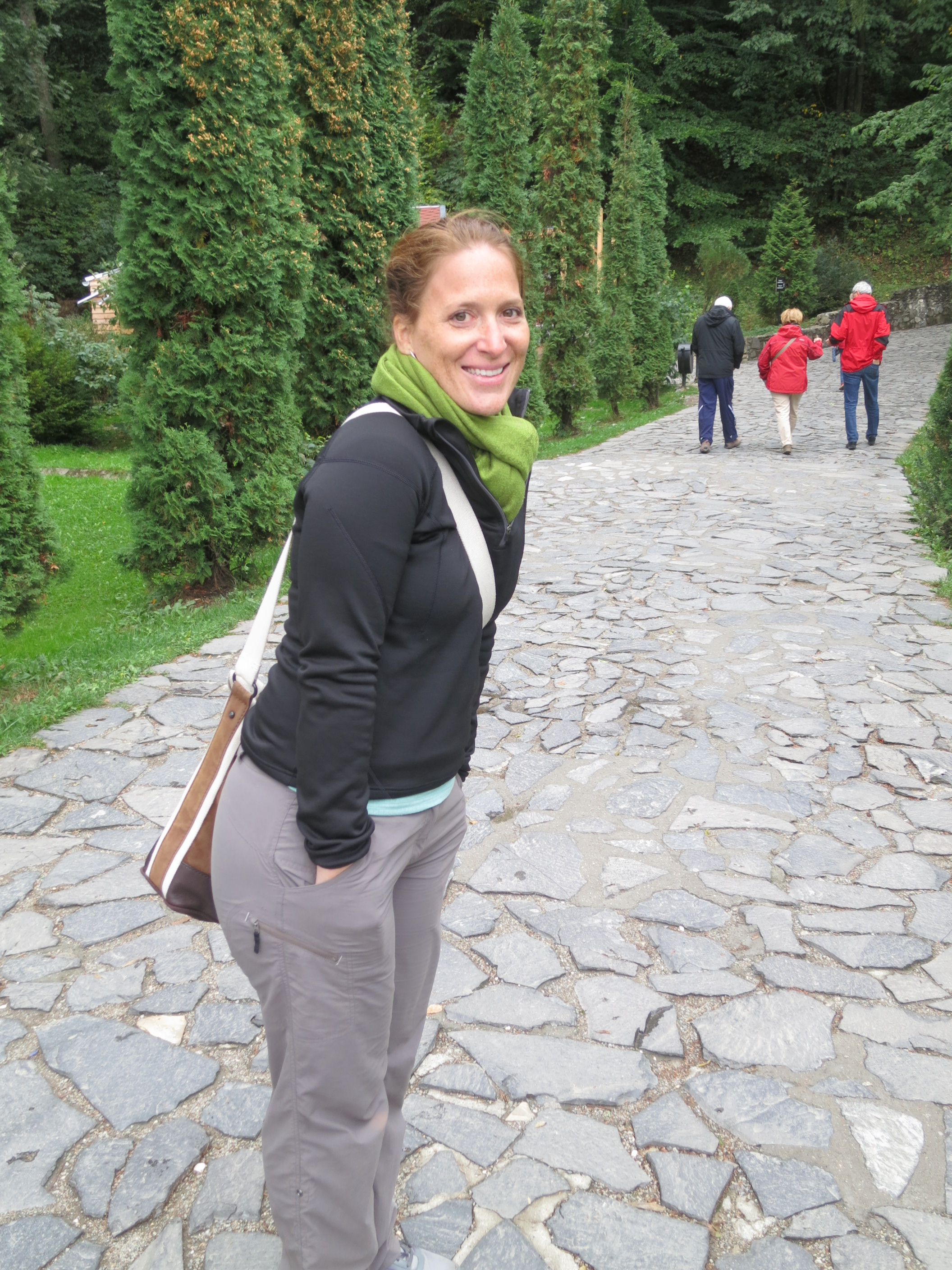
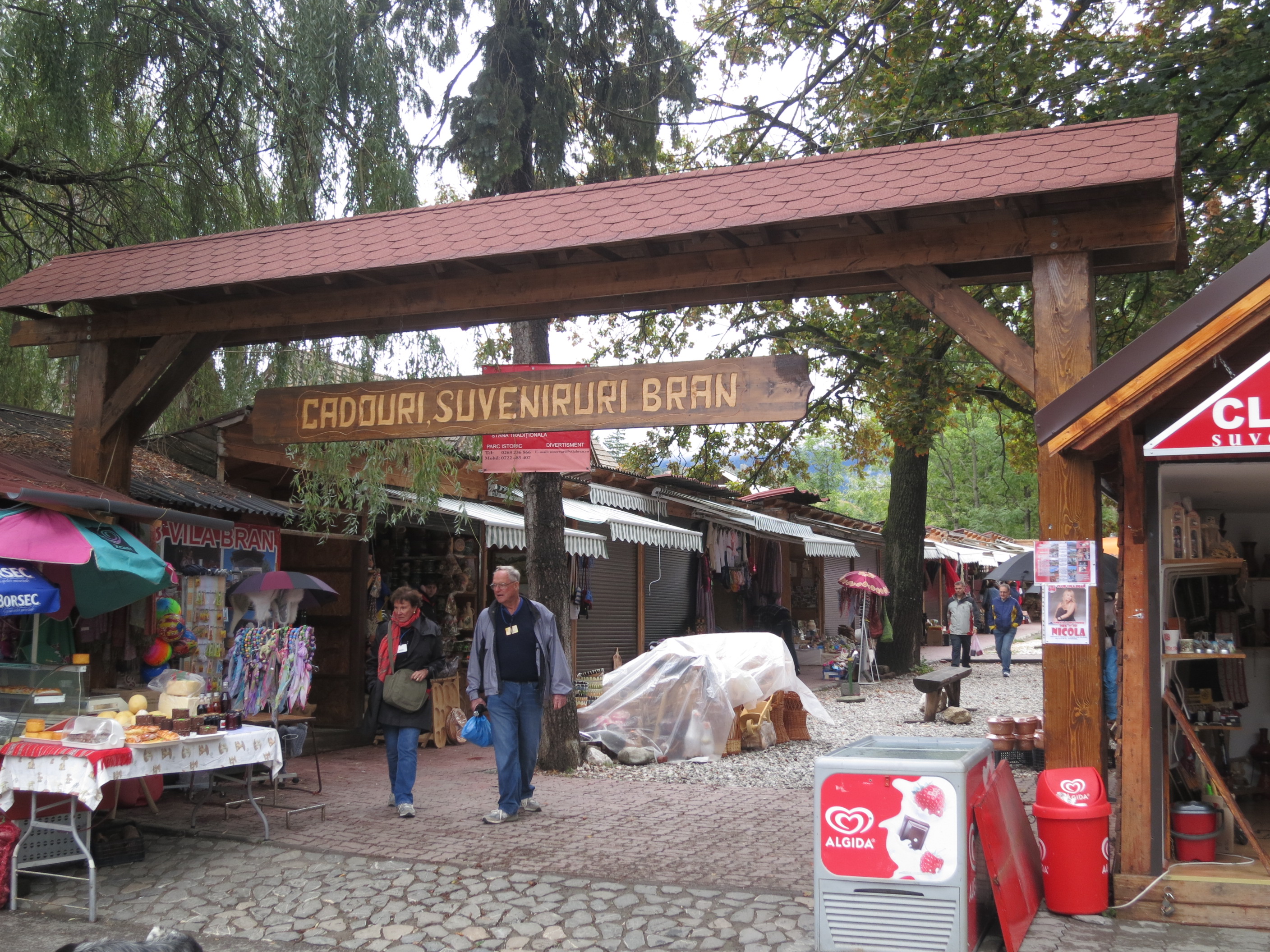
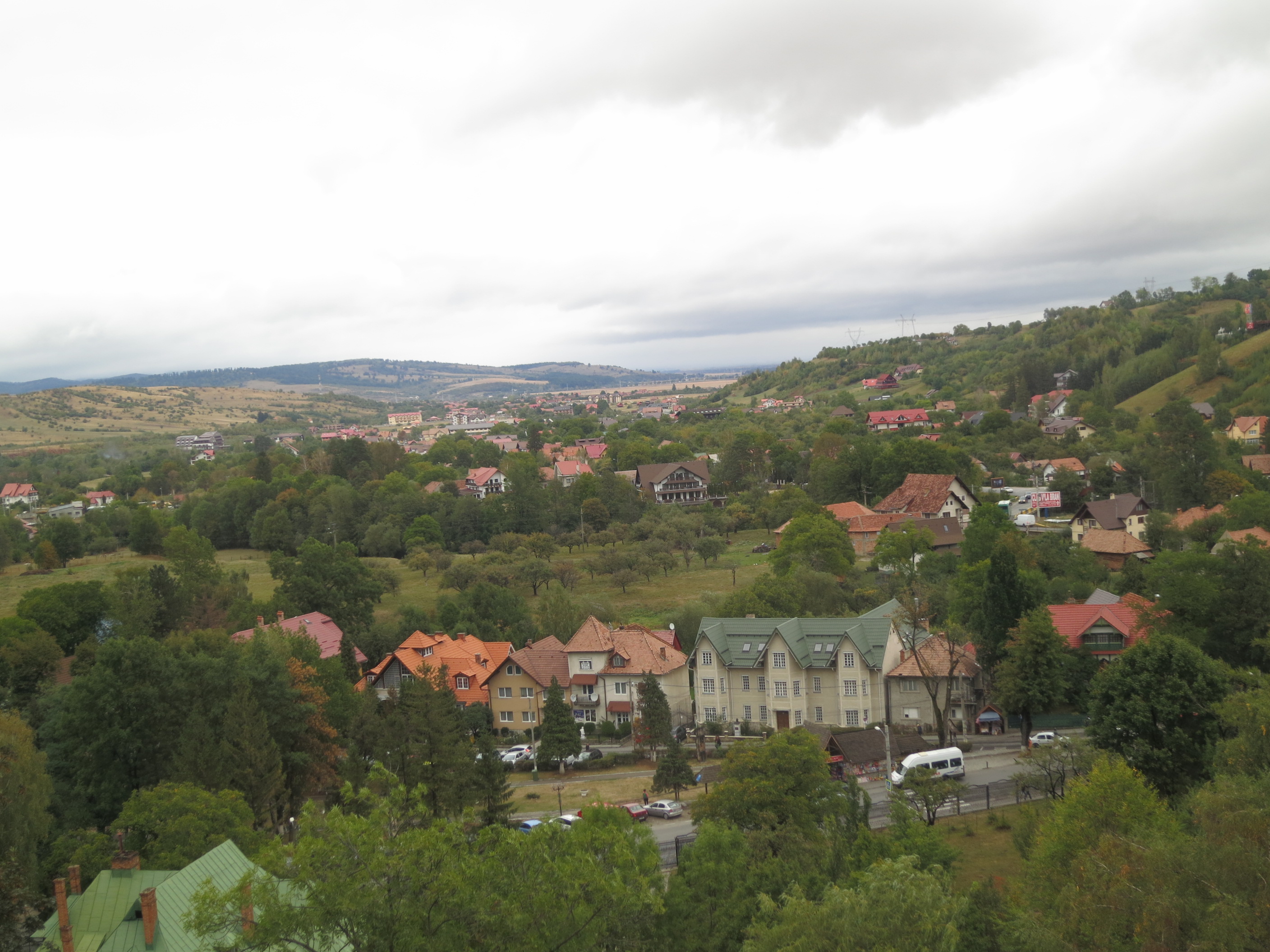
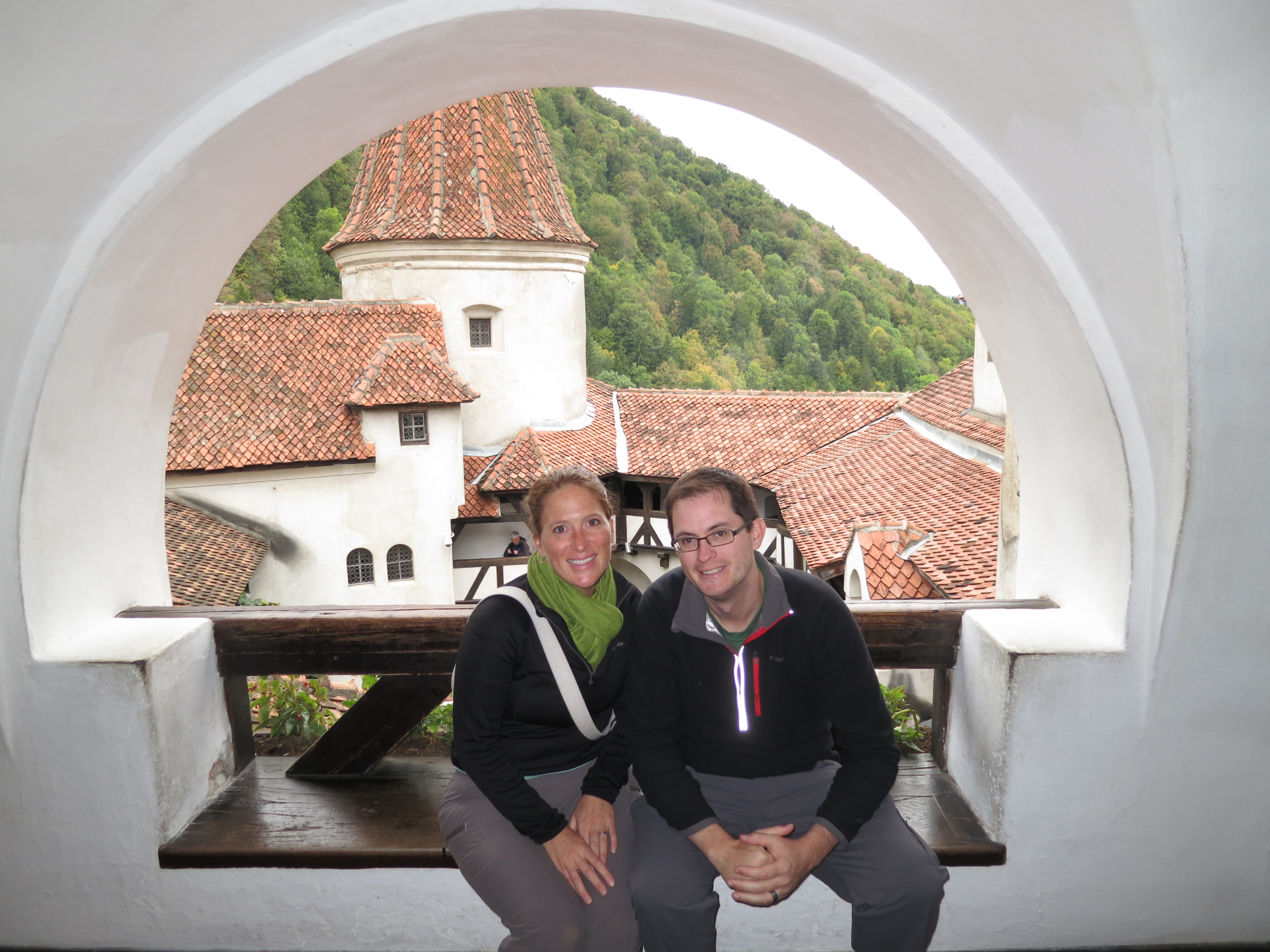
Bran is a fairly easy bus ride just 45 minutes south of Brasov.  As we pulled into town we could see Bran Castle sitting up in the hillside.  It looks rather small from the outside, but once inside it is actually quite cavernous and impressive.  Housing impressively creaky floors and drafty hallways, Bran Castle has a long history dating back to the 15th century.  It has had royal residents as recently as the late 1940’s and is one of the only castles we’ve been in that we could imagine living in.  Many of the original rooms have been refurbished to suit more modern living.  It has beautiful views and a fireplace in each room to help keep us warm–it was a chilly 48 degrees today so we kind of wish those fireplaces actually had wood burning in them!


There were two rooms dedicated to explaining the connection between Bram Stoker’s Dracula and Bran Castle.  Let me break it down for you–Vlad Dracul was a prince in Transylvania.  He had a son, Vlad the Impaler, who killed people by running a stake from – brace yourself – through their anus to their throat without hitting any vital organs thus producing a slow and painful death. He was also rumored to be ruthless and enjoy drinking blood–hence the connection to Dracula.  That’s about it. Dracula is a completely made up character by Bram Stoker.  We still aren’t sure what the actual connection is to this castle; Stoker never came close to visiting Romania.  It doesn’t really matter, though, because the castle is pretty cool all on its own.  The Dracula connection does make for some fun and kitschy souvenirs and a couple of haunted houses in the town center.

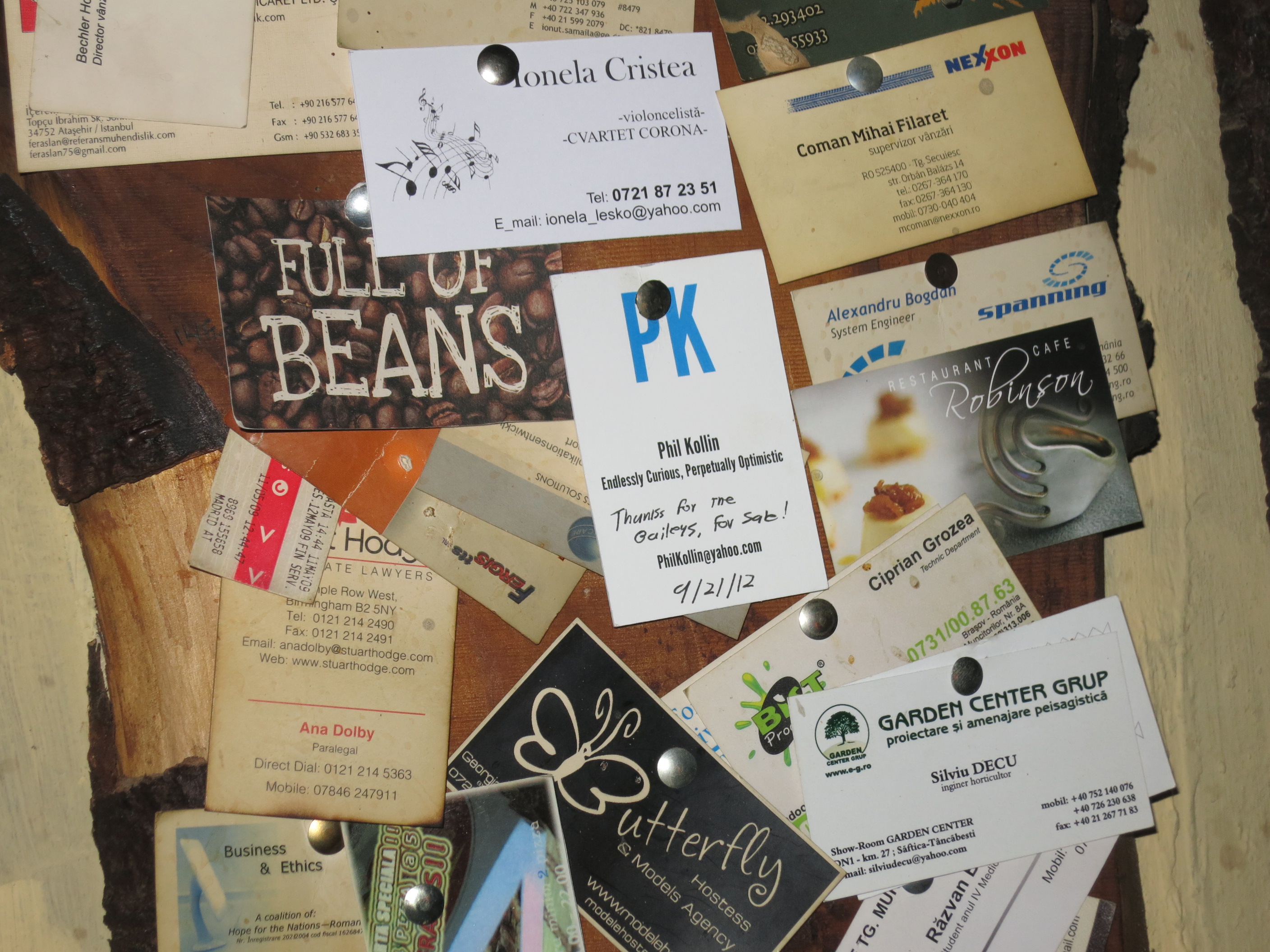
After our visit to Bran, we had planned to head to Rasnov to visit this cool fortress, but it was so cold and so rainy, we just couldn’t bring ourselves to get off the bus.  Instead, we warmed ourselves over some delicious Guinness at Deane’s Pub listening to a big band play some jazz and swing.  There’s something surreal about singing along to Sinatra’s New York, New York while sitting in a pub in Brasov, Romania.  On our way home we stopped off for a nightcap at For Sale, a cozy little bar whose walls are covered with the patrons’ business cards.  We had a drink, posted our business cards on the wall just for good measure, and now are attempting to warm up back in our room.  We think this weather must be unseasonably cold as the heat has not yet been turned on in our hotel.  (Oh well…it feels like we are back in our apartment in New York.)  Now, we plan our next steps.  We aren’t sure exactly what lies ahead, but after a little more exploration of Brasnov tomorrow, it looks like we are headed to Sofia, Bulgaria.  Wish us luck!

–Brooke

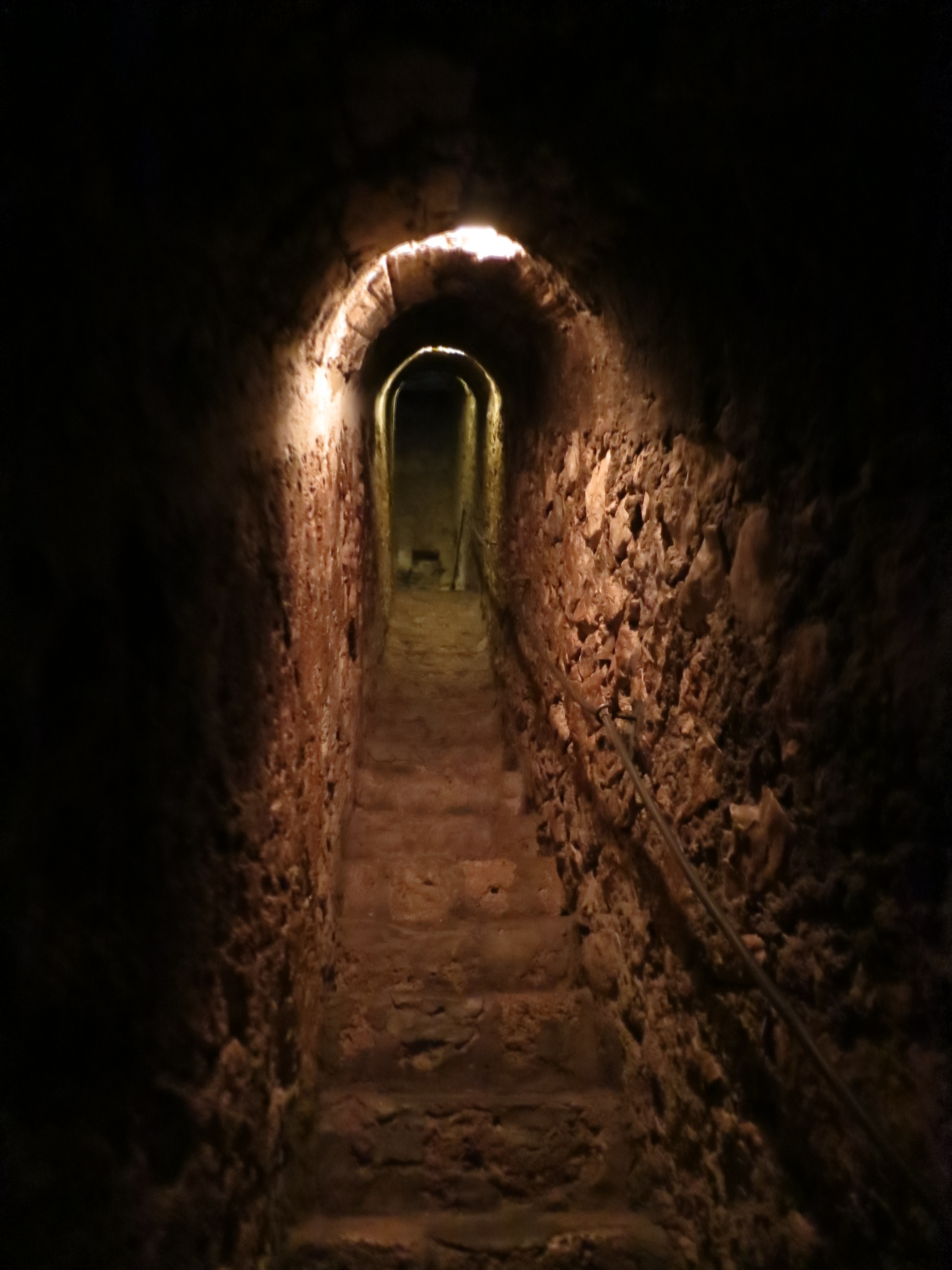
Creepy hidden staircase inside Bran Castle. I wouldn’t want to be in here for long!

Phil isn’t really meant for the castle lifestyle–he is way too tall!

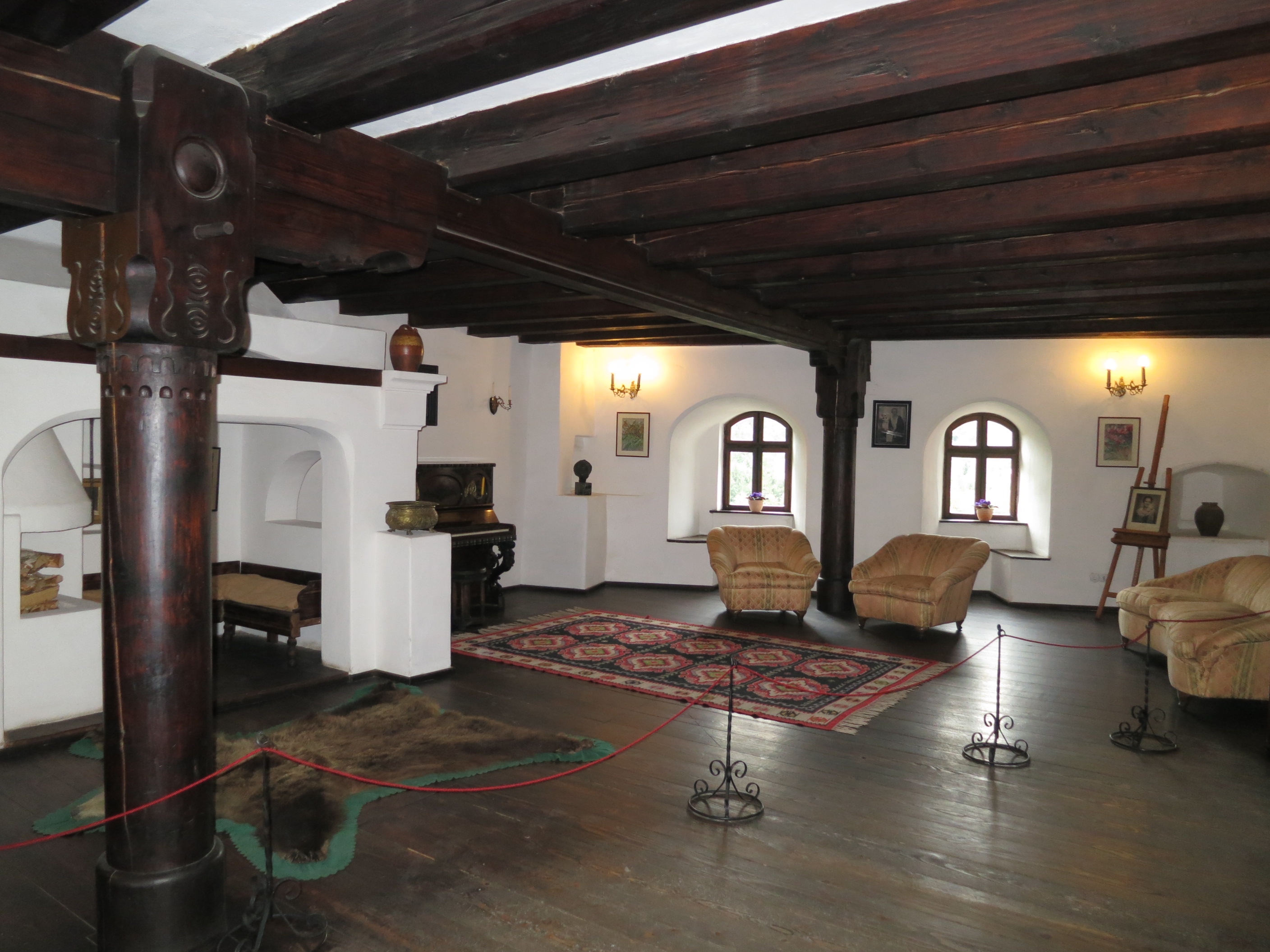
We thought this room actually looked like a room people would live in unlike so many of the cold, sterile rooms of the castle.

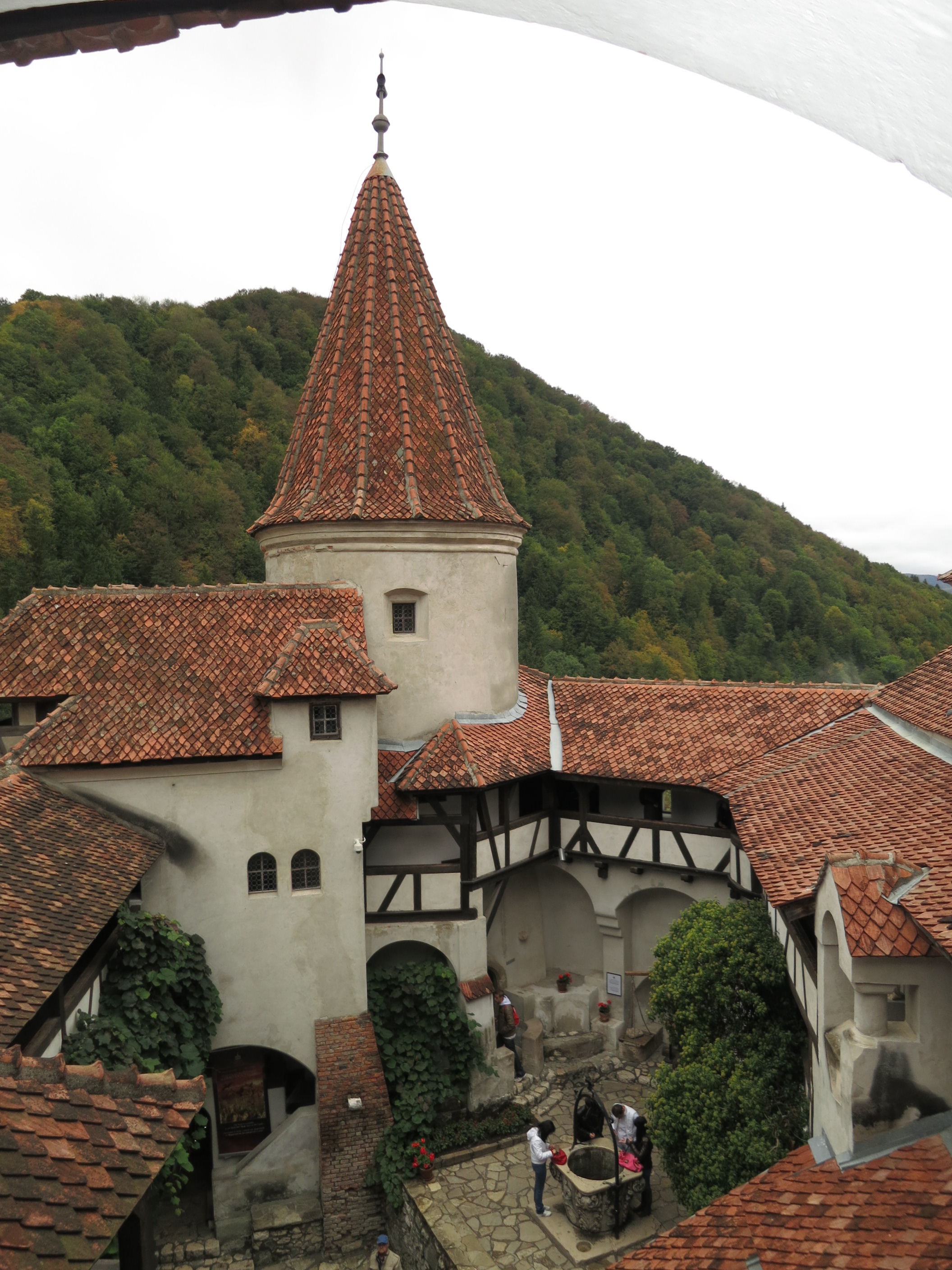
The inner courtyard at Bran Castle.

Categories: castles, Clothes, Destinations, Diversions, Europe, Exploring, Landmarks, Romania, Self Guided Tours, Uncategorized | Tags: , , , , , , , | 2 Comments

Bucharest: A Fixer Upper!

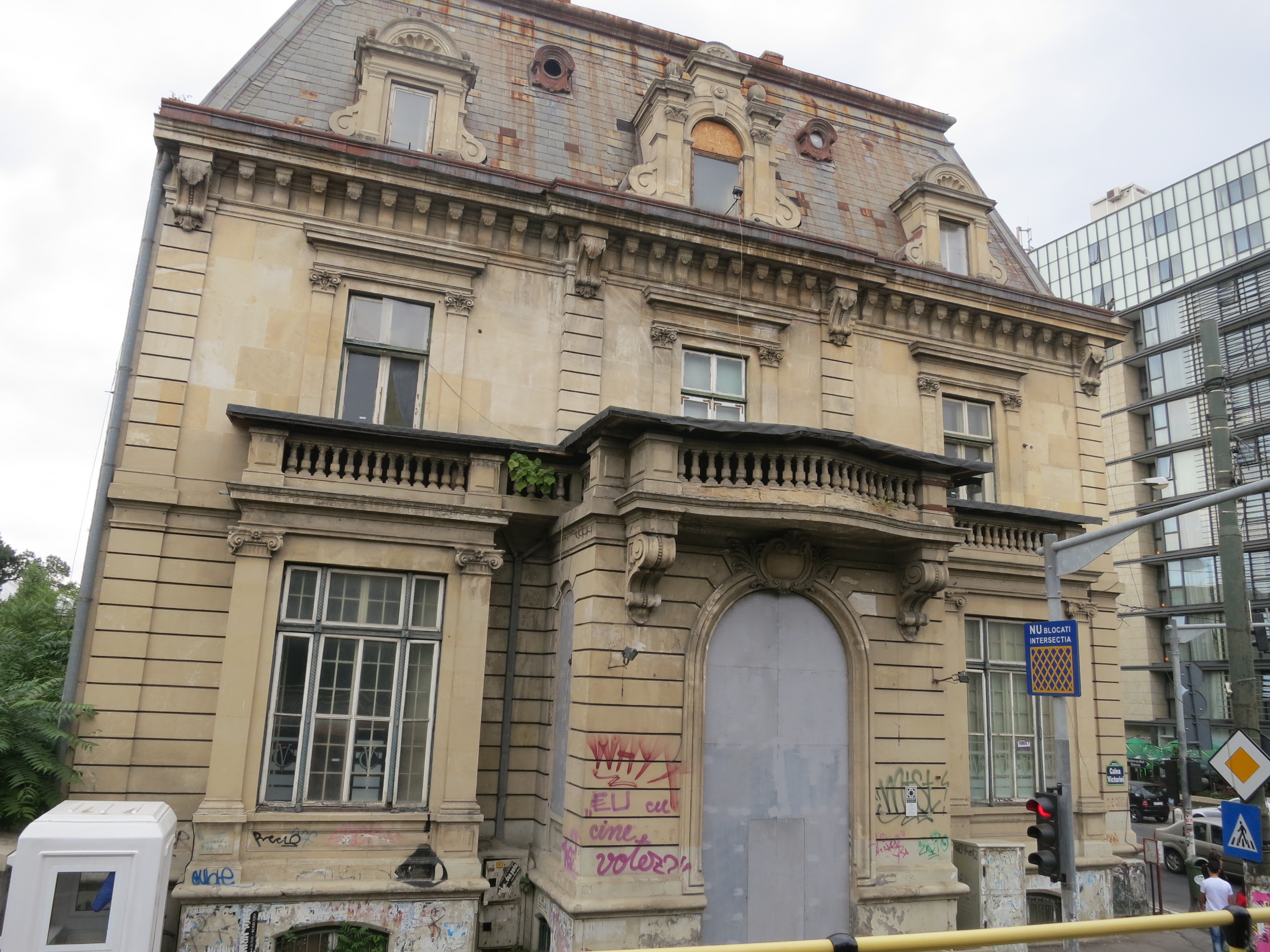
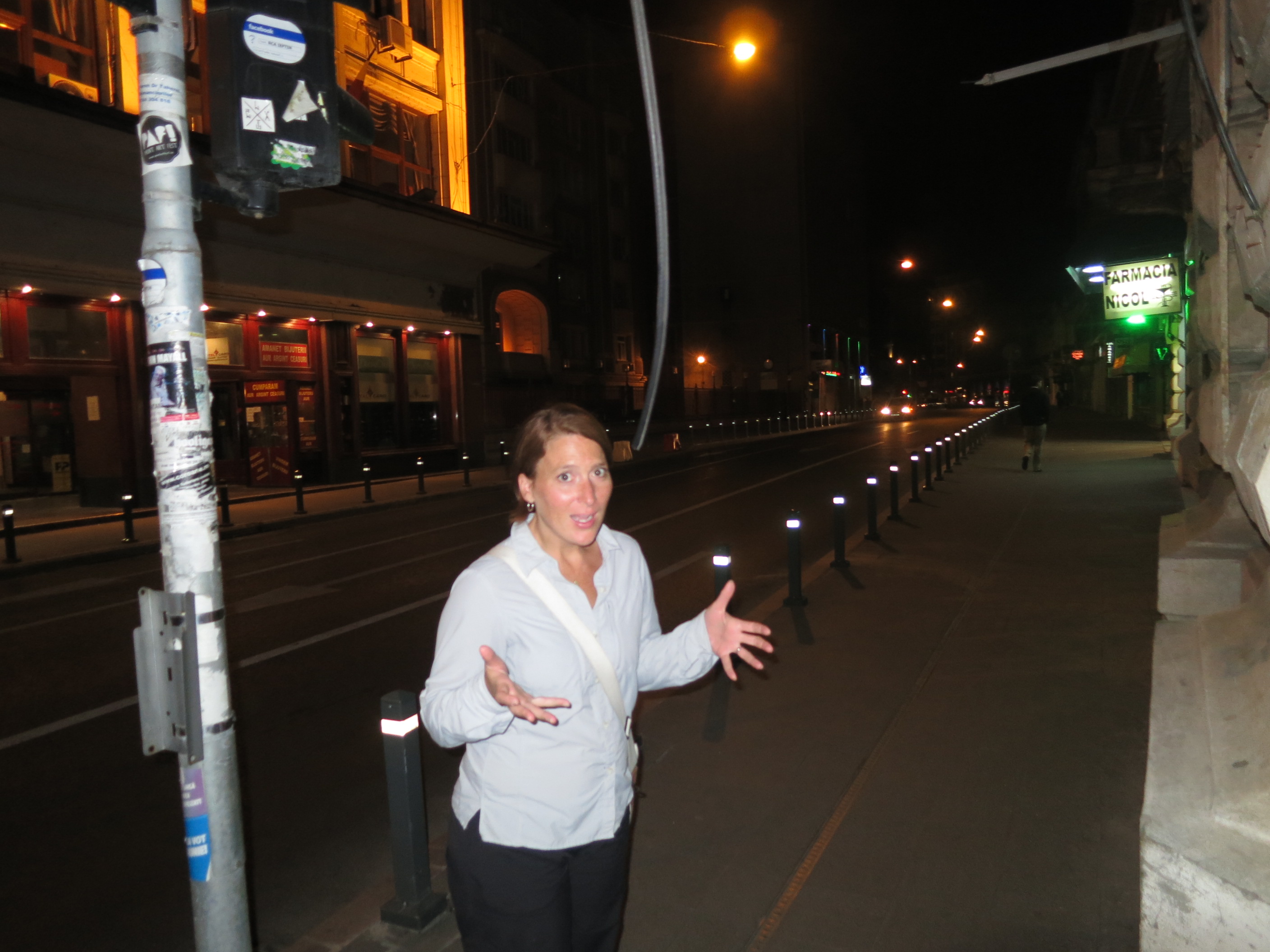
Imagine you go looking at a house or an apartment, and it’s nice, but it needs work.  The ceiling in the living room has a water spot, the roof needs to be replaced and the kitchen needs a complete overhaul.  The bathroom is functional, but a little dingy.  That’s the impression I get about Bucharest.  It has some amazing old buildings, beautiful architecture and vast green spaces, but it could use some work.  Some of the buildings have been kept up with vigor and look like they did on they day they were built, but determining which ones will be kept up seems a bit random.  Much of the architecture is dirty, with busted windows and scattered graffiti.  And there are lots of parks.  Big, spread out parks which encourage outdoor activities.  The one across the street from our hotel is always filled with people and is kept up nicely.  Well, pretty nice.  There is bird poop covering pretty much everything.  While this park is maintained pretty well, the park that sits outside of the Parliament building looks like it hasn’t had any real landscaping done in over a year.  It is this paradox that seems to define Bucharest.  On the one hand it is beautiful, but turn a corner and you have to dodge the stray dogs wandering the street and beware the loose wires hanging low over the sidewalks.

The perfect example of a building with the potential to be lovely, but which is really just neglected and busted up.

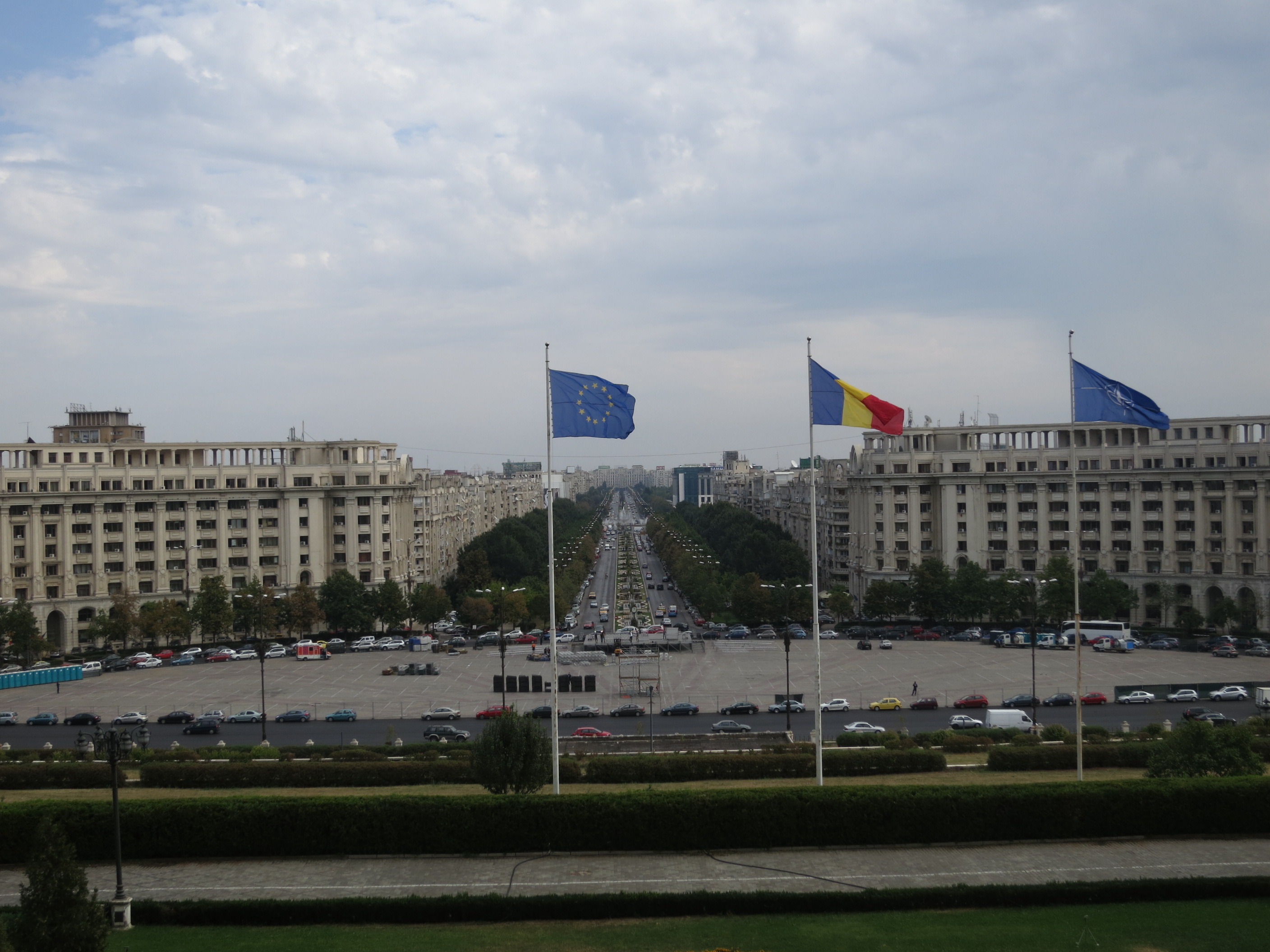
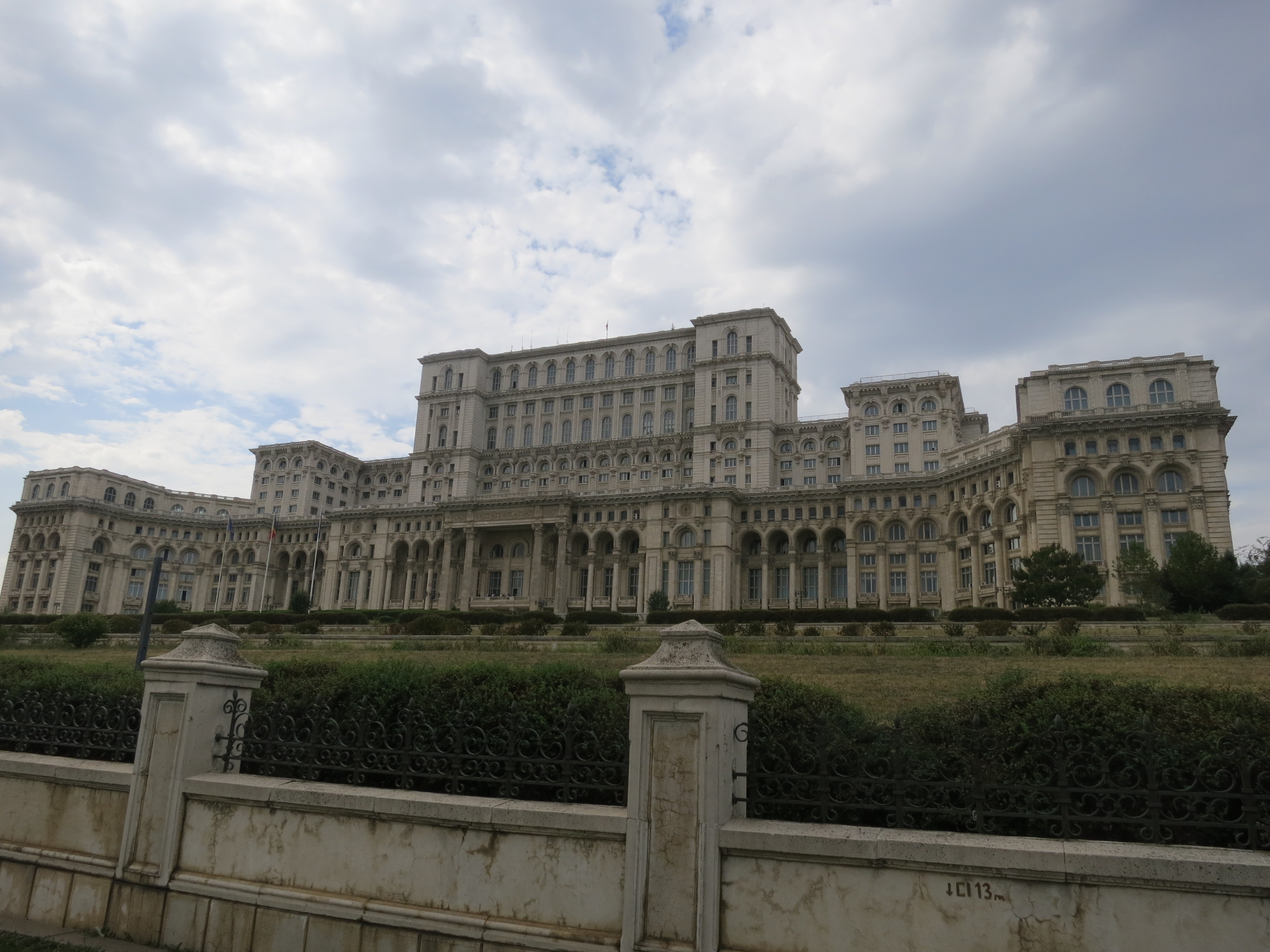
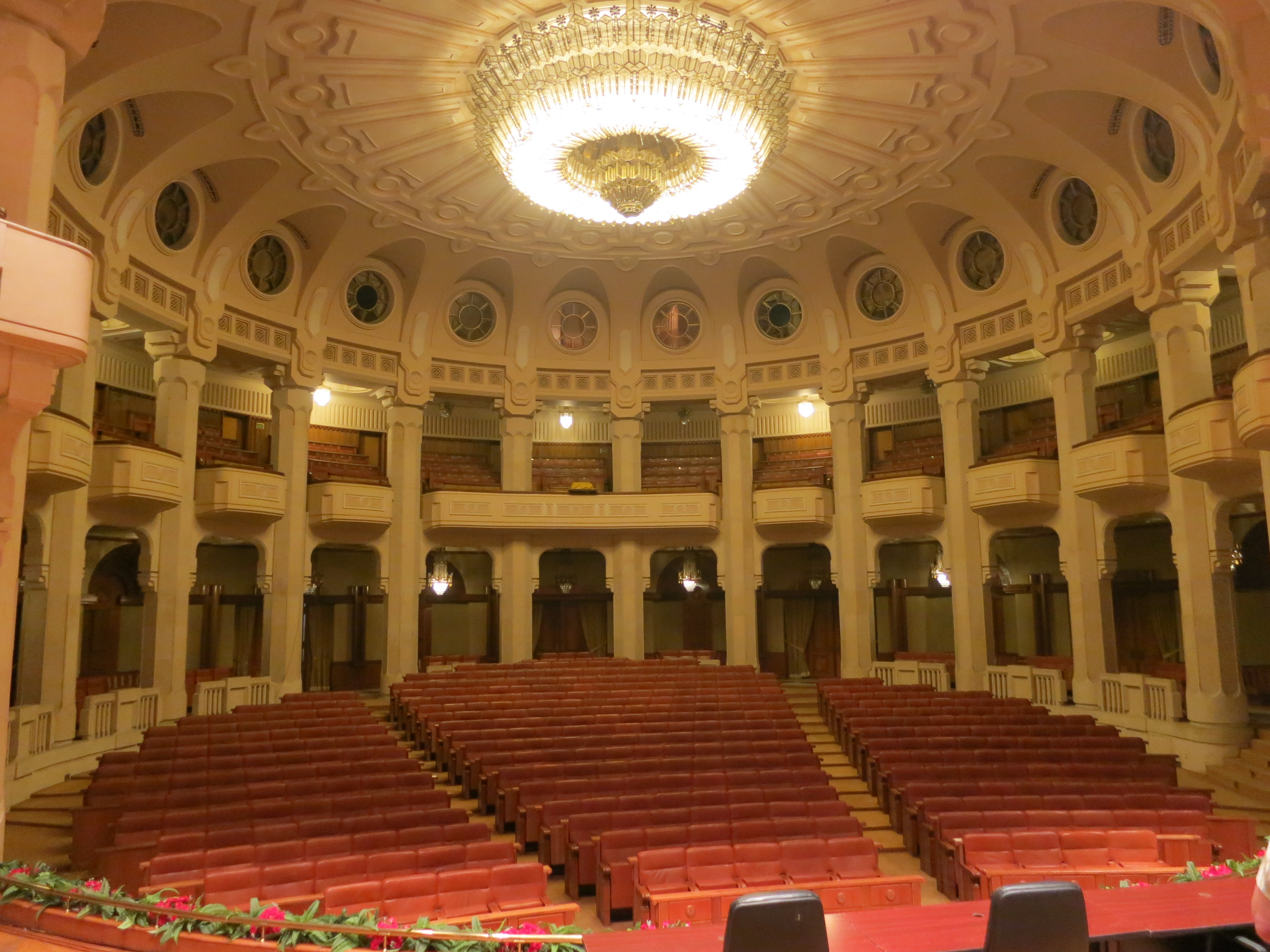
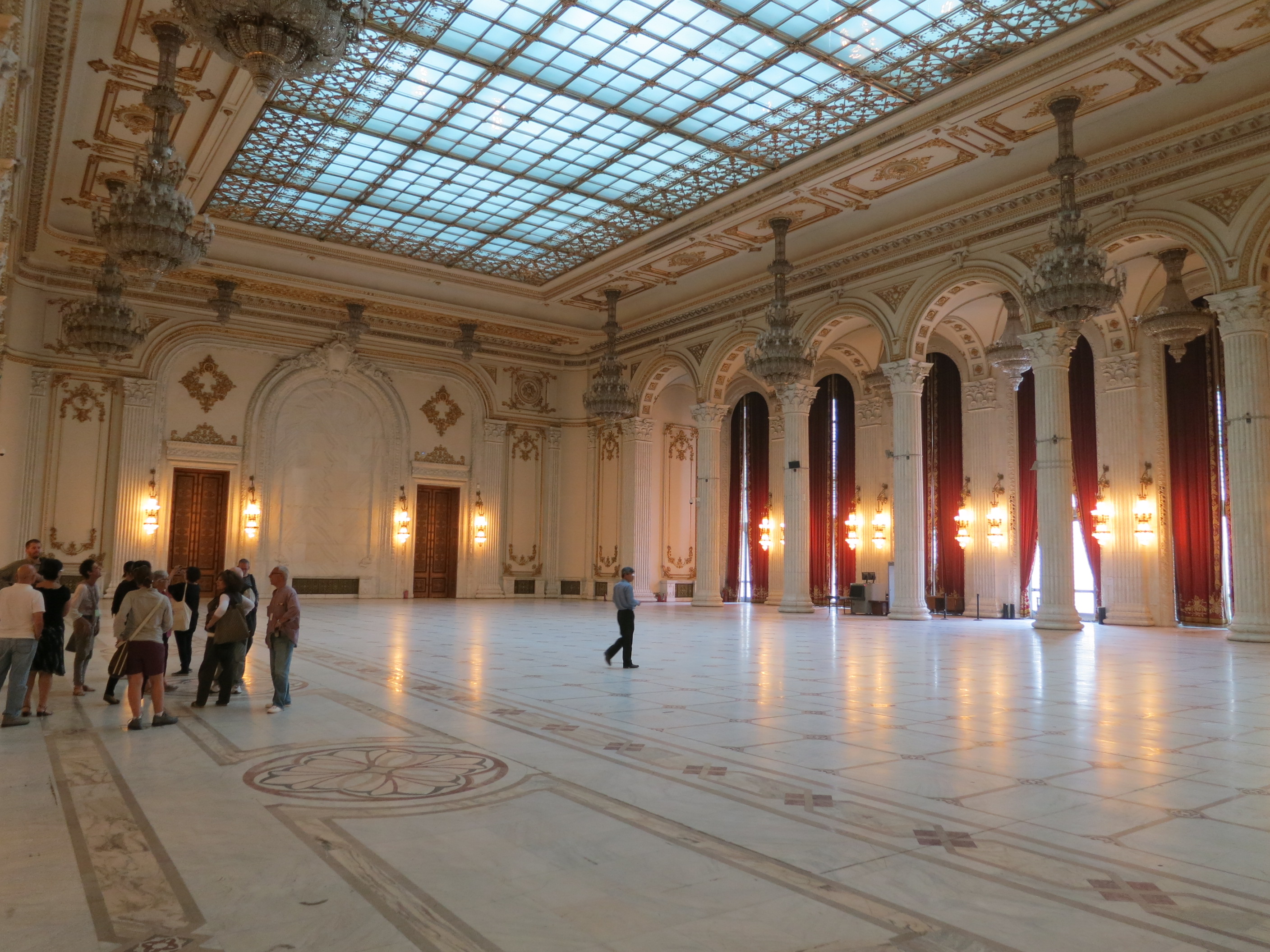
All this being said, we have really enjoyed discovering this city and learning about a part of the world whose history is incredibly complex and interconnected to the surrounding nations.  Our main event for today was a visit to the Parliamentary Palace, home to both chambers of the Romanian Parliament.  This building is absolutely gigantic–actually, it is the second largest government building behind the Pentagon in Washington, D.C..  It looks like an old building, but it has actually been less than 20 years since its construction was completed.  The former Romanian Communist Dictator, Nicolae Ceausescu, built it as a part of his “reconstruction” of Bucharest.  After visits to North Korea and China, he was inspired to raze a stunning 90% of the historic center of the city, destroying monasteries, museums, hospitals and thousands of residences displacing over 40,000 people.  Not only did he build the Parliament building, but also a huge main boulevard meant to outshine the Champs de Elysees in Paris.  It does look rather grand now, but so many people were displaced from their homes during this time that many people resorted to suicide. The entire area was made over and the centerpiece is definitely the parliamentary building.  It required 700 architects to design and building began in 1985.  Its design centered around the whims of Ceausescu, however he did not live to see it completed.

Romania was a tough place to be in the 1980’s.  Ceausescu limited electricity, food, water and all basic supplies.  Schools shut down because they did not have enough electricity to run.  People didn’t work because they spent their days in lines for their ration of food.  The people got to a breaking point in December of 1989.  There were protests in central Bucharest, Ceausescu and his family fled but were hunted down and assassinated on Christmas Day.  After that, the new government decided to finish the Parliamentary Palace so the man power and resources which had already been put into it would not go to waste.  When we took the tour, it was very interesting to hear all of the parts of the building that Ceausescu designed just for himself.  For example, he was only 5’2″, so he wanted the stairs to fit his footsteps perfectly.  He made them rebuild the marble staircase 3 times.  He also left huge frames on walls where his portrait would have hung.  He has an entrance that was designed for his use only–of course, that was just a plan which he never lived to see through.

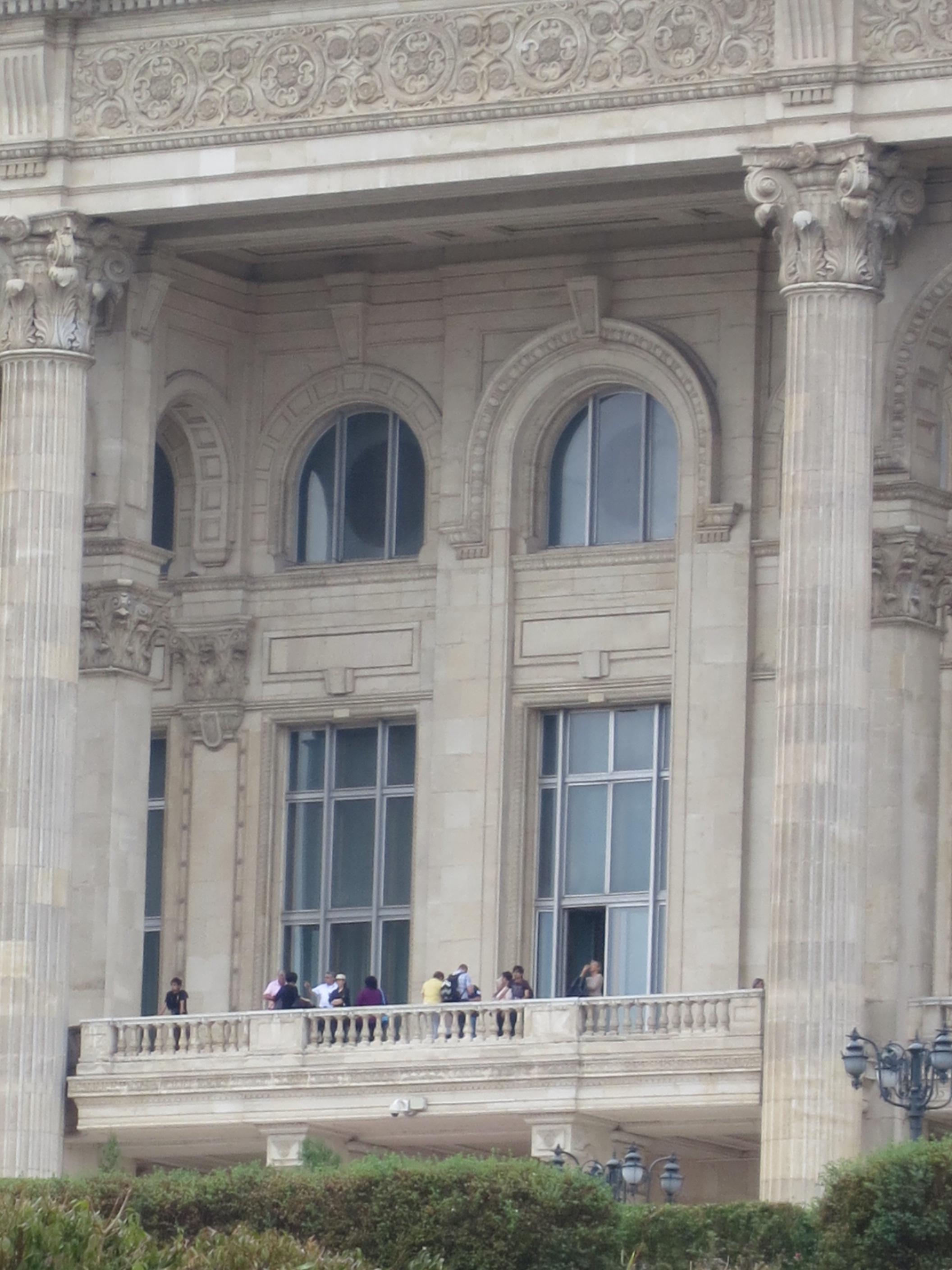
The building itself is really something special.  It is constructed entirely of Romanian materials, from the marble to the carpet.  Some of the drapes were hand embroidered by nuns at a local monastery.  Our guide told us they didn’t want to do this work, but Ceausescu said he would destroy their monastery if they refused.  I think there was a lot of that kind of coerced work which was done for this project. It looks more like a royal palace than a state government building with over the top opulence clearly having greater importance than functionality.  The rooms now largely sit empty, waiting for conferences or other corporate events.  We were shown to the beautiful terrace which looks out on the main boulevard.  The first person ever to look out onto an adoring crowd from this terrace was none other than Michael Jackson.  This is where he famously said he was happy to be in Budapest–whoops!  Wrong city, but an easy mistake to make.  It must be since George Bush made the same mistake from the same spot some years later.

Can you see the empty framed space on the wall? This is where the dictator’s portrait would have hung.

When we finished the tour, we had walked approximately 1.5 kilometers and had only seen 5% of the building.  It goes 12 floors above ground and 7 floors below.  It has a bunker suited for nuclear war.  This place is truly massive.  It seems as though much of it is empty or rarely used, and they keep lights off and elevators out of service in order to save on electricity.

Things in Bucharest certainly seem to be better than they were in the 1980’s, but there still seems to be a long way to go.  This city has all the necessary infrastructure–highways, bridges, metro stations–but it could use a face lift.  It needs some people to really invest themselves in cleaning it up.  I’m not sure if that will happen anytime soon.  The man working the front desk at our hotel told us that their current president, Basescu, was just voted out by a majority of the Romanian people.  However, due to a loophole in the constitution regarding low voter turn-out, he will maintain his office despite the wishes of the people.  It reminds us a bit of Russia–is it a democracy?  Not really.

–Brooke

The George Enescu Building, a beautiful example of what many of the buildings here have the potential to look like.

It is hard to capture in photos just how massive the Parliamentary Palace truly is. Trust us…it’s big!

Can you see how small the people appear? This is the infamous balcony where MJ made his gaff!

Here is one of many examples of random wires hanging in the street. Is it live? Hopefully not, but I’m not going to be the one to find out!

Categories: City Visits, Europe, Exploring, Landmarks, Romania, Uncategorized | Tags: , , , , , , | 6 Comments

Helsinki, Finland!

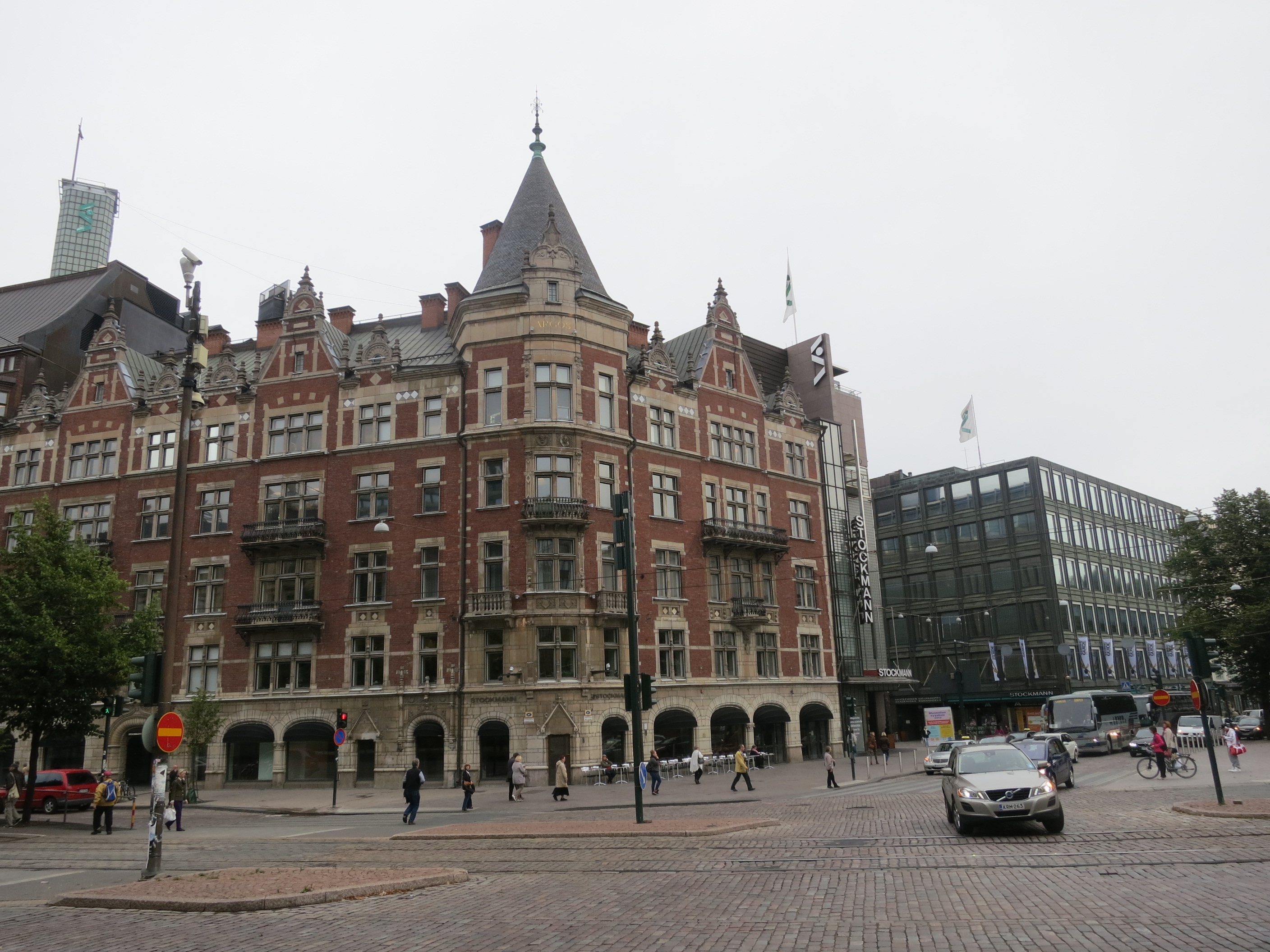
The third port of call on our Baltic Capitals cruise was Helsinki, Finland.  Talk about a place we don’t know anything about!  If someone were to ask us what Helsinki is known for, we would have a hard time coming up with an answer.  After spending the day there, we still can’t give a great answer to that question, but we can at least speak to it with a bit more confidence.

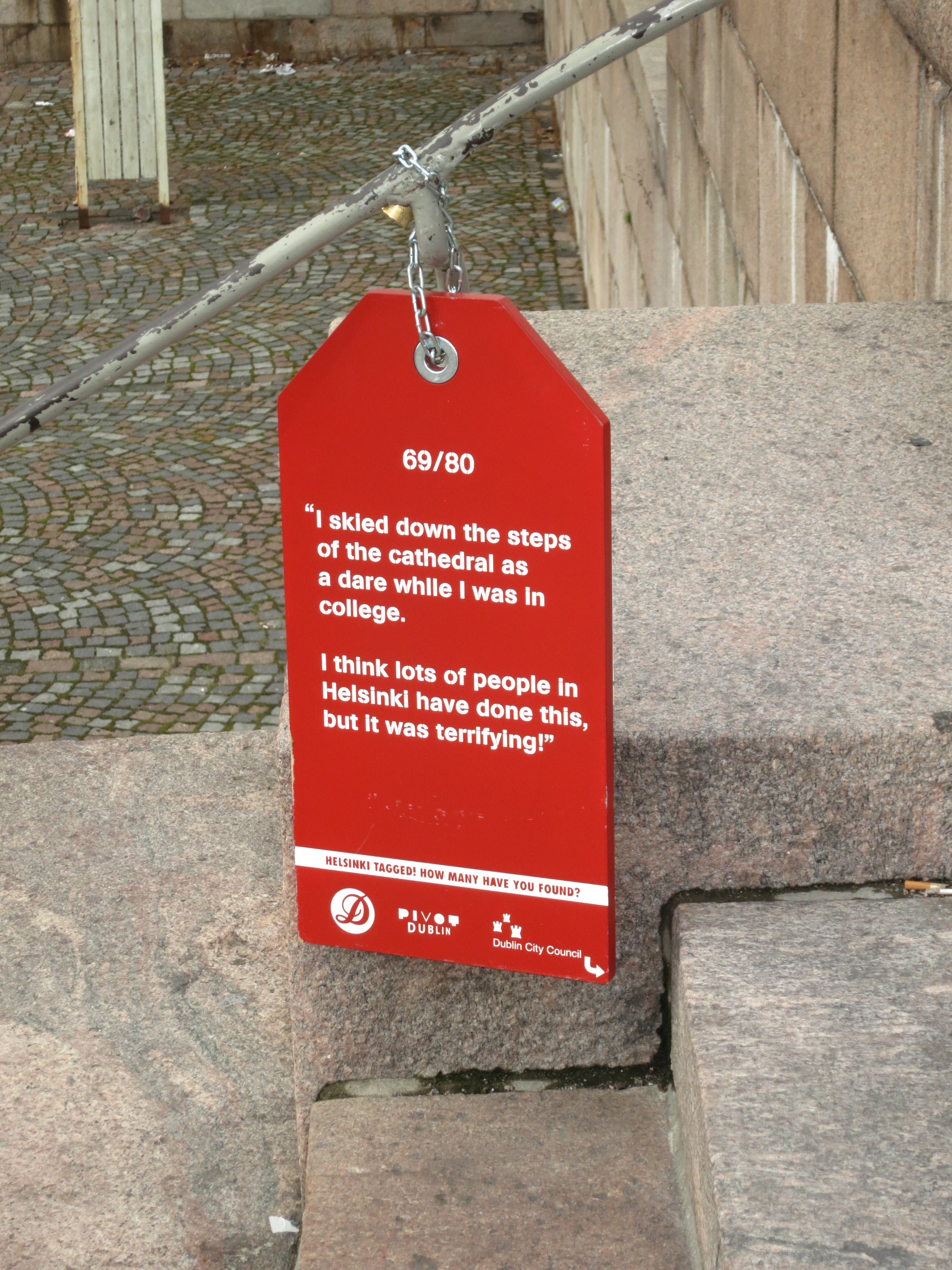
In order to make the most of our day, we got up bright and early, disembarked from the ship and made the lovely 30 minute walk from the cruise port into the city center.  One of the first things we noticed in Helsinki was the number of public art projects scattered throughout the city.  We came upon a park which had “knitted graffiti” covering many of the trees.  Essentially, people have knitted all kinds of patterns–stars, sunshines, flowers, etc.–and covered the park’s trees with them.  It is an interesting and surprising twist on the idea of graffiti.  We also noticed these red tags on many of the major landmarks.  A project called “Helsinki Tagged” has 80 different red tags spread around different landmarks throughout the city.  Each one has a quote which shares someone’s memory of that spot. These are designed to give insight into Helsinki as well as create a fun image for passersby who read them.  We were definitely amused by them, and it was fun trying to spot them as we roamed the city.

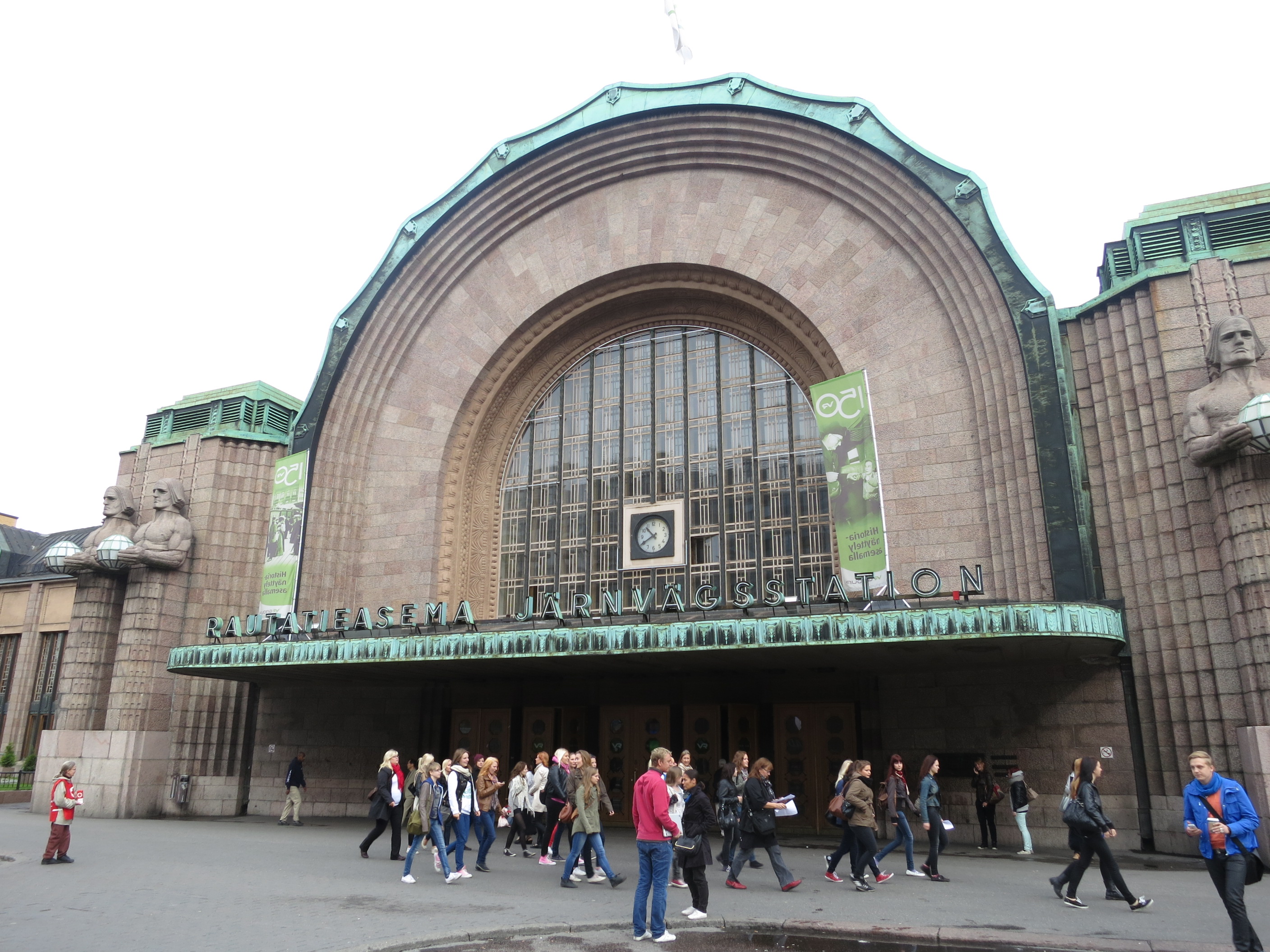
As we wound our way into the city center, admiring the public art, we soon found ourselves at the train station.  I should have known this was where Phil was leading us.  He loves trains and is very curious to see all these European train stations he has heard so much about.  Helsinki’s station is not quite as classic looking as Copenhagen’s, but it is still very impressive.  It was clearly designed for functionality, with large open spaces where people can easily find the train schedule or wait for arriving passengers.  Luckily for us, they had a small exhibit featuring the history of trains in Finland, including a discussion of how to build a system which works all year even through copious amounts of snow and ice.  As it turns out, it is more effective and efficient to have people maintain the signals so they stay free of ice and other obstructions.  They tried to do it automatically, but it didn’t work.  Not sure that’s a job I’d like to have, but hey, someone has to do it!

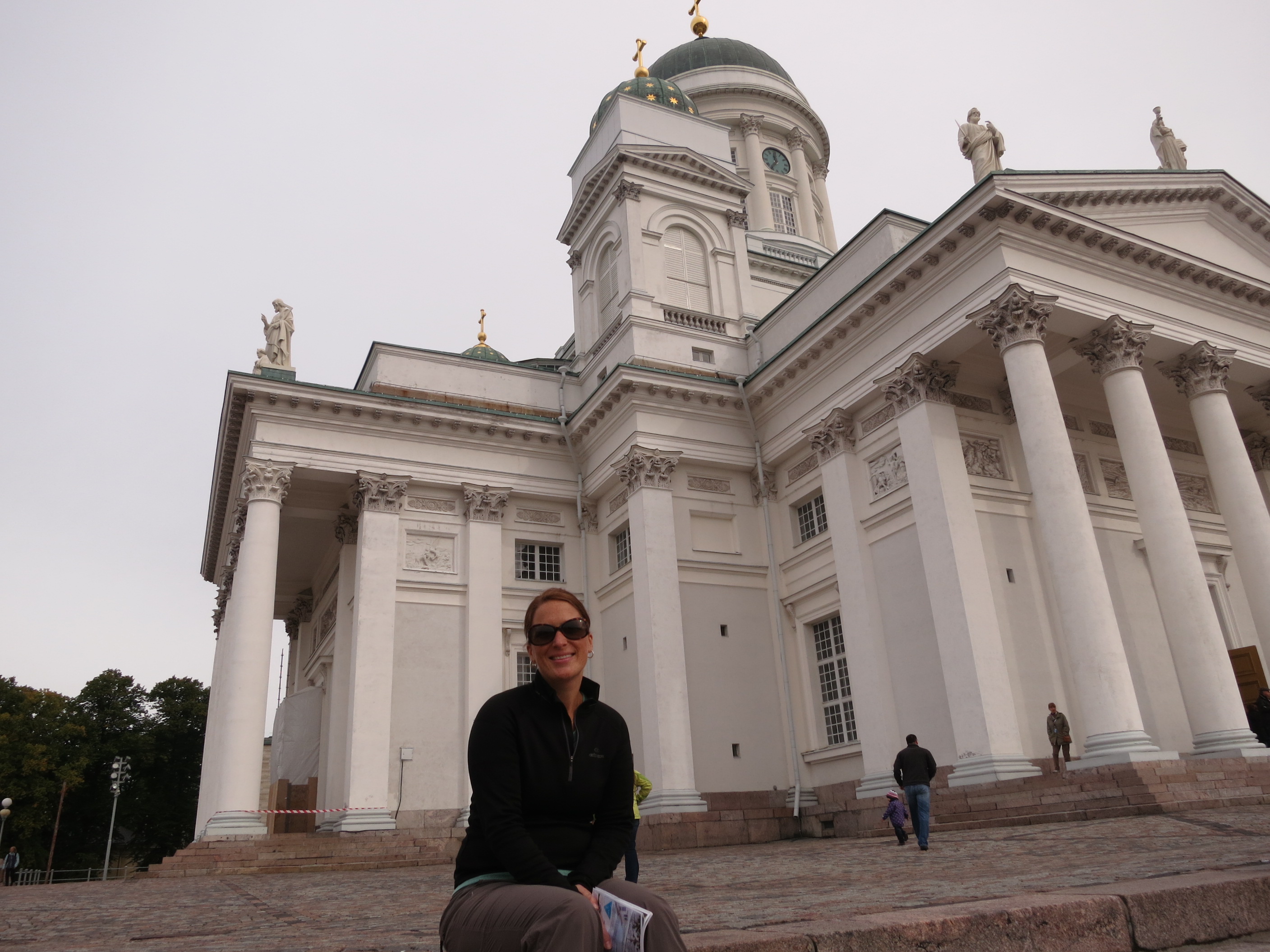
After the train station, we stumbled into the Helsinki Cathedral, a Finnish Evangelical Lutheran Cathedral which was built in 1852.  This beautiful, old cathedral is still in use today and the majority of the Finns in Helsinki belong to this parish.  As with most cathedrals, this one is filled with artwork and sculpture.  We were particularly taken with the sculptures of the 12 apostles which dot the roof.  When we endeavored to name all 12 of them, we came up short by about four.  At least we knew some! We ventured inside and discovered we had arrived just in time to wander around for a few minutes before it was closed to visitors due to accommodate a midday service.  From the steps of the cathedral we could see much of the city.  We looked on the horizon and spotted another cathedral, so we decided to head towards it and find out about it.  This red brick building turned out to be the Upenski Cathedral, the main cathedral for the Finnish Orthodox Church which also claims to be the largest Orthodox cathedral in all of Western Europe.  That is a bit surprising to me since it didn’t seem all that large.  And just like the Orthodox cathedral in St. Petersburg, there are no pews or chairs since everyone is expected to stand.  Why?  Don’t they want people to come to services?  Give ’em a chair and I bet attendance would soar!

By this point we had definitely had enough of cathedrals on our improvised self guided tour, so we headed toward the waterfront and the open air market.  As we were walking there, we heard a band playing, saw men in uniform marching and a processional of some important looking people walking into a large, gated building.  A crowd gathered around watching, so we figured something important must be happening.  We stood for a bit, watching the band and soldiers march by playing music which can only be described as patriotic.  (For all I know it could have been the Finnish National Anthem, it isn’t like I would have recognized it!)  Once the band had marched away, we headed across the street to inquire as to what we had just seen.  Apparently, this was the formal welcome for the new ambassador from Norway and this building we watched them go into was the Presidential Palace.  It was pretty awesome that we just happened to be at the right place and right time to see this event.  What a welcome!

We wandered through the market for a while, seeing that the main handicraft in Helsinki is knitting.  Sweaters, hats, gloves and socks abound in this market and I’m sure if you live in such a cold climate, these become life’s essentials.  The sky began to look ominous, so we decided to grab a late lunch and then head back to the ship.  We weren’t wrong about the Ca–it started pouring as soon as we began the 30 minute walk back.  We were wet and cold.  Luckily, Norwegian had set up hot chocolate and cookies to welcome everyone back on board.  The weather continued to get even worse and the wind really kicked up.  It wasn’t an hour after we got on board that a rumor began to spread throughout the ship–our next port of call, Stockholm, Sweden, may have to be skipped.  Much speculation and distress occurred and finally after a few hours, the captain came on and told us that due to the weather we would not be going to Stockholm.  Apparently they weren’t concerned about getting into the port, but they were concerned we might not be able to get out and get back to Copenhagen.  Of course, we were very disappointed, but after seeing the 6 meter swells in the water, it started to make sense.  Thank goodness I was wearing that motion sickness patch–there were a lot of green faces on the boat!

And so, great day in Helsinki but sadly no Stockholm for us.  That means we have 2 days at sea on the Norwegian Sun.  Free food, music, open casino and activities all day.  Sleeping, reading, hanging out in the hot tub.  I suppose there are worse things!

–Brooke

Upenski Cathedral, a Finnish Orthodox Cathedral in Helsinki.

Sittiing on the steps in front of Helsinki Cathedral.

Helsinki Tagged, public art example.

This is the inside of the Helsinki train station. Simple, functional and beautiful.

Categories: City Visits, Destinations, Diversions, Europe, Exploring, Landmarks, Rail, Trains, Uncategorized, Unusual Experiences | Tags: , , , , , , , , , , , , | 3 Comments

St. Petersburg!

Naval ShipOne of the main reasons we chose to embark on a nine night Baltic capitals cruise was to take advantage of the opportunity to visit Russia. Obtaining a Russian tourist visa on your own is actually quite difficult, so we decided to make it easy on ourselves and book shore excursions organized by Norwegian Cruise Line for our two days in the old Russian Capital of St. Petersburg.

Immediately upon arriving in St. Petersburg we started to hear talk of Peter the Great. He is the founder of the city which he modeled off other European cities like Amsterdam. Because of this, it doesn’t have a lot of traditional Russian architecture, and instead has several canals, fountains and brightly colored buildings reminiscent of old cities in Western Europe. We learned so much in our two days and only wish we would have had some time to explore it on our own.

Originally called St. Petersburg (after Saint Peter, not the Russian Czar Peter the Great), this city has been known by a few different names. It was called Petrograd for about ten years in the early 1900’s, until the name changed to Leningrad when Russia became the U.S.S.R. and was ruled by the Bolsheviks. It stayed Leningrad until 1991 when the local government finally decided to let the people decide on the name. Apparently there was some surprise that the people voted for the name to be changed back to St. Petersburg. Our tour guide quipped that her grandmother was born in St. Petersburg, lived in Petrograd, also lived in Leningrad and died in St. Petersburg and she never even moved homes!

Our first day began with a river cruise through the center of the city. Everywhere you turn there is another museum, cathedral, park or historical monument. Most notably is the Hermitage, the largest art museum in the world with over three million pieces of art. We would have loved to see it, but each excursion included a visit allotted 4-8 hours inside, and that is just a bit too much art for us. The museum was originally built for the nobility, but has become public over the years. It is housed in the Winter Palace, and its surrounding buildings where the Romanovs as well as other nobility used to reside. It is said to be impossible to see it all in two days, but we met several art enthusiasts who were willing to give it a try.

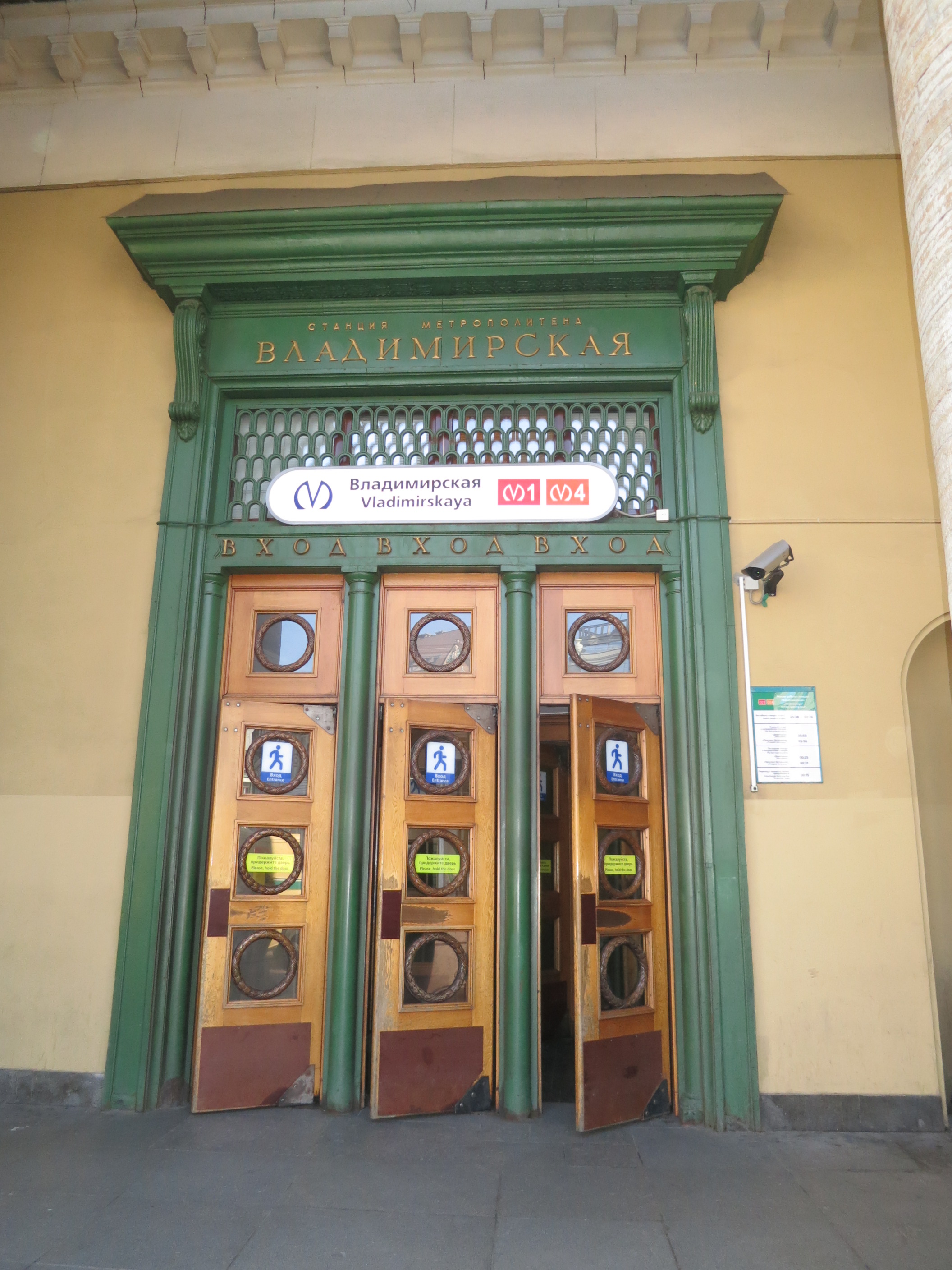
Entrance to the subway. We were actually allowed to take pictures of this!

We did not go to the Hermitage, but after visiting other landmark institutions we discovered that they are very particular about people taking photographs here. All of the museums charge tourists an additional fee to take pictures – once you have paid they give a colored sticker to place on your camera, otherwise you are liable to get fined or have your camera taken. The policy is even more strict on the subway – here, photos are not permitted in any of the stations! You can take them on the train, but none on the platform or in the buildings. This is such a shame, because their subway stations are absolutely beautiful. They are artfully designed, with huge marble columns and detailed decorations along the ceilings. It reminded us a lot of the beauty of Grand Central Station in New York City. There is even a large sculpture of Peter the Great which is set up like an art exhibit, blocked off by a velvet rope. Phil and I couldn’t help but think that this would last all of two hours (tops) in a New York subway without being vandalized and ultimately destroyed.

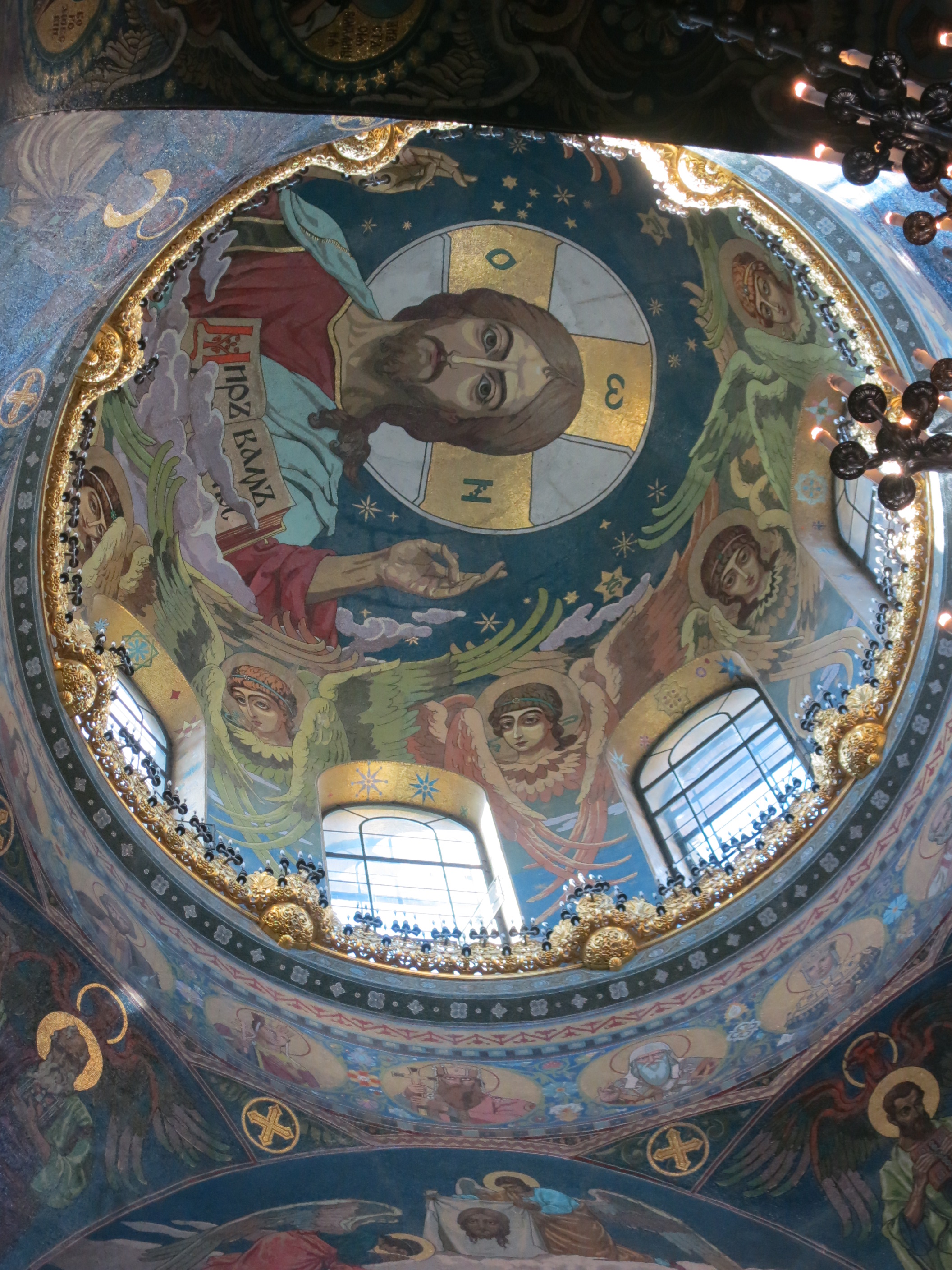
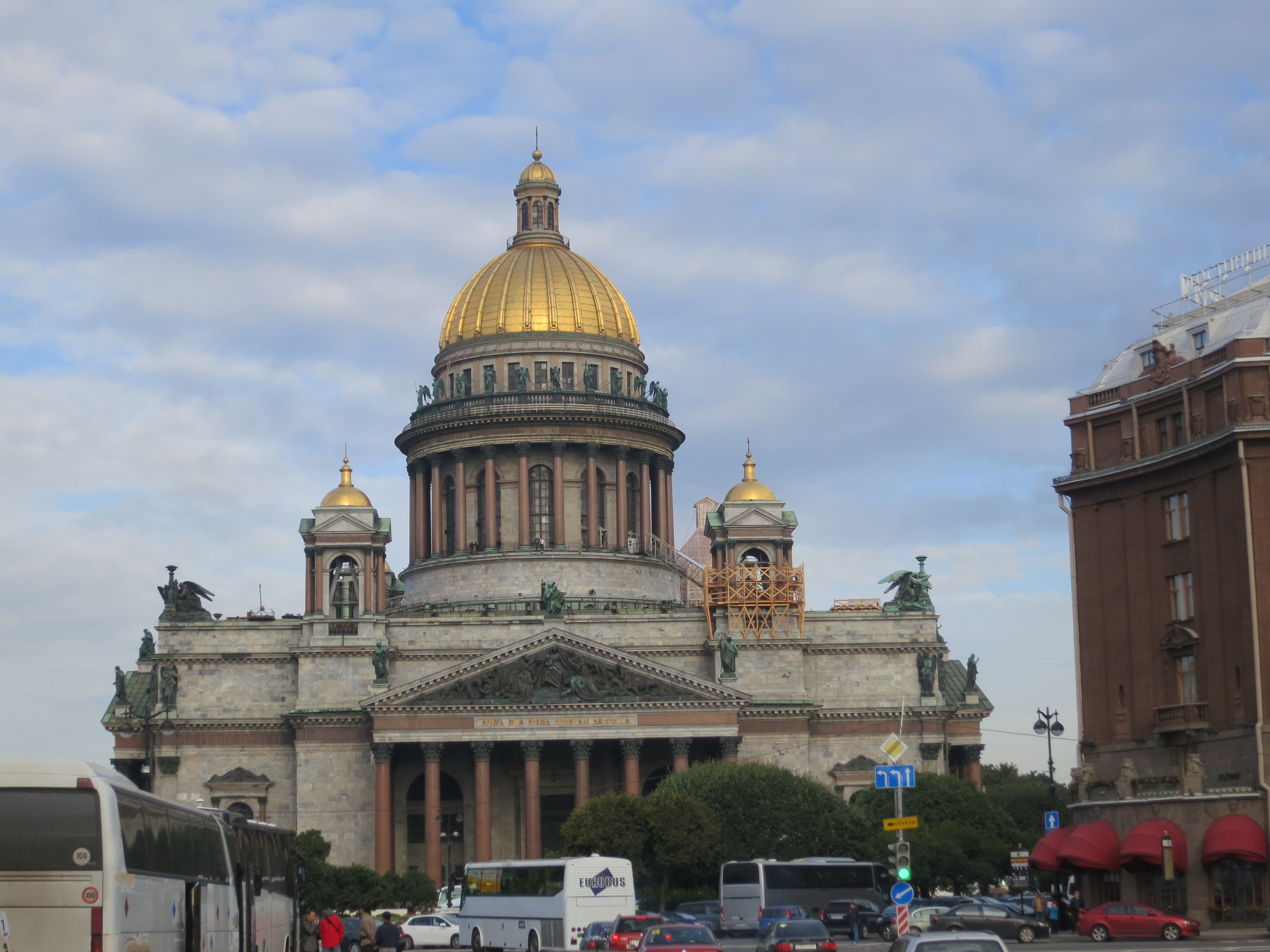
Probably the most iconic place we visited taught us an important lesson: It is very dangerous to be a czar. Sure, there is something appealing about the idea of being the leader: you get to rule the country, you have power and money and influence, but I don’t think it is worth it. Every other story we heard was about the killing of one czar or the brutal murder of another. One of the most notable stories is the centerpiece for the Spilled Blood Cathedral. Among a small number of buildings in St. Petersburg to look “Russian”, it was constructed on the site where Czar Alexander II was assassinated. Inside the cathedral, visitors can see a memorial directly above the spot where his blood was spilled–hence the colloquial name Spilled Blood Cathedral. The building itself is magnificent. It’s walls are lined with painstakingly detailed mosaics telling the stories from the Bible. In fact, this cathedral holds the largest square footage of mosaic art in the world. There was a notable absence of pews and when we inquired we were informed that parishioners are expected to stand or bow on their knees throughout the length of the service. Thanks, but I think I’ll pass.

Besides the plethora of cathedrals, museums and stories about Peter the Great, one of the most prominent topics of discussion was the weather. It is drab, dreary and depressing much of the year. Both of our tour guides emphasized the fact that St. Petersburg is on the same parallel as Anchorage, Alaska. Of course, it gets extremely cold and snowy, but even worse than that, they have less than 55 days of sunshine per year. Yikes! In the winter there is very little daylight, therefore finding distraction is important for the local people. Stereotype or not, drinking vodka seems to be the favorite distraction of most of the people here, and we got to experience it first hand.

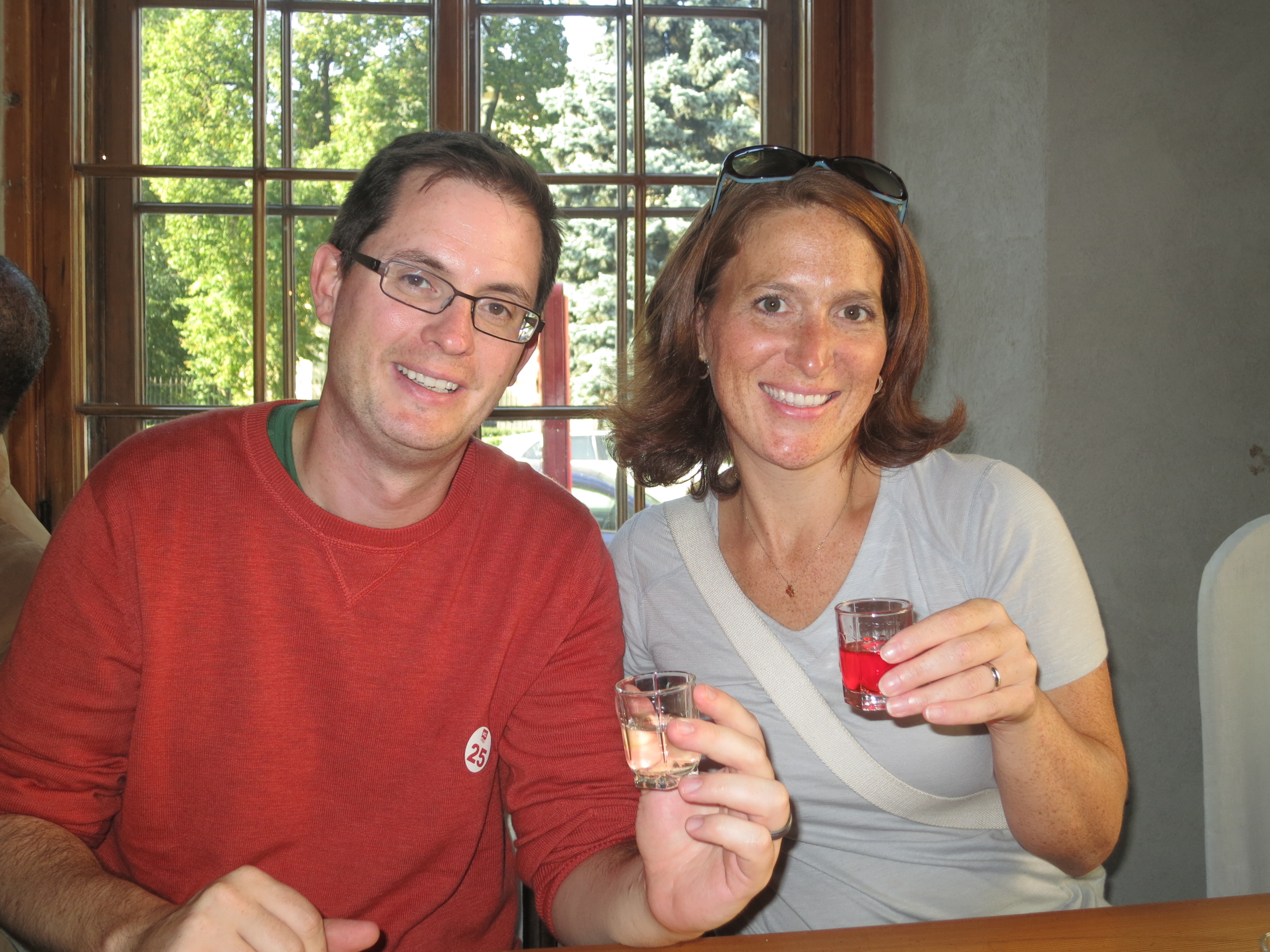
Our shore excursion on the second day in St. Petersburg was called “St. Petersburg through the eyes of the locals.” So, we did what locals do–we shopped at a mall, went to the farmer’s market to sample pickles and cottage cheese, and rode the subway. However, the most distinctly local thing we did was have a vodka tasting. That’s right! At the end of our tour, we went to restaurant where three shots of vodka were set up for each of us. There were three different kinds–horseradish, walnut, and cranberry vodka. They also set out some small pieces of toast and pickles to help wash it down. We had about 30 minutes to down all 3 shots, which was not a problem for most of us. However, it became apparent pretty quickly that some of the people in our group hadn’t done a shot of liquor in a while (not to mention three). The vodka was decent, I personally liked the walnut flavored one the best. However, what surprised us most is that there was no water on the table. No soda, no juice, nothing to wash the vodka down. This is so much different than it would have been at a tasting in America with all of its rules and regulations. Once 15 minutes had passed, most of the shots were gone and the stacking (and crashing) of shot glasses began. The crowd was certainly livelier after the shots, feeling warmer in both body and spirit, and we all understood the important role vodka plays in a country that can have such depressing weather!

All in all, St. Petersburg was a blast. We especially loved getting to see the magnificent subway system and learning a bit more about Russian history than we knew before. I’ll leave you with one more interesting note. One of the men on our tour asked the guide if Russia is a democracy. She said, “We are supposed to be a democracy, but are we? I don’t know.” She continued to talk about Vladimir Putin and extended term limits with cynicism and candor. It definitely showed us that perhaps the country has not progressed as far as Russia would have the world believe.

-Brooke

This is the ceiling of the Spilled Blood Cathedral. There was very little space on the interior walls which was not covered with some colorful artwork.

Here’s a sampling of the mosaics which cover the walls and account for the largest square footage of mosaic art in a single building in the world.

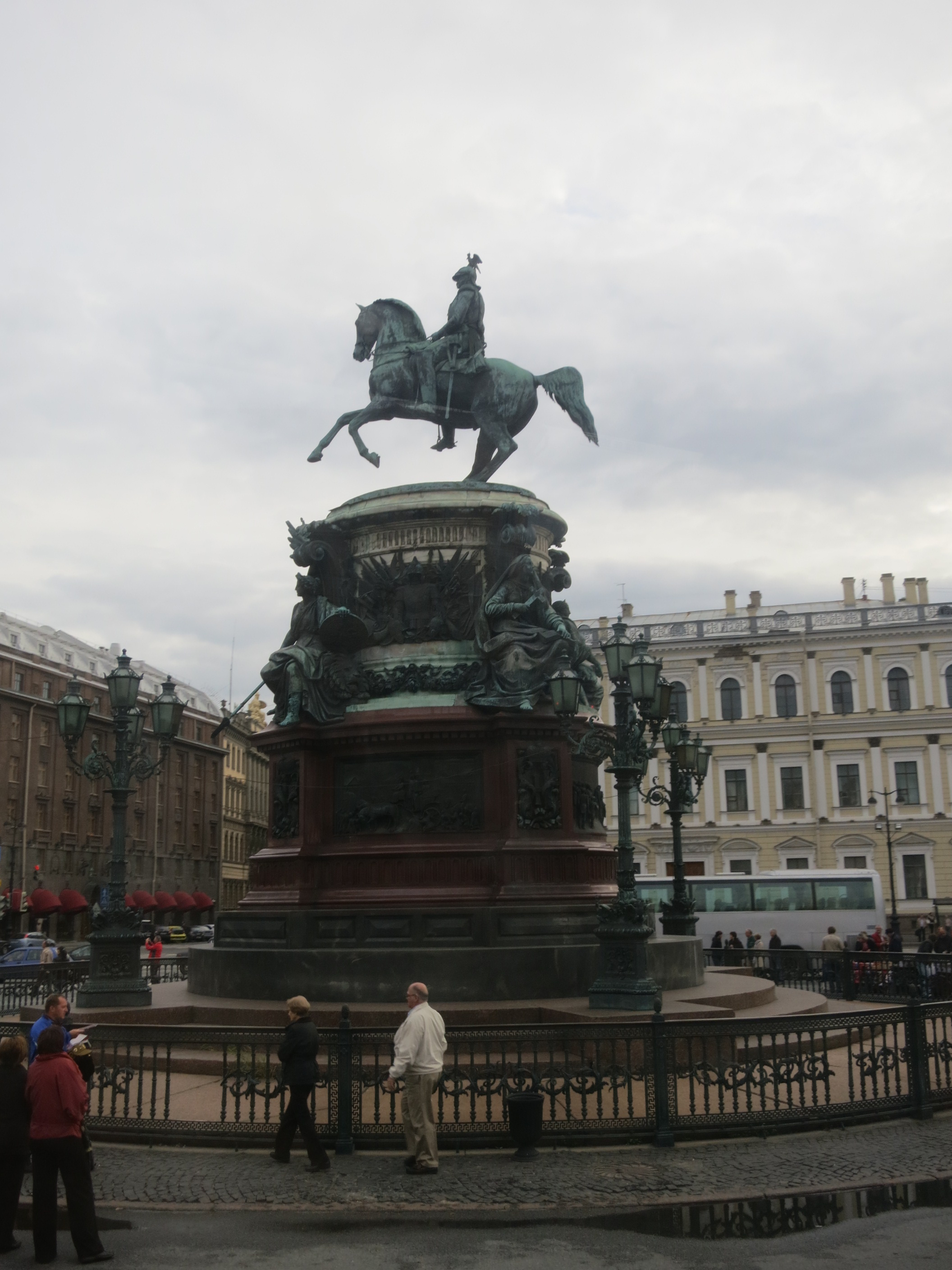
The bronze equestrian of Nicholas I s unique because it is the first horse statue in Europe to have only two support points, its rear hooves.  Impressive?  Apparently.

To celebrate St. Petersburg, the cruise ship hosted a “Taste of Russia” complete with borscht and stuffed cabbage.

Categories: City Visits, Customs, Destinations, Differences, Diversions, Europe, Exploring, Landmarks, Museums, Russia, The Cruise, Trains, Transportation, Uncategorized, Unusual Experiences | Tags: , , , , , , , , , | 2 Comments

The Cruising Life

In order for us to quit our jobs and travel the world for almost four months we had to be very budget conscious. We write down everything we spend, we set limits to our spending and shoot for cheap accommodations whenever possible. We have now embarked on the most luxurious part of our trip: a cruise! That’s right, we are currently sailing the Baltic Sea. Three square meals a day, anytime of day. Workout facilities. More activities and entertainment than you can imagine. But most importantly, this cruise has allowed us to unpack our bags and turn our stateroom into our home for the next nine days. Nine nights in the same bed–a king sized bed. We are thrilled!

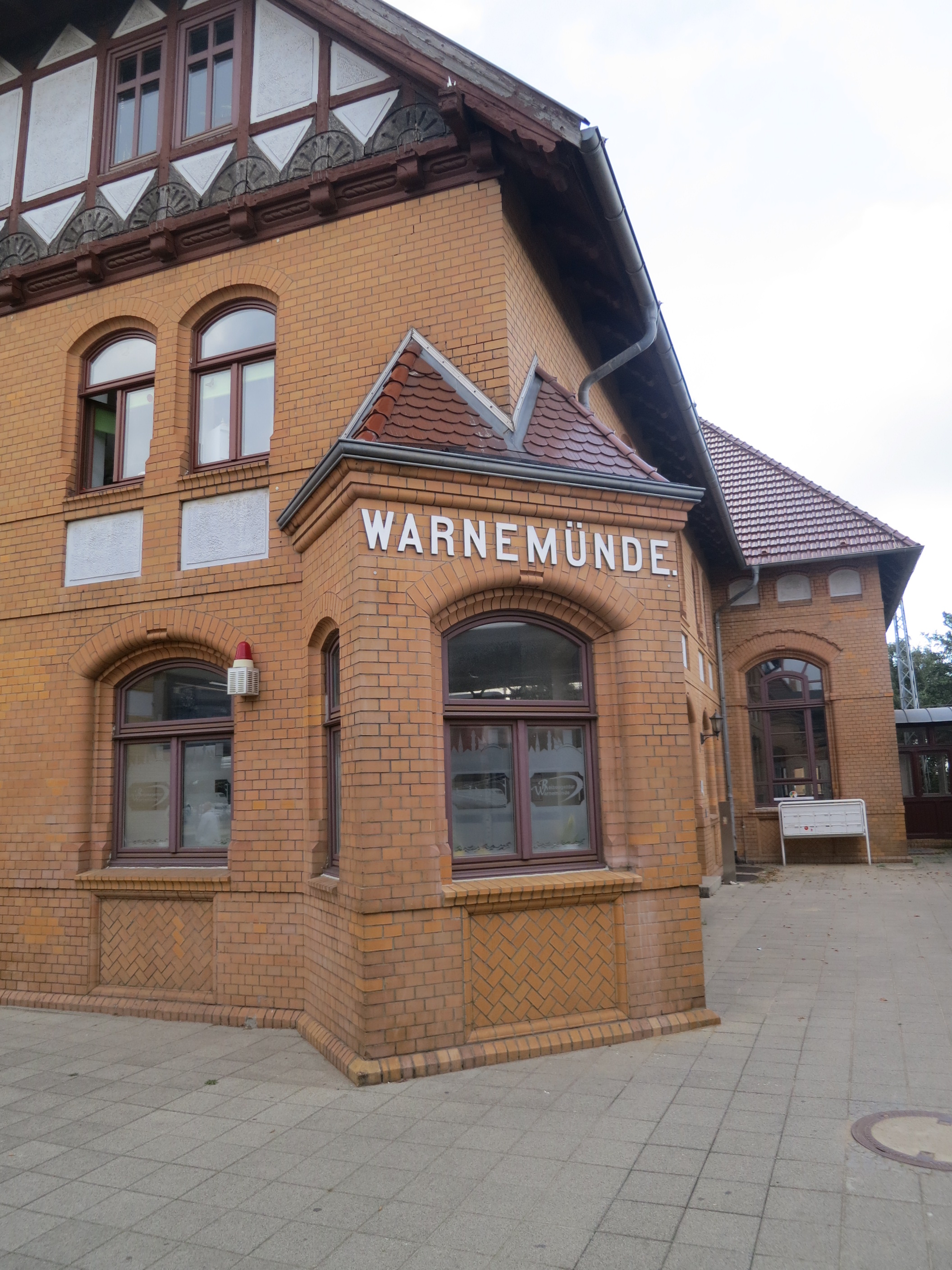
WarnemündeOur cruise left from Copenhagen heading to our first stop, Warnemünde, Germany. Never heard of it? Neither has anyone else. It is a small seaside town which is popular with locals during the summer and caters to cruise ships which frequently dock there. It is approximately a three hour ride in each direction from Berlin by train, so some people on the ship went to the German capital for the day. While this sounds great, traveling that much makes for a very long day. After seeing that Frommer’s Travel Guide has less than two pages worth of material on Warnemünde, we decided to spend a very small bit of time scoping it out, and then take the regional rail to nearby Rostock.

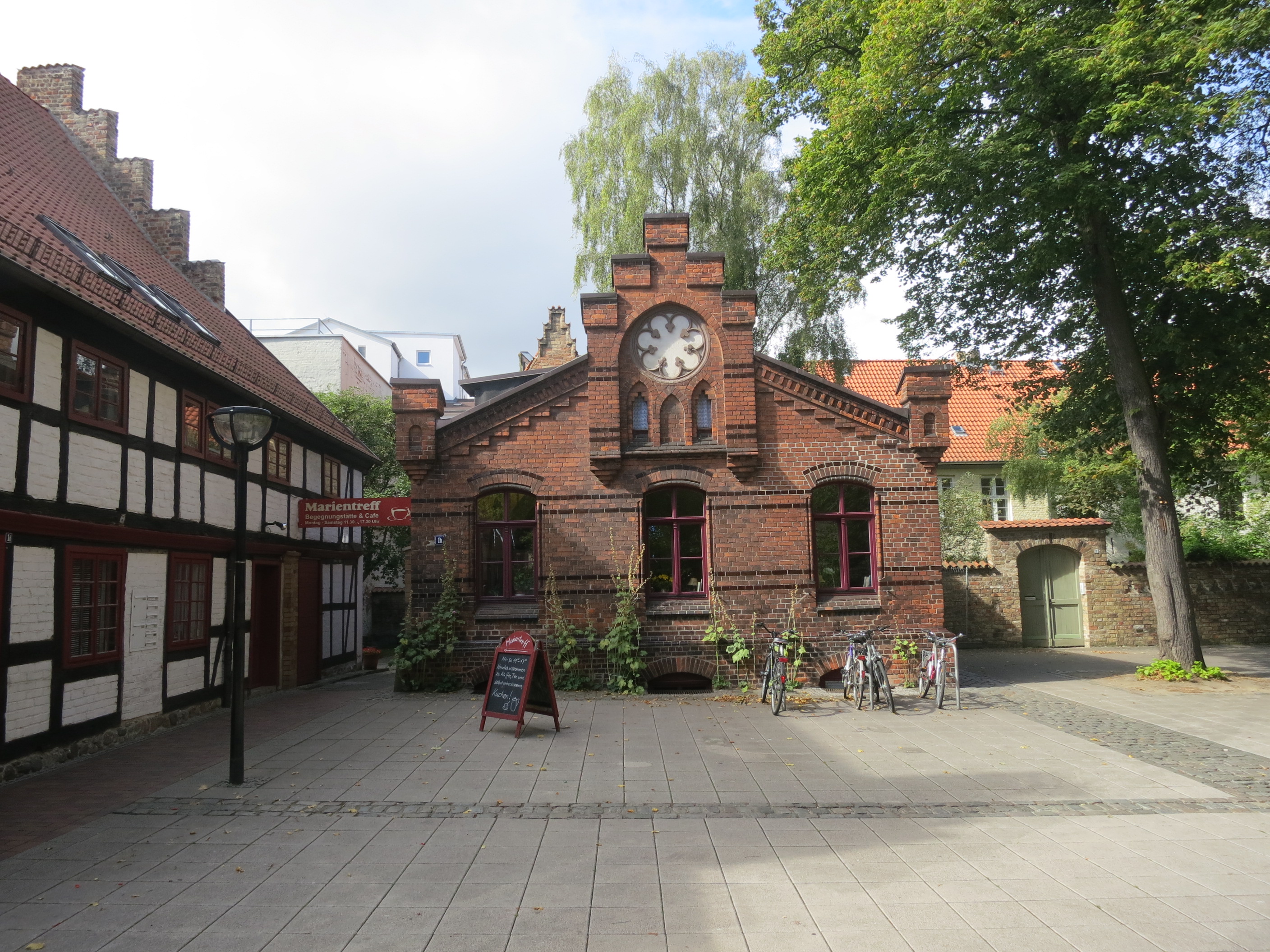
As with so many cities in Europe, Rostock has a very old feeling to it. We didn’t know much about the town and figured we would discover things as we went. As soon as we got off the train we spotted an old church in the center of town. It was definitely our find of the day. St. Mary’s Church was built in the 1200’s. It is beautiful and grand, and the best part is that it is still in use today. At the entrance to the church they make it clear that it is not museum, but a place of worship. They were fine with people walking around and taking pictures. There was an exhibit about the life of Jews in Germany from 1933-1945. It was all in German, but we got the gist We were even able to listen in on an orchestra practicing for an upcoming concert. The music filled the church and provided the perfect background for us.

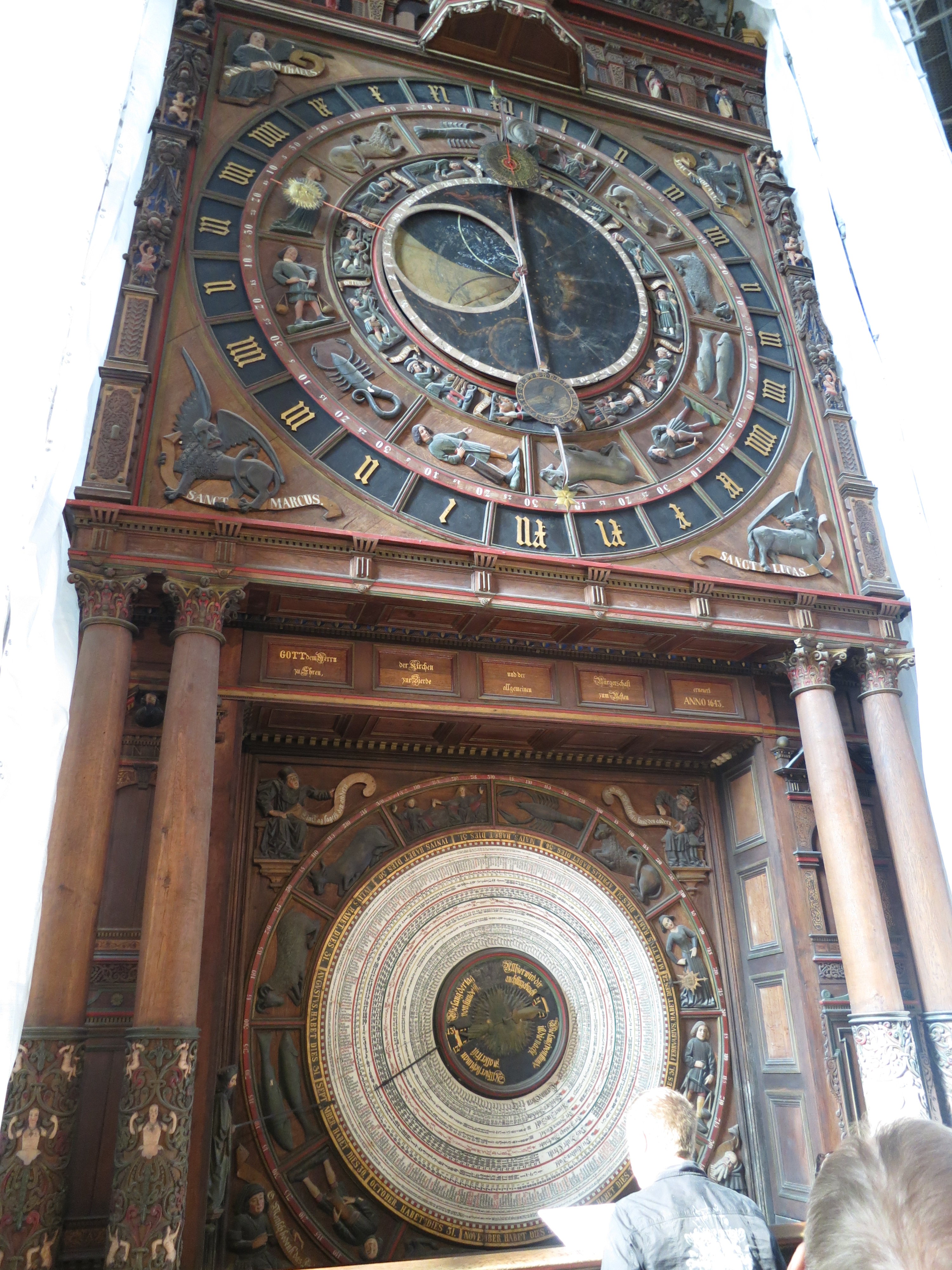
Astronomical Clock!However, the biggest draw to St. Mary’s Church is its giant astronomical clock. This clock does more than just tell the time of day, it also gives the day, month, year, moon phase, and zodiac sign. What more could you possibly need? Over 400 years old, this clock is still wound by hand each day. At noon each day there is a procession of the Apostles on the clock (sadly, we missed that). The current dial only goes to 2017, however they will be able to replace that when the time comes. The only thing that wasn’t accounted for when the clock was originally built was daylight savings time. Twice a year they have to account for this time change.

We wandered around Rostock a bit more, watched kids play in the fountain and absorbed all the sights, sounds and smells of this small town. When it was time to head back to the boat, we opted against taking the short train ride back to Warnemünde and instead we chose to take a ferry up the river. We soon realized the ride was a cross between a sight-seeing tour (all in German) and a booze cruise. Since we couldn’t figure out if the drinks were part of the ticket or not, we abstained. All the Germans on board seemed to be having a marvelous time, shouting at other boats and toasting to their own happiness. The ferry helped demonstrate what a busy port both Rostock and Warnemünde really are. There were tons of ships–not cruise boats, but ferry’s, cargo boats and even some decommissioned military vessels. It was a great way to see these two cities from a new perspective.

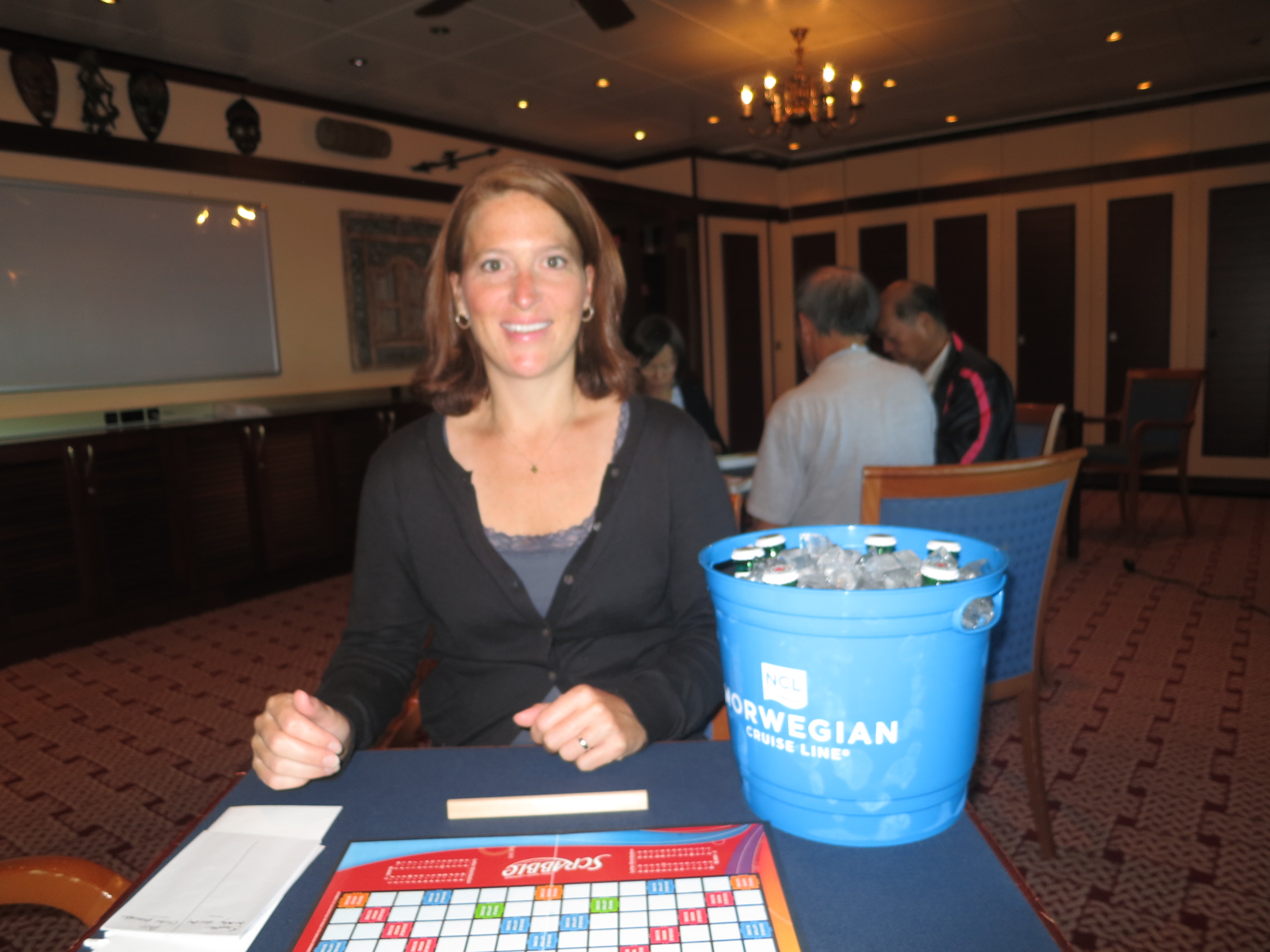
Our time in both Warnemünde and Rostock was limited, but we don’t feel too bad about it since we will be back in Germany later on in our trip. Actually, we were eager to get back to the boat and our life of luxury. We ate delicious food, did terribly at some very difficult trivia and played some $5.00 Blackjack. Because it was my birthday, the casino bought a round of drinks fo the whole table and gave me a $25.00 chip to bet. Sadly I lost that hand, but we were ahead in winnings quite a bit by the time we walked out, so that always makes it more fun.

We could definitely get used to this cruising lifestyle. Our room gets made up 2 or 3 times a day. The casino is never far away. There is wonderful entertainment: last night we listened to one of the onboard entertainers do a set of Neil Diamond covers. He’s so good! He really does sound like Neil Diamond, gravelly voice and all. Besides the entertainment, we find that we are simply having a blast! On the days when we are at sea, it is like mandatory relaxation. There is no pressure to make the most of our time or to see as much as we can. It has been a nice change of pace.

Our next stop is Tallin, Estonia and then we head on to St. Petersburg, Russia. We are incredibly excited about both of these stops and can’t wait to share them with you.

–Brooke

Categories: Budget, Casino, City Visits, Europe, Hotels, Relaxing, Self Guided Tours | Tags: , , , , , , , , , , , , , , | 2 Comments

Discovering Copenhagen

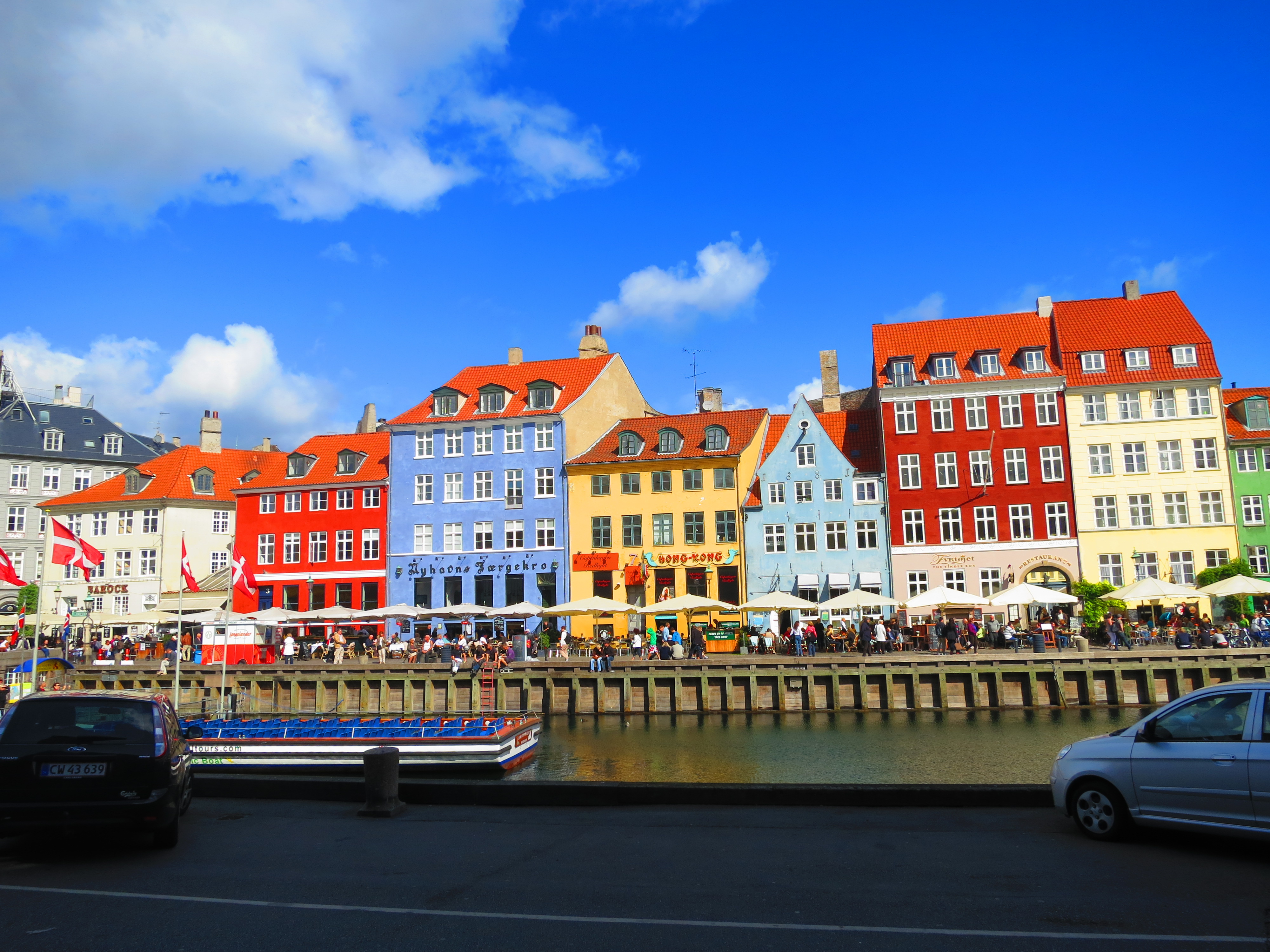
Colorful Buildings along the canalThere is no mistaking it…we are NOT in Asia anymore.  From the moment we stepped off the plane and every moment since then, it has been quite clear we are in an old European city.  But even more than that, it is clear we are in Denmark.  Everywhere we look there are beautiful blondes riding bicycles (very politely, I might add).

After a short morning run, we truly began to explore Copenhagen.  Going off recommendations, we started our day with a canal cruise.  This hour-long cruise through the winding canal system was a great way for us to see several different areas of the city so we could then determine what we really wanted to visit. When the tour-guide began speaking German, we were afraid we had gotten on the wrong boat.  We checked to make sure the tour would be in English, but she definitely wasn’t speaking English.  As it turned out, she gave all the information in three different languages–Danish, German and English.  We were relieved we would be able to understand, and again felt awful about the fact that we seem to be the only people in the world who only speak one language.  As for the tour, we especially love looking at the architecture of the city.  They really take pride in their old buildings, some of them date back hundreds of years.  However, they also have a lot of new construction, including an opera house right on the water which was built less than ten years ago.  Because of this, the newer buildings really have to be spectacular so they can stand the test of time.  Unlike Tokyo or Hong Kong, there is no race for the tallest towers or highest buildings.  In fact, there are very few skyscrapers in sight.  As we walked the streets, we kept saying that it all looks so European–old, grand, brick buildings lining the street, some with huge squares in front where people gather.  It is exactly what we pictured before we got here.

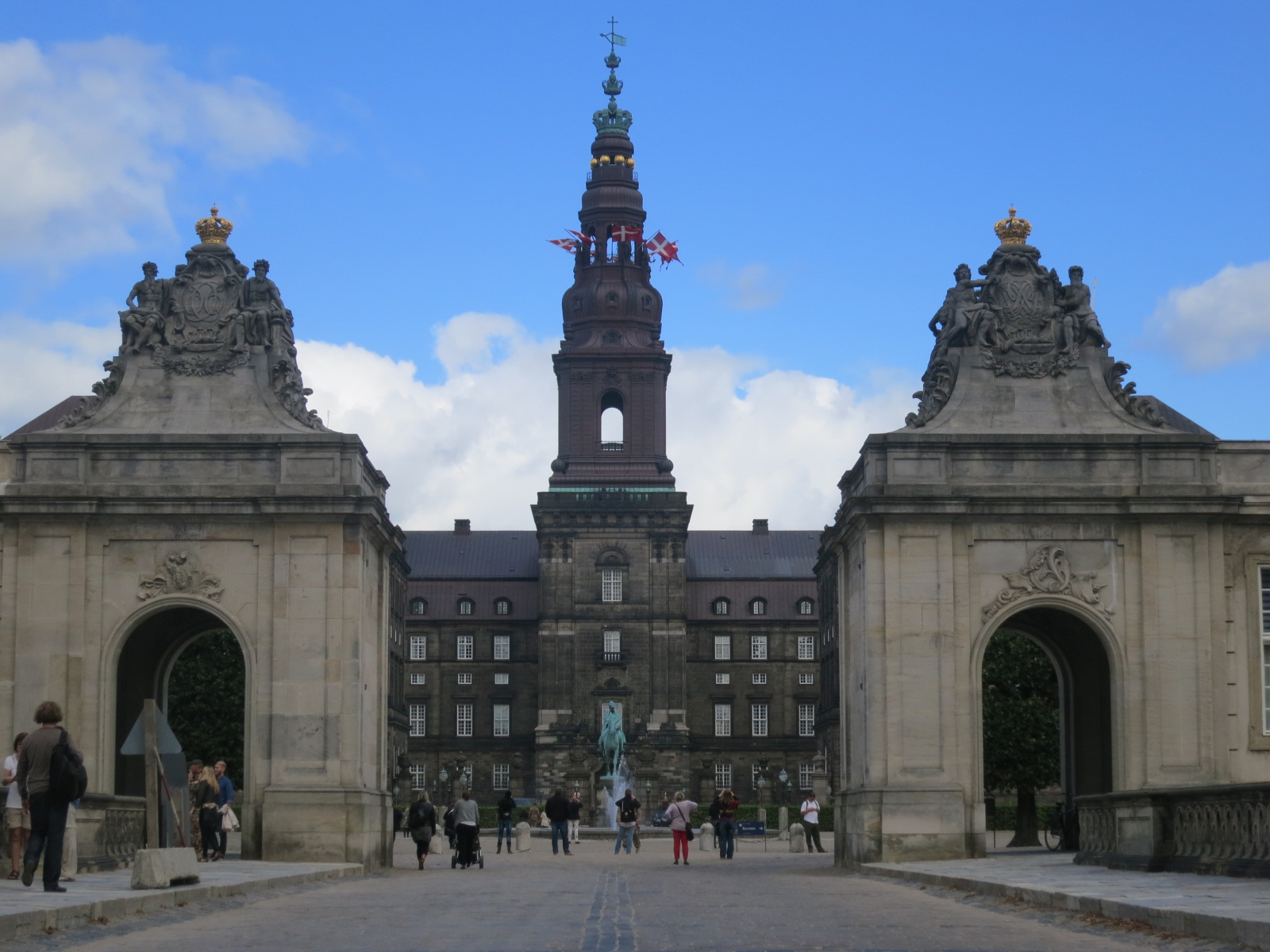
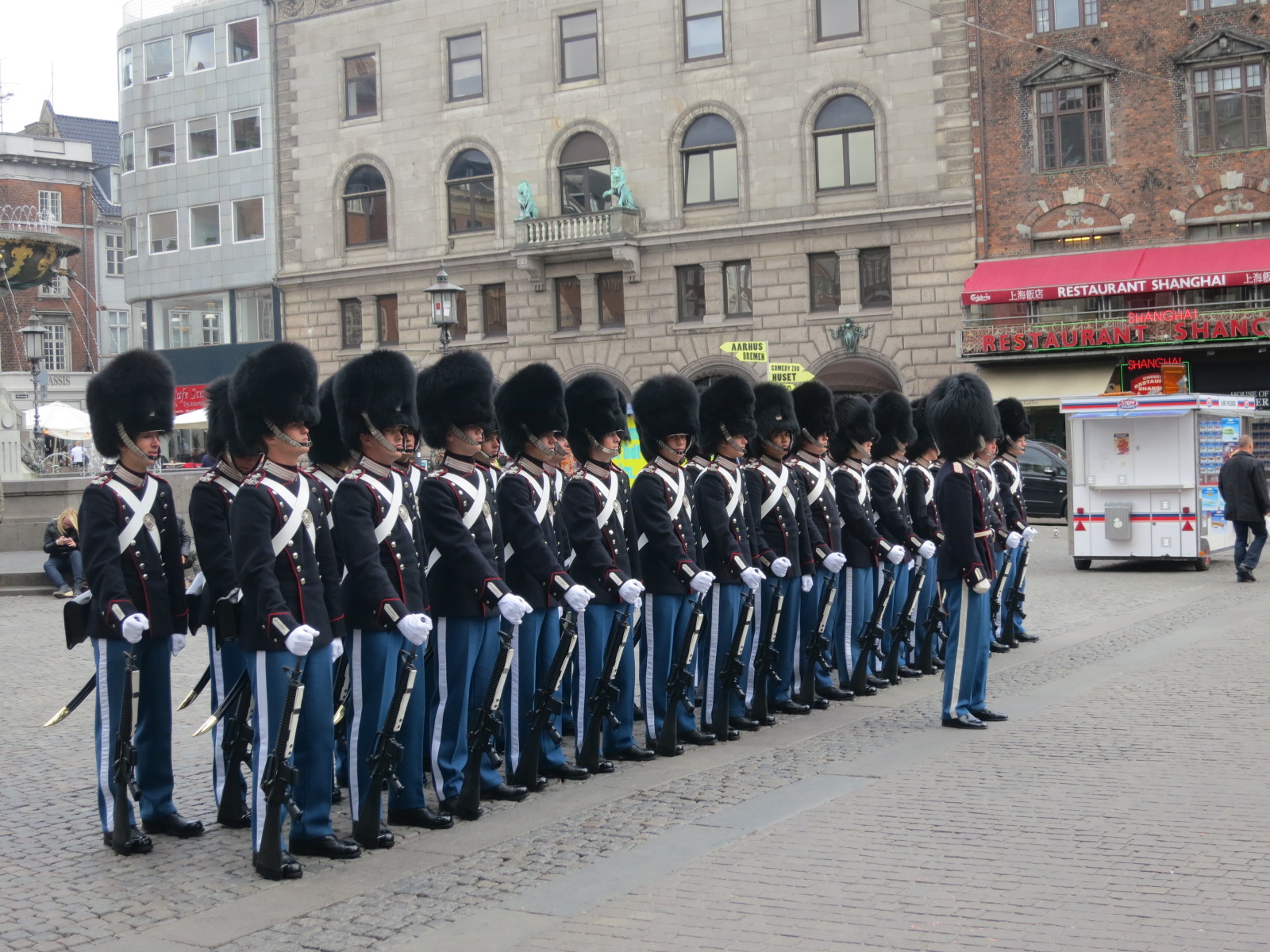
CopenhagenThe riverboat cruise inspired us to head to the National Museum so we could understand a bit more about Danish history.  As we walked over there, we saw a crowd gathered outside an old church.  Today was Flag Day or Soldier’s Day, so there were lots of celebrations and officials about town.  There were clearly secret service types outside of the church, so we thought we might glimpse the prime minister.  As it turns out, they were waiting for the Queen (Queen Margaret) to come out.  Apparently this was her private church and she was inside.  The royal family here seems to be fairly accessible to the people.  Of course, they are guarded, but people can walk the palace grounds and the royals are often spotted about town.  We waited for a bit to see Queen Margaret, but as it seemed like she wasn’t coming out anytime soon, we continued on through the Parliament grounds and over to the museum.

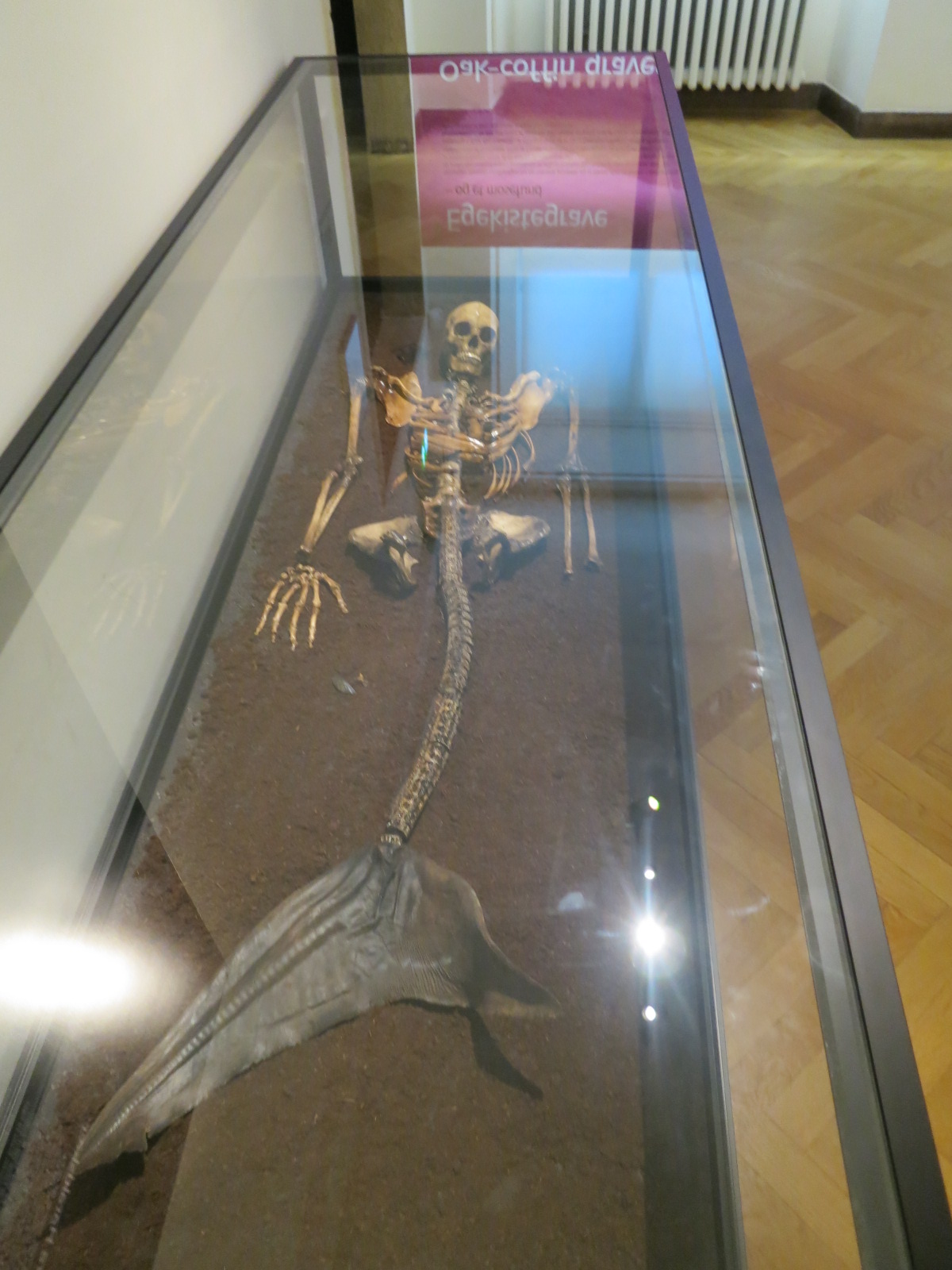
Not real!The National Museum (Nationalmuseet) has a completely free admission and is rather large, consisting of exhibits from the beginning of time through the year 2000.  That seemed a bit overwhelming to us, so we started with Danish pre-history through the Viking era.  Intermingled with the exhibits discussing burial rituals and ancient tools were art pieces that provide a “modern interpretation” of history.  Clearly the Lego version of the Deathstar from Star Wars was a piece of art.  Unfortunately, they were not all so clear and we found ourselves incredibly confused about what was real and what was art.  We questioned the exhibit showing the grave of the “bog witch” who boiled diseased children creating a dense fog over the bog. However, it was the mermaid that really made us confused.  Laying in a case are the bones of a mermaid with the story of a man who dug her up while tilling his farmland.  We looked at each other, completely unsure of what was happening.  We know mermaids aren’t real, but was the story real?  Had someone placed bones together to make it look like a mermaid and trick the farmer?  We backtracked down to the information desk to figure out what was happening.  The woman working at the museum was not at all surprised by our questions and confusion.  She cleared it up…kind of.  Bog witch–fake.  Mermaid–fake.  However, they are next to other very real graves which are genuine museum exhibits.  She told us these artists are “interpreting history in a modern way to push the limits of our thinking.”  I think that is complete garbage and they should say instead they are creating mythology to go along with the history.  It is far too confusing to figure out what is real and what is made up.  If a seven year old kid walked through there, he would walk out thinking Mermaids are real.  I don’t think that’s what they are going for.

After feeling completely confused and like I had just wasted an hour, we scrapped Danish prehistory and learned about more modern times.  It was interesting to learn of their history with Sweden and Norway as well as the other countries in the region.  There is so much history and it was all jammed so closely together that it got to be a bit overwhelming and we found ourselves skimming through parts.  In more modern times, the history is quite similar to the America– Industrial revolution, child labor laws, women’s rights, etc.  With all of this culture and history under our belts, it was time to learn what Copenhagen was really all about and we figured the best way to do that was to find a good bar.

Awesome Bar

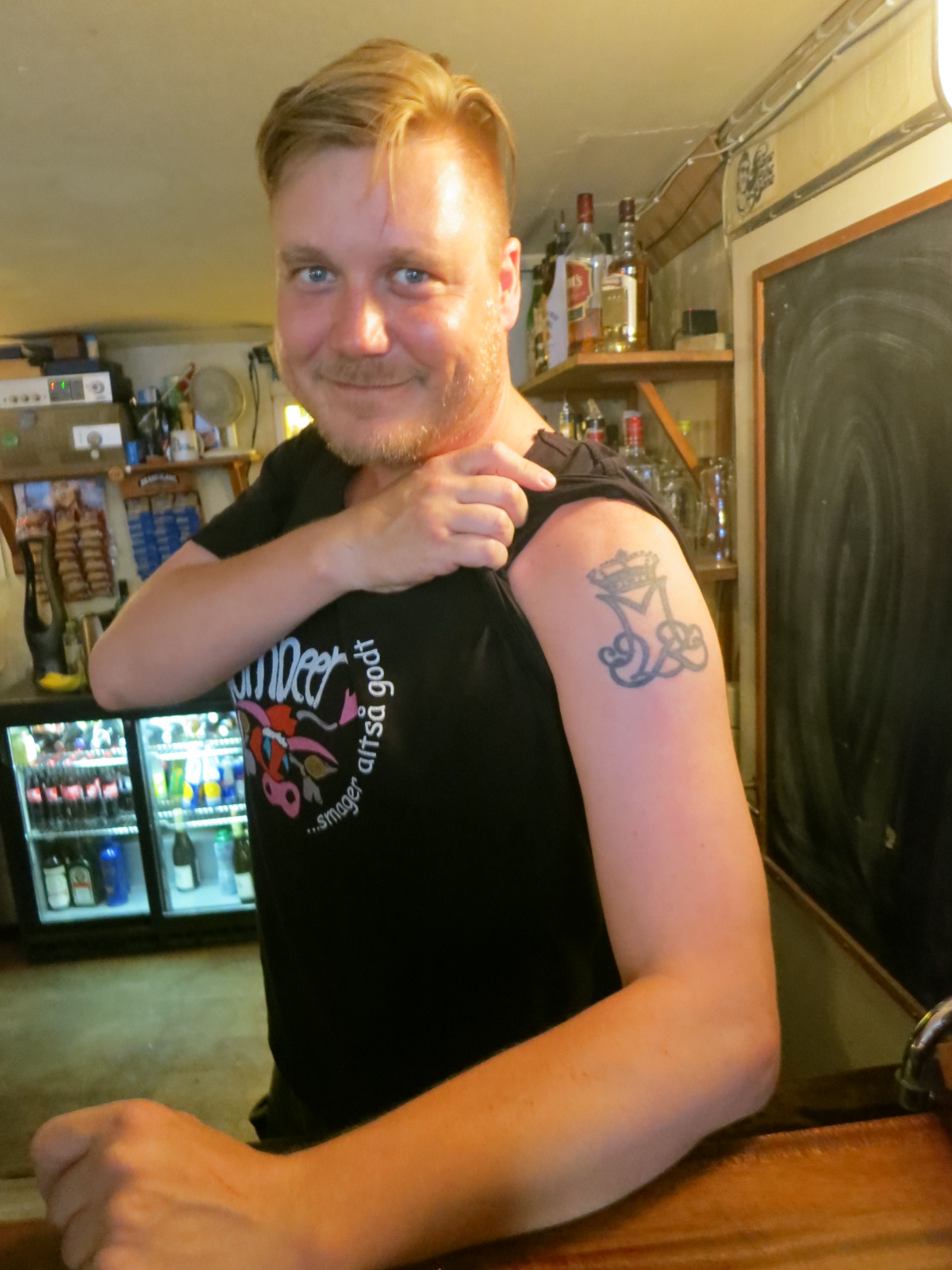
Amid the cutesy cafes and upscale bars in a rather touristy part of town, we managed to find Lord Nelson, a basement bar specializing in craft beer filled with locals and regulars.  Our friendly brother-sister bartending team, Morton and Ricki, were awesome.  Not only did they let us try every beer they had on tap, they  encouraged us to branch out our tastes and go with beers we might not normally drink.  We both enjoyed the Kiss Me Hardy, a delicious hoppy beer named after Lord Nelson’s final words to his First Officer.  Through this discussion of beer, we also learned a bit about Morton’s favorite places in Copenhagen and a little bit about life here.  We also talked for a long time with Perm, an older gentleman who has traveled the world and was excited to talk to us about all the different places he’s been.  We asked lots of questions about the relationship between Denmark and other countries and truly learned as much there as we did at the museum.  Lord Nelson is exactly the kind of bar we’ve been looking for and we were happy to spend a couple of hours resting after touring Copenhagen.

Beautiful, but not worth itWe managed to drag ourselves away from the bar so we could head to Tivoli, one of the oldest amusement parks in the world, known for its beautiful lights and gardens.  We know it for being a huge disappointment.  We had to pay to get in, which we figured since it is an amusement park.  However, we had to also pay to do anything inside.  Rides, restaurants, games–everything cost additional money.  We walked around, unimpressed, and left thinking we could have spent our money much more wisely.  Oh well.  We were tired and ready to head home anyway.

Our first day in Copenhagen was a roaring success and we can’t wait for tomorrow.  We plan to hit the Carlsberg Brewery, Christiana and eat lots of delicious pastries.  We look forward to sharing what we find!

-Brooke
At Lord Nelson's

Morton, our awesome bartender at Lord Nelson’s, showing off his tattoo from his time in the Queen’s military.

Don't drink and drive boats

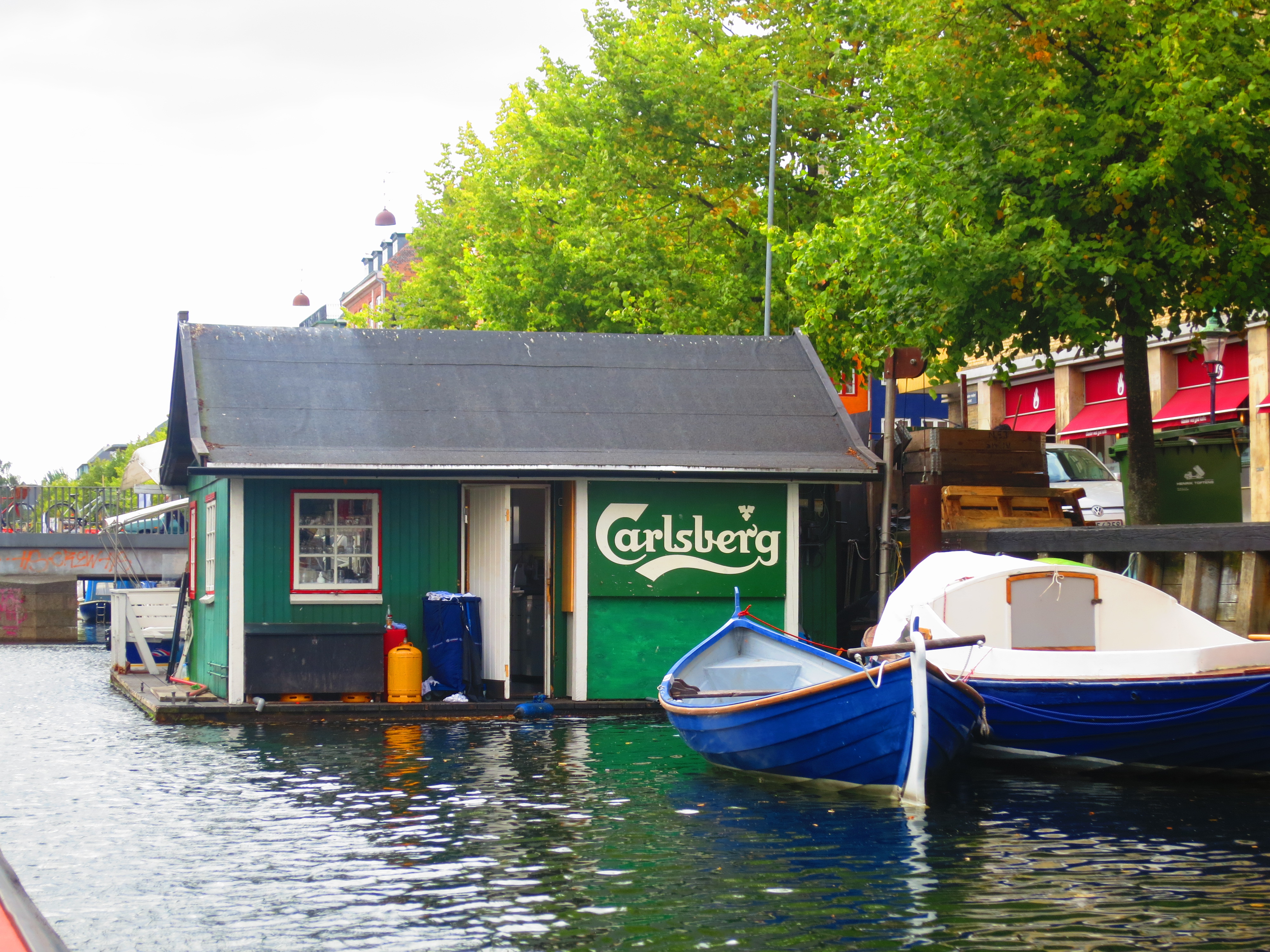
Here’s a bar right on the canal where boats can pull up to have a drink.

Soldiers

Royal Guard lining up for Flag Day events.

A typical example of the beautiful buildings that remind us we are in Europe.

Categories: Bars, City Visits, Copenhagen, Destinations, Diversions, Europe, Exploring, Museums, Uncategorized | Tags: , , , , , , , , , , , , | 4 Comments

Blog at WordPress.com.