Miyajima and Mazda

After visiting Peace Memorial Park and Museum in Hiroshima, we decided we needed to do something different. Something totally unrelated to the atomic bomb and the events which follwed. One of the things that is so great about this trip is the fact that we find ourselves in interesting and unique places that we never even knew existed even a month ago. Miyajima Island, about 45 minutes outside of Hiroshima, is just that place.A beautiful Island
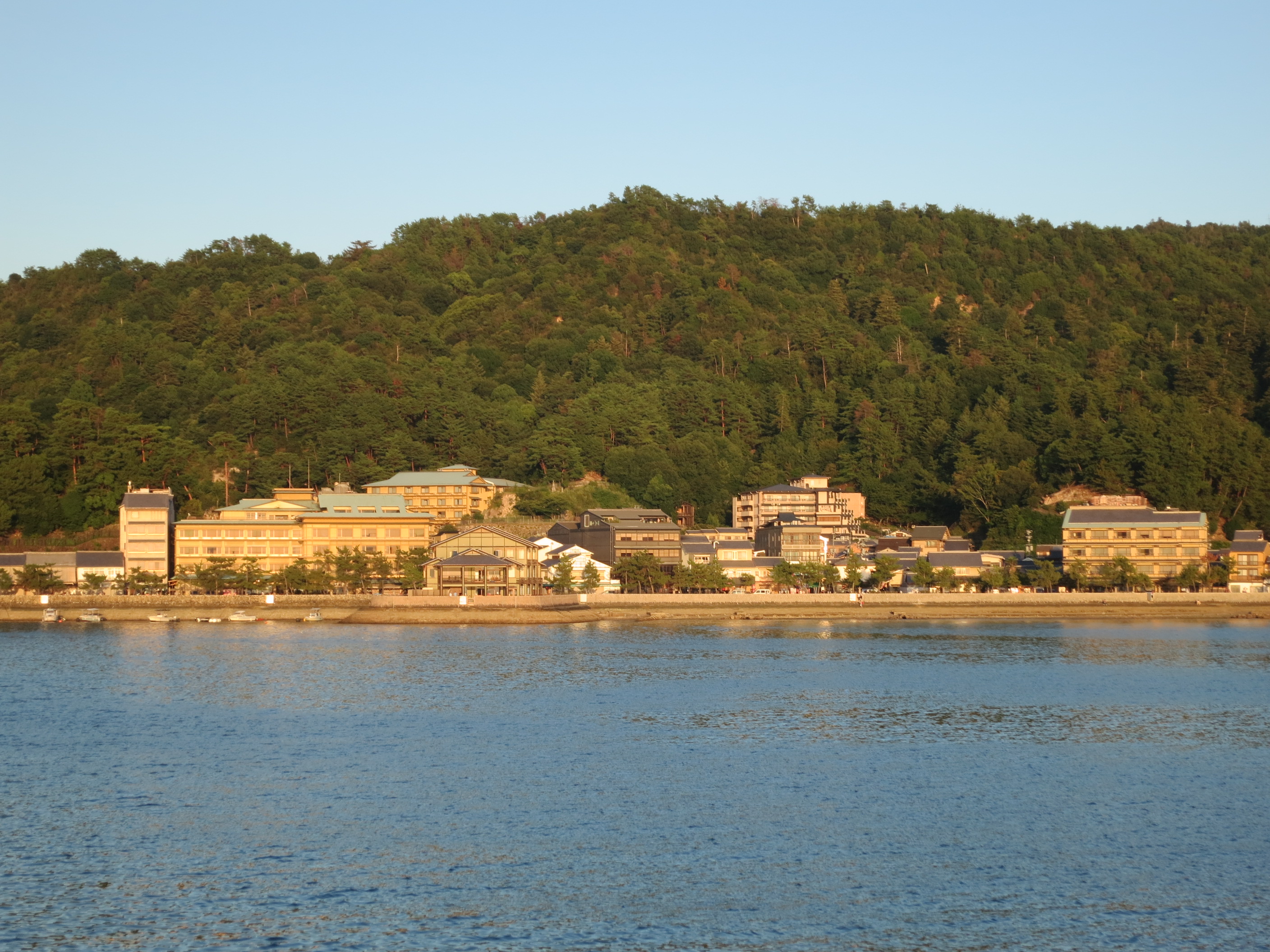
Miyajima is a renowned tourist attraction in Japan and is most widely known for its beautiful shrine gate. When I read the descriptions, what drew me most to visiting this island is the flame burning near the temple at the top. I know this sounds strange, but apparently this flame has been burning continually since it was lit 1,200 years ago. Twelve hundred years! That is utterly amazing. So, without knowing much more than this, we made the journey out of Hiroshima, first taking the street car, then the train, then a ferry! Many modes of transportation are required to get there, but Miyajima is totally worth it. Once again, our JR Pass paid for itself as the trip out and back didn’t cost us a single Yen.
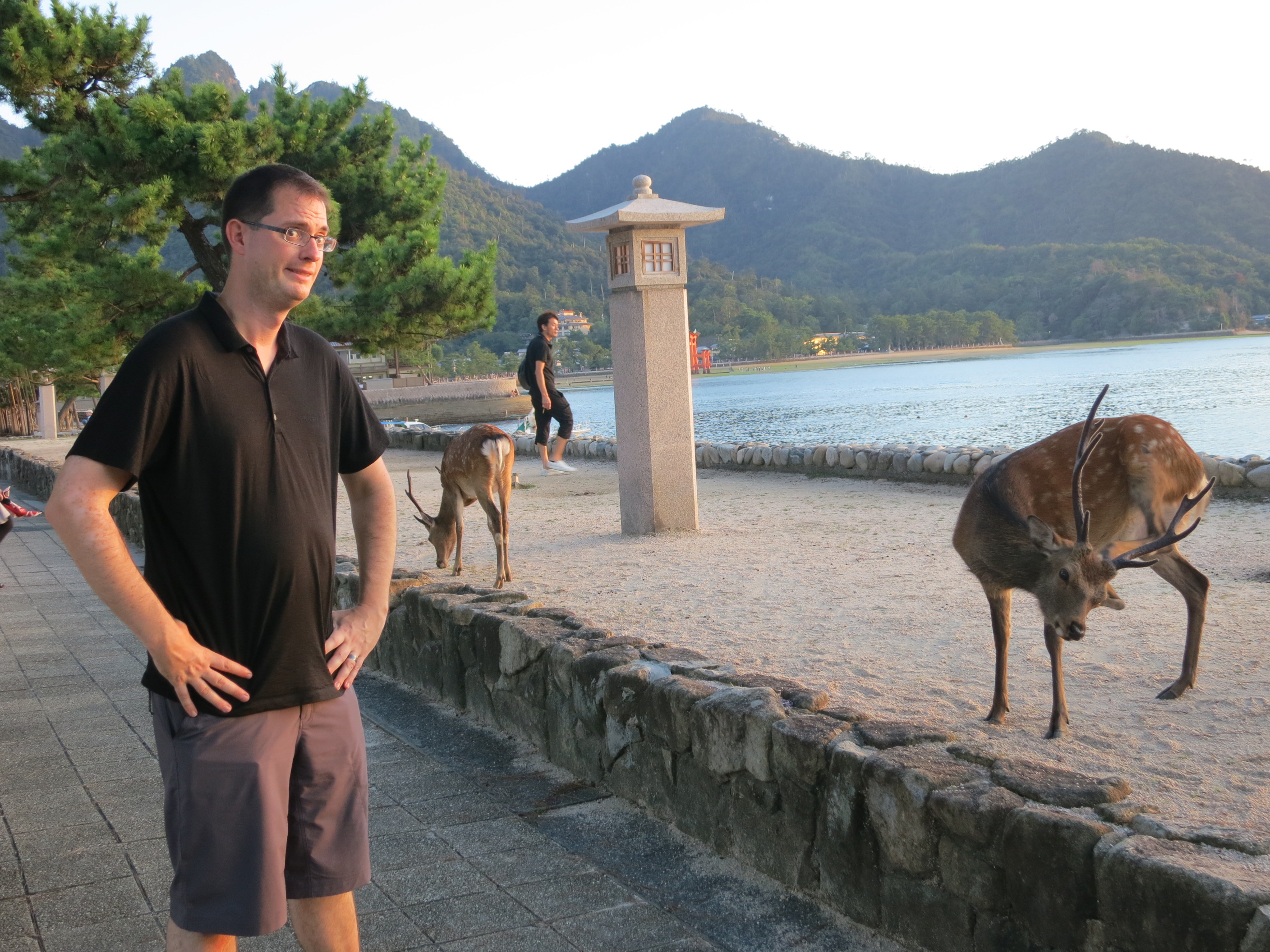
Domestic Deer?When we first stepped off the short ferry ride and began walking around the island one thing struck us immediately–the amount of “wild” deer. I say “wild” because they really seem quite domesticated and docile. Having grown up in Ohio, I am used to deer which run away at the sound of people or cars. I expect deer to be skittish and elusive. Not these deer. They walk amongst the people like they are pets. People are told not to feed them, and we didn’t see any of that happening, but people were definitely petting the deer and even touching their antlers. Phil and I kept our distance, but at one point the deer came right up to me, sniffed my bag and kept going. We saw one deer steel a bag of snacks from the back of a man’s wheelchair. It was very strange and a little unsettling.

Gorgeous!Because we got there so close to sunset, we were unable to go up the ropeway which would have taken us to the 1200 year old flame, but it was totally worth missing to get to view the brilliant red shrine gate of Itsukushima-jinja at sunset. This huge gate is set out in the water, so at low tide visitors can walk up to it and at high tide it looks as though it is floating. It is one of the most sensational sights we have seen thus far. We realized that most of our time in Japan has been spent in bustling cities and crowded areas. Miyajima at sunset is the complete opposite. Sure, lots of people were there taking photos and watching the sun slide behind the mountains, but it was incredibly quiet and tranquil. We sat for almost an hour, watching the sun go down and the stars come out. It was really majestic.

Our final morning in Hiroshima found us touring the Mazda Museum. I’m not really a car buff and I certainly don’t know what makes Mazda different from any other type of car, but it was so great getting to take this tour. First of all, the facilities are absolutely huge. We were not allowed to take pictures of the outside buildings, but did learn that the assembly line is 7km long, the longest in the world. In addition, this Mazda facility has its own private bridge which is 500 meters long making it one of the longest privately owned bridges in the world. They also have a private port where their ships transport up to 5000 cars at a time to different areas overseas (it takes 14 days to transport a car from Hiroshima to Northern California).
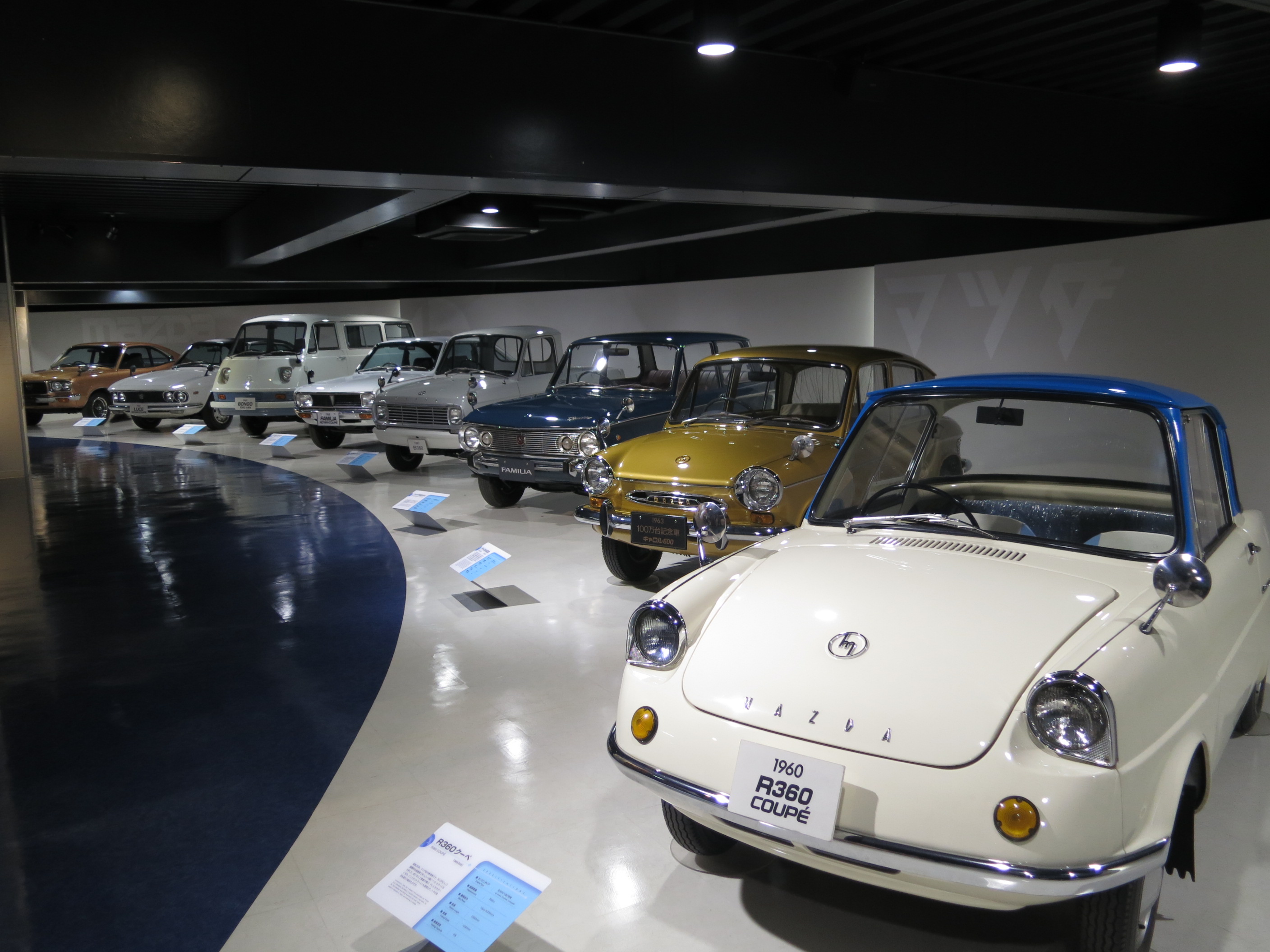
Mazda Museum

The tour was really great, starting with a little history of the company and moving through the years. Of course there were 2 major parts which were most spectacular. First, we got to see some of the classic Mazda cars. They were absolutely beautiful. We even saw a Cosmo Sport, a sports car from the sixties which is very rare because it is entirely hand made; there were only 1200 in existence. I also thought the 3-wheeled trucks were awesove me–these were the first motor-vehicles Mazda ever made. I think I could drive one of these as my everyday vehicle!Love this truck
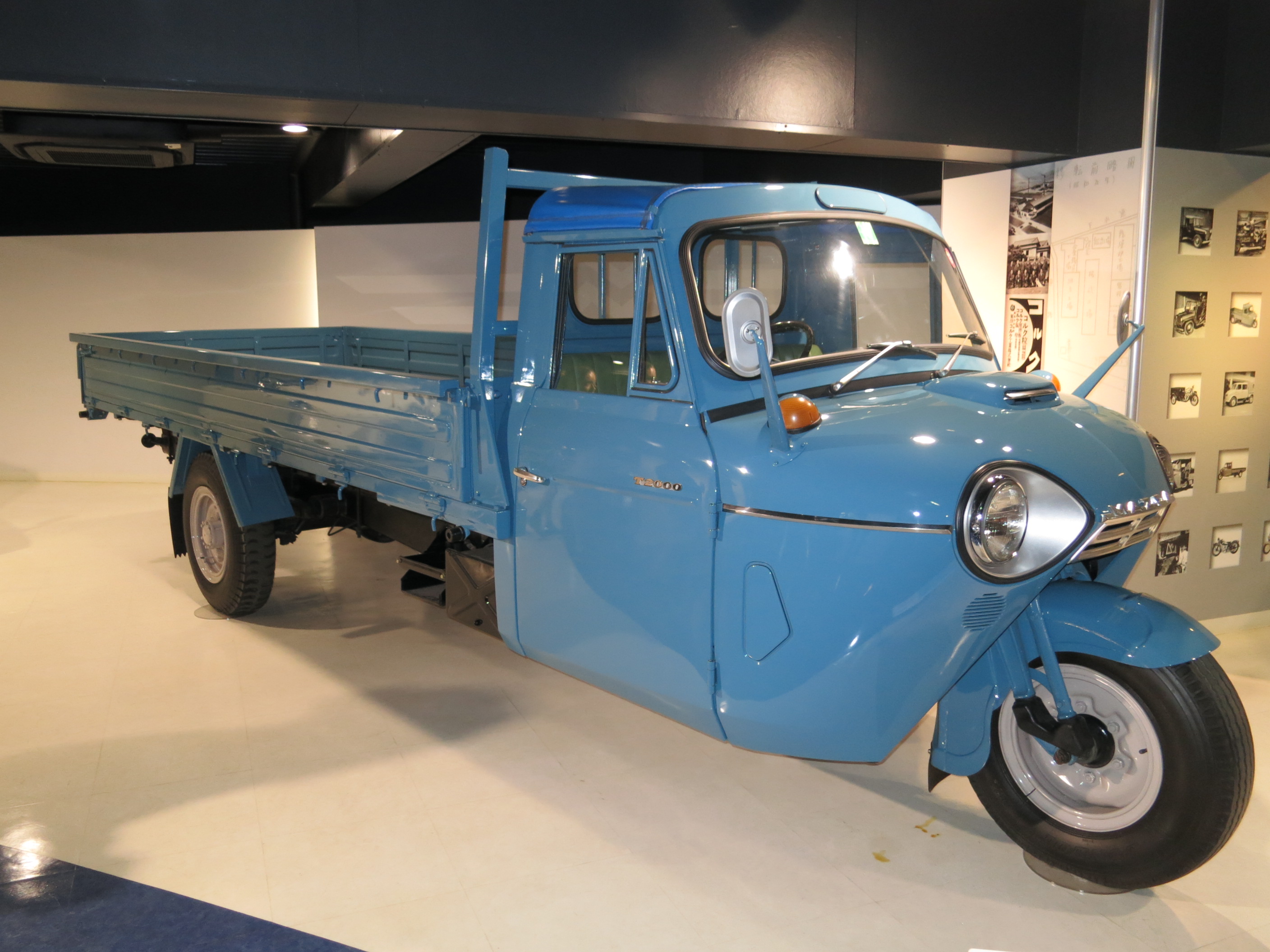
But to be honest, the best part of tour was actually getting to see the assembly line. It was amazing. The cars would creep down the conveyer belt while workers put different parts into place. We were surprised to see different models of cars being made on the same line. We figured that would get confusing, but they clearly have a way of keeping it all straight. We were especially fascinated by the machine that put adhesive around the edges of the windows, windshields and rear windows. It knew exactly where to go–it really is like magic. The cars are put together from start to finish at this plant, and it takes about 15 hours per car. They make about 1,000 cars per day. Absolutely amazing. Unfortunately, we weren’t allowed to take pictures of the assembly line, but just trust me when I tell you it is one of the most intricate and interesting things you can see–we could have stood there watching all day.

Toy Truck?After visiting the Mazda Museum, we decided it was time to leave Hiroshima and head back towards Tokyo. We can’t believe how quickly our time in Japan is going, although that seems to be a pretty consistent theme of our trip so far. Now, we spend the day buying souvenirs and shipping some things home (we have the benefit of using the U.S. Postal Service on base). However, the most important thing we are going to do today is get prepared for tomorrow–the day we climb Japan’s tallest peak – Mt. Fuji!

-Brooke

Miyajima gate at sunset

The shrine gate at sunset is truly a sight to behold. The tide is coming in at this moment, but at high tide it looks like it is floating.
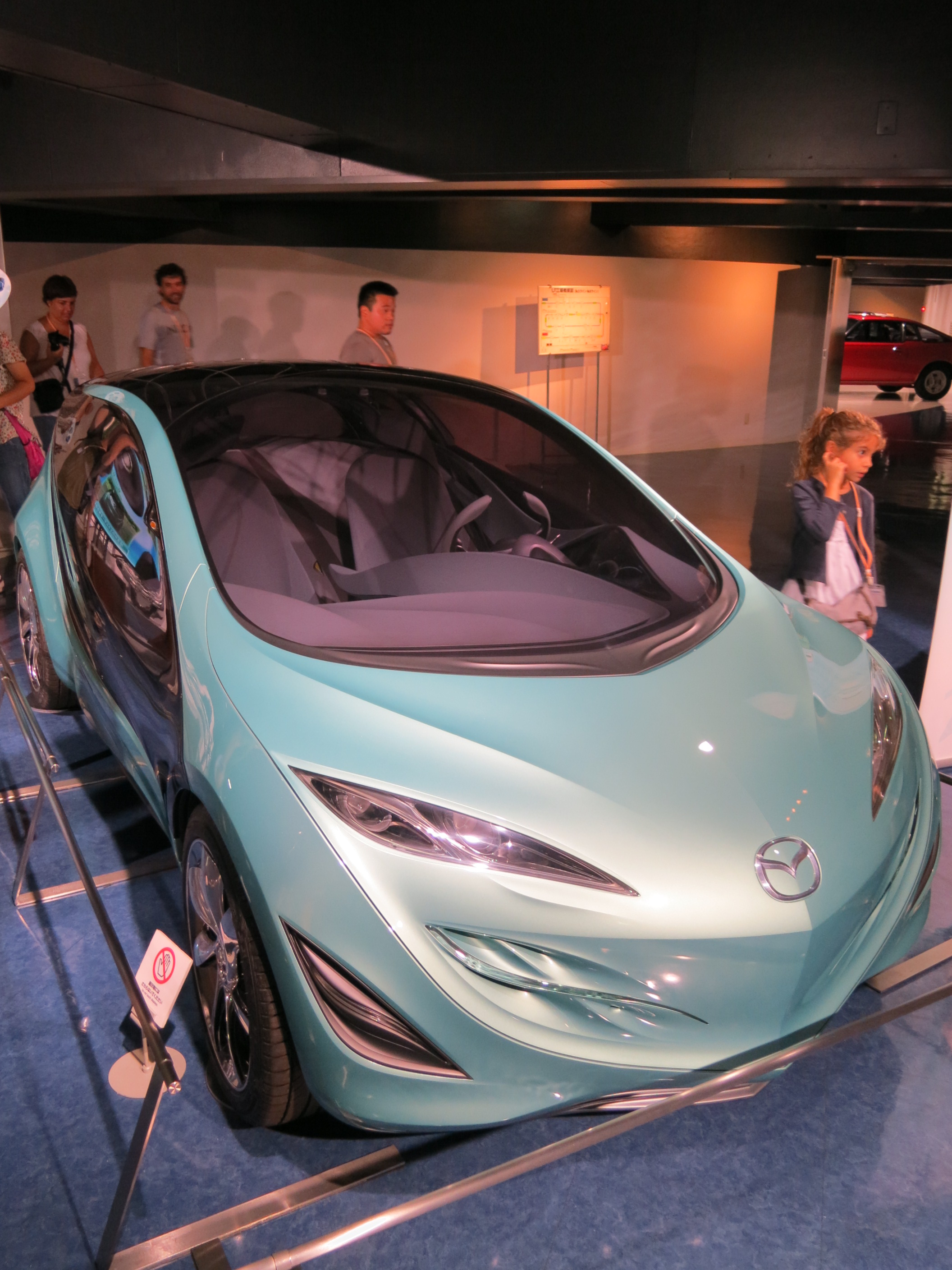
Going Green
One of Mazda’s concept cars. In an effort to “go green” there are grooves on the roof to collect rain water, filter it, and pour into a bottle for the driver to drink. Really!?
Categories: City Visits, Destinations, Diversions, Exploring, Japan, Landmarks, Museums, Relaxing, Temples, Unusual Experiences | Tags: , , , , , , | 4 Comments

Visiting Hiroshima

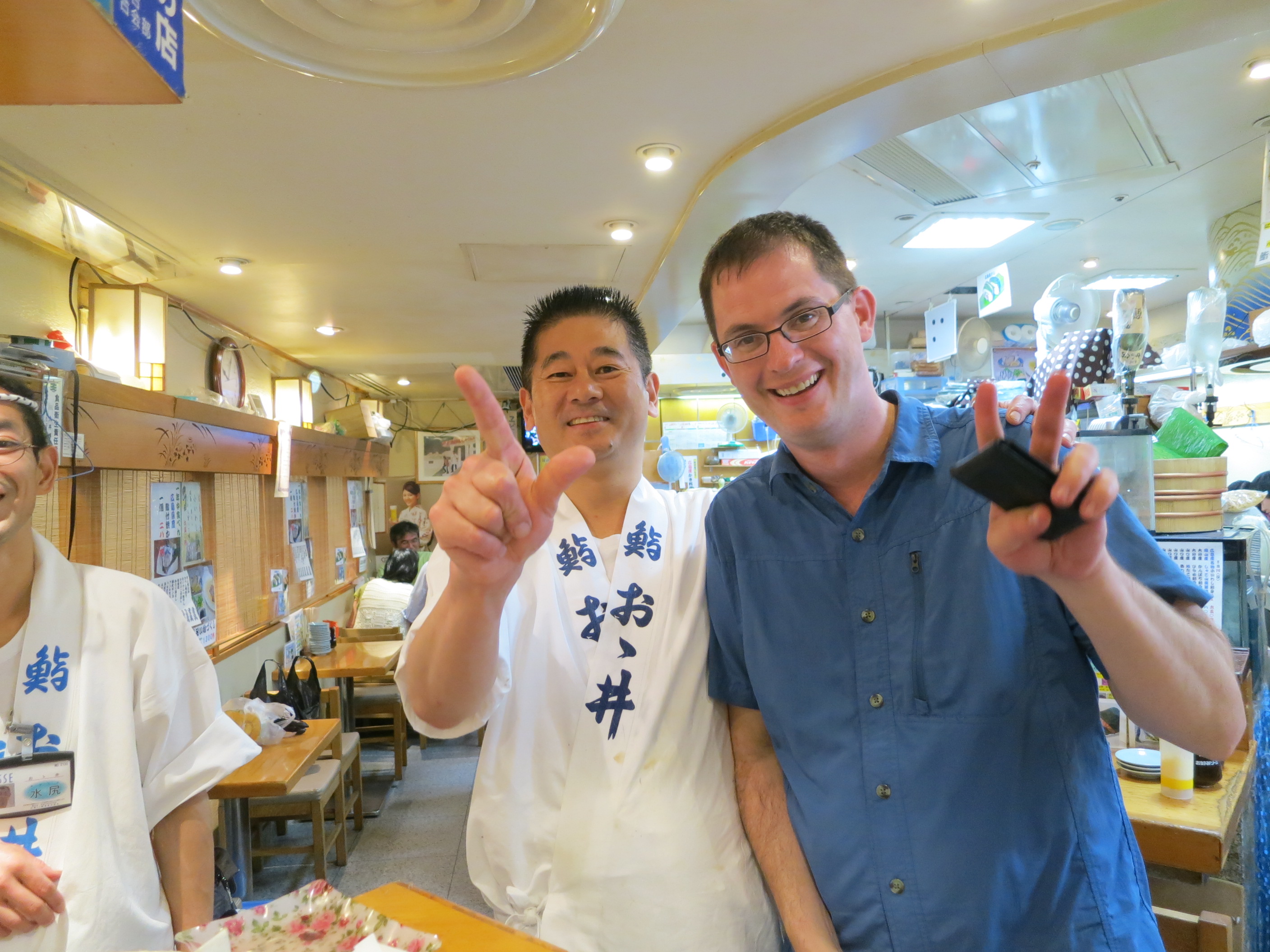
New foods!We’ve made our way on the Shinkansen from Kyoto to Hiroshima leaving behind Shoguns, Geishas, Kimonos and Pagodas and ready to see a new city. It was a quick two hour ride on the Shinkansen. After arriving in the early evening, we set out to grab some dinner. Very quickly, we discovered Okonomiyaki – Hiroshima’s signature dish. Okonomiyaki is best described as a noodle pancake loaded with cabbage, sprouts, egg, meat and more – all cooked on a griddle. Locals take pride in their Okonomiyaki and it is as ubiquitous as chili is to Cincinnati or deep dish style pizza is to Chicago. The verdict? Inexpensive and tasty! Can’t wait to go back tomorrow for another round before we head out of town! The very friendly owner of the particular restaurant we visited was insistent on giving me his card. You can visit his site here.

Hiroshima is a lively, colorful city that uses street cars of all sizes, models and years as their signature public transportation. Running up and down the major streets, the street cars are the main way we’ve been getting across town. After a relaxing night at Hiroshima’s wonderful Hana Hostel, we made our way to Peace Memorial Park and The Peace Memorial Museum – part of a whole complex dedicated to the memory of the atomic bombing of Hiroshima and to creating lasting worldwide peace..

Memorial at HiroshimaThe museum and park certainly qualify as “must visits” in Japan. The nearly-free museum is well done, informative and paints a complex picture of the really widespread, horrific destruction done by the atomic bomb. It was interesting and informative and solemn, but structured to teach and share to make sure that all remember. Brooke and I walked away glad we took the time to tour the museum and grounds surrounding this incredibly important, watershed event in human history. It is also the first time we’ve really come to understand the specific impact of an atomic attack on a specific place.

The museum has such a tactile component with archives full of items from the blast that you can touch and hold. Showing these human, personal items helps to establishes a more intimate connection with what happened here 67 years ago. One eye-catching exhibit was the stopped wristwatch reflecting the exact minute that the bomb went off- it is literally a snapshot of time. The personal stories and archived items, and especially the photographs from the city after the bombing are unsettling, but that’s to be expected and kind of the point.

Archives at Hiroshima MuseumWe found it really interesting how the current generation of Hiroshima locals really shoulder the city’s legacy from the past. The city is a rebuilt place, but they are urging people to never forget what has happened here. The museum has a clear focus on their dedication to peace and ending nuclear proliferation. In fact, the sitting mayors of Hiroshima have sent a letter of protest to a country each time their nation has tested an atomic weapon over the last forty years. Copies of these letters fill up two or three full walls within the museum. We also applaud their mulit-lingual exhibits that show the desire to spread peace across all peoples. I get that this is supposed to be a message of warning, but it does sort of make the future looks grim and bleak. I saw a sign on the way out indicating that this should be a “warning to future generations.” Indeed.

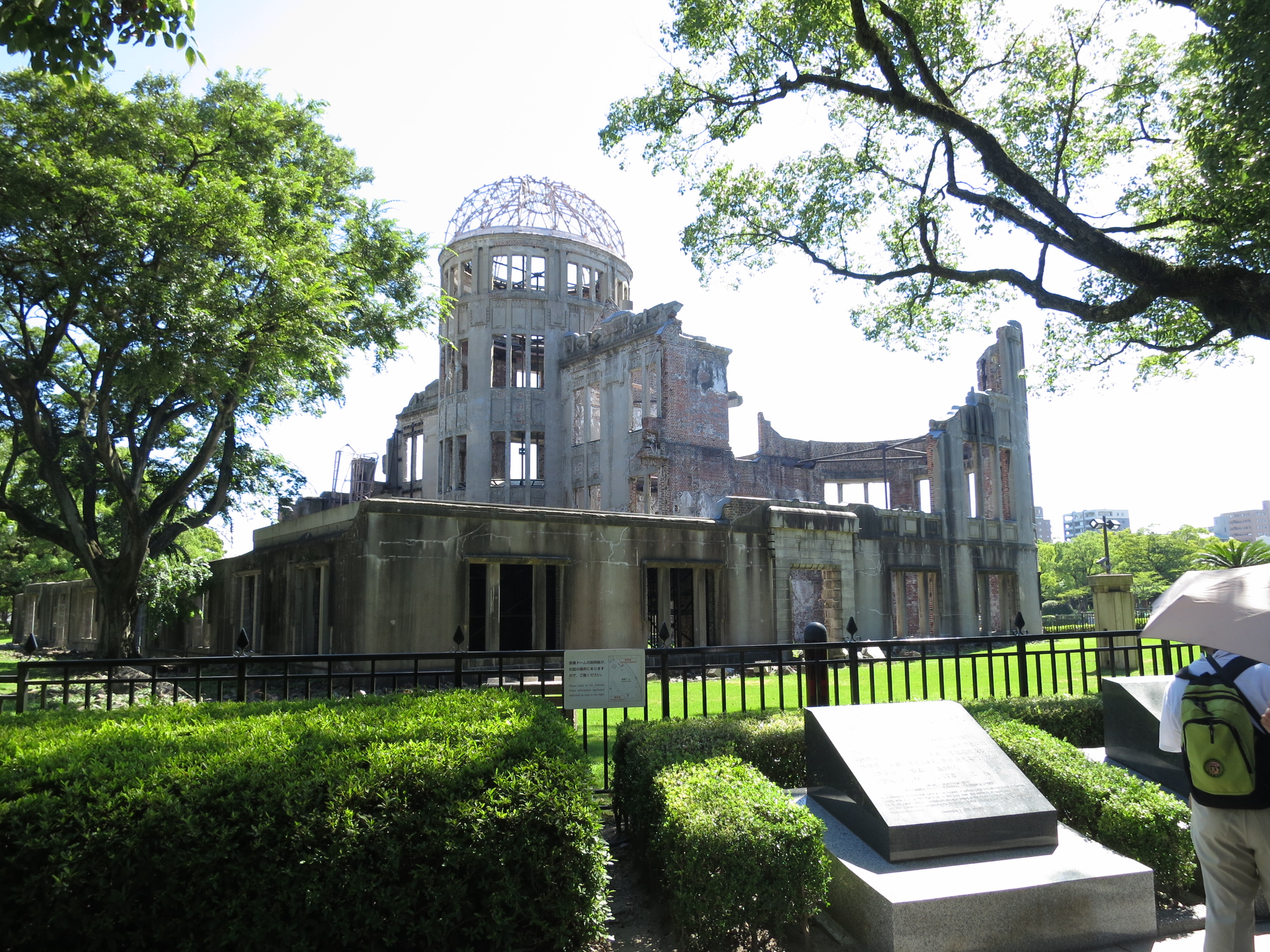
After leaving the museum, meandering through Peace Park was its own striking experience because you’re standing in the near exact bombing spot that you had just studied inside. It’s all preserved green space now with the cenotaph, flame of peace and the Childen’s Peace Monument which was built in a response to the well-known story of Sadako Sasaki- the cancer stricken girl who made a 1,000 paper cranes. Is is an astonishing tale that’s simply heartbreaking. The most notable building was the so called “A-dome” structure: the shell of a building close to the center of the bombing that was one of the very few to remain intact.

The "A-Dome"We walked away from the area and took some time to compose our thoughts and consider our experiences. Hiroshima is in no way a depressing city and its desire to be focused on peace rather than tragedy is quite clear. We understand why some people may avoid visiting this city, but we would definitely try to convince them otherwise. No matter what your political views or beliefs about nuclear weapons, the story of Hiroshima and its people deserve our attention and remembrance. There is more to our visit to Hiroshima which is a bit more uplifting and fun, but we will tell you all about that tomorrow.

-Phil

Phil and The noodle pancake owner guy

Phil and the owner of the Okonomiyaki joint

Another view of the really striking A-dome.

Another view of the really striking A-dome. It’s been preserved to look exactly as it did right after 8:15 AM on August 6th, 1945. Everything else around it was just obliterated.

Categories: City Visits, Destinations, Exploring, Hotels, Japan, Landmarks, Museums, Transportation | Tags: , , , , , , , , , | 4 Comments

Kyoto, Japan


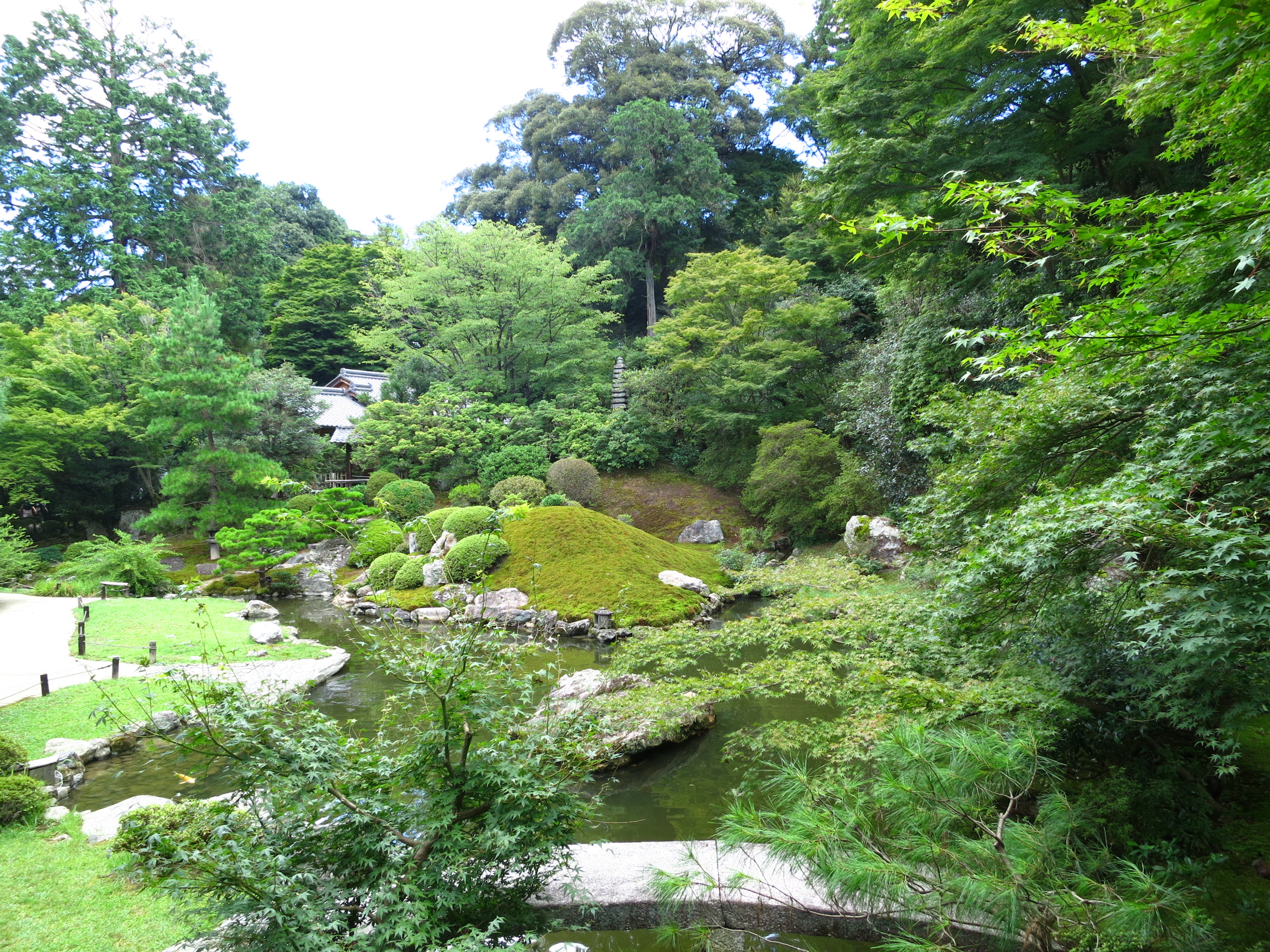
So very peaceful
Almost everyone we spoke to before arriving in Japan told us we should visit Kyoto.  It is known for its traditional Japanese buildings, its overwhelming number of shrines and temples, and its beautiful gardens.  It is at the top of every Japan Tour list and so we decided it was a “must see” for us.  We are so glad we made a visit.

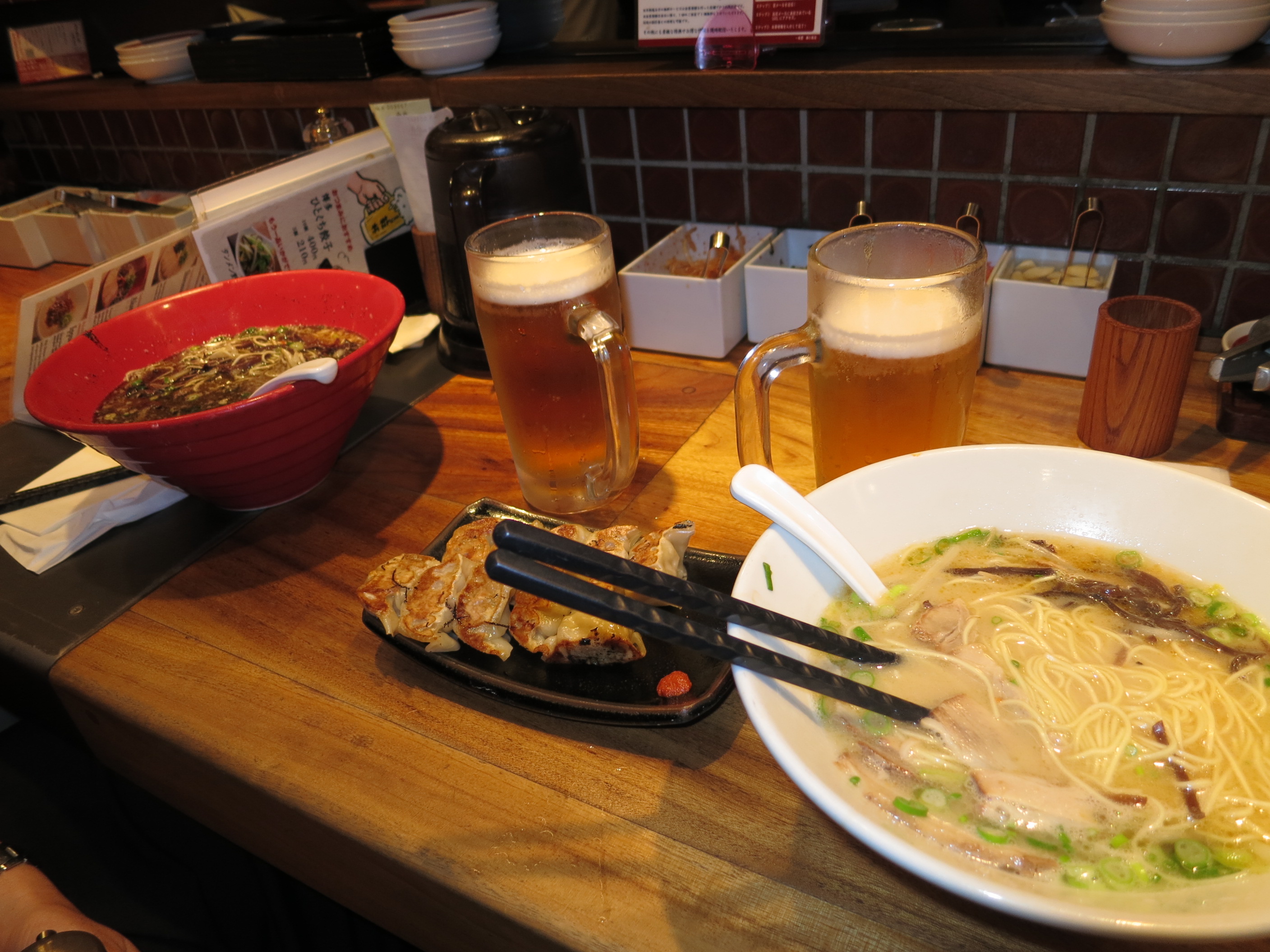
Hot and SteamyWe arrived in Kyoto yesterday evening after taking the Shinkansen (bullet train) from Yokohama.  It was turning dark, raining and not really the right time for sight-seeing, so we did what we do best–explored the restaurant and bar scene!  Everyone who has ever been a poor college kid (or who was raised in a house with my mom) has had their fair share of Ramen noodles–you know, the hard brick of noodles with the flavor packet.  You may have had the Cup-o-Noodles variety.  I’m sure you are familiar. Don’t get me wrong, they are great and perfect for cheap eating.  But that little 49 cent pack of Ramen barely comes close to resembling the real thing.  We tasted our first real Ramen at Ippudo which sits nestled within the tightly packed streets of the Nishiki Market district.  We spied the food in front of the people next to us, pointed to their dishes and the picture of dumplings on the menu, and our order was complete.  While we waited we watched our neighbors eat Ramen with chopsticks and a spoon so we would know the etiquette.  Slurping is totally allowed and putting your lips up to the side of the bowl is expected.  Thank goodness!  When our huge bowls of steaming hot Ramen arrived, we had broth flying everywhere!  The flavor combinations were really amazing with fresh scallion and some delicious peppery oil drizzled on top.  However, the real highlight of the meal were the Gyoza, Chinese style dumplings.  These were like little bites of heaven–easily the best dumplings I’ve ever had.

Kyoto BarAfter our delicious dinner, we made our way to some bars.  Our first stop had us trying our hand at darts fairly unsuccessfully.  We left there defeated and once again found a tiny little alley and wandered down it to see what was happening.  It was so cool–door after door were bars with people lined up on stools taking turns singing karaoke.  Well, we couldn’t resist!  We are in Japan after all.  We went into one that was essentially empty and took it over by singing everything from Bon Jovi to the Backstreet Boys.  It was so tiny that when we sat on the stools our backs were up against the sliding doors.  It was essentially a hallway.  The bartender brought us this crazy looking plate with fish and noodles (which we didn’t ask for or want) and continued to chain smoke while we sang.  We were having a blast in this cramped little space, until the bill came.  We couldn’t believe how expensive our two beers were.  It turns out, we think we were being charged for each song we sang.  Crap!  We had no idea and we tried asking, but she spoke no English at all.  Oh well, that was a tough lesson learned.

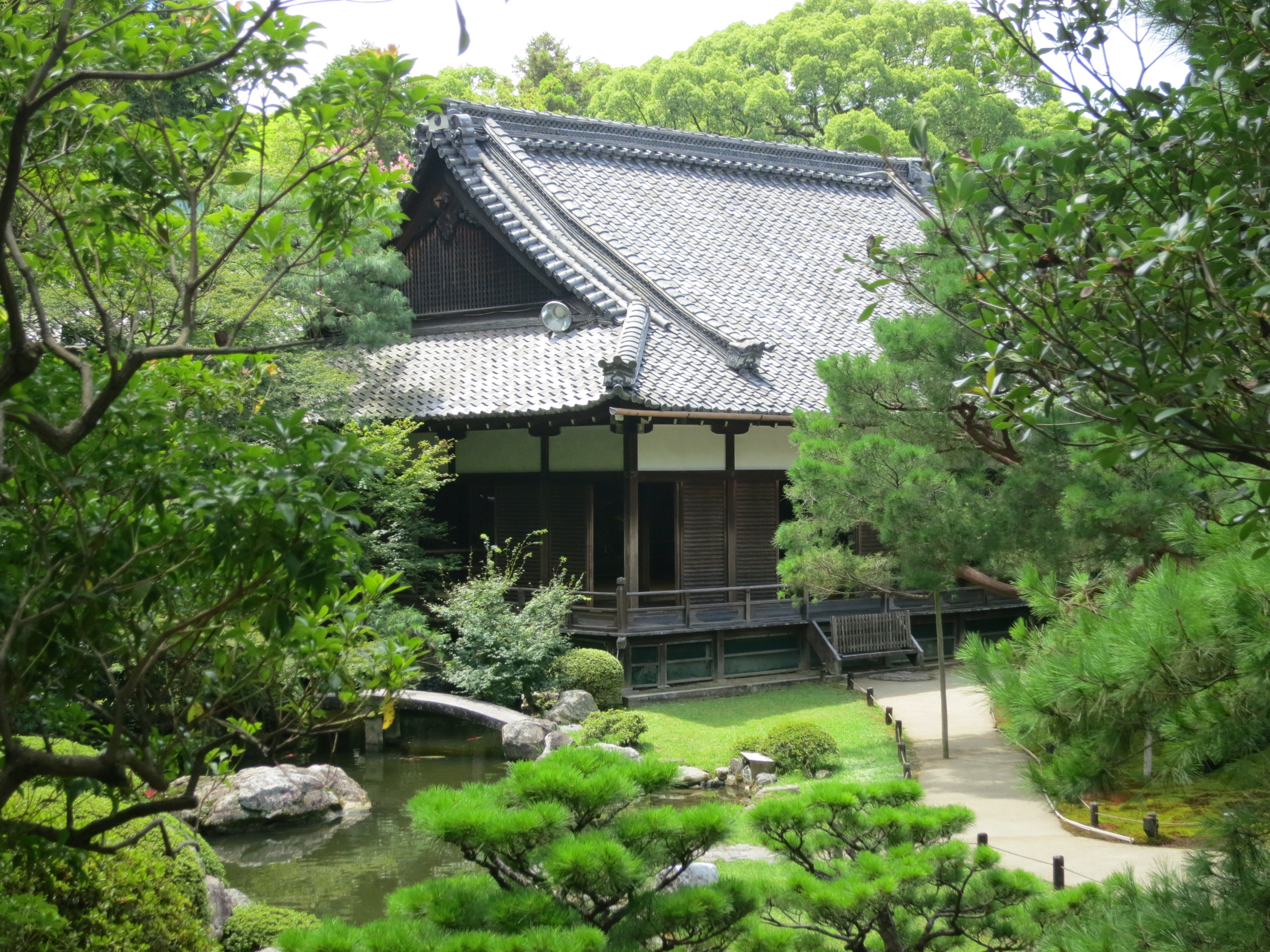
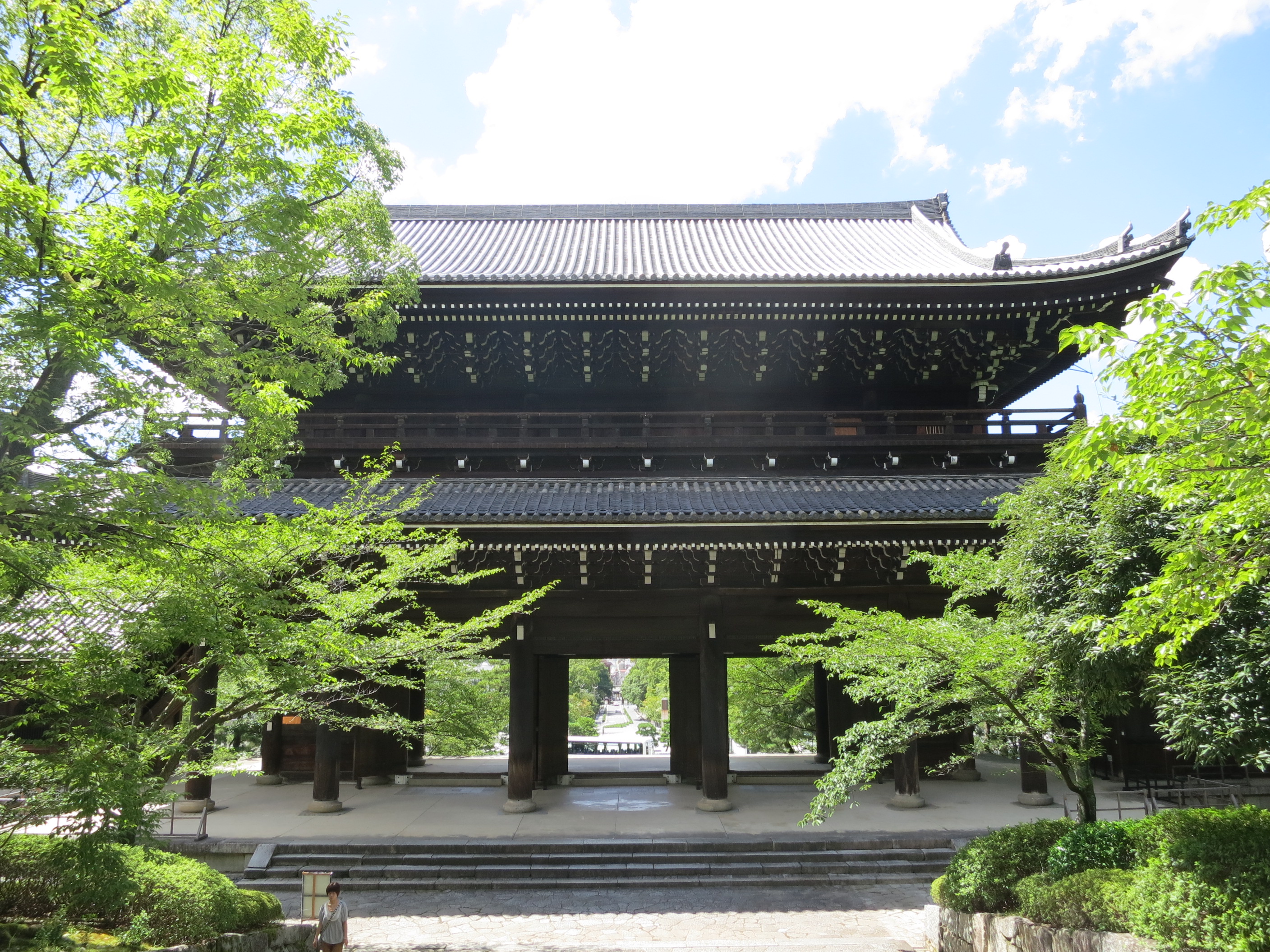
Peaceful gardenThis morning, we hit the ground running and went to Hagashiyama, an area in Kyoto loaded with shrines, temples and gardens.  Wow, we fast-paced New Yorkers could really learn something from these Buddhists.  We first went to Shoren-in, an ancient temple complex which is no longer in use.  After taking our shoes off, we strolled along the tatami mats and wooden walkways of the temple buildings.  In the center of this serene complex lay a beautiful garden with a koi pond.  We found ourselves just sitting there, listening to the singing cicadas and rush of the water.  Relaxing isn’t even the word for it…more like, peaceful. My brain felt clear and still.  I can completely understand why people would come here and pray.  We both agreed the equivalent to this would be amazing in New York City.  Not far from Shoren-in, we walked to Chion-in.  This is another huge temple complex, but it is still actively used today and is a popular place of pilgrimage for Buddhists.  Unlike the other, this temple was bustling with people and activity.  We could hear chanting and bells ringing and there were certain places where we could not go because there were people worshiping. The coolest part of this temple is the San-mon, the gate at the main entrance.  It is the largest temple gate in Japan and let me tell you, it is huge!  Pictures really don’t do it justice.

Largest temple gates in Japan

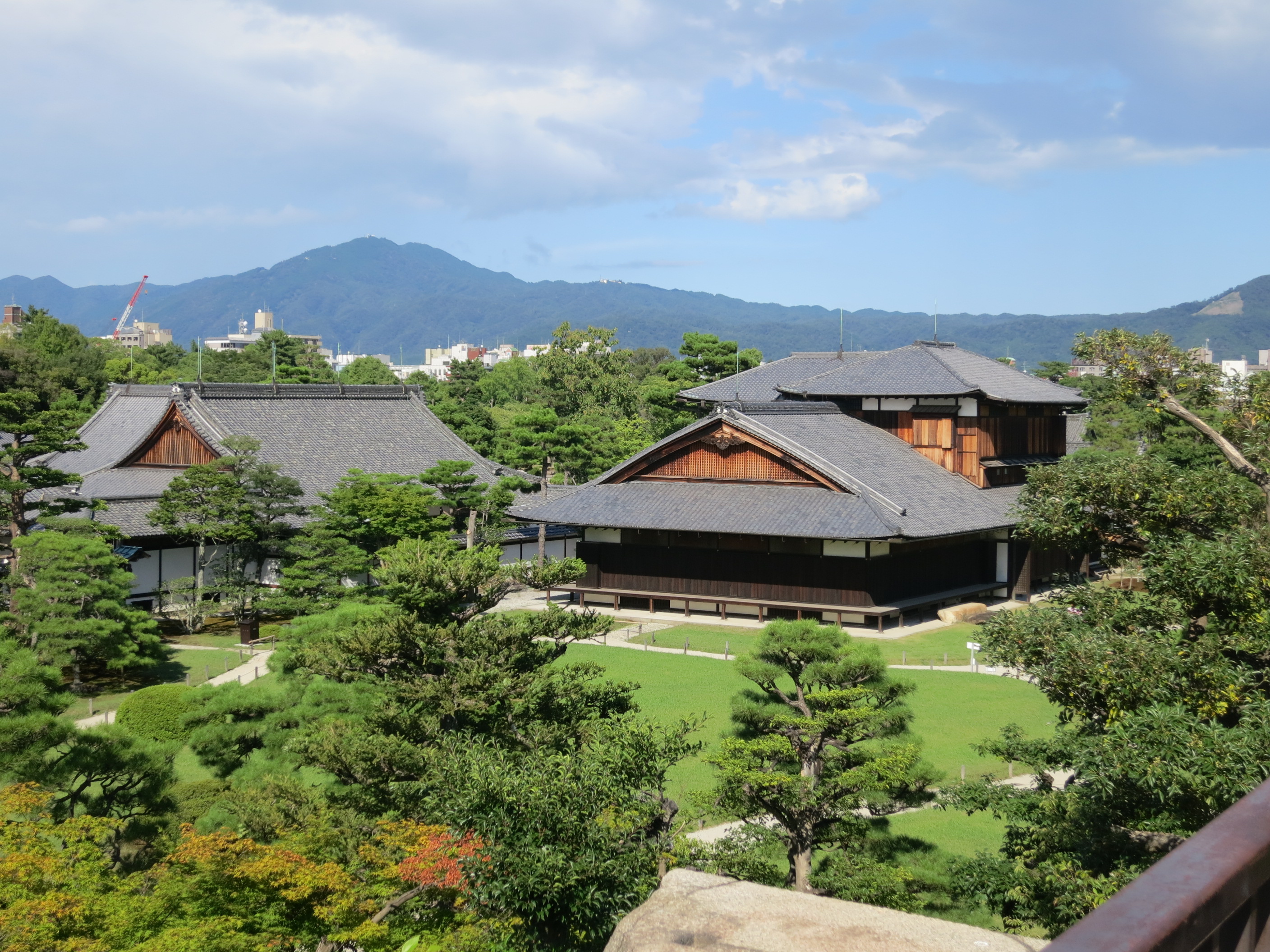
After seeing a few temples, we were in the mood for something a bit different, so we headed to Nijo-jo, a castle built in 1603 which was the official residence of the first Tokugawa shogun (essentially a military dictator).  The castle and its grounds are absolutely gigantic!  We were unable to take pictures (or even sketch them, not that we would have) inside the building, but we basically understood that the shogun was the most important person in the room and all activities revolved around him.  For his protection, the castle is surrounded by both in outer moat and another inner moat.  However, if some stealthy Ninja warrior managed to get past both moats, they would have a hard time getting past the “nightingale floors.”  These are floors which “sing” each time they are stepped on so intruders are unable to come in unnoticed.  (I think Phil’s mom should have had these floors installed in the house he grew up in to keep him from sneaking out while she slept.)  The movement of the boards really does cause them to creak at each step–very clever, shogun.  Very clever, indeed.Huge castle in Kyoto

After traipsing around Kyoto in the crazy-hot sun, we found ourselves exhausted and ready for a rest.  Luckily, a smooth and air-conditioned ride on the Shinkansen awaited us.  And so, we said goodbye to Kyoto feeling much richer in our understanding of Japanese culture and history.  Now we attempt to understand modern history as we head to Hiroshima.  We both anticipate being disturbed by some of what we will see there, however we feel it is important to pay our respect and gain a greater understanding of this city and the events which took place here so many years ago.

-Brooke

We don't speak Japanese!

One of many instances when we wish we could read Japanese. What is this sculpture? It kind of looks like potatoes on a big rock, but that can’t be right.

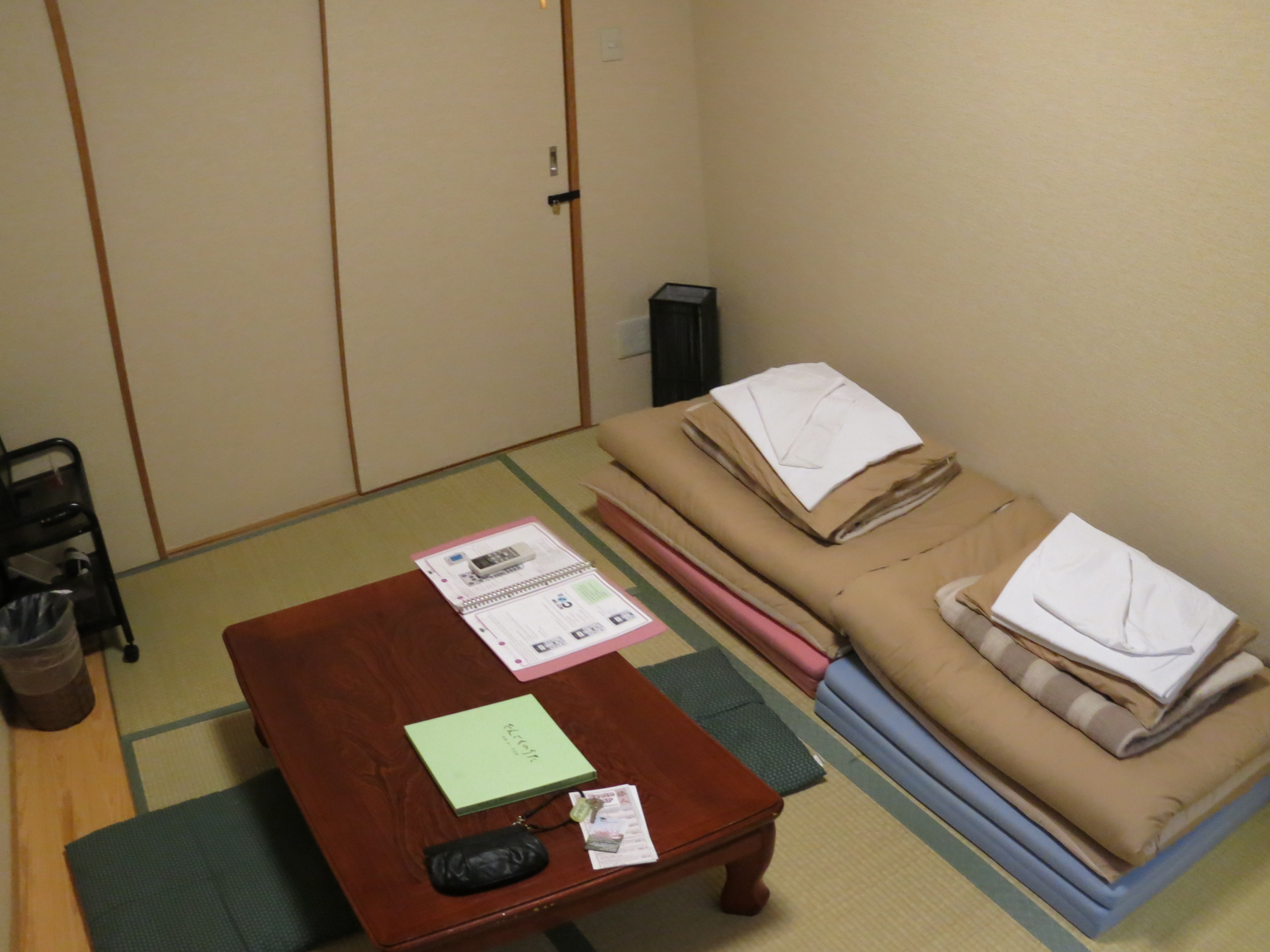
Traditional Japanese

Our traditional Japanese style room at Hana Hostel, complete with tatami floors and mats to roll out for sleeping.

No shoes allowed!

Since guests are not allowed to wear shoes inside Hana Hostel, they have dozens of these slippers upon entering the building.

Categories: City Visits, Destinations, Diversions, Eating, Exploring, Japan, Landmarks, Rail, Relaxing, Temples, Uncategorized, Unusual Experiences | Tags: , , , , , , , , , , | 10 Comments

Trains in Japan

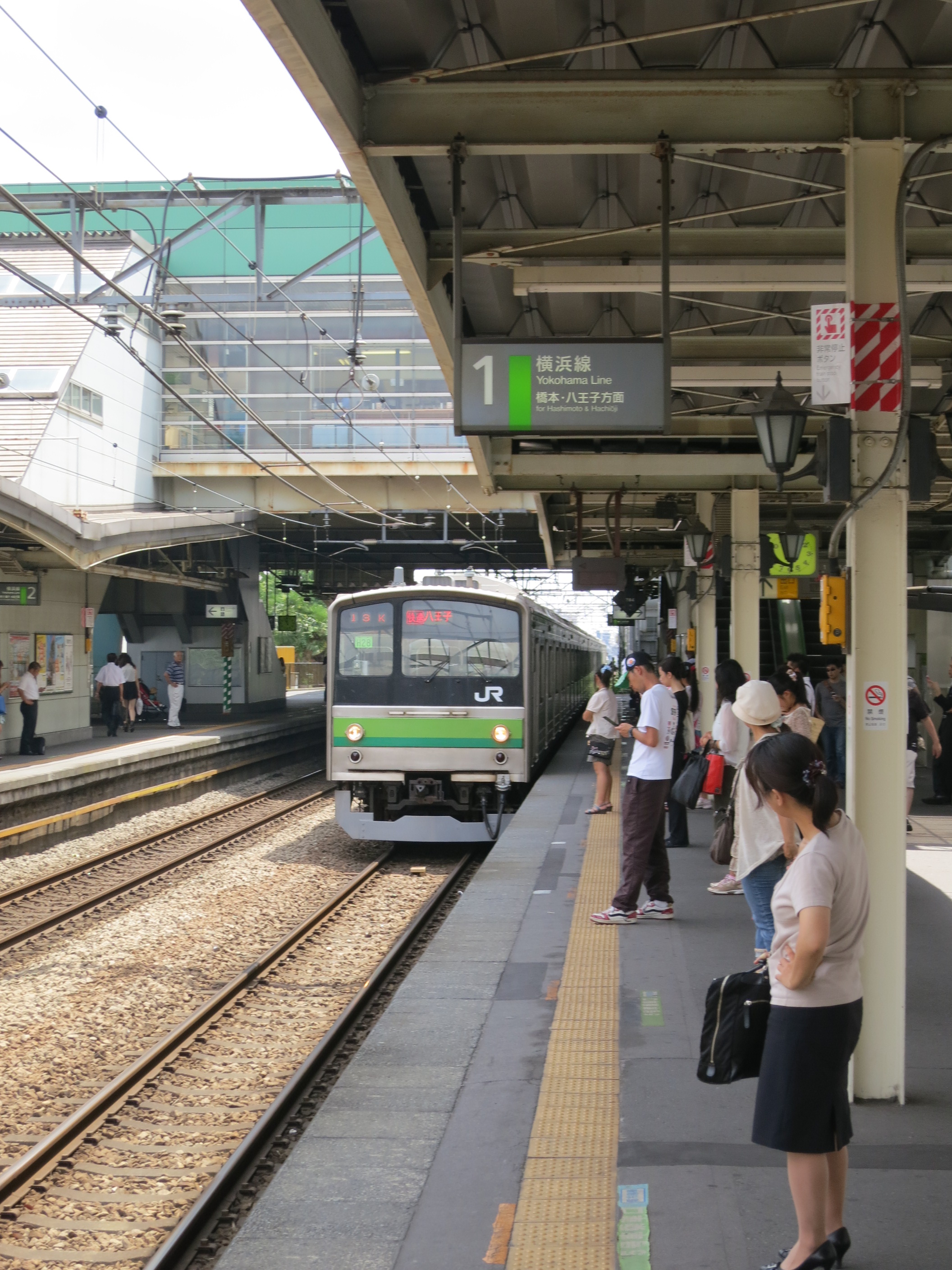
JR Line TainAfter five days in Japan, we’ve noticed a million examples of how things are slightly different here. From the insanely loud Pachinko parlors that resemble slot machines on crack to the ubiquitous bowing. But the one that strikes us over and over is that train travel in Japan is both astounding and outstanding. The traveling Kollineisers have been continually in awe of this vast and extensive rail network that runs smoother than seems possible. In fact, aside from the power of our own two feet, train rides have been our sole mode of transport since arriving. I really, really wanted to avoid throwing up this tired cliched mantra, but it is unavoidable: the trains in United States look like a half-hearted joke when compared to those we’ve seen here. (And yeah, probably Europe too, but we haven’t made it quite that far yet).

Before arriving, we purchased the seven-day Japan Rail Pass (the JR Pass) that must be purchased outside of Japan in advance of arrival. At around $350 per person, that pass wasn’t cheap, but it has already paid for itself twice over. It has been easy to use and one of the best purchases made to date. In fact, short of subway rides, it is the only transportation cost we’ve incurred. And to be candid, it helps that I love trains. I always have.

Phil has no clue where the hell he's goingWe’ve had a chance to ride the regional rail, Subways in Kyoto and Tokyo and even the Shinkansen (aka the famed “bullet train”). Our first experience was on the regional rail – the line of trains that connect city to city in and around Tokyo and continues through the rest of Japan. It starts with a never ending rail map that seems to have infinite possibilities and infinite stops. It took some time and patience, but with the help of some stop names in English, we were able to decode the rail map sufficiently. I’d rather not mention that this was a map that included only PART of the Tokyo system, but I’ll include that admission for the sake of accuracy. So far, we haven’t had to wait on a train for more than, say, seven minutes at most. At first, we chalked it up to some solid train luck, but the reality is that they just always seem to be pulling into the station. All of the train schedules – and even all of the seemless connections from line to line – are planned to such a methodical timetable that it would make the most dedicated clockmaker cry like a baby.

On all the trains we’ve ridden, people line up directly behind the space on the platform where the doors will open. Polite and organized. (Keep in mind, we haven’t been on the subway during rush hour which sounds like it could be much different.) While everyone has a mobile device in their hands, everyone avoids talking on their cell phones. My absolute favorite part is that each train line has their own unique, fun jingle that plays when the train doors are about to close. No boring chimes here, more like friendly little tunes that sound like you just hit the jackpot on a slot machine. And with so many trains, you end up having not just express service, but some crazy, multi-station skipping service called “Rapid Super Express” service. On top of all that, the trains are all remarkably clean. It’s possible we’ve just been riding at the right times, but we’ve seen no graffiti and no trash.

Directions are so clear!Brooke and I spent the last six years riding the NYC Subway just about every day, so we were interested in comparing the two underground labyrinths. To start, each car ends with a giant glass door that allows you to see into the next car. When everyone is seated, you can literally see from one end of the train to the other which makes for a more exposed experience. We’ve also seen doors and sometimes full walls that are on the station platform. They line up with the train doors and, in theory, prevent a rush hour passenger from falling onto the tracks. Finally and probably more importantly, each station has a designation like “N5” or “A10” (letter for the line, number for the stop) and a sign indicating which direction the train on these track will go and what the previous and next stop will be. Genius! That already saved us going in the wrong direction before we even got on our first train! Thanks, Japan!

Ticket Machines are a little trickier when they are in JapaneseSimilarly, the stations have maps indicating the time in minutes to the future stations on the line. Seriously, these are such simple, amazing ideas that Brooke and I need to import ASAP. In the stations, we’ve even managed to see a few women (and a handful of men) wearing traditional Kimono outfits. We’ve seen signs that during rush hour times, there are trains that are “Women Only.” Pretty sure that one is to dissuade the icky gropers. As if that weren’t enough, each station on the regional rail (JR lines) have a nice set of shops and in some cases giant malls attached to the buildings.

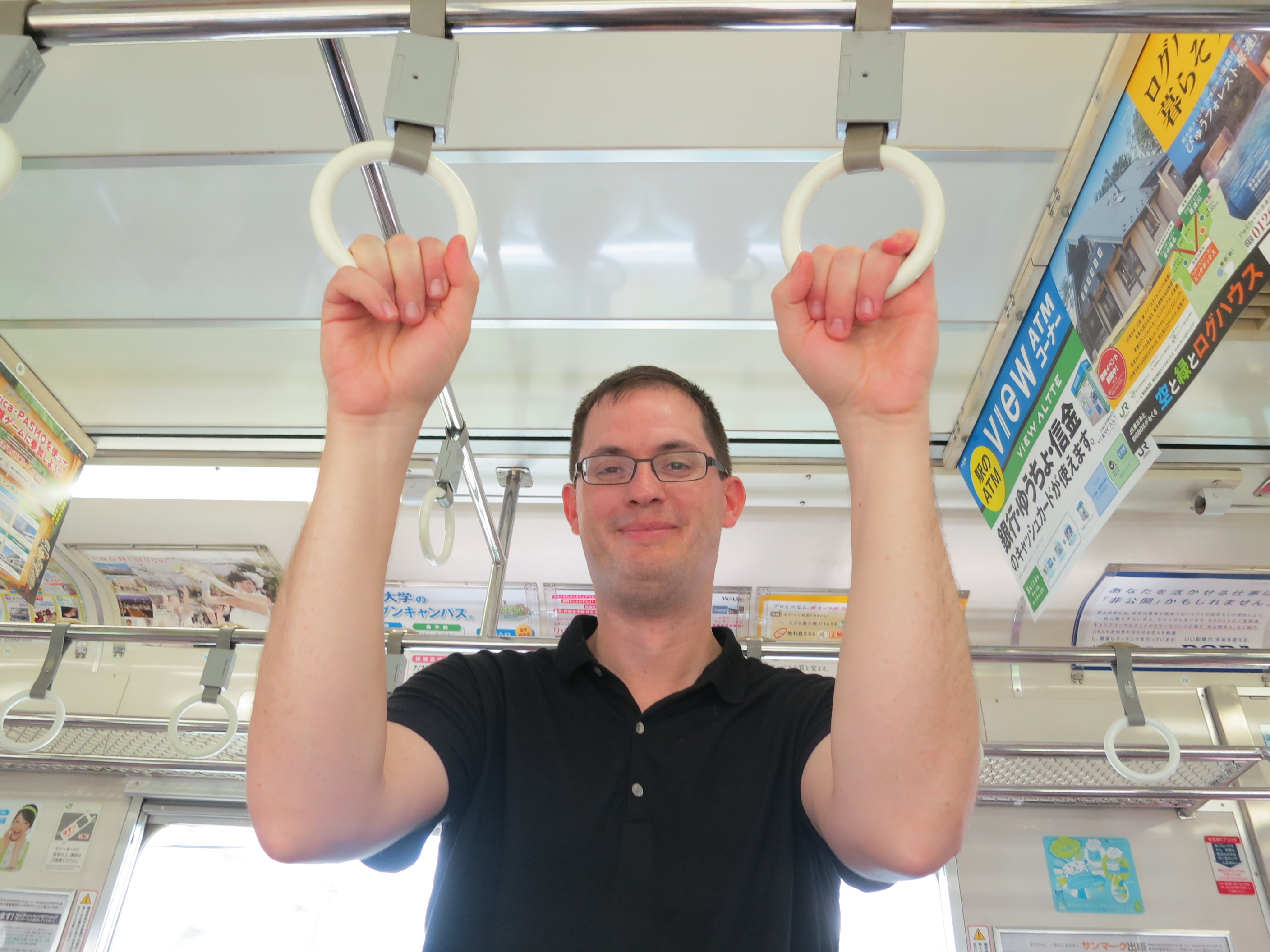
I am a train riding giant!For the nerd in me, It has been a giant thrill learning and mastering a complicated new train system, exploring the trains themselves, and discussing complicated routes with Brooke. Talk about getting some insight. I became dangerous when I finally scored a quality map. It’s been my new best friend. However, we should point out that there is no 24 hour rail service in Japan. We haven’t found any trains that run much past midnight. I guess NYC’s 24-hour subway scores a win in that category. Well, that and you have a more intriguing set of smells on American subways. Overall, it is a simply amazing system. Sensational! But beyond all of that, the single most impressive thing is that Brooke and I haven’t gotten on the wrong train once yet. Trust us, it hasn’t been for lack of trying. Give it time.

-Phil

PS – We’ll do a full write up of the Shinkansen in a few days!

Categories: Doccuments, Japan, Tokyo, Trains, Transportation | Tags: , , , , , , , , , , , , , | 4 Comments

Japanese Baseball!

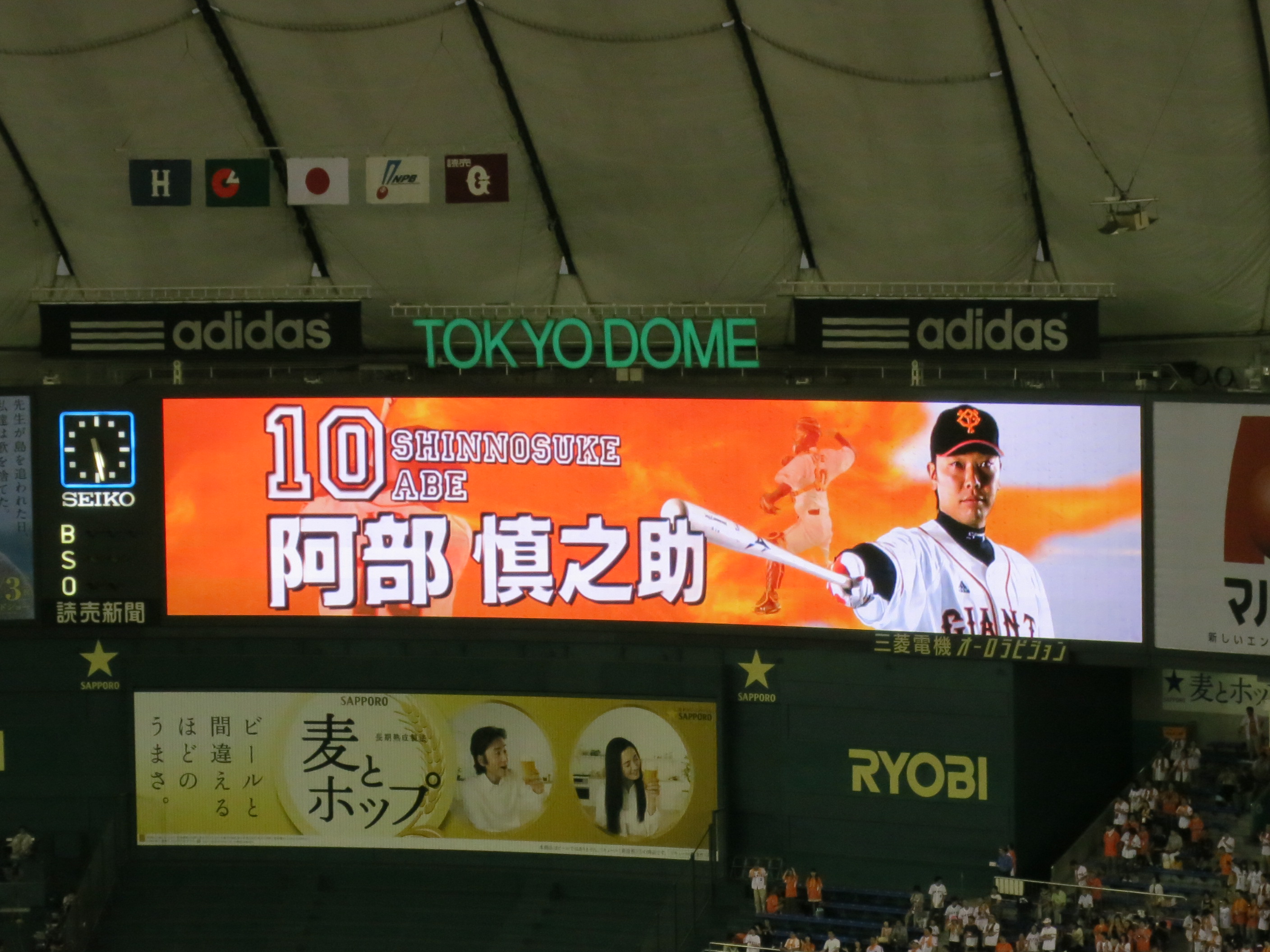
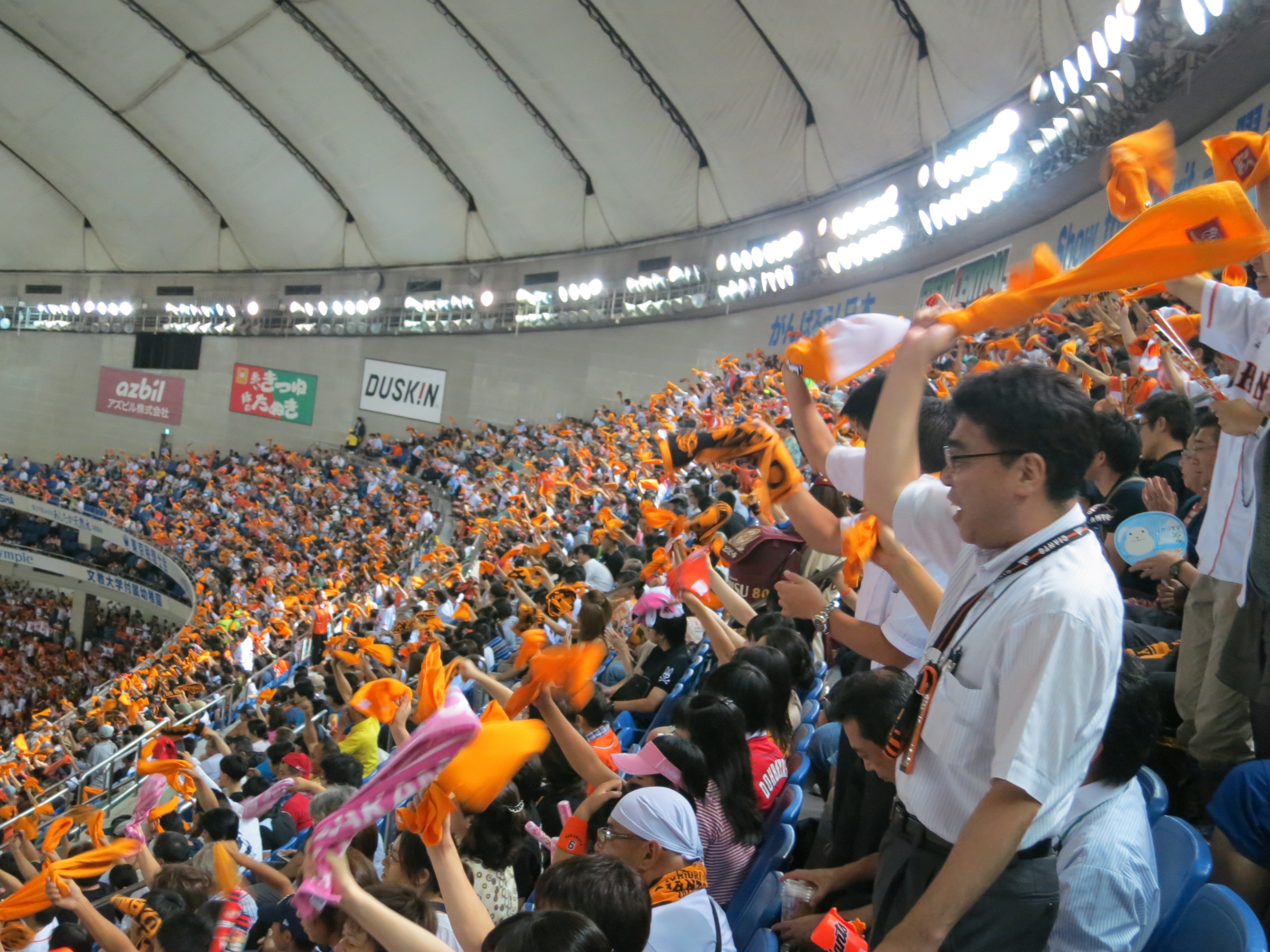
Tokyo Dome ScoreboardIf you had asked me back in June what was a “must do” on our trip, I would have said hitting up some international sporting events. Cricket, Rugby or even Sumo Wrestling. Want to see some sports live and in action. Yesterday, our evening in Tokyo brought us the highlight of the day and one of my favorite moments of the trip so far – attending a Yomiuri Giants baseball game at the Tokyo Dome!

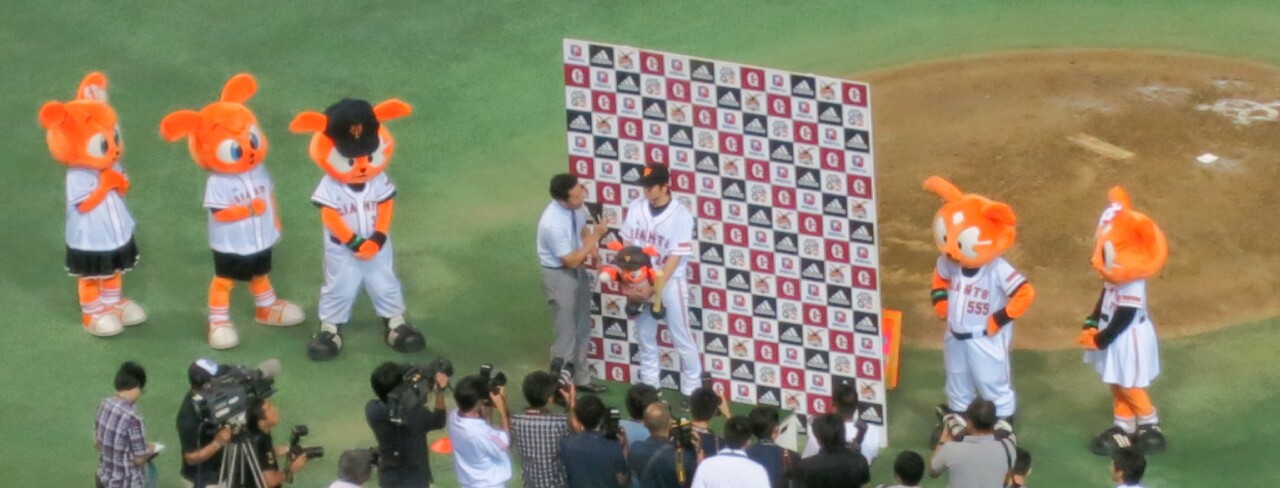
Holy crap on a stick, this was cool! It was baseball…in Japan. Brooke and I had an amazing time watching the game against The Hiroshima Carp (one of only 12 other teams in the league.) Wow, what an experience. Our seats were relatively high up, but the entire space was relatively small for a dome so we could see it all. The Giants wear the exact same colors of the San Francisco Giants and the team had six mascots running around the field. Six of them! Also of note were that ALL of the beer vendors were women. There were working hard: hustling up and down the aisles with min-kegs strapped to their back and big smiles and colorful outfits. And, yeah, the beers may still cost $10, but at least it was a high quality Asahi brew served by a very cute girl!

...And there were two more mascots after this!Tigers fans are loud and amazingBut the most eye-popping part of the baseball game was the crowd. Through every inning, a small brass band and loud drum led the entire stadium in a wide variety of cheers, songs and chants. Hard to do it justice in this post, but the enthusiasm and energy was infectious and constant. Every batter had his own song and when a homerun was hit – look out – the roof almost came off the place. I’ve never seen anything like it! It was like a college football game with a drum corps and even a vocal (but polite) visitors section. Remarkable. I love baseball in the states, always have, and now I think I love baseball in Japan.

The game play was exactly the same as in America and it was a high-quality competitive match up. As good as any MLB game (and there were some American players on each team). No 7th inning stretch, but there was plenty of singing. We never could find the bullpen- believe it to be behind the stands. And, sure, the Tokyo Dome is a little bit on the older side, but who cares?  With a nearly sold out crowd and those never-ending chants, the good guys won 5-0. To celebrate the win, the home team lined up and bowed to the fans! We never knew what was going to happen next. After the game, player #25 Takahashi was honored for hitting his 300th home run. At least we think that’s what was going on…baseball may be an international language, but the signs and announcements were still in Japanese. After a small ceremony, he rode on the back of a golf-cart and threw out several autographed baseballs to eager fans waiting in the outfield stands! The game is so fan friendly that it’s dizzying. A night out at the ballpark was anything but ordinary and an absurd amount of fun. Go Giants!

-Phil

Brooke and Phil at Tokyo Dome!

Categories: Destinations, Eating, Exploring, Japan, Landmarks, Self Guided Tours, Sports, Temples, Tokyo | Tags: , , , , , , , , , , , , , , , | 5 Comments

Tokyo, Towers, Temples and Back Alley Restaraunts

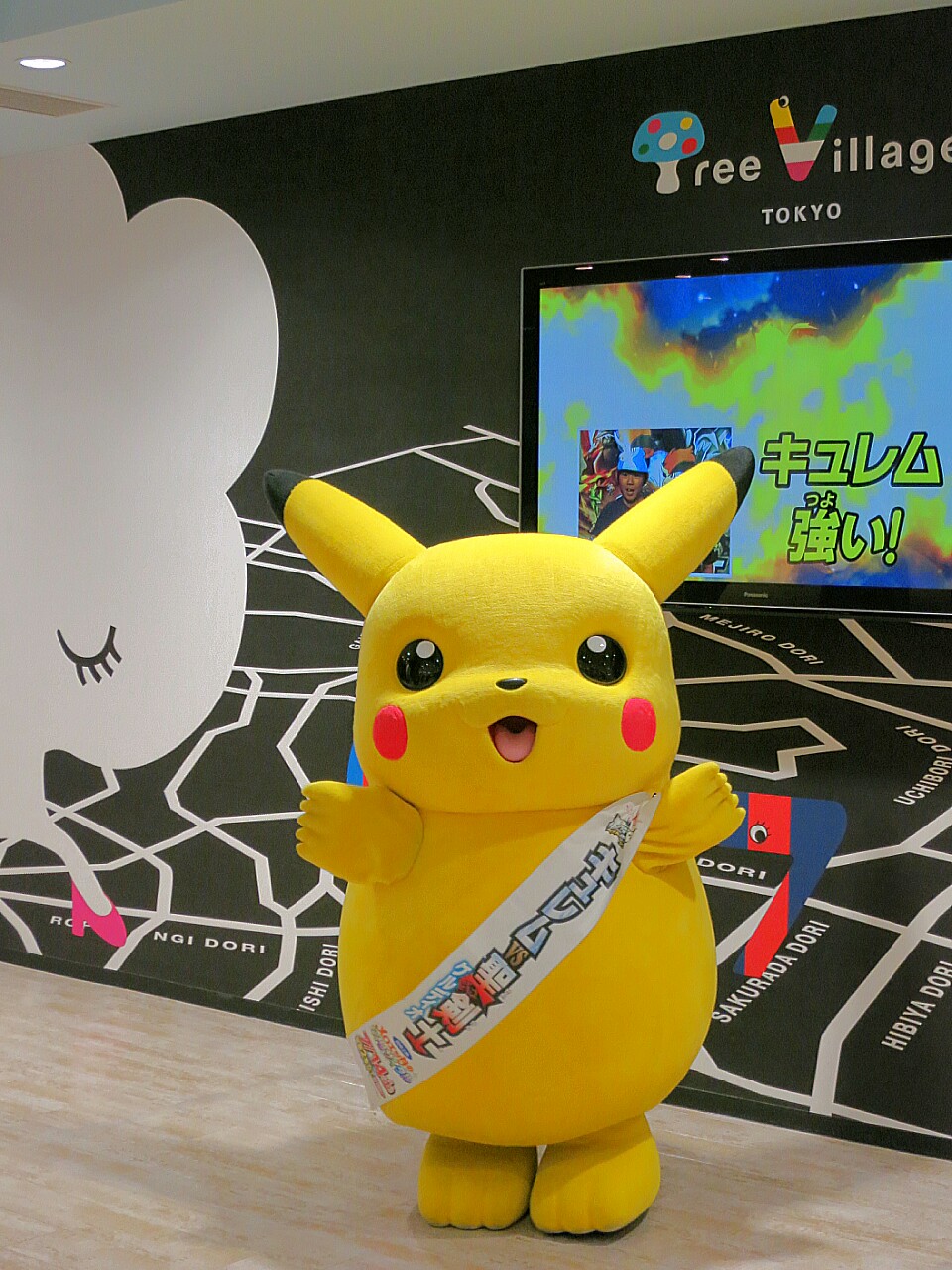
Our first Japanese TempleI begin this update from Japan by asking for your forgiveness in advance. This is going to be a long blog post. There is just no way around it. Our second full day in Japan was so full and amazing, that we have a lot to share. Today was our designated Tokyo day and the entire day was spent exploring just a bit of this mammoth, expansive city. Even had an encounter with a giant Pikachu. We spent the better part of 13 hours absorbing Japanese culture from district to district. Lucky for us, you can’t really go wrong in Tokyo. With a town this gigantic, just about every neighborhood offers something capitivating, interesting and worth mentioning in a ridiculously long blog post.


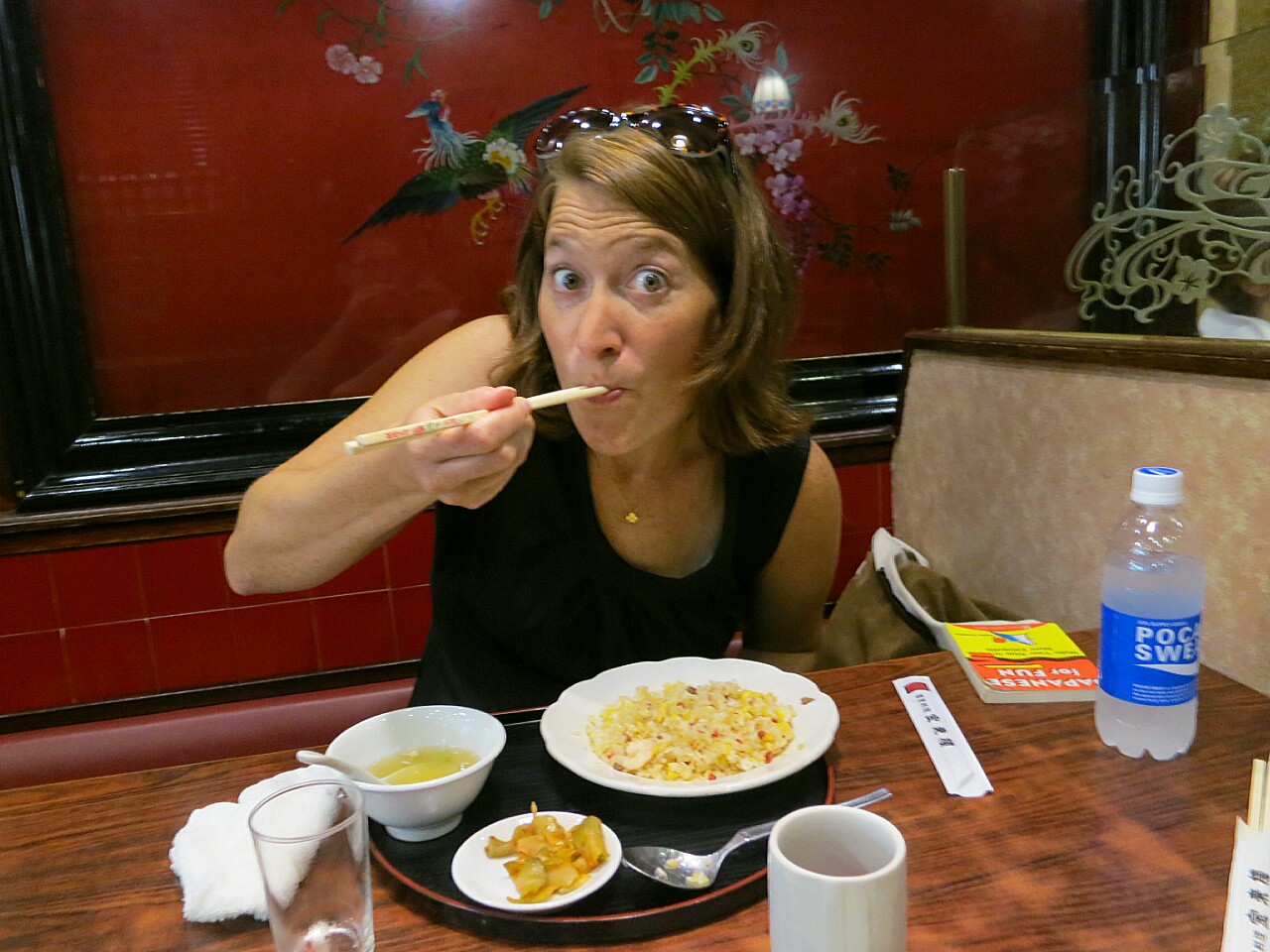
Eating in TokyoWe started our day in the well-visited district of Asakusa which is likely best known for it’s Senso-Ji temple complex and hundreds of tiny, cute shops in Nakamise-Dori. Once off the train, we grabbed lunch at a beckoning seemingly-Japanese restaraunt. The language barrier struck again because I’m pretty sure that we might have actually eaten at a Chinese restaurant. The jury is still out. We had pangs of regrets later on because we passed dozens of food booths that we’re hawking delicious smelling, exotic street meat. We strolled from shop to shop, investigating endless keepsake and souvenier options (we’re overdue for some new chopsticks and Brooke thinks I would look good in a Kimono) and enjoyed the sites despite the scorching sun. We even saw some interesting plaques that gave us some handy pointers on how to Ninja Proof our new home in Louisville.

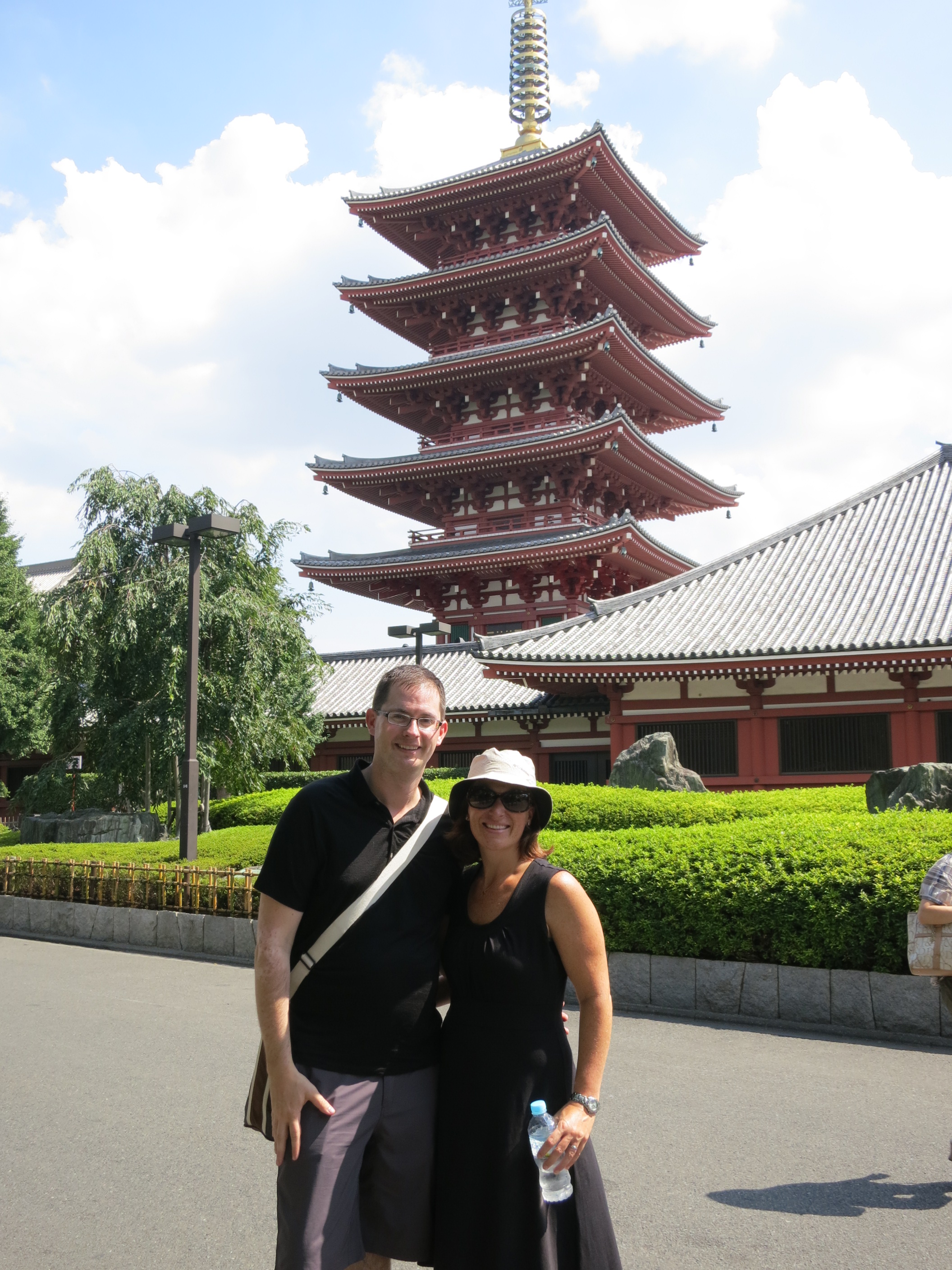
Five Storied PagodaWe finally happened across the giant, bustling temple complex. Although rebuilt in the 1960’s, Senso-Ji had an impressive collection of gates, temples and pagodas. We even took part in some rituals when we threw 100 yen in the well, said a prayer, and received a fortune based on the Japanese character for luck. There were also rituals involving burning incense and washing with temple water that were popular among the visitors. The temple complex, complete with giant lantern that could replace Lady Liberty’s torch, was a great visit.

From Asakusa, we set our sites on the newly-completed Sky Tree Town tower. Opened this past spring, Sky Tree is…well…a giant tower. Impressively tall, notably modern and complete with an entertainment complex that includes an aquarium, planetarium and crazy toy store that looks like a Tim Burton dream (this is where I saw Pikachu). The tower was packed with excited, massive crowds to fill every space. The cost to get to the top of to the tower was enough alone to dissuade us, but if that didn’t do it, the ridiculously long line would have.

The Sky Tree Town Tower Thing

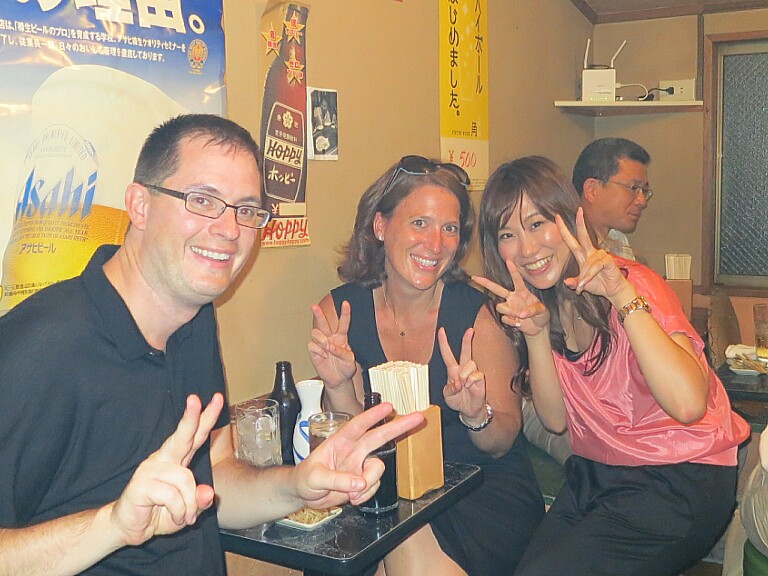
Two distinct nickname: Memory Lane or Piss AlleyOur last stop of the night, was in the neighborhood of Shinjuku – with 3 million commuters going through here each day, it is home of one of the city’s largest train stations. The hustle and bustle of Shinjuku at 10:30 PM on a Friday night makes Grand Central Station look like a backwater bus stop. Once again, we learned that just taking that extra step around the corner will take you all kinds of places. We looked down a narrow and appealing alley and ended up in what they call a Yakitori style restaurant. We learned later that the alley has been called both “Memory Lane” and “Piss Alley” – which should tell you something right there. After being beckoned into a itty-bitty restaurant smack-dab against a dozen clones, we were ushered upstairs to an even smaller dining area that barely held eight people.

Kempai for New FriendsThis was a dinner like no other made up of kebabs and long sitting crowds. You know you’re having an authentic experience when the other guests are so fascinated by your presence that they ask to take pictures of YOU! The various chicken kebabs we’re tasty and “oyshikata.” When we ordered beer, we received a “White Hoppy” and “Black Hoppy” in a bottle. The waitress, in broken English, suggested we mix it with at least 1 to 2 parts water that she had brought to the table. I loaded my glass with this water, poured in the beer and sampled. Hilarity (and a touch of drunkenness) ensued when it turns out that the water….was Sake. Let’s just say it was a much stronger “beer” than I was expecting. On the long train ride home in the middle of a beautiful summer night, Brooke and I reflected that the Yakitori were shady enough to be fun, but not shady enough to make you nervous.

Today was the epitome of what we want out of our Round The World trip. Sensational new discoveries and unexpected cultural experiences. Just a great day! And it is only our second day in Japan! We’re finding our way around with greater ease by the hour. The endless amount of well marked signs is a big help. Although it’s an interesting puzzle trying to find a pattern of why some signs are in English and why some have zero English. As a bonus, we’ve even able to master a few handy phrases. As we shut down for the evening, I asked Brooke, “What will see tomorrow?” Her answer: “Everything!” Tomorrow: Kyoto!

-Phil

Gates welcoming us to shopping/temples in Tokyo

one small restaurant

Table for 10? How about restaurant for 10! I look like a giant in this place…

Pika Pika

Holy crap, it’s a life size, hugable pokemon. Pika Pika!

Categories: Destinations, Eating, Exploring, Japan, Landmarks, Self Guided Tours, Sports, Temples, Tokyo | Tags: , , , , , , , , , , , , , , , , , | 7 Comments

Yokohama, Japan

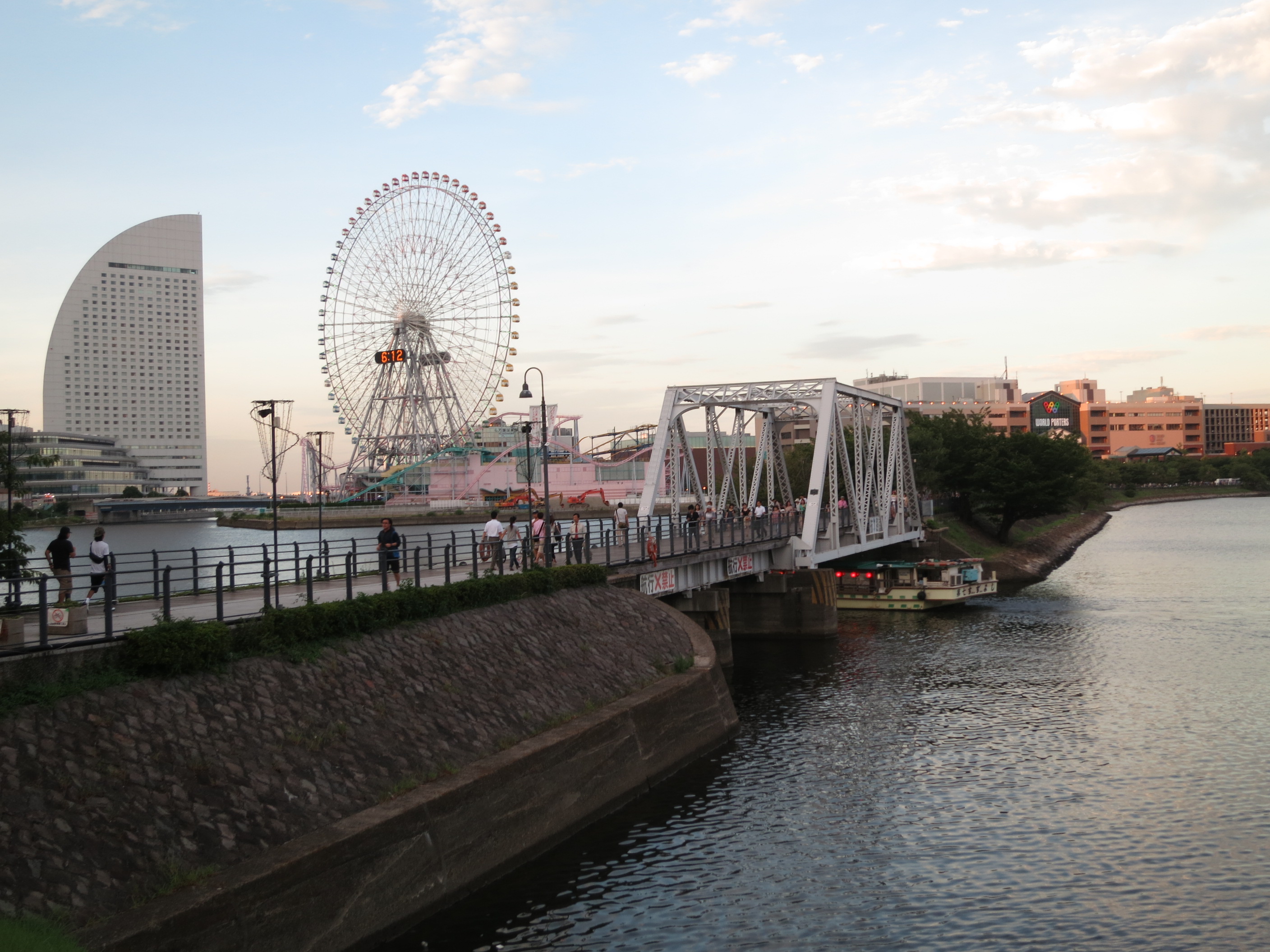
Yokohoma!There is no doubt about it…we are definitely in a foreign country. Sure, in New Zealand there were cute little differences like saying “toilet” rather than “restroom,” but that was nothing compared to Japan. Okay, it’s true that Starbucks, McDonalds and KFC are almost inescapable, but otherwise the vast differences have quickly thrown us into sensory overload. It has been great, but very intimidating.

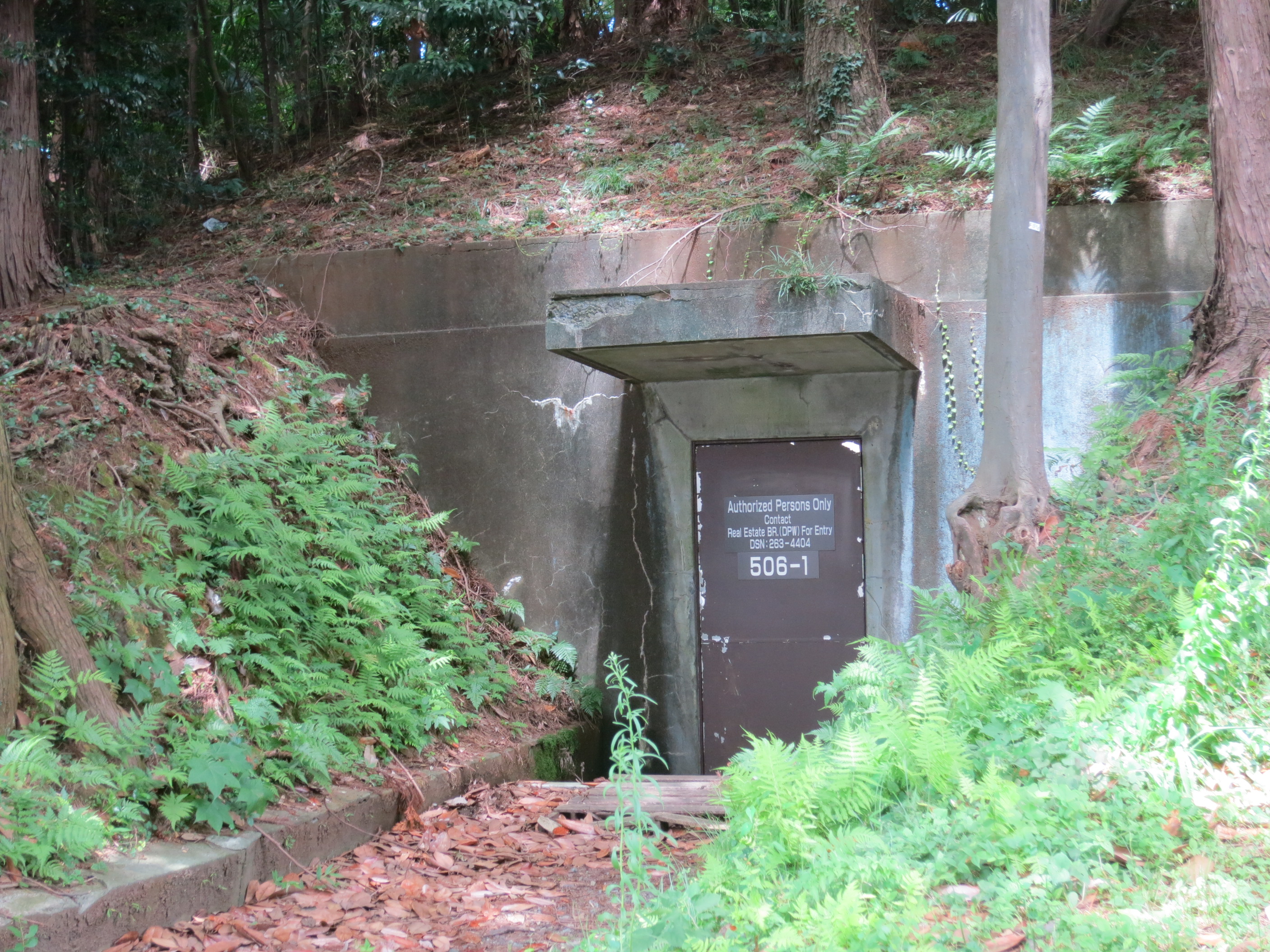
Ito's hideout

On the base of Camp Zama, Gaye showed us this: A secret (unused) bunker for the Japanese Emperor during World War II. When Americans claimed the based, this was found!

Today, we took care of a little bit of necessary business before really sinking our teeth into Japan. Gaye, my cousin who is the most gracious hostess ever, drove us around Sagamihara City and took us over to Camp Zama, the U.S. Army Base where she has taught for the last 25 years. Here, we visited the tourism office, stopped by the ATM and had a nice lunch by the golf course. There were far more Japanese working on the base than I expected, but overall US dollars could be used and in a lot of ways it did feel very American. We can understand why Gaye has chosen to stay here for most of her adult life–it is the perfect balance of living in a foreign country, but still having your own culture close by. However, this American culture stopped as soon as we said sayonara to the guard at the gate.

One of our biggest feats today was figuring out, at least a little bit, the train lines. Our pre-trip research led us to the JR pass – a train pass which allows us unlimited access to the national JR train line for seven days. This isn’t a subway, it is more like a combination of regional rail and Amtrak. The train line will get us around Tokyo and its suburbs, but also travels to all areas of Japan. Luckily, Gaye lives right next to the Sagamihara stop on JR Yokohama line. We decided to venture to Yokohama, a city of 3.5 million just south of Tokyo. Gaye walked us to the station and pointed us in the right direction, which actually turned out to be the wrong direction (to her credit, she usually uses a different train line–there are SO MANY trains here). Luckily, Phil and I checked the map, and even though most it is written in Japanese, the station names are also written in English and everything is well marked with arrows and time tables.

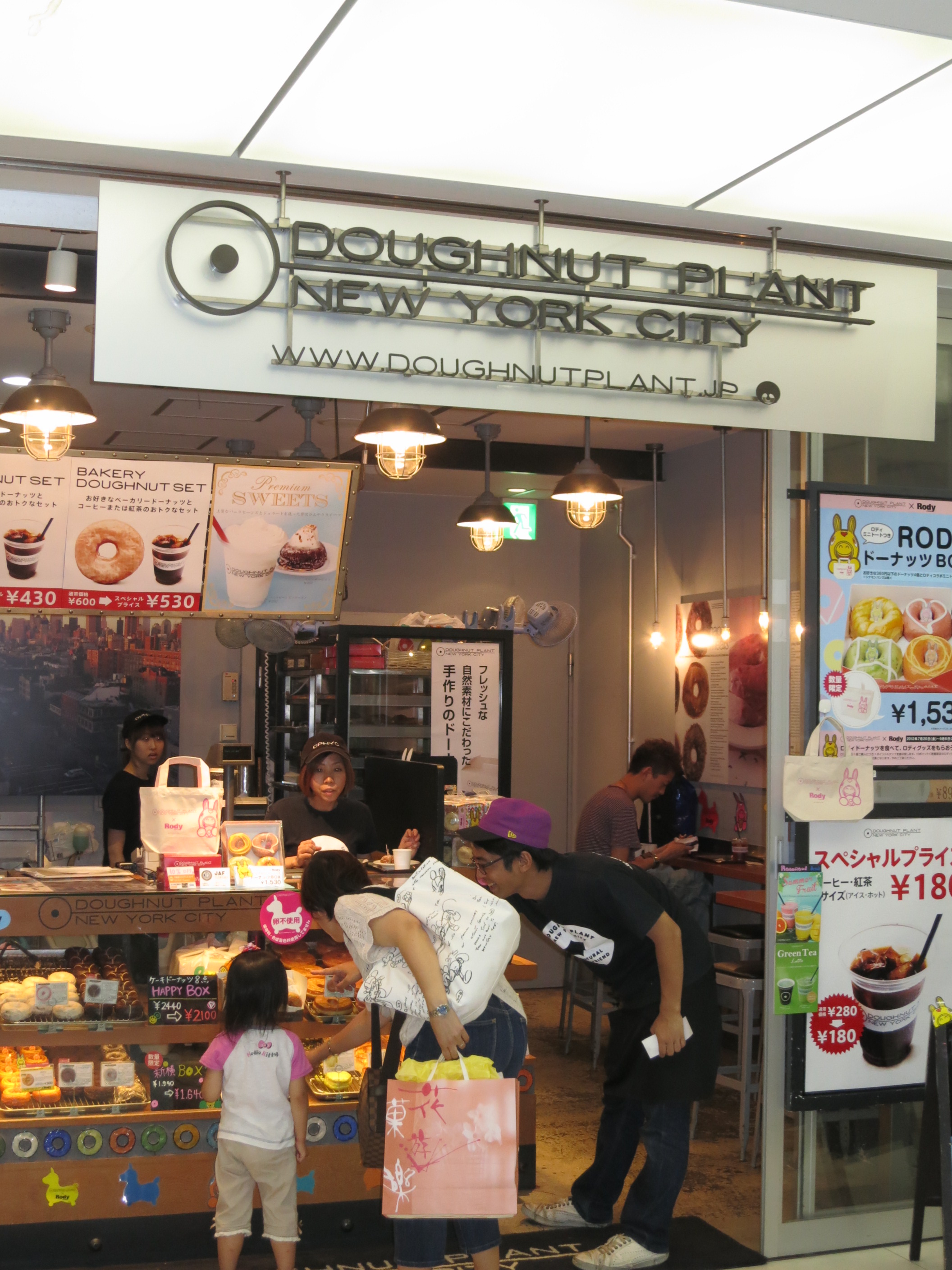
Donut Plant Tokyo

Amazingly, we never made it inside the Donut Plant in New York City, but to our shock we saw this store at the ShinYokohana Train Station!

Once on the train, it wasn’t much different from riding the train in New York–it is filled with people weary from a long day of work or tired out from the heat who just want to get where they are going. Except for us, of course. We were bright eyed and smiling, reading every sign we could to make sure we were headed in the right direction. The train moves fast, so catching the one word written in English on the sign was not as easy as we thought it would be. Luckily, we made it into Yokohama with no problems at all–we didn’t even have to ask for help!

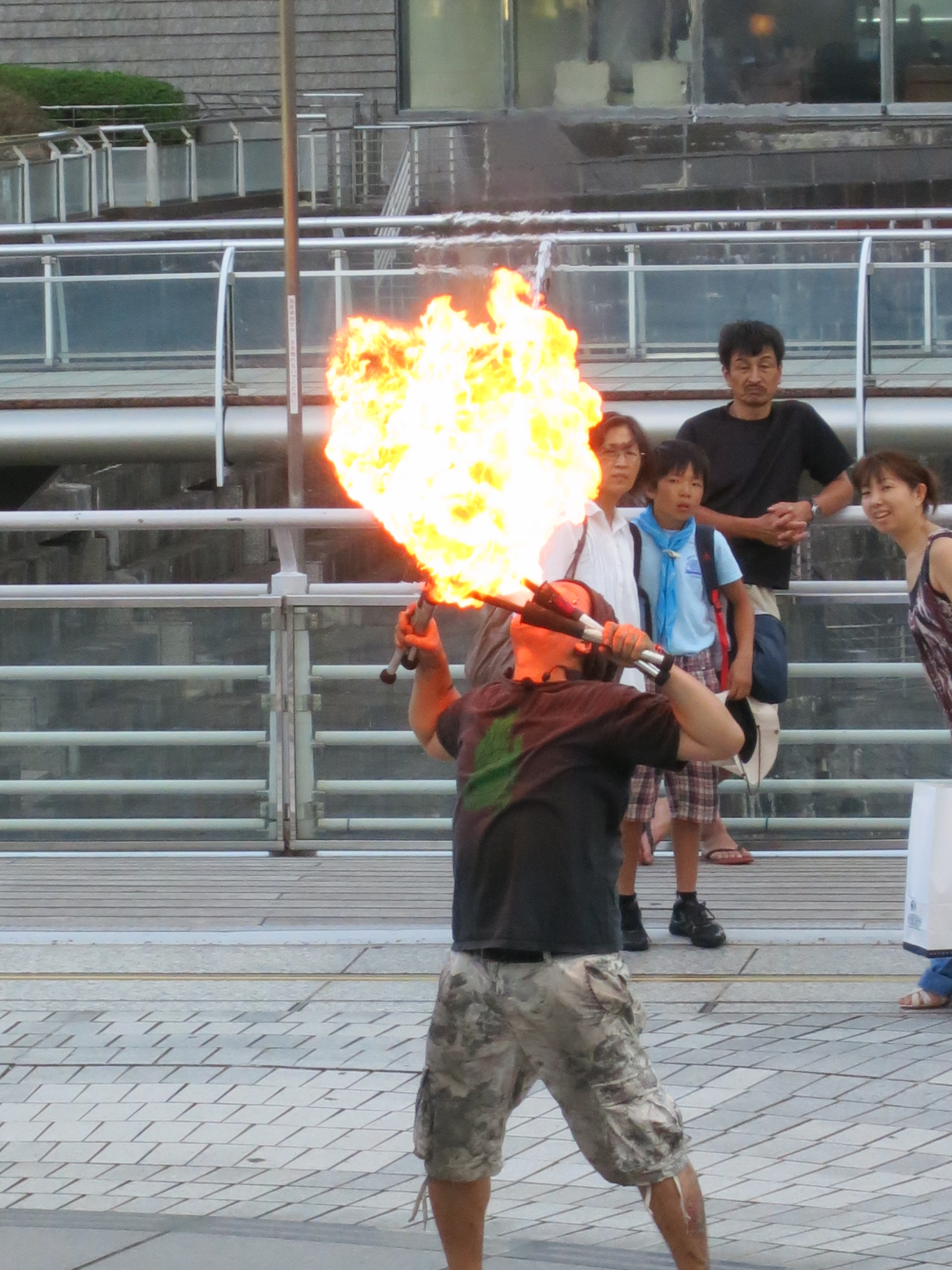
Once off the train, we did what we do best–we wandered around looking for interesting things to see. It took us all of two minutes to happen across a large crowd of people gathered on steps watching a street performer. This wasn’t the same crappy dance group you see in the Times Square subway station who spends 15 minutes gathering a crowd to watch their performance but they never actually do anything. No, this guy was pure entertainment. He was cracking up the crowd, telling jokes, singing little bits–sure, we had no idea what he was saying, but we laughed when everyone else did and joined in clapping when it seemed appropriate. Adding onto his joke telling, he began juggling–of course. But then he lit the juggling sticks on fire, then he juggled fiery sticks while balancing on a rolling cylinder, then he spit fire! It was awesome! Being a part of this crowd of all Japanese people, and having no idea of the words but still getting the message just the same, was really neat.

Crazy Street Performer below Landmark TowerWe left the performer and wandered around Yokohama taking in the sights, the coolest of which was Yokohama Stadium. We know the Japanese love their baseball, and man was it obvious just walking by the stadium. A game had just begun and already the crowd was chanting, cheering and singing. The energy from the crowd inside was electrifying the air outside–it was almost contagious. As we walked around, we saw a big screen set up outside the stadium with tables, chairs and food vendors where people could sit and watch the game without having to buy a ticket and go in. The atmosphere was awesome, and got us even more excited for tomorrow when we get to have our experience at a Tokyo Yomiuri Giants baseball game at Tokyo Dome. We can’t wait to tell you about it!

For now, we go to bed with Japanese phrases swimming in our head, yen conversions fogging up our brains, and the question of how we can possibly retain all that we’ve learned confounding us.

-Brooke

Japanese Vending Machine

There are vending machines everywhere! For Cold Drinks, Hot Drinks and more. All sorts of unique goodies stocked inside

Categories: Destinations, Discounts, Diversions, Family, Japan, Self Guided Tours, Tokyo, Trains | Tags: , , , , , , , , , , , , | 3 Comments

Blog at WordPress.com.