Transportation

St. Petersburg!

Naval ShipOne of the main reasons we chose to embark on a nine night Baltic capitals cruise was to take advantage of the opportunity to visit Russia. Obtaining a Russian tourist visa on your own is actually quite difficult, so we decided to make it easy on ourselves and book shore excursions organized by Norwegian Cruise Line for our two days in the old Russian Capital of St. Petersburg.

Immediately upon arriving in St. Petersburg we started to hear talk of Peter the Great. He is the founder of the city which he modeled off other European cities like Amsterdam. Because of this, it doesn’t have a lot of traditional Russian architecture, and instead has several canals, fountains and brightly colored buildings reminiscent of old cities in Western Europe. We learned so much in our two days and only wish we would have had some time to explore it on our own.
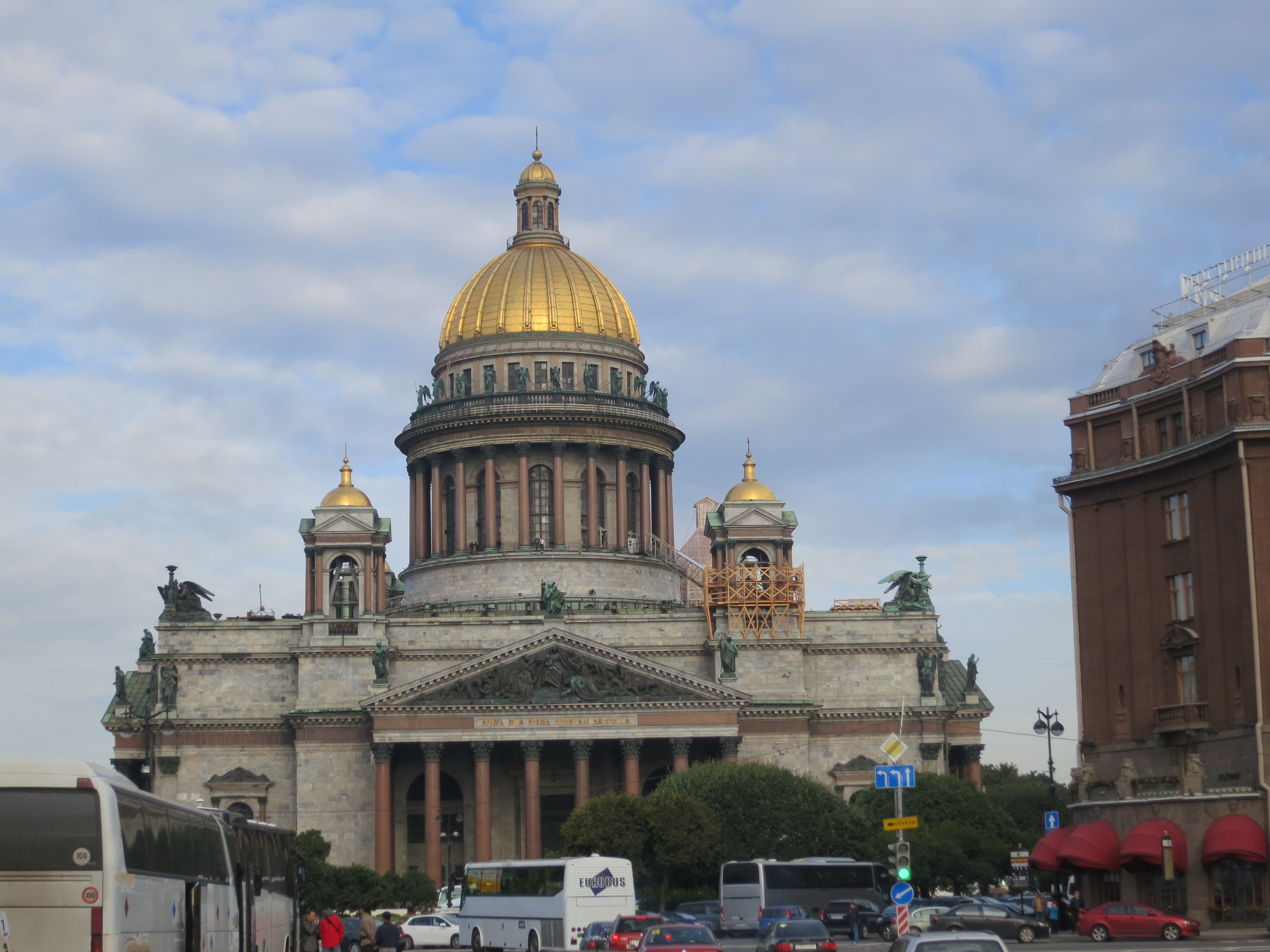
Originally called St. Petersburg (after Saint Peter, not the Russian Czar Peter the Great), this city has been known by a few different names. It was called Petrograd for about ten years in the early 1900’s, until the name changed to Leningrad when Russia became the U.S.S.R. and was ruled by the Bolsheviks. It stayed Leningrad until 1991 when the local government finally decided to let the people decide on the name. Apparently there was some surprise that the people voted for the name to be changed back to St. Petersburg. Our tour guide quipped that her grandmother was born in St. Petersburg, lived in Petrograd, also lived in Leningrad and died in St. Petersburg and she never even moved homes!

Our first day began with a river cruise through the center of the city. Everywhere you turn there is another museum, cathedral, park or historical monument. Most notably is the Hermitage, the largest art museum in the world with over three million pieces of art. We would have loved to see it, but each excursion included a visit allotted 4-8 hours inside, and that is just a bit too much art for us. The museum was originally built for the nobility, but has become public over the years. It is housed in the Winter Palace, and its surrounding buildings where the Romanovs as well as other nobility used to reside. It is said to be impossible to see it all in two days, but we met several art enthusiasts who were willing to give it a try.

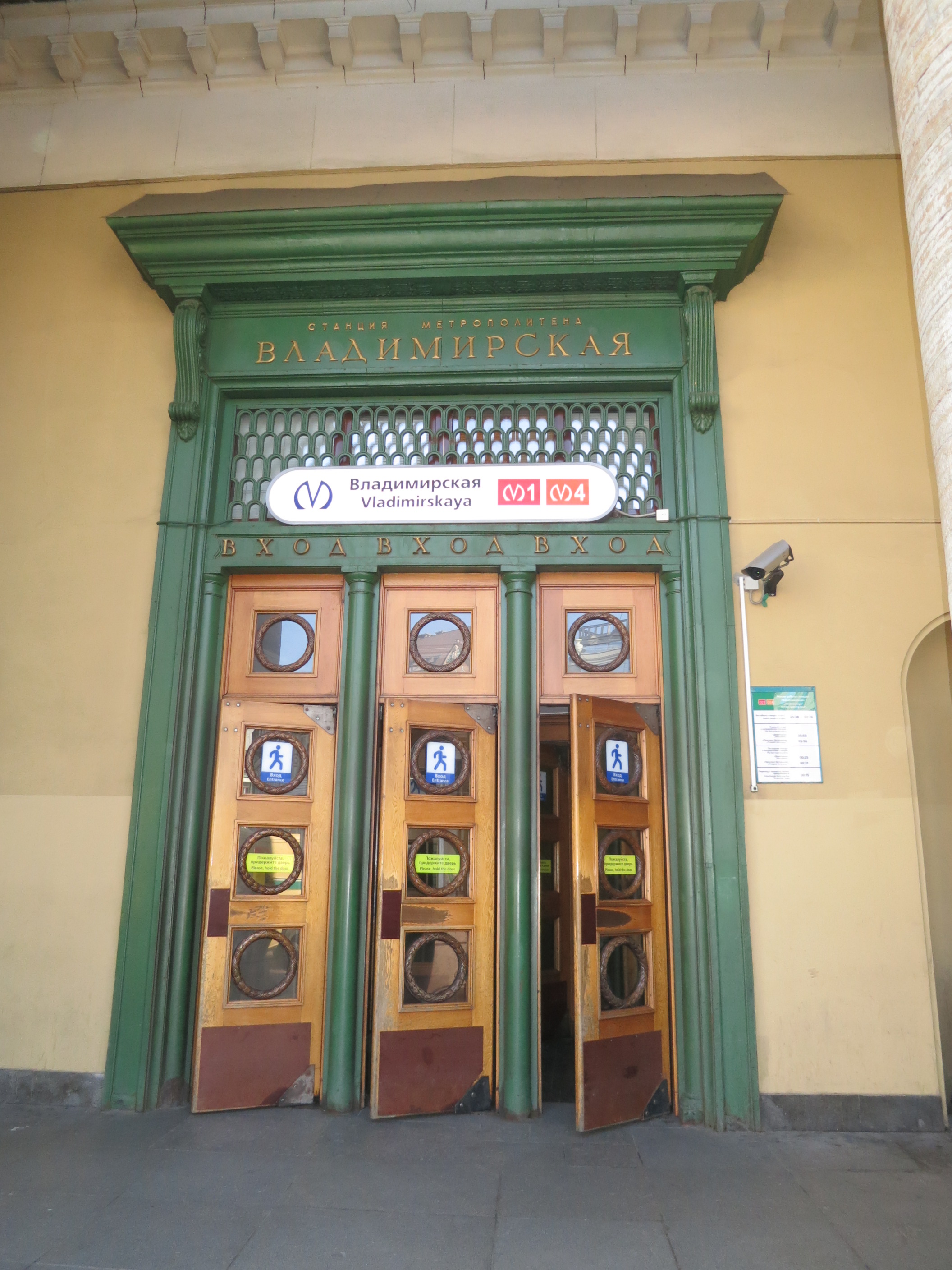
Entrance to the subway. We were actually allowed to take pictures of this!

We did not go to the Hermitage, but after visiting other landmark institutions we discovered that they are very particular about people taking photographs here. All of the museums charge tourists an additional fee to take pictures – once you have paid they give a colored sticker to place on your camera, otherwise you are liable to get fined or have your camera taken. The policy is even more strict on the subway – here, photos are not permitted in any of the stations! You can take them on the train, but none on the platform or in the buildings. This is such a shame, because their subway stations are absolutely beautiful. They are artfully designed, with huge marble columns and detailed decorations along the ceilings. It reminded us a lot of the beauty of Grand Central Station in New York City. There is even a large sculpture of Peter the Great which is set up like an art exhibit, blocked off by a velvet rope. Phil and I couldn’t help but think that this would last all of two hours (tops) in a New York subway without being vandalized and ultimately destroyed.

Probably the most iconic place we visited taught us an important lesson: It is very dangerous to be a czar. Sure, there is something appealing about the idea of being the leader: you get to rule the country, you have power and money and influence, but I don’t think it is worth it. Every other story we heard was about the killing of one czar or the brutal murder of another. One of the most notable stories is the centerpiece for the Spilled Blood Cathedral. Among a small number of buildings in St. Petersburg to look “Russian”, it was constructed on the site where Czar Alexander II was assassinated. Inside the cathedral, visitors can see a memorial directly above the spot where his blood was spilled–hence the colloquial name Spilled Blood Cathedral. The building itself is magnificent. It’s walls are lined with painstakingly detailed mosaics telling the stories from the Bible. In fact, this cathedral holds the largest square footage of mosaic art in the world. There was a notable absence of pews and when we inquired we were informed that parishioners are expected to stand or bow on their knees throughout the length of the service. Thanks, but I think I’ll pass.

Besides the plethora of cathedrals, museums and stories about Peter the Great, one of the most prominent topics of discussion was the weather. It is drab, dreary and depressing much of the year. Both of our tour guides emphasized the fact that St. Petersburg is on the same parallel as Anchorage, Alaska. Of course, it gets extremely cold and snowy, but even worse than that, they have less than 55 days of sunshine per year. Yikes! In the winter there is very little daylight, therefore finding distraction is important for the local people. Stereotype or not, drinking vodka seems to be the favorite distraction of most of the people here, and we got to experience it first hand.
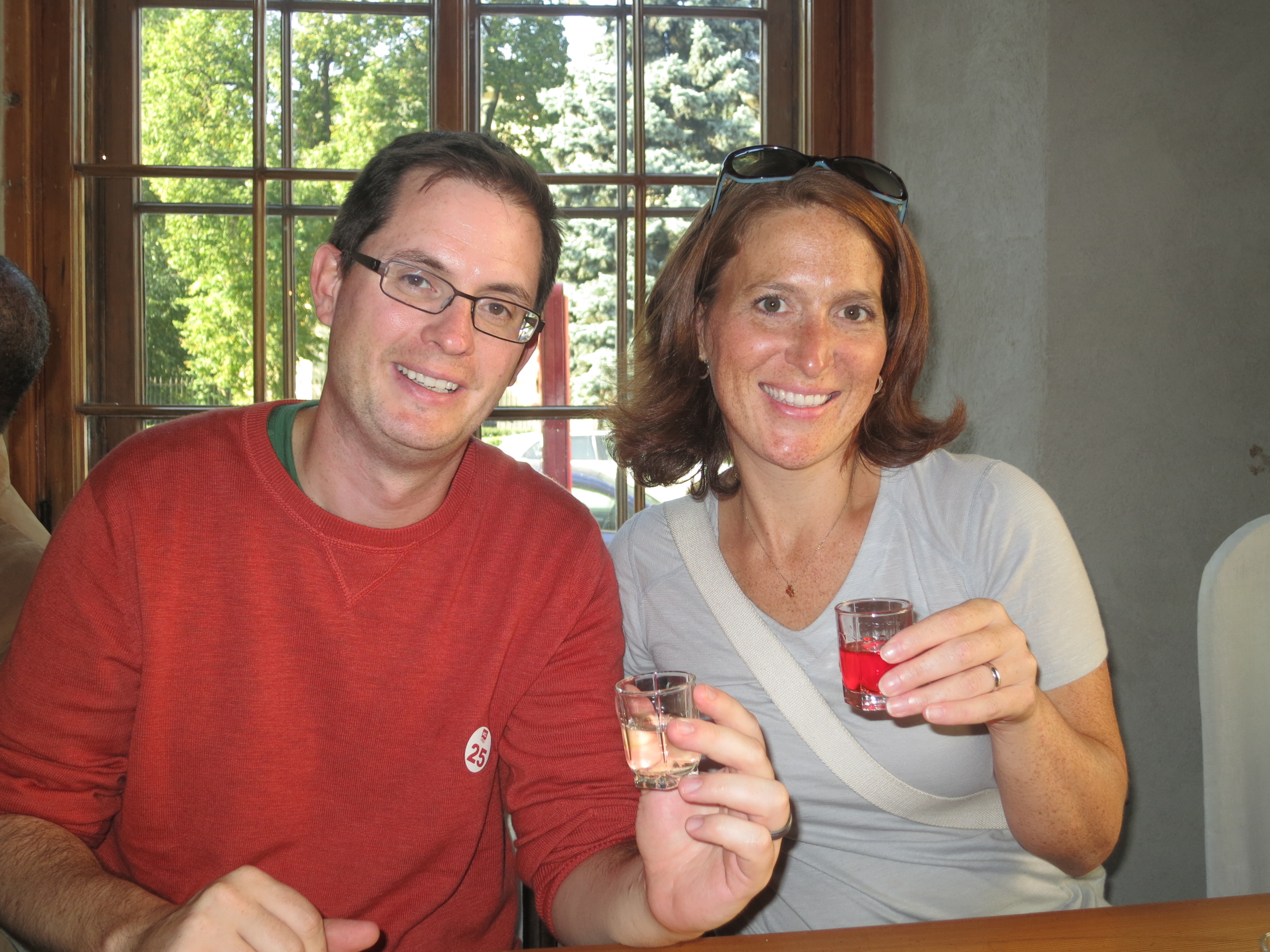
Our shore excursion on the second day in St. Petersburg was called “St. Petersburg through the eyes of the locals.” So, we did what locals do–we shopped at a mall, went to the farmer’s market to sample pickles and cottage cheese, and rode the subway. However, the most distinctly local thing we did was have a vodka tasting. That’s right! At the end of our tour, we went to restaurant where three shots of vodka were set up for each of us. There were three different kinds–horseradish, walnut, and cranberry vodka. They also set out some small pieces of toast and pickles to help wash it down. We had about 30 minutes to down all 3 shots, which was not a problem for most of us. However, it became apparent pretty quickly that some of the people in our group hadn’t done a shot of liquor in a while (not to mention three). The vodka was decent, I personally liked the walnut flavored one the best. However, what surprised us most is that there was no water on the table. No soda, no juice, nothing to wash the vodka down. This is so much different than it would have been at a tasting in America with all of its rules and regulations. Once 15 minutes had passed, most of the shots were gone and the stacking (and crashing) of shot glasses began. The crowd was certainly livelier after the shots, feeling warmer in both body and spirit, and we all understood the important role vodka plays in a country that can have such depressing weather!

All in all, St. Petersburg was a blast. We especially loved getting to see the magnificent subway system and learning a bit more about Russian history than we knew before. I’ll leave you with one more interesting note. One of the men on our tour asked the guide if Russia is a democracy. She said, “We are supposed to be a democracy, but are we? I don’t know.” She continued to talk about Vladimir Putin and extended term limits with cynicism and candor. It definitely showed us that perhaps the country has not progressed as far as Russia would have the world believe.

-Brooke
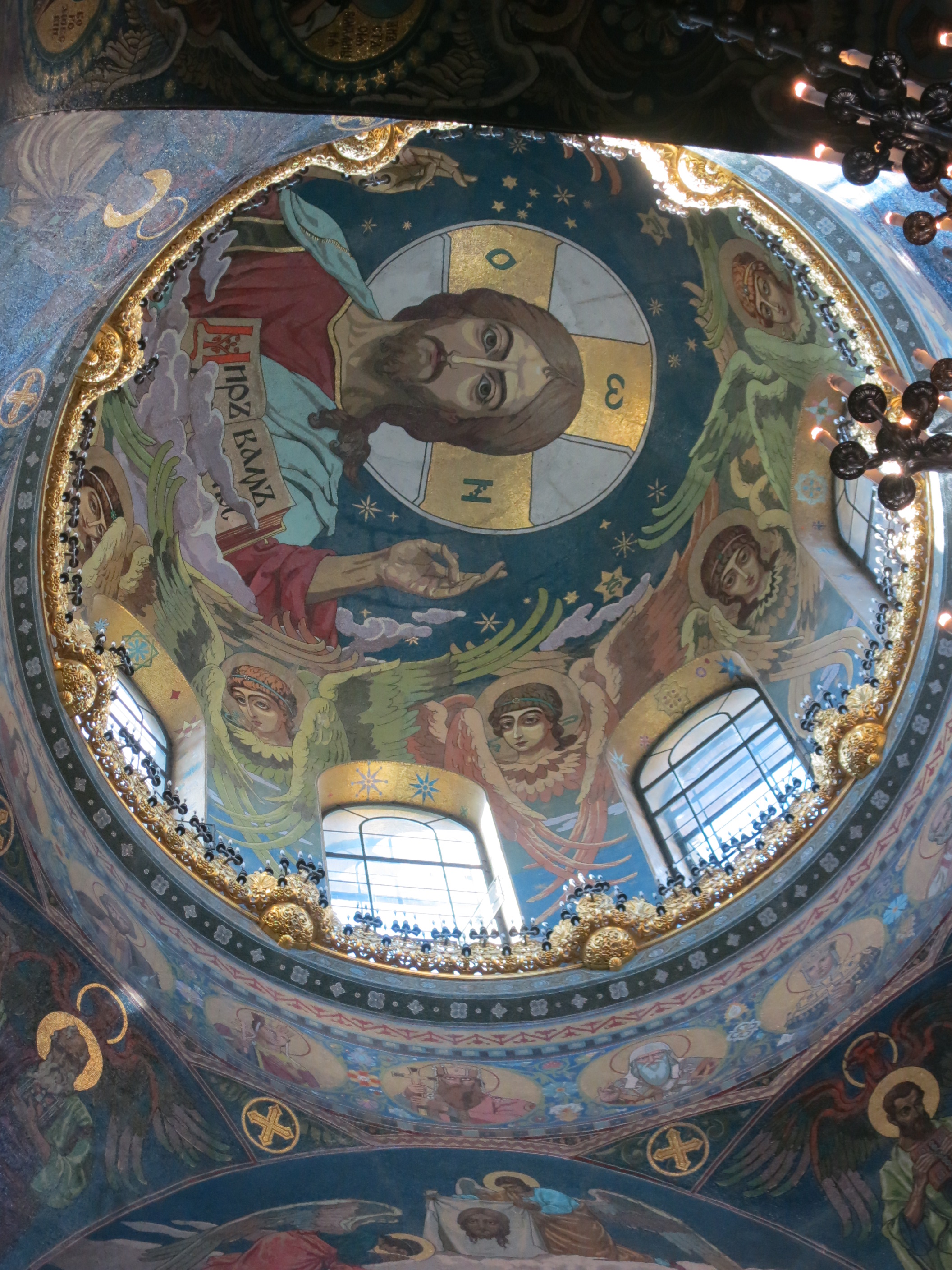
This is the ceiling of the Spilled Blood Cathedral. There was very little space on the interior walls which was not covered with some colorful artwork.

Here’s a sampling of the mosaics which cover the walls and account for the largest square footage of mosaic art in a single building in the world.
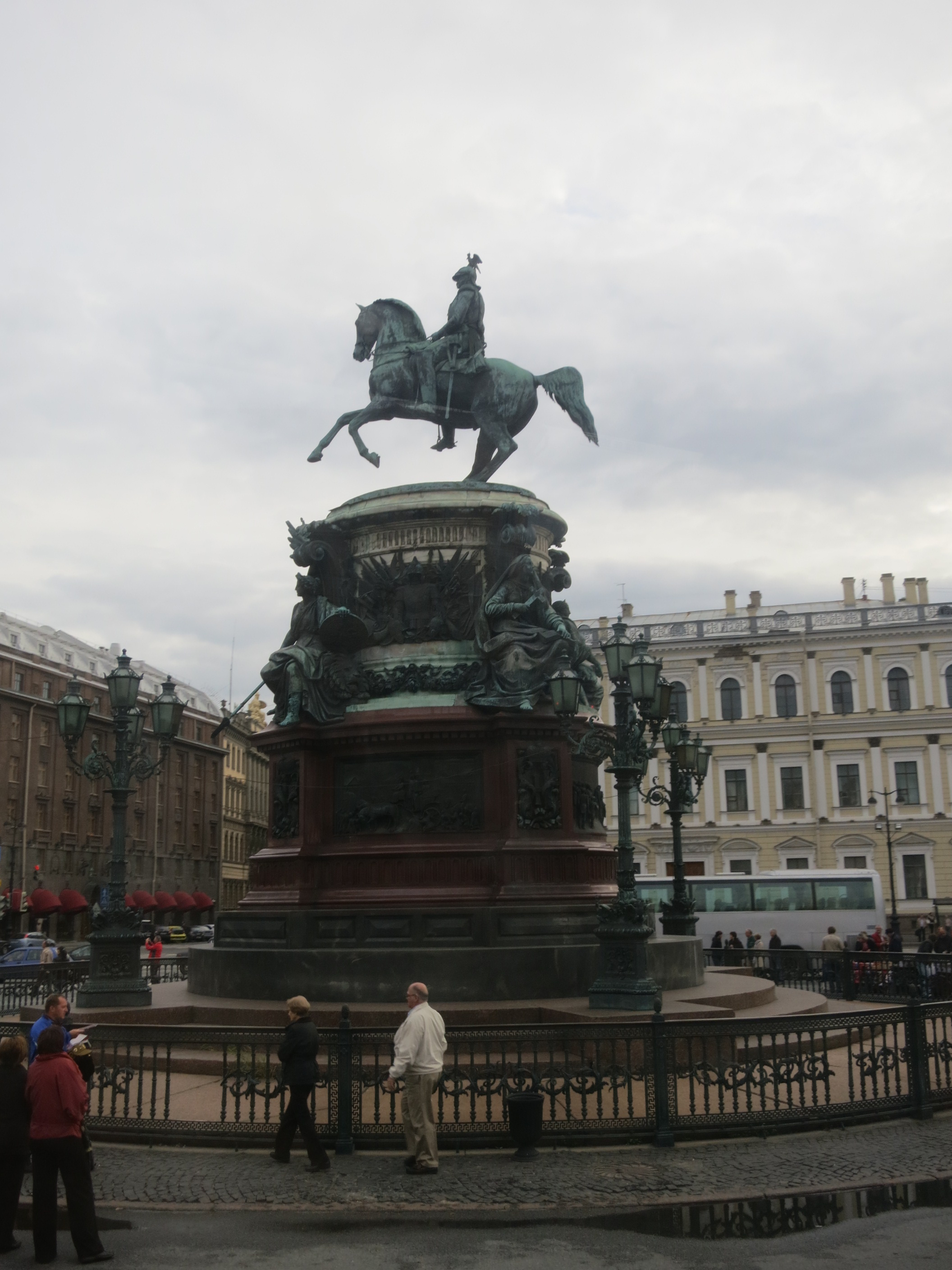
The bronze equestrian of Nicholas I s unique because it is the first horse statue in Europe to have only two support points, its rear hooves.  Impressive?  Apparently.

To celebrate St. Petersburg, the cruise ship hosted a “Taste of Russia” complete with borscht and stuffed cabbage.
Categories: City Visits, Customs, Destinations, Differences, Diversions, Europe, Exploring, Landmarks, Museums, Russia, The Cruise, Trains, Transportation, Uncategorized, Unusual Experiences | Tags: , , , , , , , , , | 2 Comments

Our time in Copenhagen Continues

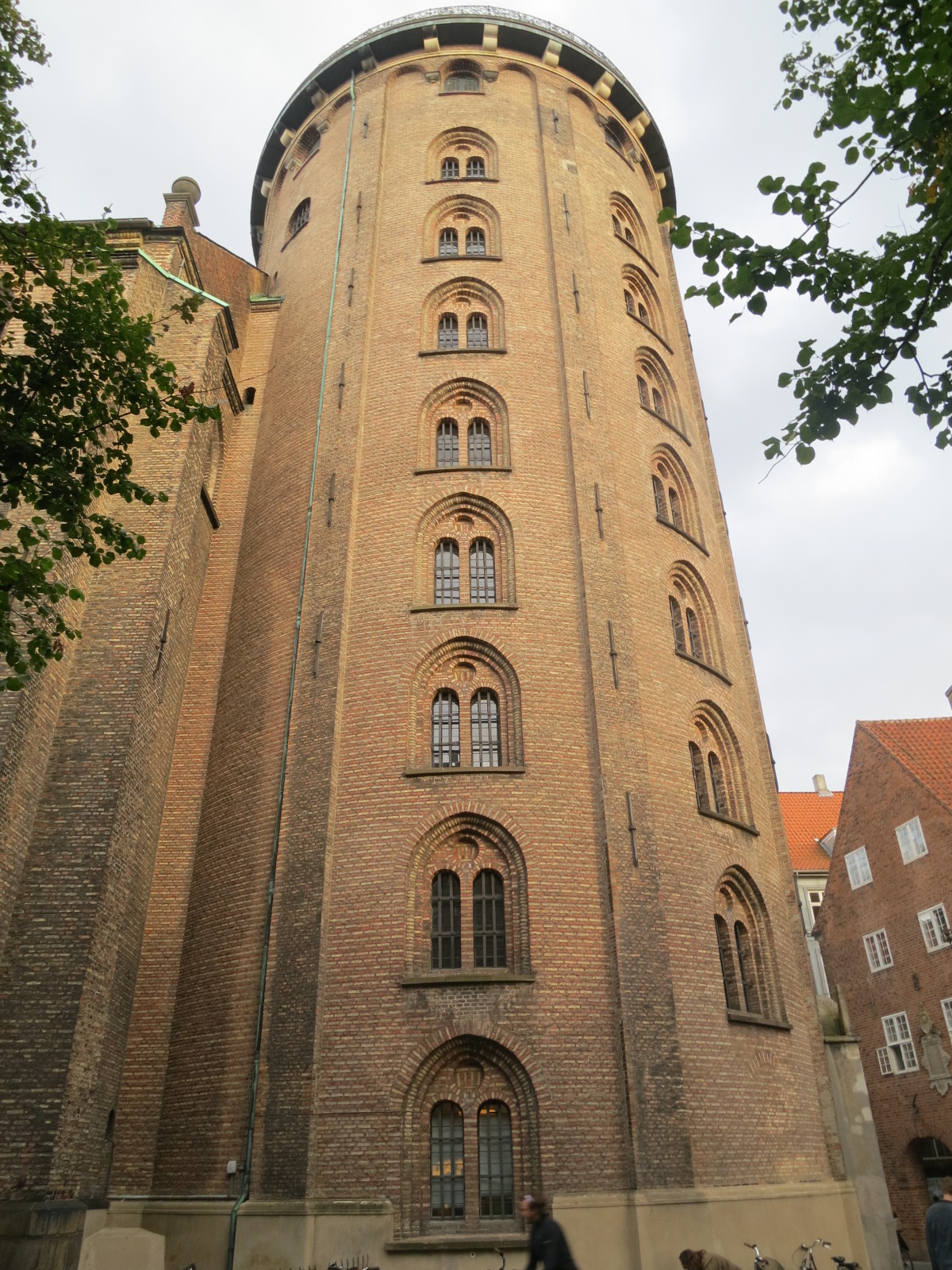
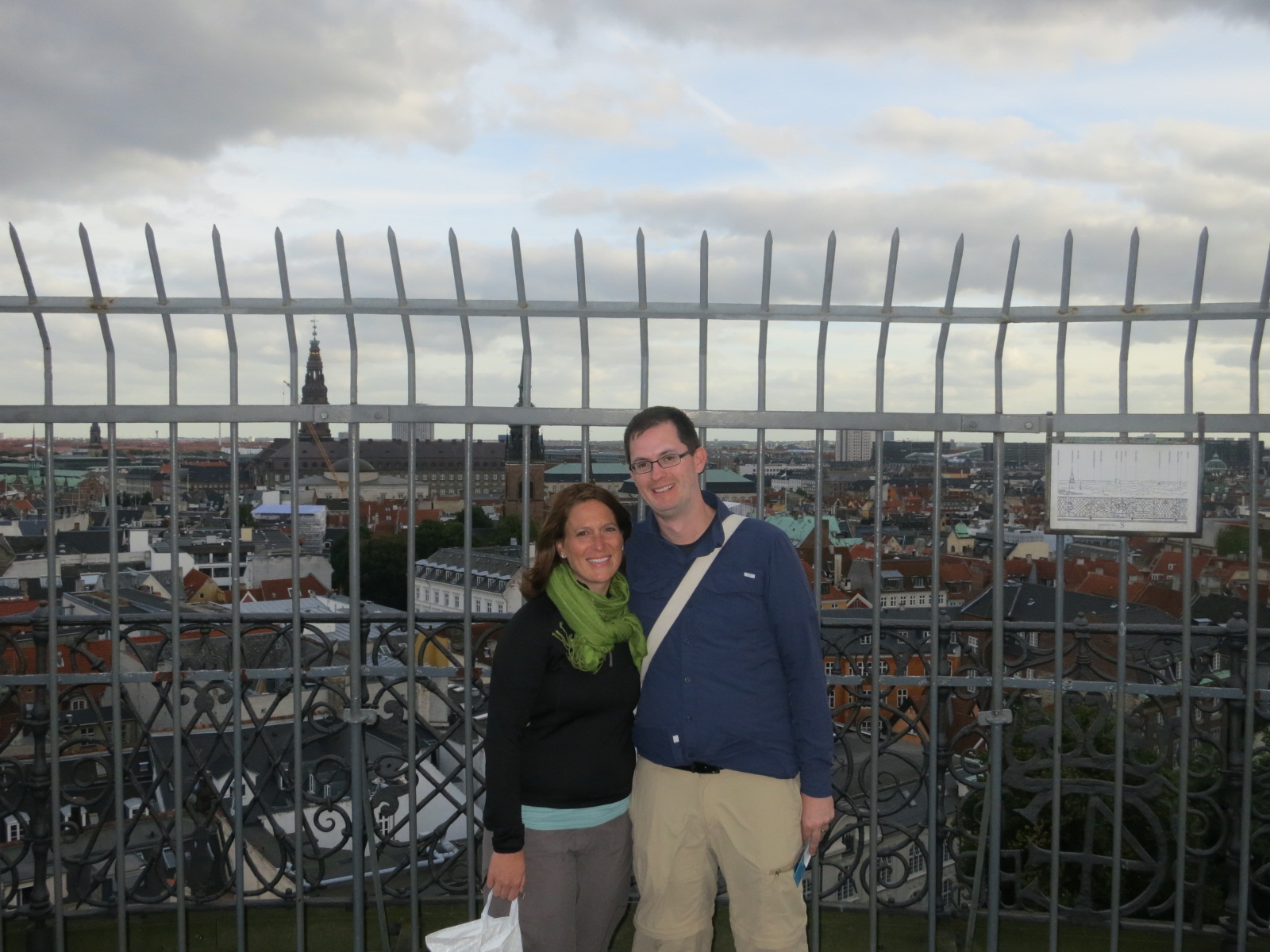
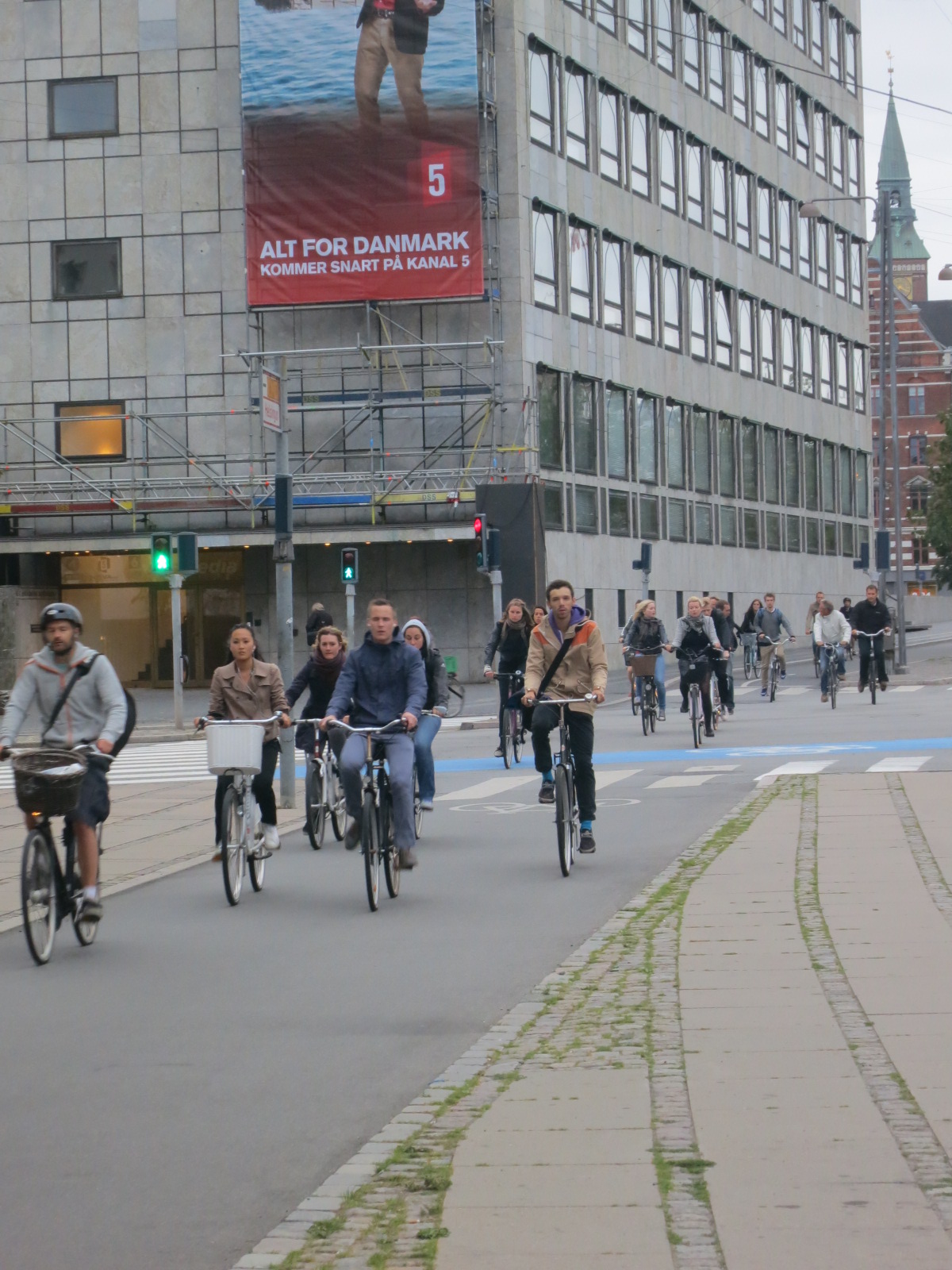
High a top Round TowerAh, just two days in Copenhagen and we already feel like we’re fitting in. I think we’re ready to be issued our bicycles now. Each day, scores of blond and blonder fit Danes ride their bicycles past me with an inviting arm outstretched asking for a high five. Or they might just be signaling a left hand turn. I’m not quite sure. I know Brooke mentioned it before, but the amount of cycling as a means of transportation is inspiring and stunning. Eveywhere you turn, there are dedicated, large bike lanes spanning a flat terrain full of polite cyclists scooting about town. We’ve also seen a couple of guys on roller skates, but we’re pretty sure that just means that their bikes are in the shop. Thus far, it’s been a blast exploring Denmark’s capital city. It’s a compact area with a sea of orange, slanted roofs and low rises that emit both an old and modern look. In one small area alone, you can walk the serpentine path to the top of the nearly 400-year old Round Tower, shop in a late 19th century storefront or stroll past the modern “Black Diamond” – the striking Royal Danish Library. The city is entirely walkable with (yet another – we’ve seen so many) stellar public transportation system comprised of buses, regional rail and an expanding subway.

People on bikesIt’s easy to think of Copenhagen as a sophisticated, classy, old-world city. Clean, organized, and cultured. As for the locals, I think that the best way to describe the people we’ve met is engaging. Once you a start a conversation with anyone from the bartender to the guy on the bus, everyone is talkative and eager to share. It doesn’t hurt that just about everyone speaks English incredibly fluently as a second language and many speak a third or even fourth language. Reading scores in Scandinavia are higher in general since virtually all television is in English with closed captioning in the native language. Hence, the country’s youth is often reading while watching television.

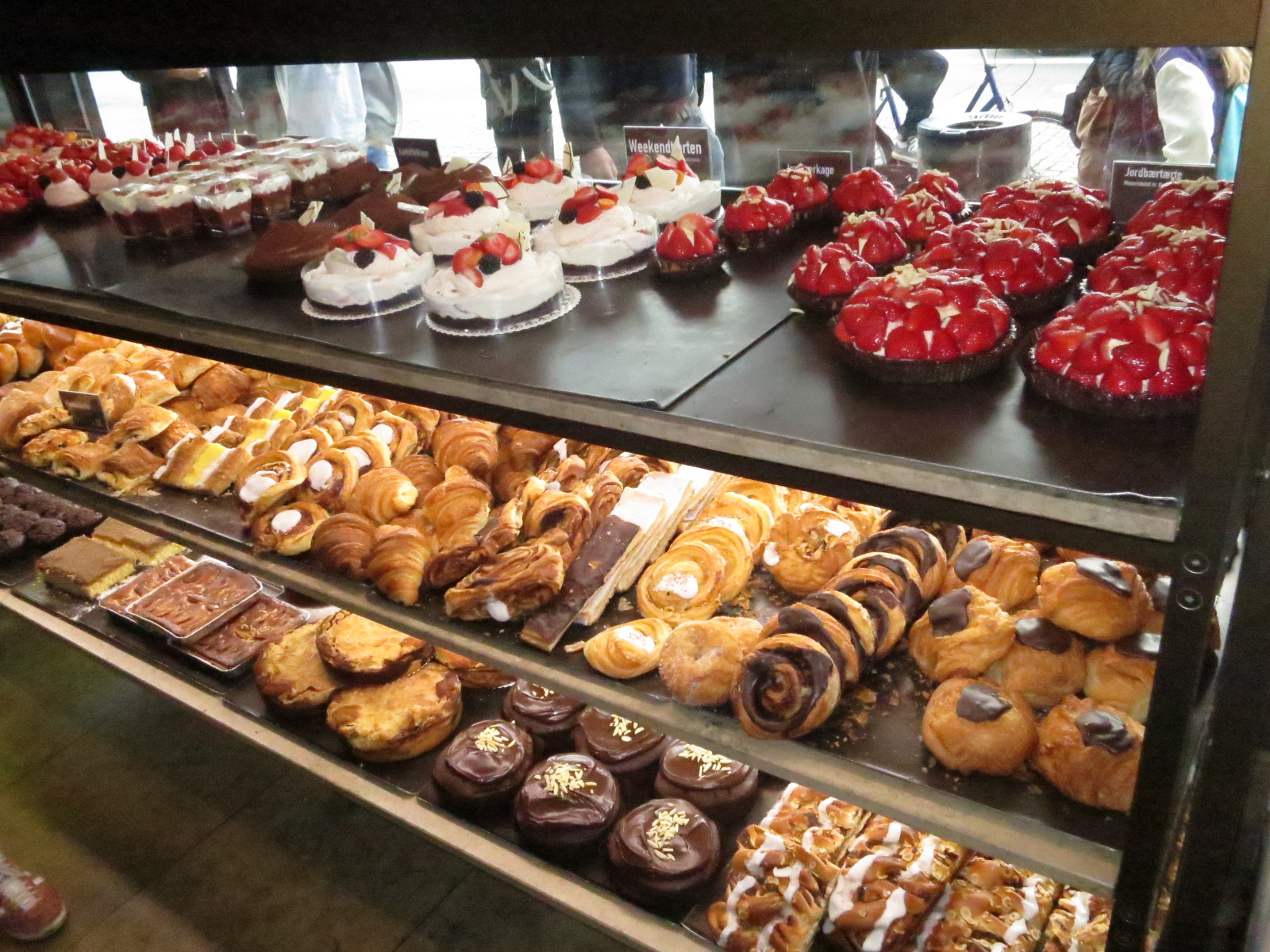
Oh my, that's deliciousWe realize that reflecting on the food is becoming a common motif in our blog, but some delicacies are too good not to share. If there is one thing Copenhagen does well it would be bakeries. Storefronts loaded with freshly baked pastries, breads, tarts and more are almost as common as ads for Carlsberg. We’ve sampled the ware and they deliver the tasty goods. We also sampled the national mid-day lunch dish – Smørrebrød (don’t worry, we can’t pronounce it either) which is essentially an open face sandwich made of everything from meatball and pickled cabbage to roast beef. Available everywhere, we stopped in an unassuming lunch place to give ’em a shot. Delicious! Only problem was that we didn’t know the custom is to order two or three since they are a bit on the smaller side. Learning as we go.

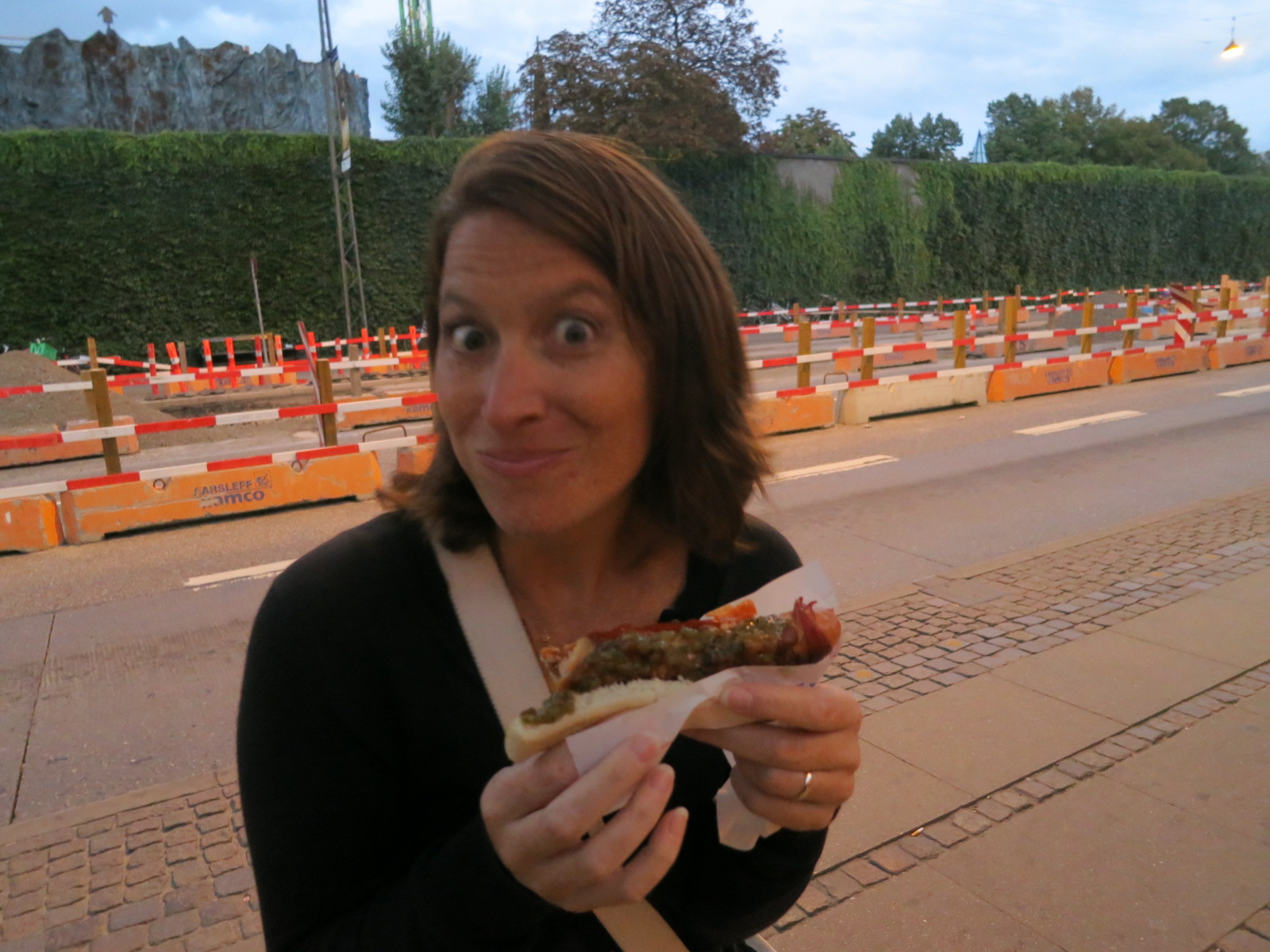
My wife with no mere everyday weinerAnother sensational “local” dish we discovered is, believe it or not, hot dogs from a street vendor. In a land known for sausage, this is some of the best street meat we’ve had in months. Large, mouth-watering sausages wrapped in bacon loaded with condiments? More, please. These put (most) NYC hot dogs to shame. And, yeah, we’re going back for another round today. Copenhagen also lays claim to the “World’s Best restaurant” – Noma. How is it? Amazing and delicious…are the words that a world traveler who could dream of being able to afford to eat there might.

Example one of how to get lost in Copenhahgen

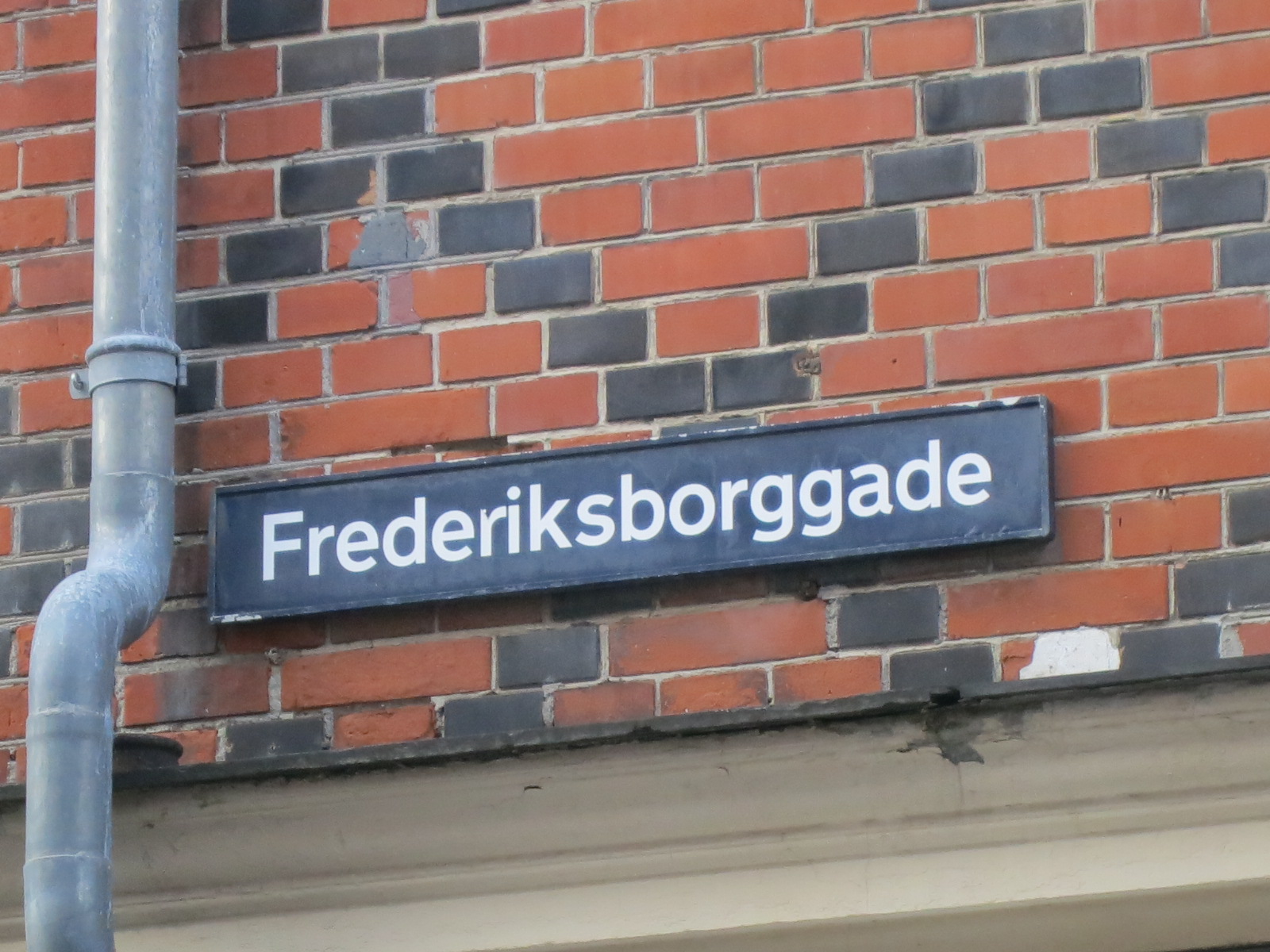
Street sign commonly seen in Copenhagen or example one of how to get lost

There is so much more to tell you about Copenhagen. Next time we’ll share stories of the Carlsberg Brewery, Christiana (the incredibly interesting community of squatters), and our amazing Air B ‘n B experience.

–Phil

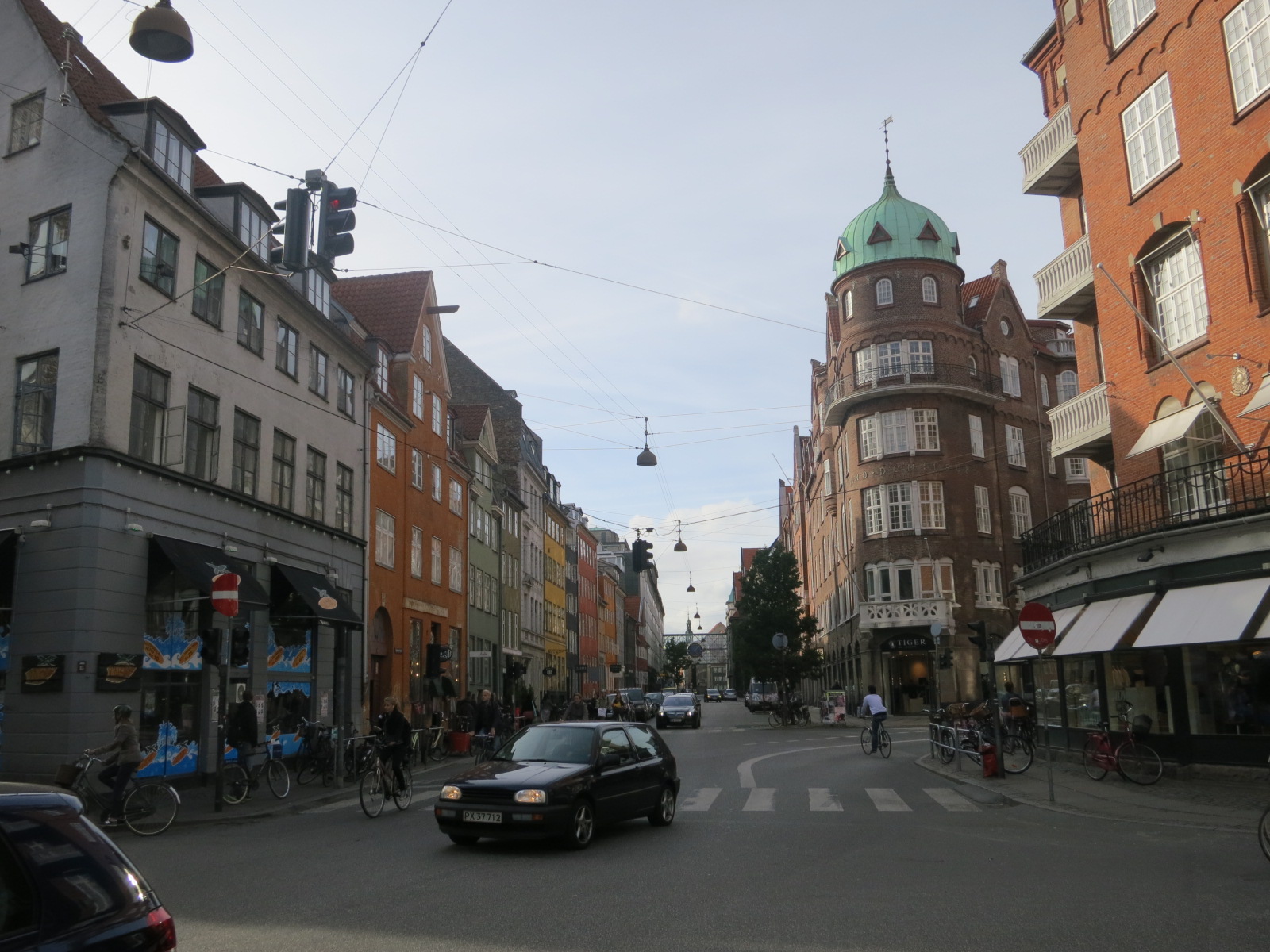
Stunning buildings on the streets of downtown Copenhagen

Round Tower

The Rundetarn- or Round Tower- build in 1642 as part of a church and observatory complex. Very, very cool walk up.


Categories: City Visits, Copenhagen, Destinations, Europe, Landmarks, Transportation, Uncategorized | Tags: , , , , , , , , , | 3 Comments

A few video clips and leaving Asia

Well, we’ve reached a small milestone on our Round The World trip. Today, we officially close the book on the Asia and Pacific portions of the trip and head west to Northern Europe. We’ve got some amazing photos, sensational stories and our passports are starting to fill up with stamps the colors of the rainbow. The list of countries we’ve visited so far includes New Zealand, Japan, China, Hong Kong, Vietnam and Singapore. Not too shabby. We have some mixed feelings about leaving Asia. We’re pumped to see what we’ll get up to in Copenhagen (and eager for any suggestions!), but it’s a bittersweet ending to our time in that section of the world.

We sort of fell in love with several of the places we visited and wish we had a bit more time to explore and dive in. So, I guess that just means we’ll have to plan a return trip down the road. One thing is for sure: it will be nice to get a break from the heat! Now, we fly halfway around the world (again) on an overnight flight in business class on Air France from Singapore to Paris and then Paris to Copenhagen. Monsieur! Monsieur! More Champagne, si’l vous plait! Time for a new country, a new region and even a new continent but that also means, sigh, so long Asia.

We also wanted to say a huge thanks to everyone who has been checking out our Luggage Tags travel journal. It’s great to be able to share our big trip with our friends, family and the world and we’re thrilled that people seem to be digging it. We seem to gain a few new followers every day. It’s been cool to watch the blog grow and we get a kick out of each comment someone leaves (we do our best to respond to each comment!). As a reminder, if you are so inclined to follow the blog or get an e-mail when we post our daily update, you can click the link in the column to the right to follow.

As we shift gears on our trip, we thought we’d shift gears on our blog by posting some of our favorite video clips from the last few weeks shot with our trusty Canon S100 digital camera. (Sorry e-mail subscribers – you’ll have to click on the images to open up a new page). If you want to see any of our past videos, you can click here to see all of our videos on the You Tube page. As always, we can’t wait to see what’s next!

-Phil

Categories: Europe, Flights, Leaving, Transportation, Uncategorized | Tags: , , , , , , | 11 Comments

Hanoi, Vietnam and 2 Million Motorcycles

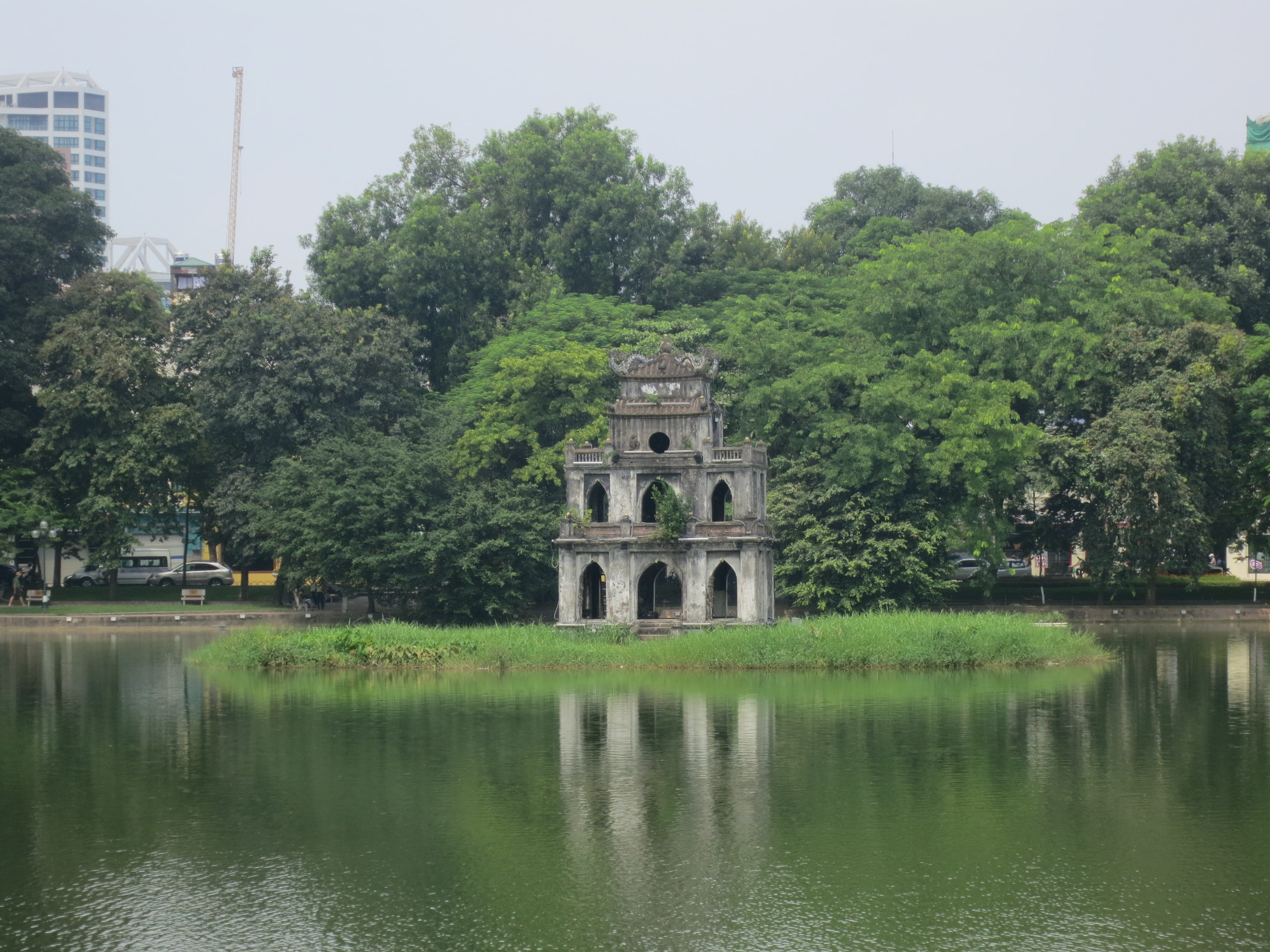
Shrine to turtles in the middle of the lake in Old QuarterHello from Hanoi! After a quick and easy flight on Vietnam Airways departing from the modern, giant Hong Kong Airport, we quickly made it to Hanoi. Departing Hong Kong was easy- having the flexibility to fly on a Wednesday afternoon paid off in cost and ease. We’re becoming quite excellent at navigating airports. And we haven’t had to pay any of the infamous departure taxes when leaving a country. So far, our airports have included Dayton, Minneapolis, Los Angeles, Auckland, Guangzhou, Tokyo, Hong Kong and now Hanoi. All in just under one month. Whew.

After landing and clearing immigration with ease (we really haven’t had a single question in any country yet), we leaped into a taxi which we had set up in advance and was waiting for us. This was a nice bonus because we have already repeatedly been warned of shady taxi services throughout Hanoi. While Vietnam is, by and large, a very safe country, there seems to be no shortage of scams and hustles by opportunistic taxi drivers, “tour guides” and others. We’ve seen drivers everywhere clamoring for business, but with a little wherewithal, a list of reputable companies and our preference for walking, it hasn’t been a problem. Brooke and I made a quick journey from the airport to the heart of Hanoi in the Old Quarter. Along the way into town, we saw what we think were buffalo just lazily hanging close to the side of the road.

Endless Motorcycles!One of our first impressions of Vietnam? Motorcycles. I know that may sound odd, but I’ve never seen so many mopeds, scooters, and motorcycles in my life. I’m talking by a factor of ten. These two-wheeled vehicles are the preferred method of transport around Hanoi. Cars, bicycles and public buses all come in a distant second. It is kind of insane. Drivers take a liberal interpretation of traditional road rules and stop lights are few and far between. The constant sound of tiny horns dot the environment. Some scooters carry up to a family of four wedged on to the bikes – with young children in precarious positions conspicuously lacking helmets. With all this endless motorcycle traffic, being a pedestrian is an art form. Brooke and I have had to re-learn how to simply cross the street while negotiating an endless sea of bikes. The trick is to walk slowly and with confidence. And to take a leap of  faith that the helmet-clad drivers (who mostly seem to be paying good attention) are not going to run smack into you. It’s kind of thrilling. Still, we’re not quite ready to navigate the major intersections just yet.

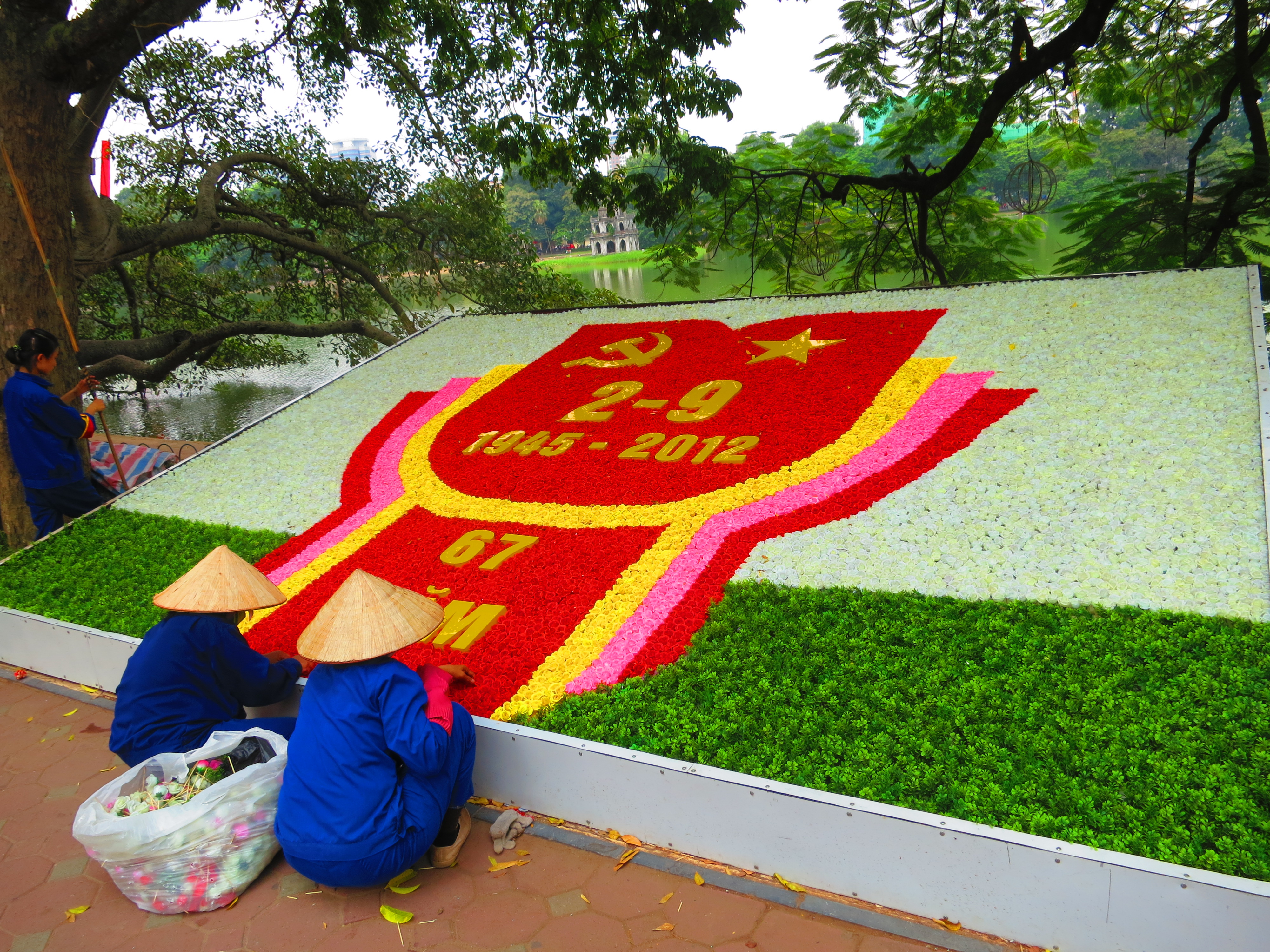
National Day is right around the cornerOur hotel is smack dab in the middle of Hanoi’s Old Quarter. A section of Vietnam’s capital that is packed with people, shops and more motorcycles on streets that zig and zag in each direction. So far, some of the best sight-seeing has just been walking these streets. Short, bright blue and plastic stools filled with residents dining on simple, makeshift meals prepared on the street. Tiny storefronts that open up to the sidewalk and range across all sorts of businesses from sewing machine repair to T-shirt sales. These small two-story store fronts sometimes also double as people’s homes. Initially, we also thought we saw store owners and residents burning paper garbage on the sidewalk in small homemade fires, but later learned that this is actually part of Yu Lan – a religious ritual offering that happens over the course of this month. Vietnam truly feels more different from any place we’ve been yet – light years from Hong Kong. Hanoi feels raw and rugged, but cheerful and busy. A developing nation that’s driven to keep developing. I’m pretty sure that this is one of the most exotic places I’ve visited. And it’s an exhilarating place that we already kind of love.

On top of all that, we’ve arrived just before National Day on September 2nd – Vietnam’s Independence Day. The town is dressed and decorated with banners, lights and more. It looks like it’s going to be a great holiday that we’re missing by one day.

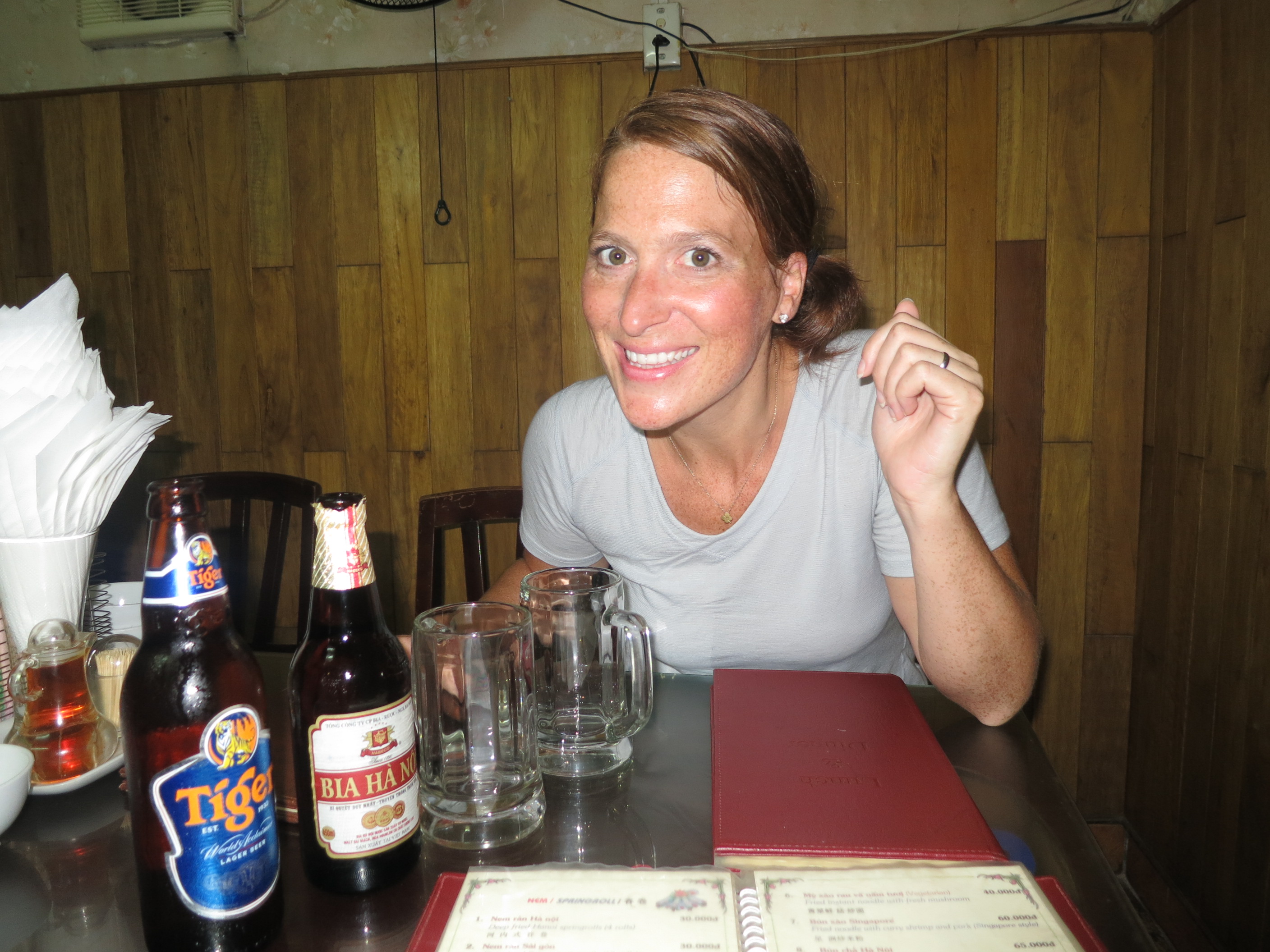
Brooke, motorcycles and humidity!As you might imagine, it is friggin’ humid here. Our heat wave continues. A 20 minute walk earns you a healthy glow of sweat almost pouring from your body. Add the heat from the exhaust of a parade of motorcycles (Hanoi certainly isn’t going to win the award for cleanest award or most environmentally friendly city) and street fires, and everything just gets that much hotter. It feels like we could use another three showers a day. Fret not: we’ve built in lots of breaks at cafes and restaurants throughout the day. It’s amazing how much beer you find yourself drinking when you can’t drink any of the local water. Refreshing and inexpensive. Our preference has been for the local Beer Ha Noi. The other commonly found beer, Tiger from Singapore, tastes like a poor man’s Bud Light.

We continue to blow through Southeast Asia taking in as much as we can each day.  We’re not alone – tourists are larger in number here, but most of the Western faces we’ve seen tend towards the younger side. A million discoveries await us in Vietnam. Hanoi brings food, culture, beer, history, coffee, baguette and more. Ready to open our eyes, clear our mind, expand our horizons and see something new. I can’t wait to explore Hanoi tomorrow.

-Phil

First Meal in Hanoi

Our “Welcome to Hanoi” Dinner at the wonderful local New Day restaurant. Two big beers will help knock the heat off!

The Old Quarter At Night

The Old Quarter At Night- Check out all of the endless bikes in the background! Click enlarge and the photo looks even more vivid! 

Categories: City Visits, Reflections, Self Guided Tours, Transportation, Uncategorized, Vietnam | Tags: , , , , , , , , , , , , , | 3 Comments

36 Hours in Guangzhou

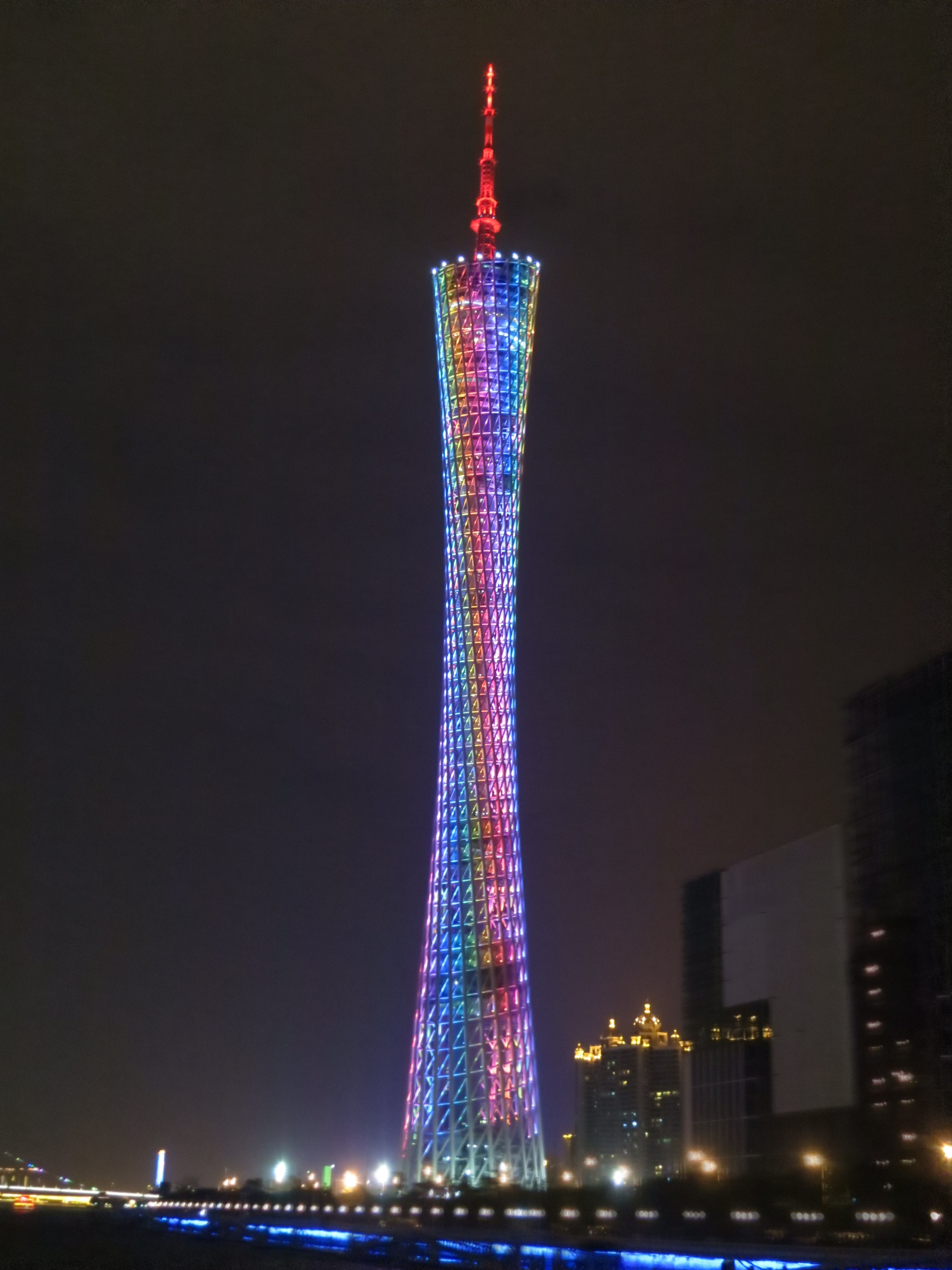
The Stunning Guangzhou Tower!

The Stunning Guangzhou Tower!

Out of Japan and into China! We landed last night, negotiated another new subway system to our hotel and checked into the lovely Guangdong Dasha Hotel near the heart of Guangzhou. We’re back to driving on the right hand side of the road, but it looks like we’re done with drinking water out of the tap for a while.

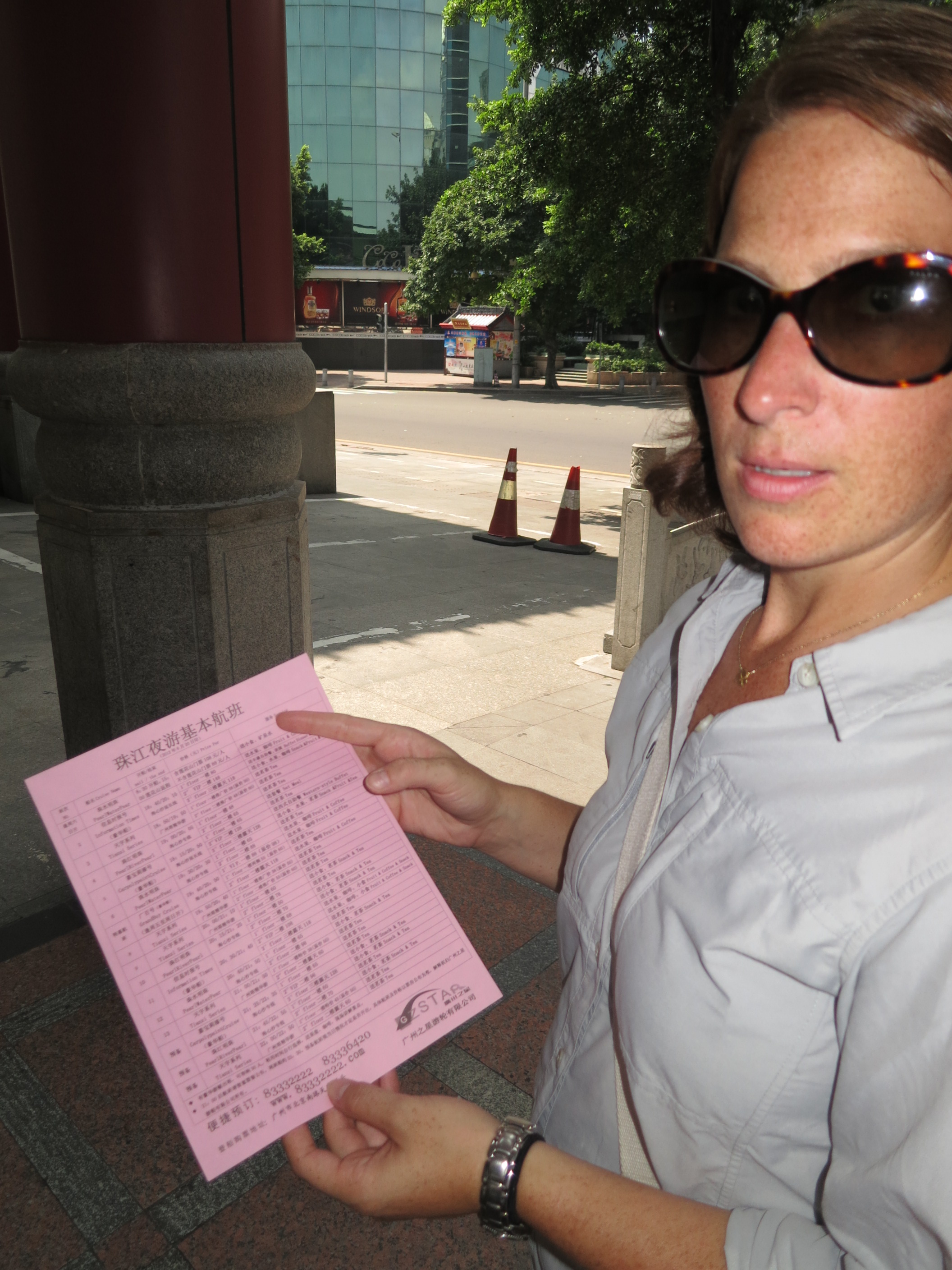
Our biggest impression after a day in Guangzhou? It’s hard here. We felt more like foreigners than we ever have in our lives. There is such little English spoken or written on any signs in Guangzhou. For the first time, the langauge barrier became a hinderance and a real issue. A huge chunk of our communication today, from directions to asking for a to-go box for food, was done in half-sentences and pantomime. Relatively simple questions such as trying to get a suggestion for dinner at the front desk of the hotel, turned into a painstaking process involving four employees. While everything was a bit different in Japan, we never had these kind of issues. There are far less Westeners here in Guangzhou, that’s for sure. We’ve been getting a lot of stares that come, we think, mostly out of curiosity. Still, we’d like to learn the phrase “What are ya lookin’ at?!” or “Do I have something in my teeth?” So many stares. It was really an eye opening day.

Brooke is confused

Looking at a boat schedule we were given…not understanding a word

Besides the staring, the general behavior of the people here has a much different feel. Unlike the polite, patient crowds we saw throughout Japan, Guangzhou has been full of Shovey McShoversons. People will not hesitate to shoulder past you to get on a train or to get in front of you in line. This same sense of urgency can be seen in the drivers, too. When it comes to street traffic, our primary goal quickly became to avoid getting flattened by a speeding taxi or bus. The drivers and pedestrians in this town seemed to be locked in an epic city-wide game of chicken. It seems cars definitely have the right-of-way and we were doing some serious heads-up walking when we crossed the street.

Our other immediate impression of Guangzhou is how friggin’ inexpensive everything was. A full dinner ran us about $15, taxi rides came to around $3 and a subway ride was about 75 cents…for two people! We took advantage by taking the morning to pursue stores (they love their malls in Asia) on the Beijing Road Shopping district. Endless deals complimented endless shops. After walking the downtown streets, seeing the colors and sites and a really, really difficult experience attempting to by boat tickets, we needed a break. So, we went to the one place where we knew everyone in the room would speak English – our comfy hotel room. We grabbed some beers and toasted to humility, to hubris and to travel in general.

Lunch!

Lunch! Somewhat tasty and really, really cheap

Although there have been some challenges today, Guangzhou itself has been very easy to navigate and a breeze to get around. The modern subway runs quickly and cheaply with a lot of innovative, high-tech features. Some of the stations look like they haven’t been open a month and new lines are being added each year. In fact, there was construction everywhere. Cranes on the horizon as far as they eye could see. There is a splattering of high-rise construction around every corner. For every recently constructed high-rise, there was another one half-built. We read that in 2007, 25% of the world’s construction cranes were in China and that seems to still hold true in Guangzhou.

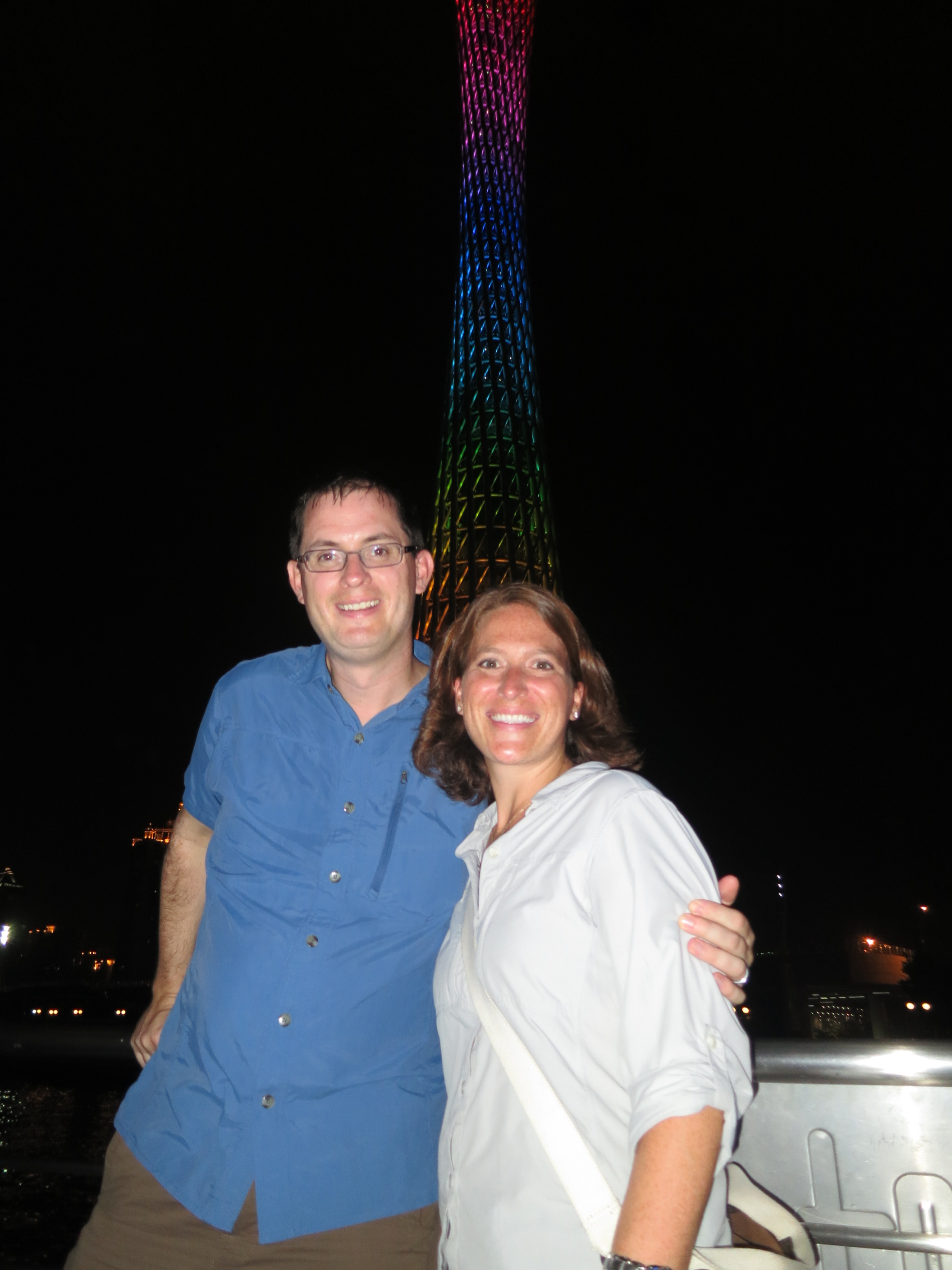
After the best beef and broccoli I’ve ever had, our day ended on a particular high note with a stellar night cruise down the Pearl River. A popular activity, river boats cruise up and down the Pearl River through the center of town. The smooth hour-long ride allows you to see the illuminating, dazzling lights from just about every building – new and old. Every structure from stadium, to bridge, to apartment complex gets in on the act. Most spectacular is the Guangzhou tower. So, yeah, it’s about the 5th tower we’ve seen since arriving in Asia, but it really is the best one we’ve seen yet. It was the highlight of our day and showcased Guangzhou’s most signature feature.

The Pearl RiverIt was important that we ended our day with the river cruise, because our general feeling for today was frustration. We wish we spoke even a little Cantonese, but we barely know how to say hello. Even at our lovely hotel, miscommunication abounds. With that, we’re taking our 36 hours in Guangzhou and heading out of town. We are amazed when we think that we still have SO much trip left! We have lots to look forward to. Including a bus ride to Hong Kong tomorrow. At least, we think we’re heading on a bus to Hong Kong tomorrow. With all of the language challenges we’ve had today, we’re never 100% sure on what we’re doing next!

-Phil

Categories: China, Destinations, Differences, Discounts, Hotels, Surprises, Transportation | Tags: , , , , , , , , , , | 4 Comments

Riding The Shinkansen

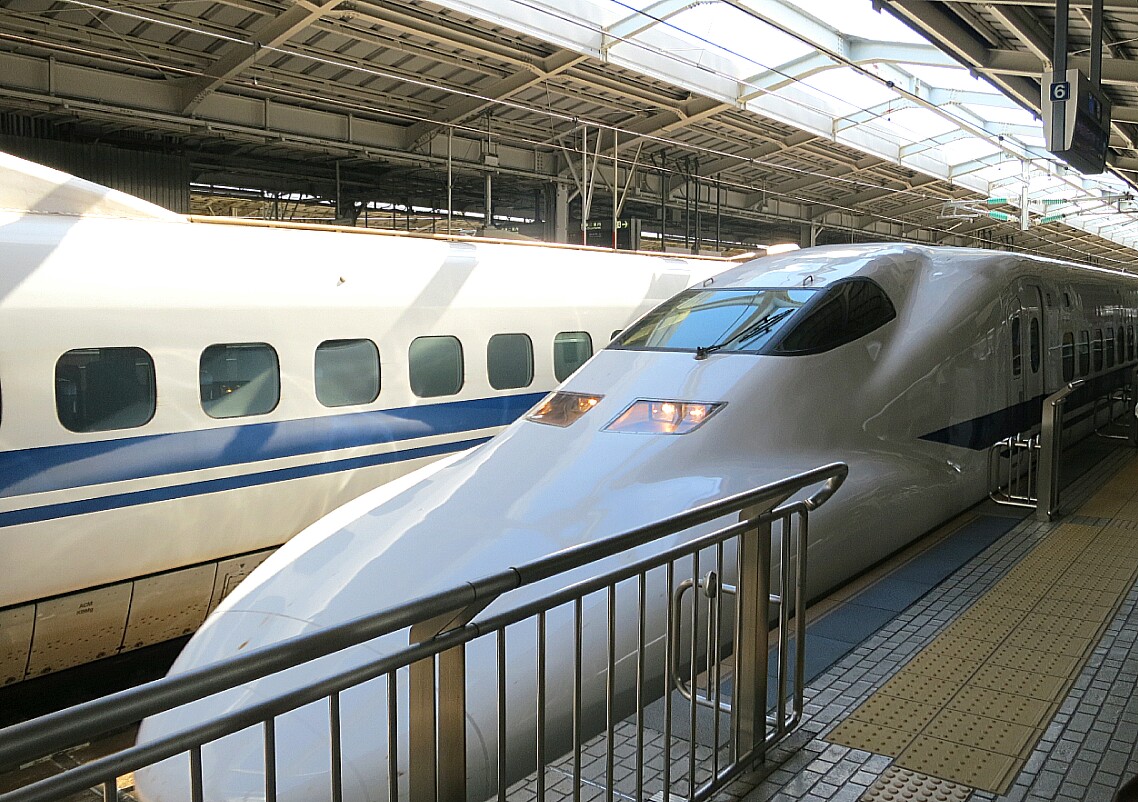
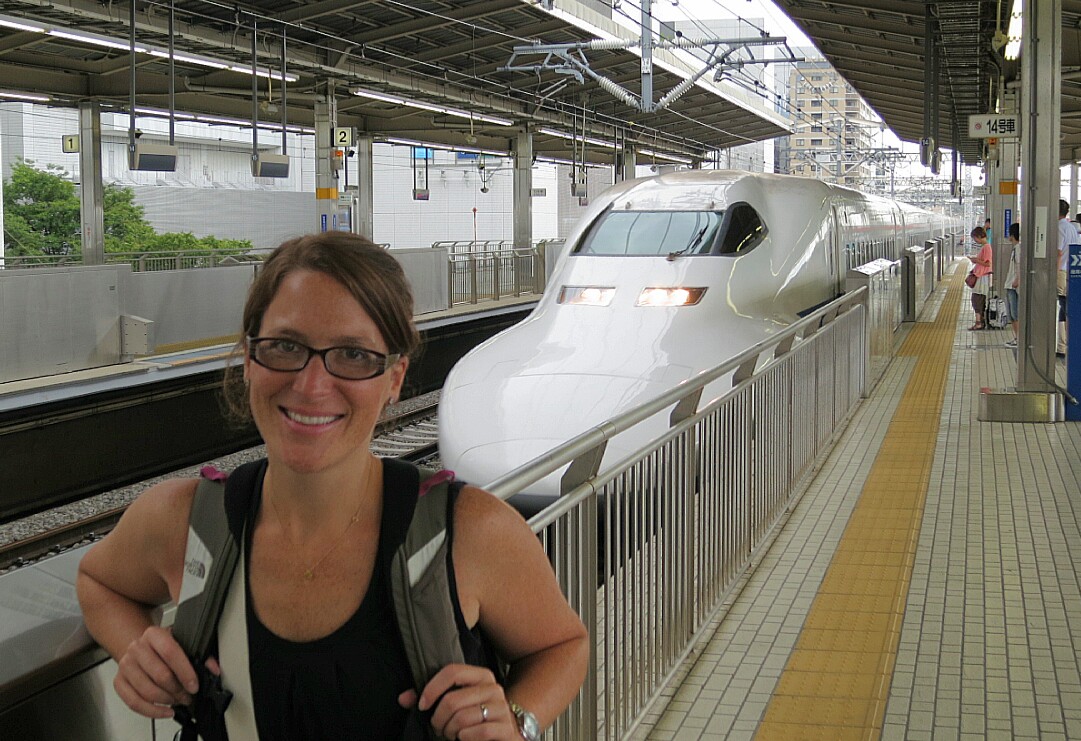
Awesome train pulling into the station in TokyoThe number one benefit of purchasing the seven day Japan Rail Pass (that we mentioned earlier) is that it has allowed us to ride all of the JR trains including the famed Shinkansen (pronounced like “Wisconsin”) AKA the bullet train. Talk about a wonderful, lightning fast way to trek through Japan! We knew it would be a speedy ride, but Sweet Sassy Molassy! That train is fast! Amtrak’s Acela service crawls in comparison.

A sensational, practical, relaxing and enjoyable way to travel, the Shinkansen rail network spans the islands of Japan from tip to toe providing the fastest, smoothest and among the most comfortable train ride that I have ever enjoyed. Shinkansen service is near legend in Japan and it’s easy to see why. These trains are a technology and transportation achievement that should have other countries drooling.

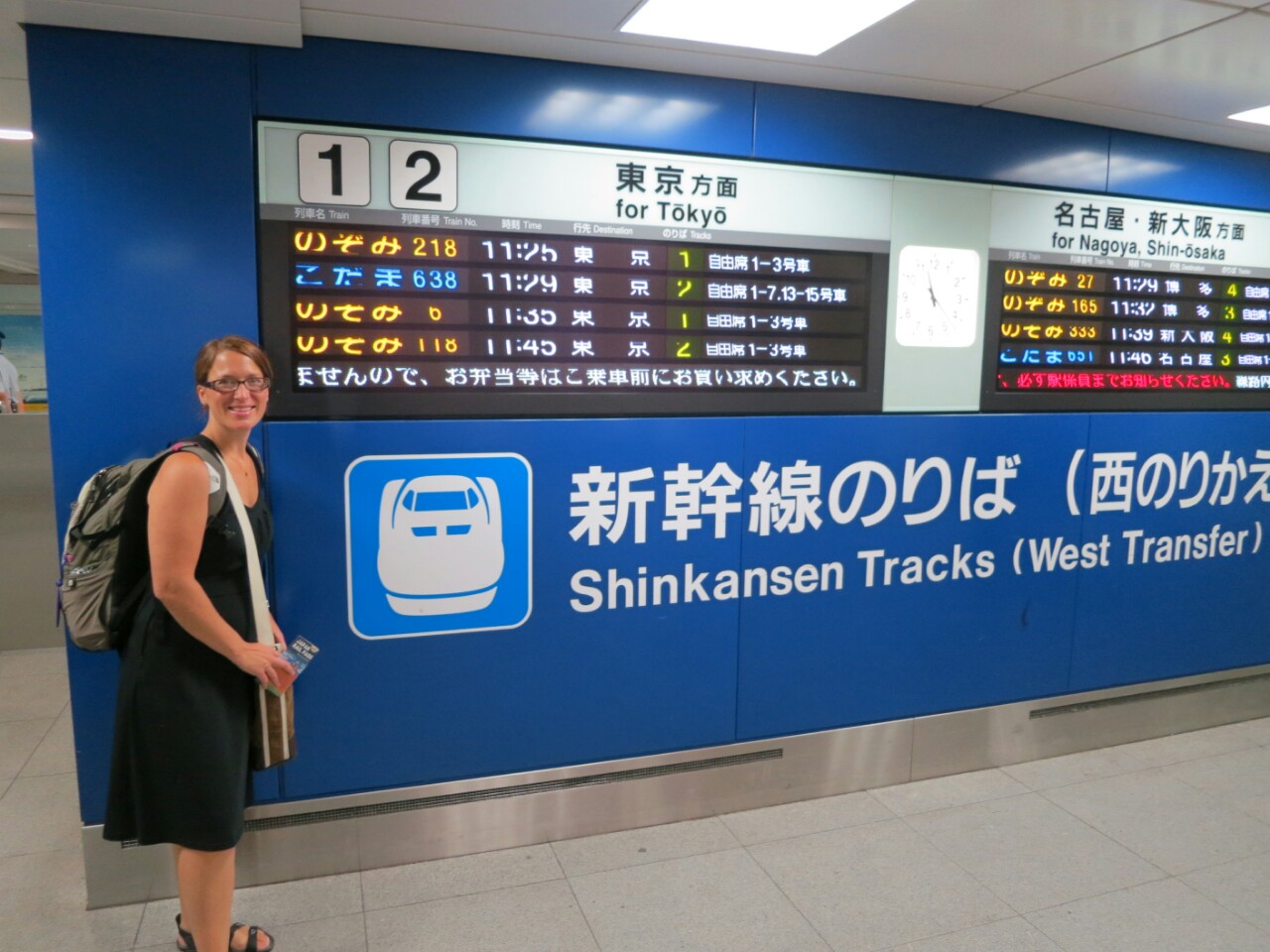
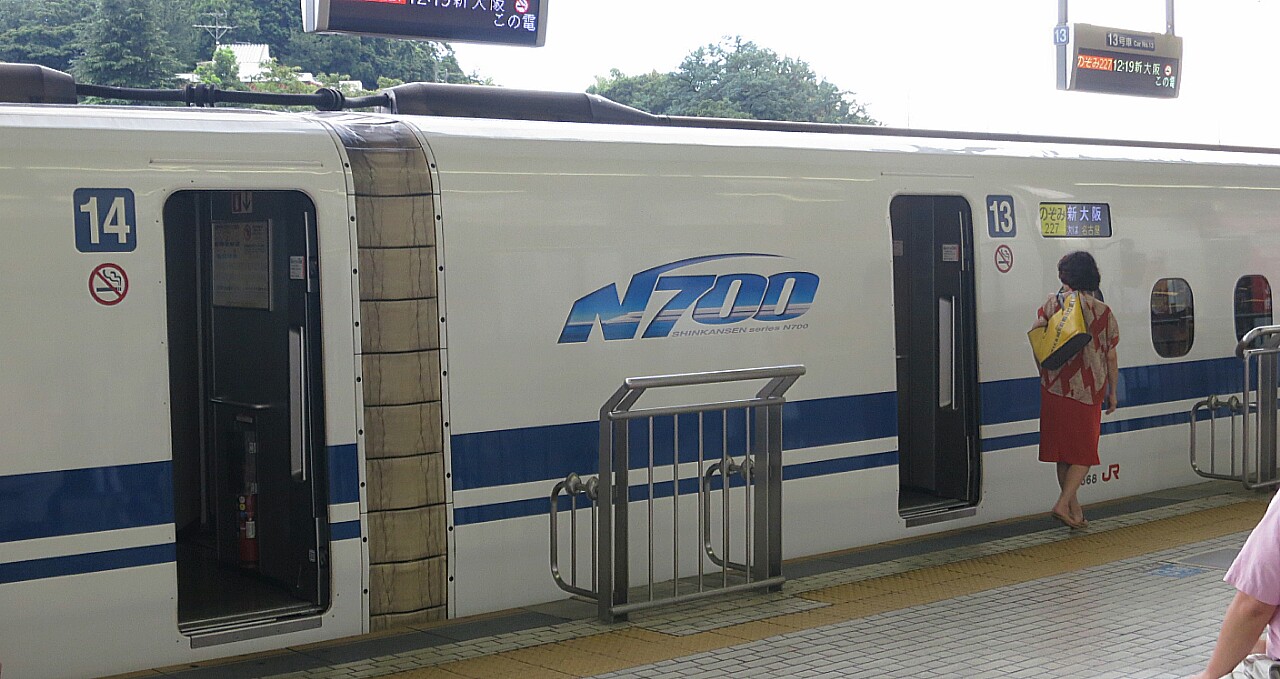
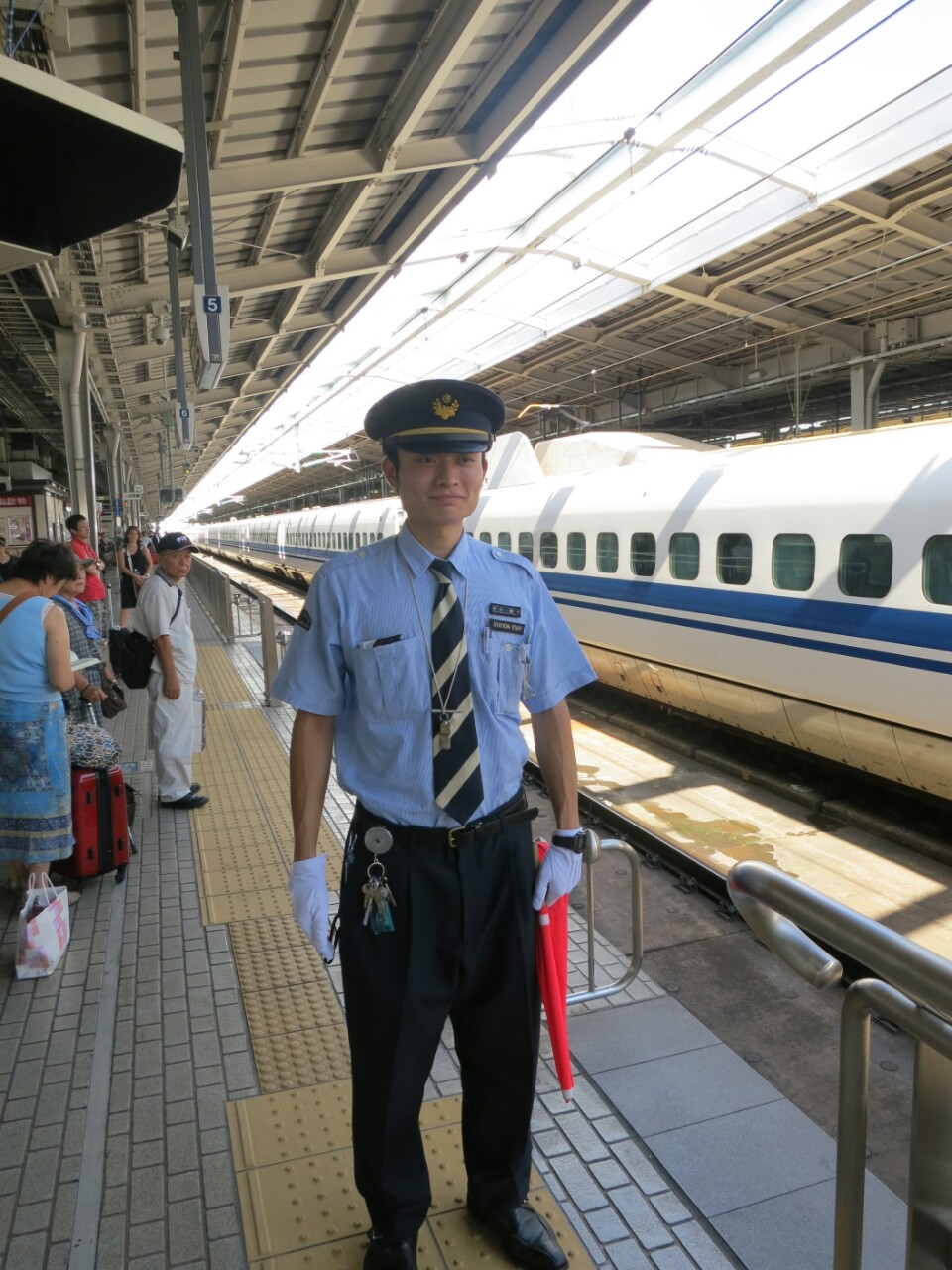
Brooke checking out the departure time for our trainThe Shinkansen trains themselves have a fierce and futuristic look – even though the trains have been around for years and years. Their signature look embodies speed. Each sleek car is white with a signature single blue line that streaks down the center of the outside. These aerodynamically shaped trains are also considerably longer than most other trains I’ve seen with some running up to sixteen cars. Each train can hold over 1,500 passengers; when they pull in the station they seem to keep going and going. The interior is equally as nice: comfortable quiet cars, and reclining seats. They are very clean trains with attentive in-seat service from an ever-bowing crew. In that regard, we’re starting to expect nothing less from the Japanese! And there are just so many Shinkansen are on the schedule running each day! The frequency is surprising: wait ten minutes in a station and you might see a half dozen Shinkansens zoom through. It’s a little thrilling each time one roars into the station.

Long Cars

But above all else, it is simply a wonderful way to see the country. Sit back, tilt the chair a bit, and gaze through the oversized window. And these suckers are fast and getting faster. Each generation of engines are apparently a touch speedier than the previous. Speeds of up to 180-200 MPH makes looking out the window a little challenging. Traveling at this new speed, closer objects are hard to focus on before they are out of sight. We rode the Shinkansen from Tokyo to Kyoto and then Kyoto to Hiroshima and finally back to Tokyo. It would have been great if we had just a smidge more time to head north, but that’s becoming our mantra lately: If only we had a bit more time!

Top notch servicecBut buyer beware – these Shinkansen tickets can be expensive! That handy-dandy Japan Rail pass included our fees, but we estimate our three train tickets could have cost upwards of $500 each. The costs seem justifiable when you start to add up all of the infrastructure that must have been required here. Riding the line on elevated tracks (no ground level track-crossings here), curves on a very small grade, and through endless tunnels & bridges, it breaks my four-function brain calculator to add up what the infrastructure demands must have been. And it looks like it is paying off- most trains we rode on were sold out and it seems to be the preferred method of travel through the country. Who needs airports when a Shinkansen stop is likely a short jaunt from your home! Hmmm…I wonder if there is a Shinkansen route that will take us to the top of Mt. Fuji tomorrow? Man, what a cool ride.

-Phil

Yes please!

Zooming into Kyoto


Categories: Destinations, Japan, Tokyo, Trains, Transportation | Tags: , , , , , , , , , , , , , | 5 Comments

Visiting Hiroshima

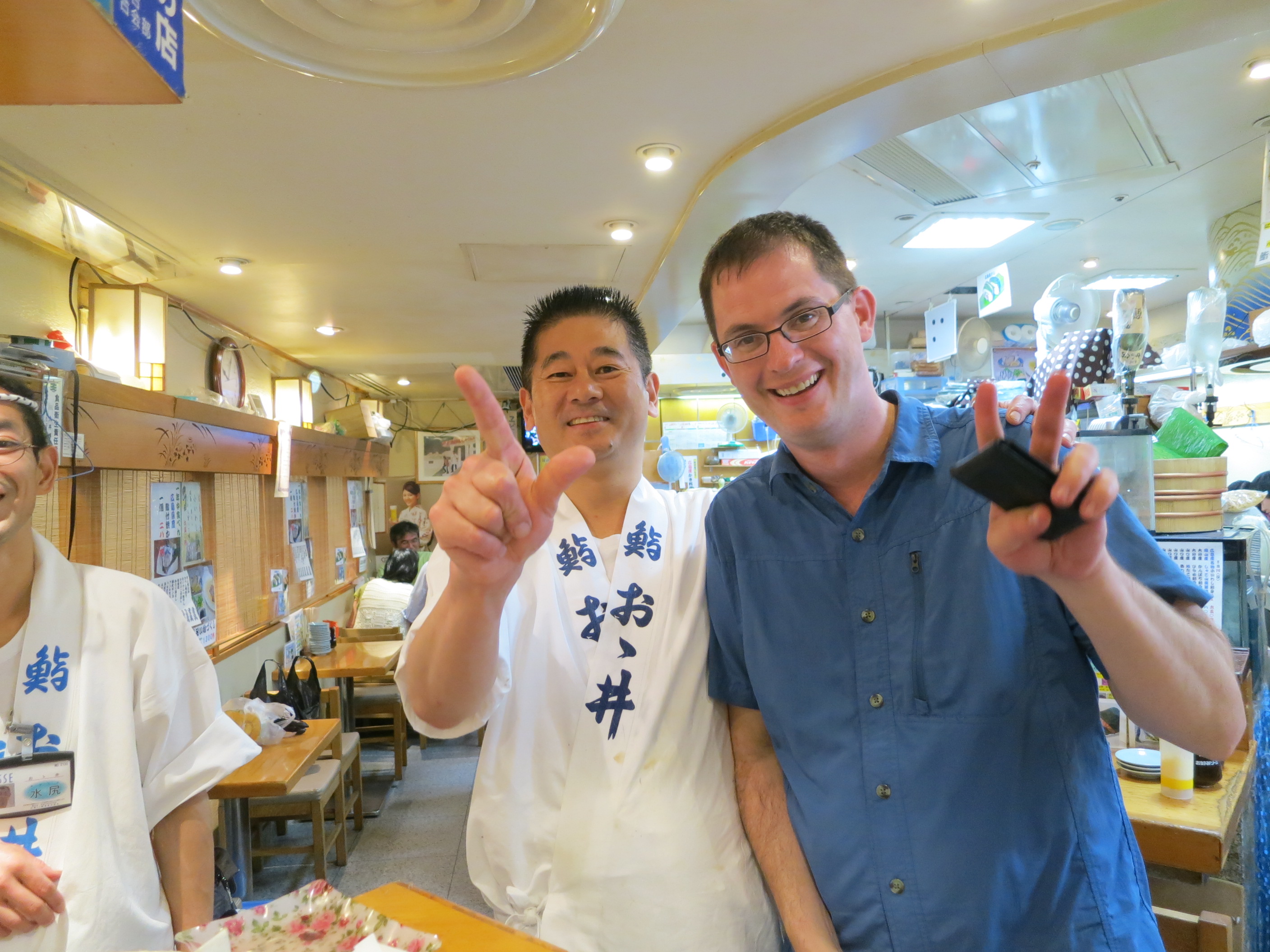
New foods!We’ve made our way on the Shinkansen from Kyoto to Hiroshima leaving behind Shoguns, Geishas, Kimonos and Pagodas and ready to see a new city. It was a quick two hour ride on the Shinkansen. After arriving in the early evening, we set out to grab some dinner. Very quickly, we discovered Okonomiyaki – Hiroshima’s signature dish. Okonomiyaki is best described as a noodle pancake loaded with cabbage, sprouts, egg, meat and more – all cooked on a griddle. Locals take pride in their Okonomiyaki and it is as ubiquitous as chili is to Cincinnati or deep dish style pizza is to Chicago. The verdict? Inexpensive and tasty! Can’t wait to go back tomorrow for another round before we head out of town! The very friendly owner of the particular restaurant we visited was insistent on giving me his card. You can visit his site here.

Hiroshima is a lively, colorful city that uses street cars of all sizes, models and years as their signature public transportation. Running up and down the major streets, the street cars are the main way we’ve been getting across town. After a relaxing night at Hiroshima’s wonderful Hana Hostel, we made our way to Peace Memorial Park and The Peace Memorial Museum – part of a whole complex dedicated to the memory of the atomic bombing of Hiroshima and to creating lasting worldwide peace..

Memorial at HiroshimaThe museum and park certainly qualify as “must visits” in Japan. The nearly-free museum is well done, informative and paints a complex picture of the really widespread, horrific destruction done by the atomic bomb. It was interesting and informative and solemn, but structured to teach and share to make sure that all remember. Brooke and I walked away glad we took the time to tour the museum and grounds surrounding this incredibly important, watershed event in human history. It is also the first time we’ve really come to understand the specific impact of an atomic attack on a specific place.

The museum has such a tactile component with archives full of items from the blast that you can touch and hold. Showing these human, personal items helps to establishes a more intimate connection with what happened here 67 years ago. One eye-catching exhibit was the stopped wristwatch reflecting the exact minute that the bomb went off- it is literally a snapshot of time. The personal stories and archived items, and especially the photographs from the city after the bombing are unsettling, but that’s to be expected and kind of the point.

Archives at Hiroshima MuseumWe found it really interesting how the current generation of Hiroshima locals really shoulder the city’s legacy from the past. The city is a rebuilt place, but they are urging people to never forget what has happened here. The museum has a clear focus on their dedication to peace and ending nuclear proliferation. In fact, the sitting mayors of Hiroshima have sent a letter of protest to a country each time their nation has tested an atomic weapon over the last forty years. Copies of these letters fill up two or three full walls within the museum. We also applaud their mulit-lingual exhibits that show the desire to spread peace across all peoples. I get that this is supposed to be a message of warning, but it does sort of make the future looks grim and bleak. I saw a sign on the way out indicating that this should be a “warning to future generations.” Indeed.

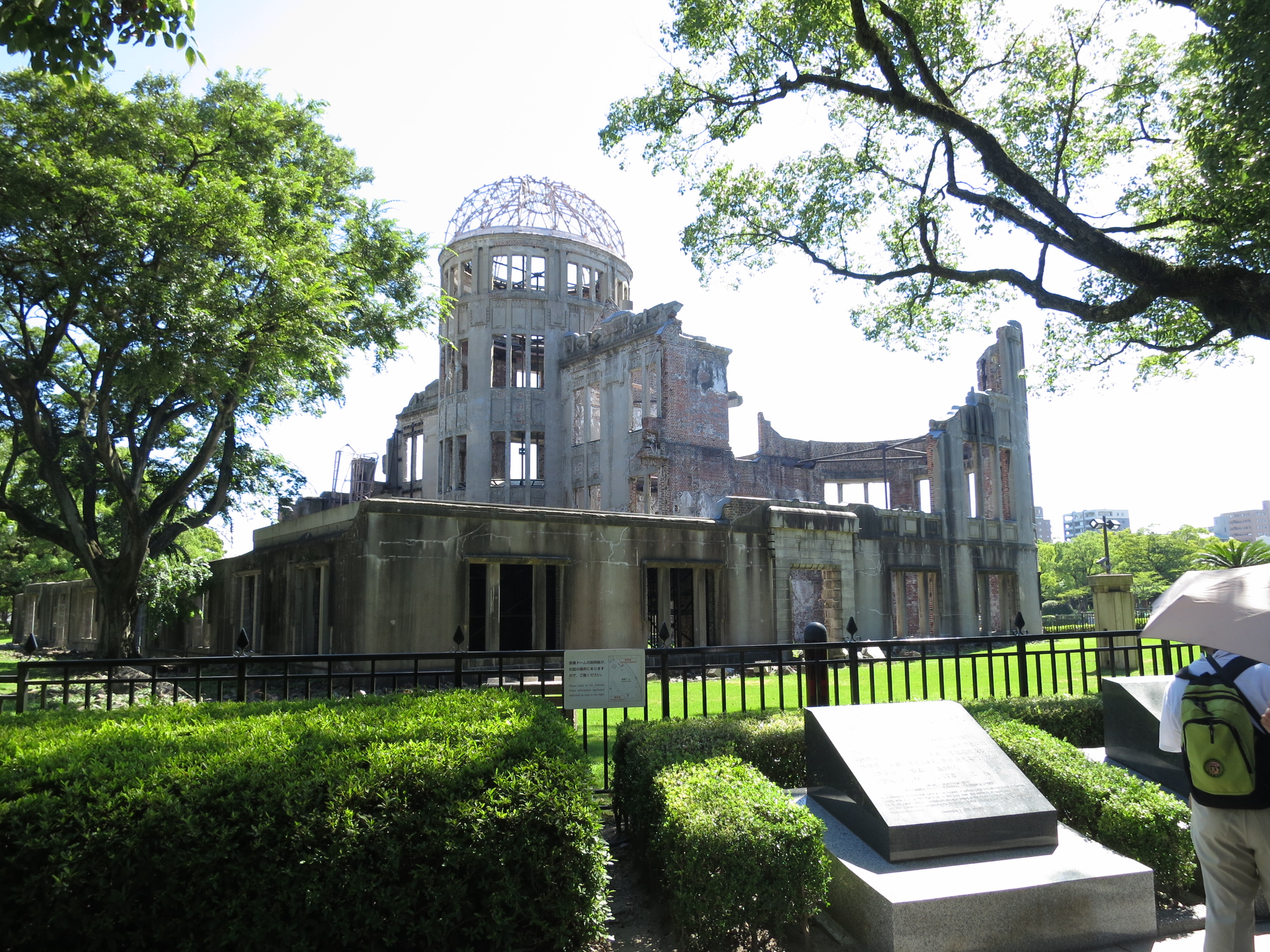
After leaving the museum, meandering through Peace Park was its own striking experience because you’re standing in the near exact bombing spot that you had just studied inside. It’s all preserved green space now with the cenotaph, flame of peace and the Childen’s Peace Monument which was built in a response to the well-known story of Sadako Sasaki- the cancer stricken girl who made a 1,000 paper cranes. Is is an astonishing tale that’s simply heartbreaking. The most notable building was the so called “A-dome” structure: the shell of a building close to the center of the bombing that was one of the very few to remain intact.

The "A-Dome"We walked away from the area and took some time to compose our thoughts and consider our experiences. Hiroshima is in no way a depressing city and its desire to be focused on peace rather than tragedy is quite clear. We understand why some people may avoid visiting this city, but we would definitely try to convince them otherwise. No matter what your political views or beliefs about nuclear weapons, the story of Hiroshima and its people deserve our attention and remembrance. There is more to our visit to Hiroshima which is a bit more uplifting and fun, but we will tell you all about that tomorrow.

-Phil

Phil and The noodle pancake owner guy

Phil and the owner of the Okonomiyaki joint

Another view of the really striking A-dome.

Another view of the really striking A-dome. It’s been preserved to look exactly as it did right after 8:15 AM on August 6th, 1945. Everything else around it was just obliterated.

Categories: City Visits, Destinations, Exploring, Hotels, Japan, Landmarks, Museums, Transportation | Tags: , , , , , , , , , | 4 Comments

Blog at WordPress.com.